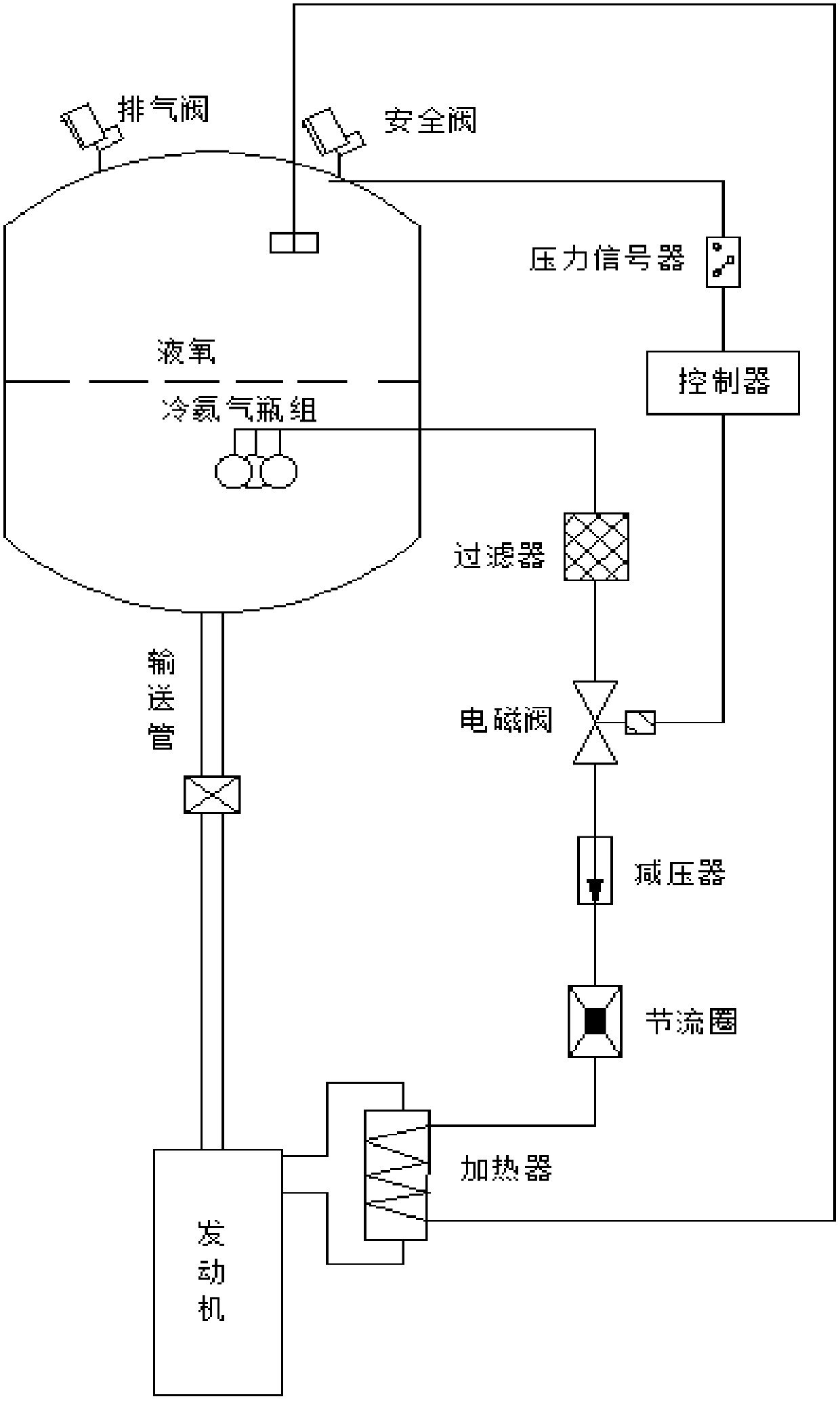
Cold helium heating and pressurizing system for rocket oxygen tank

A pressurization system, rocket oxygen tank technology, applied in the direction of rocket engine devices, jet propulsion devices, machines/engines, etc., can solve the problems of high propellant loss, large amount of propellant, strong vibration, etc., to improve the rocket carrying capacity, Effect of reducing the amount of helium used for pressurization and high safety and reliability

A pressurization system, rocket oxygen tank technology, applied in the direction of rocket engine devices, jet propulsion devices, machines/engines, etc., can solve the problems of high propellant loss, large amount of propellant, strong vibration, etc., to improve the rocket carrying capacity, Effect of reducing the amount of helium used for pressurization and high safety and reliability

CN107630769AInactive Publication Date: 2018-01-26SHANGHAI AEROSPACE SYST ENG INST +1

Image

Smart Image Click on the blue labels to locate them in the text.
Viewing Examples
Smart Image
  • Cold helium heating and pressurizing system for rocket oxygen tank

Examples

Experimental program
Comparison scheme
Effect test

Embodiment 1

[0050] Embodiment 1 (filling process)

[0051] The specific steps of the cold helium cylinder filling process are as follows:

[0052] 1. Before the launch of the rocket, the filling of liquid oxygen in the liquid oxygen storage tank is completed, and the initial temperature of the liquid oxygen is 90K;

[0053] 2. The cold helium cylinder starts to fill with helium, the filling temperature of helium is 80K, and the filling flow rate is 0.02kg / s;

[0054] 3. The cold helium cylinder is filled with helium to 23MPa, and the helium is continuously replenished to maintain 23MPa during parking.

[0055] After simulation calculation, it takes 2800s for the cold helium cylinder to reach 23MPa, it takes 3200s for the temperature and pressure inside the cylinder to stabilize, the maximum temperature of the cylinder is 93.71K, and the maximum heat transfer between the cylinder and liquid oxygen is 4222W.

Embodiment 2

[0056] Embodiment 2 (supercharging process)

[0057] The specific steps of the cold helium cylinder pressurization process are as follows:

[0058] 1. The pressure signal device detects the pressure of the air pillow in the liquid oxygen storage tank. When the pressure of the air pillow is lower than the rated value, the controller opens the solenoid valve on the booster pipeline, and the low-temperature and high-pressure helium is output from the cold helium cylinder. Flow 0.26kg / s;

[0059] 2. Helium is decompressed through the pressure reducer, and the throttle coil controls the flow;

[0060] 3. Helium enters the heater and heats up to about 500K;

[0061] 4. The decompressed and heated helium enters the air pillow of the liquid oxygen tank for pressurization.

[0062] Through simulation calculation, it is concluded that the liquid oxygen temperature is basically maintained at 90K, the minimum temperature of the gas cylinder is 77.4K, the maximum final temperature is 84...

the structure of the environmentally friendly knitted fabric provided by the present invention; figure 2 Flow chart of the yarn wrapping machine for environmentally friendly knitted fabrics and storage devices; image 3 Is the parameter map of the yarn covering machine
Login to View More

PUM

No PUM Login to View More

Abstract

The invention discloses a cold helium heating and pressurizing system and method for a rocket oxygen tank. The cold helium heating and pressurizing method for the rocket oxygen tank comprises the steps that a certain number of cold helium cylinders are placed in the liquid oxygen storage tank, helium in the cold helium cylinders enters a gas pillow of the liquid oxygen storage tank after passing through a filter, an electromagnetic valve, a pressure reduction device, a throttling ring and a heater, and then liquid oxygen is pressurized. The cold helium heating and pressurizing system and method for the rocket oxygen tank have the advantages that helium in the cold helium cylinders enters the gas pillow of the liquid oxygen storage tank after being filtered, decompressed and heated, so thatliquid oxygen is pressurized, and the requirement for the pressure at an inlet of an engine is met. Through reasonable design of the cold helium heating and pressurizing system, it is ensured that under the normal operating condition of the cold helium heating and pressurizing system, the self weight of the heating and pressurizing system can be reduced, meanwhile, the effective utilization rateof helium can be increased, the carrying capacity of a rocket is improved accordingly; and meanwhile, the heating and pressurizing system has high safety and reliability.

Description

technical field [0001] The invention belongs to the field of spacecraft system technology and cryogenic engineering technology, and in particular relates to a rocket oxygen tank cooling helium heating and pressurizing system with a novel structure. Background technique [0002] Cryogenic liquids such as liquid hydrogen and liquid oxygen are currently the main propellants for high-thrust rockets, and the cold helium pressurization system is one of the key technologies for cryogenic liquid propulsion systems. The system usually uses helium as the pressurization medium, and the helium cylinder is placed in a liquid hydrogen or liquid oxygen tank. After decompression and heating, the low-temperature and high-pressure helium enters the air pillow of the liquid oxygen tank to maintain the Boost to ensure the pressure requirements of the engine pump inlet. Cold helium pressurization can reduce the weight of the pressurization system, reduce the amount of helium used for pressure s...

Claims

the structure of the environmentally friendly knitted fabric provided by the present invention; figure 2 Flow chart of the yarn wrapping machine for environmentally friendly knitted fabrics and storage devices; image 3 Is the parameter map of the yarn covering machine
Login to View More

Application Information

Patent Timeline
26 Jan 2018
Publication
CN107630769A
IPC
F02K9/50; F02K9/56
Inventors
耑锐; 刘拓