
Preparation method of tumor targeted nanoparticle carrier co-loaded with breast cancer chemotherapeutic drug MTDH siRNA
A chemotherapeutic drug and nanoparticle technology, which can be used in medical preparations with non-active ingredients, medical preparations containing active ingredients, anti-tumor drugs, etc. time, improve curative effect, reduce the effect of toxic and side effects
Patent Information
- Authority / Receiving Office
- CN · China
- Patent Type
- Applications(China)
- Current Assignee / Owner
- Publication Date
- 2018-06-01
Smart Images
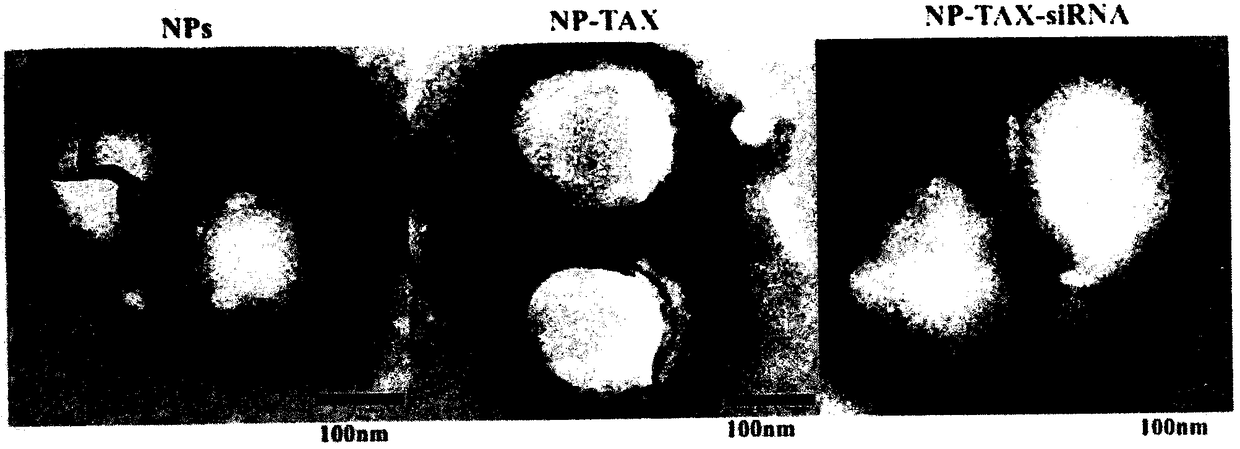
Figure 1 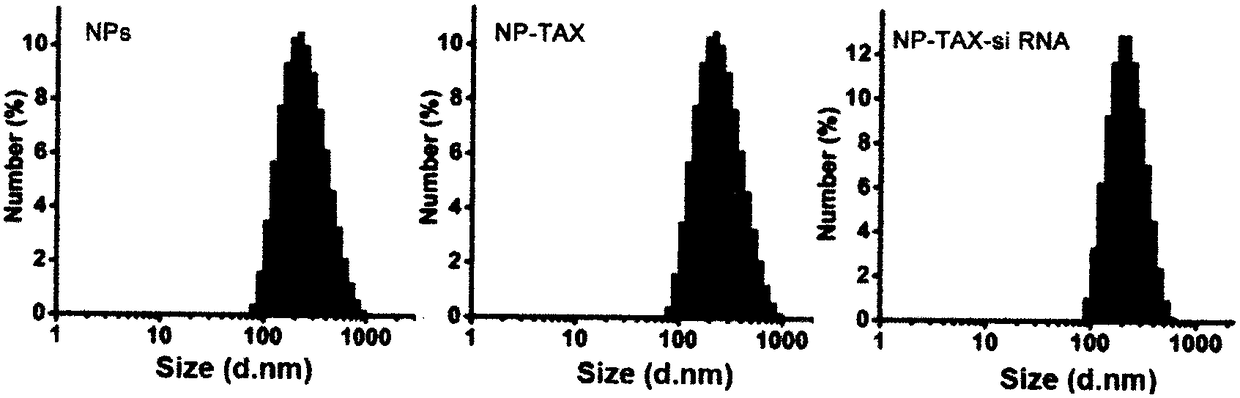
Figure 2 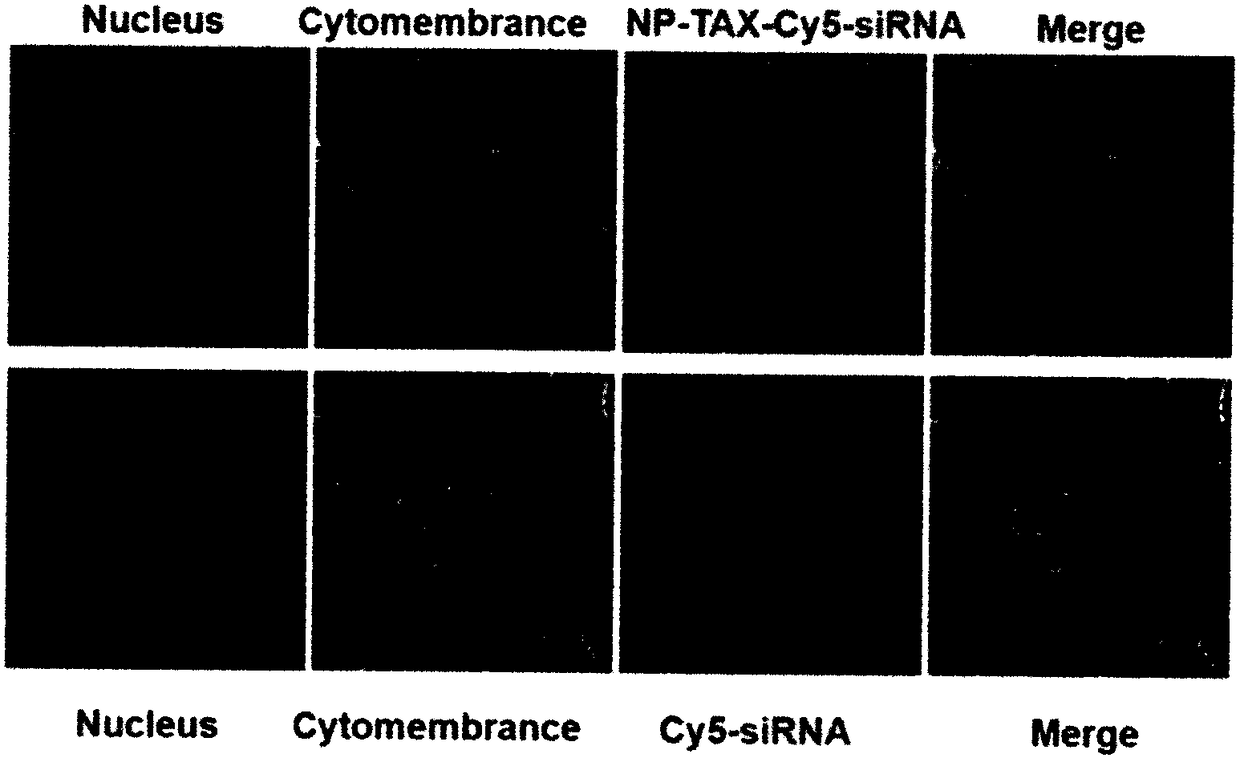
Figure 3
Abstract
Description
technical field
[0001] The invention belongs to the field of nano-medicines, and in particular relates to a preparation method of tumor-targeting nano-particles co-carrying breast cancer chemotherapeutic drug MTDH siRNA. technical background
[0002] Malignant tumor is an important disease that threatens human health and social development. Its occurrence is a complex process of multi-gene and multi-factor interaction, which eventually leads to abnormal cell proliferation and death. Breast cancer has become the tumor with the highest incidence rate in women, and as a highly heterogeneous tumor, breast cancer has significant differences in pathological typing, molecular typing, and prognosis. Although estrogen receptor-positive breast cancer can benefit from endocrine therapy, chemotherapy still plays an important role in postoperative systemic treatment and treatment of recurrence and metastasis. However, triple-negative breast cancer is highly invasive, prone to recurrence...
Examples
Embodiment 1
[0025] a. After dissolving 18mg polyethyleneimine-lactic acid glycolic acid polymer in 1ml dichloromethane, add 0.2ml deionized water and mix well;
[0026] b. Ultrasonic crush the above solution and emulsify it into a homogeneous emulsion; use the cell disruptor at 25% power for 5 minutes;
[0027] c. After mixing 1.8ml of vinyl alcohol with a mass concentration of 1.8% and 0.2ml of hydrophobic paclitaxel with a mass concentration of 1.8% and 2-4ml of dichloromethane, add it to the above-mentioned emulsion, and then continuously add 10ml of it with a mass concentration of 0.6%. In the state of vinyl alcohol, it was ultrasonically crushed again and then emulsified into a homogeneous emulsion;
[0028] d. After the organic phase in the emulsion prepared in step c is removed with a low-pressure rotary evaporator, the nanoparticle cores loaded with paclitaxel are obtained;
[0029] e. Rinse the paclitaxel-loaded nanoparticle core with deionized water for 5 minutes at 12,000 rpm,...
Embodiment 2
[0036] Embodiment 2: the difference between this embodiment and embodiment 1 is that
[0037] a. After dissolving 20mg polyethyleneimine-lactic acid glycolic acid polymer in 1ml dichloromethane, add 0.25ml deionized water and mix well;
[0038] b. Ultrasonic crush the above solution and emulsify it into a homogeneous emulsion; use the cell disruptor at 25% power for 5 minutes;
[0039] c. After mixing 2.0ml of vinyl alcohol with a mass concentration of 2.0% and 0.25ml of hydrophobic paclitaxel with a mass concentration of 2.0% and 2-4ml of dichloromethane, add it to the above emulsion, and then continuously add 10ml of it with a mass concentration of 0.6%. In the state of vinyl alcohol, it was ultrasonically crushed again and then emulsified into a homogeneous emulsion;
[0040] d. After the organic phase in the emulsion prepared in step c is removed with a low-pressure rotary evaporator, the nanoparticle cores loaded with paclitaxel are obtained;
[0041] e. Rinse the pacli...
Embodiment 3
[0042] Embodiment 3: the difference between this embodiment and embodiment 1 is,
[0043] a. After dissolving 22mg polyethyleneimine-lactic acid glycolic acid polymer in 1ml dichloromethane, add 0.3ml deionized water and mix well;
[0044] b. Ultrasonic crush the above solution and emulsify it into a homogeneous emulsion; use the cell disruptor at 25% power for 5 minutes;
[0045] c. After mixing 1.8-2.2ml of vinyl alcohol with a mass concentration of 2.2% and 0.3ml of hydrophobic paclitaxel with a mass concentration of 2.2% and 2-4ml of dichloromethane, add it to the above-mentioned emulsion, and then continuously add 10ml of it with a mass concentration of In the state of 0.6% vinyl alcohol, it was ultrasonically crushed again and then emulsified into a homogeneous emulsion;
[0046] d. After the organic phase in the emulsion prepared in step c is removed with a low-pressure rotary evaporator, the nanoparticle cores loaded with paclitaxel are obtained;
[0047] e. Rinse th...