Reduced genome library building method for millet

A millet and gene technology, applied in the field of simplified gene library construction of millet, can solve the problems of unstable sequencing quality, unsatisfactory, low throughput, etc., and achieve the effect of improving data utilization and avoiding two-way complementarity

CN108165646AInactive Publication Date: 2018-06-15GRAIN RES INST HEBEI ACAD OF AGRI & FORESTRY SCI
4 Cites 0 Cited by

Patent Information

Authority / Receiving Office
CN · China
Current Assignee / Owner
Publication Date
2018-06-15
Estimated Expiration
Not applicable · inactive patent

Smart Images

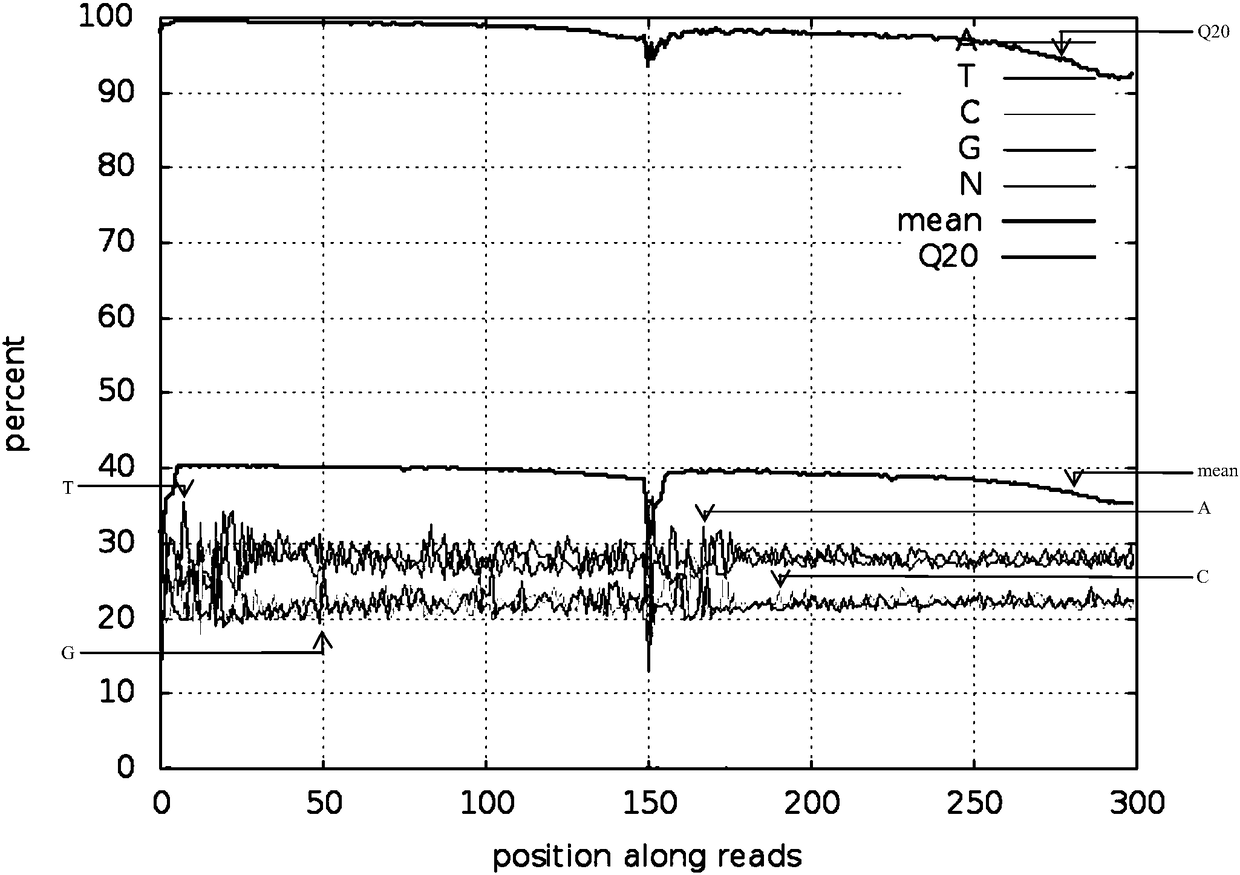
  • Figure 1
    Figure 1
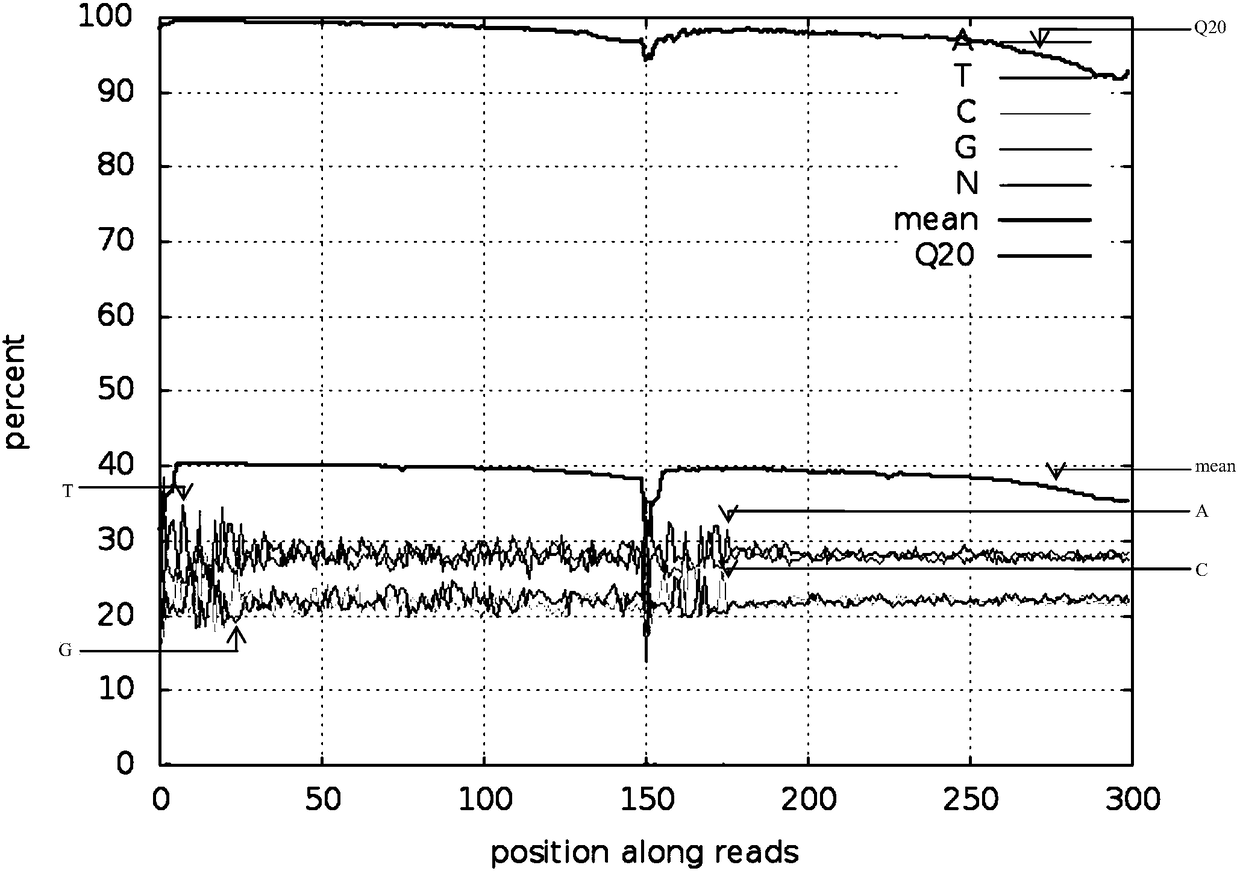
  • Figure 2
    Figure 2
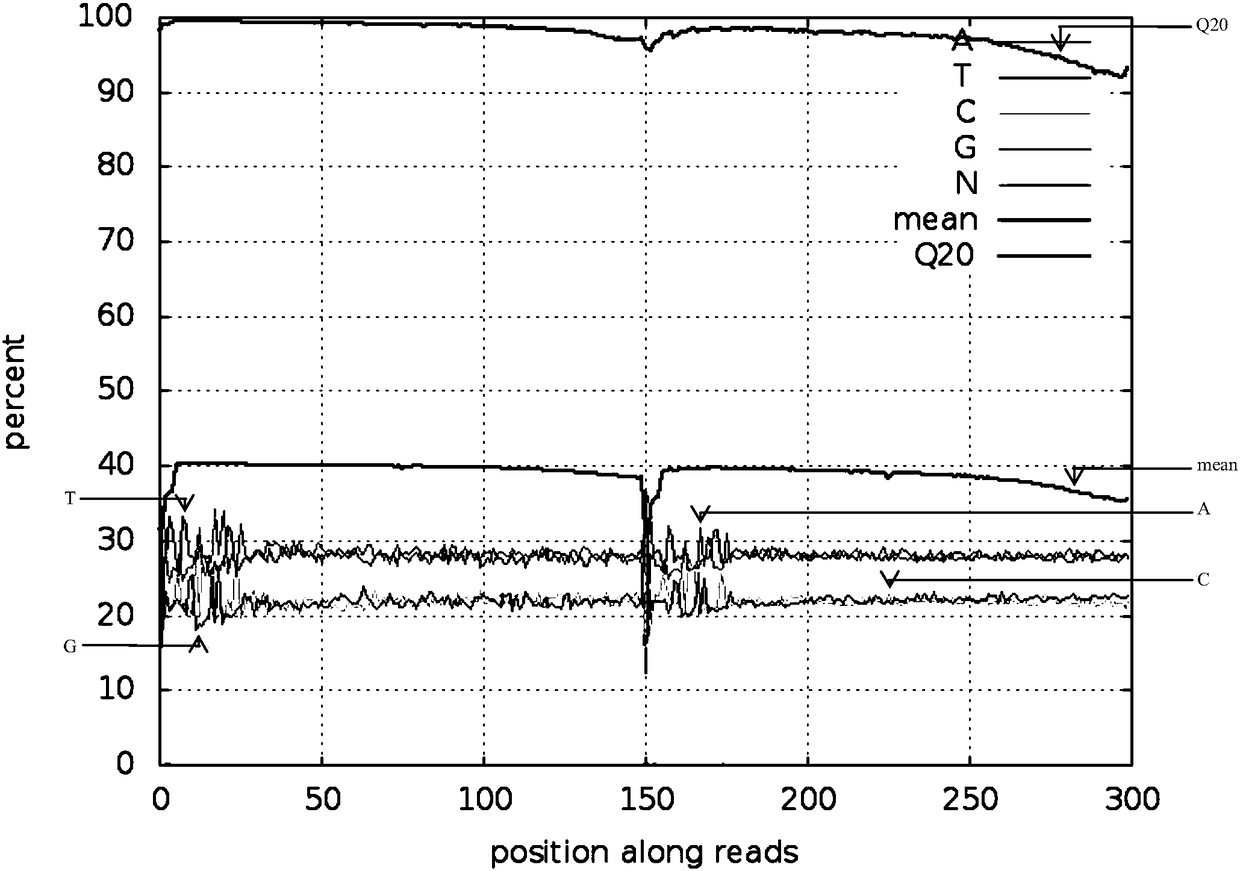
  • Figure 3
    Figure 3
Patent Text Reader

Abstract

The invention relates to a reduced genome library building method for millet. The method includes the steps of: 1. utilizing restrictive endonuclease ApeK I for enzyme digestion on the genome DNA of several millet samples respectively to obtain an enzyme-digested product; 2. connecting a bar code joint F and a universal joint R with the enzyme-digested product; 3. mixing the connection products ofthe several millet samples at an equal volume and performing purification to obtain a purified connection product; 4. taking the purified connection product, using a universal primer F and 1 or morebar code primers R for PCR amplification to obtain a PCR product; 5. purifying the PCR product to obtain a target fragment, thus obtaining a sequencing library; and 6. using a high-throughput sequencing platform for sequencing of the sequencing library. The method provided by the invention has the advantages of high detection flux, low cost, good library building stability, and accurate and reliable sequencing result, and at the same time simplifies the genome sequencing and library building steps.
Need to check novelty before this filing date? Find Prior Art

Description

technical field

[0001] The invention relates to genome sequencing technology, in particular to a simplified gene library building method suitable for millet. Background technique

[0002] Reduced-representation sequencing (reduced-representation sequencing) is a high-throughput sequencing method for sequencing part of the genome, mainly including RAD (restriction-site associated DNA), GBS (genotyping-by-sequencing), 2b-RAD (type IIB restriction-site associated DNA) and other technologies. The basic principle is to carry out sequencing on the machine after digesting the sample DNA. Due to the small amount of sequencing data and the ability to evenly distribute across the entire genome, these technologies are being used more and more widely, and have been widely used in the construction of genetic linkage maps after genotyping, population genetic diversity assessment, population evolutionary analysis, etc. However, subject to technical conditions such as low throughput, hig...

Examples

Embodiment 1

[0058] Embodiment 1 is a simplified gene library method for 6 millet samples,

[0059] Selection of materials: select 6 millet samples, extract the genomic DNA of the millet samples, and the extraction method is carried out according to the operation manual of the new plant extraction kit of Tiangen Biochemical Technology Co., Ltd.;

[0060] Restriction endonuclease ApeK Ⅰ: Biolab company;

[0061] NEB Buffer (NEB Buffer): Takara Company;

[0062] T4 DNA ligase (T4 DNAigase): Takara company;

[0063] 10xT4 DNAigase Reaction Buffer: Takara Company;

[0064] HiFi enzyme: Kakp company;

[0065] AMPure XP Beads: Novozyme Biotechnology Co., Ltd.

[0066] The simplified gene library method of 6 millet samples specifically includes the following steps:

[0067] Step 1. Using the restriction endonuclease ApeK Ⅰ to digest the genomic DNA of several millet samples respectively to obtain digested products;

[0068] The enzyme digestion system used is: NEB Buffer (NEB Buffer) 2μL, A...