
2, 5-furan diformyl copolyester foam material and preparation method thereof
A technology of furandicarboxylic acid-based copolyester and furandicarboxylic acid, which is applied in the field of polymer foaming materials, can solve the problems that cannot be effectively improved and the solubility of foaming agents is low, and achieve the effect of uniform cell size and appropriate expansion ratio
- Summary
- Abstract
- Description
- Claims
- Application Information
AI Technical Summary
Problems solved by technology
Method used
Image

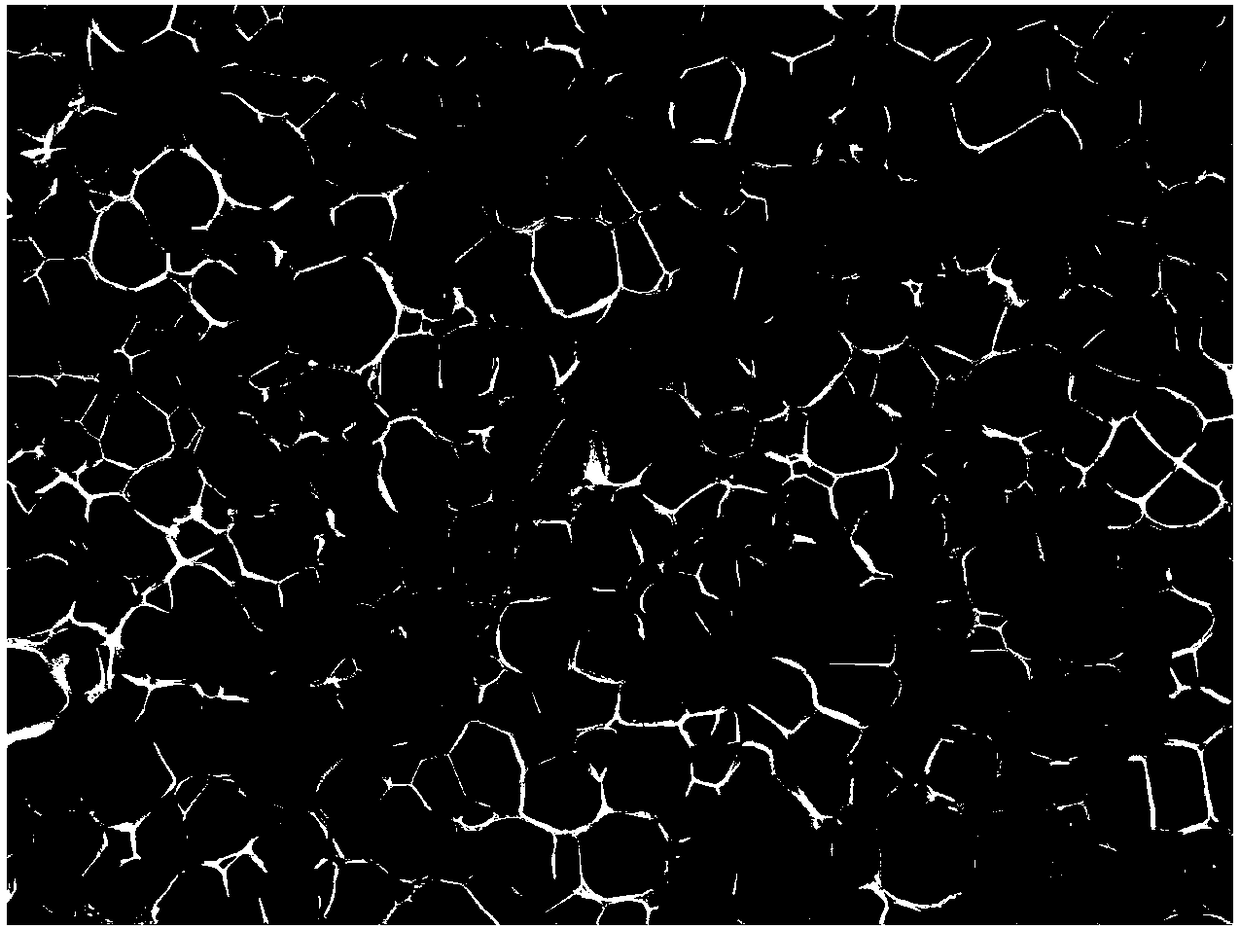
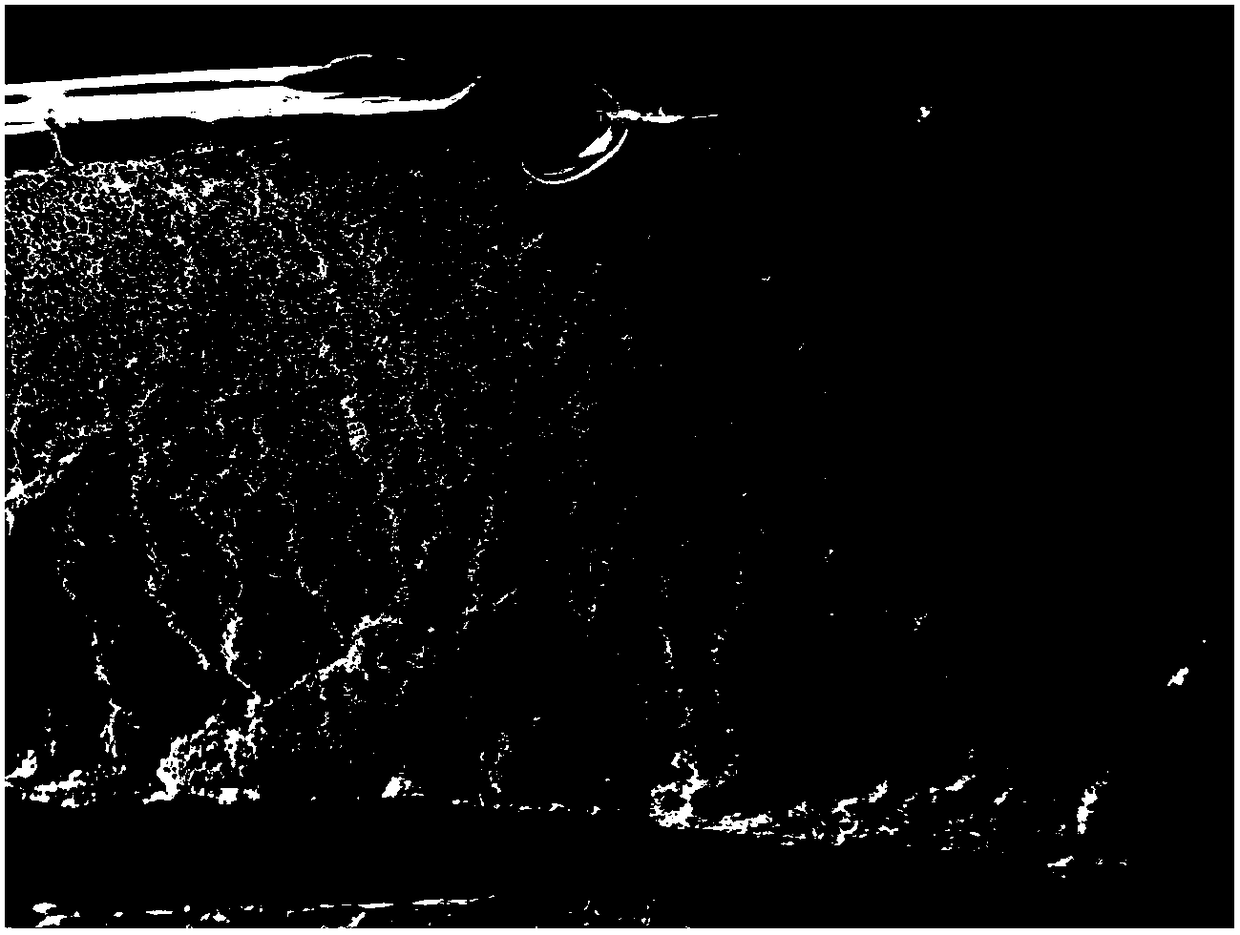
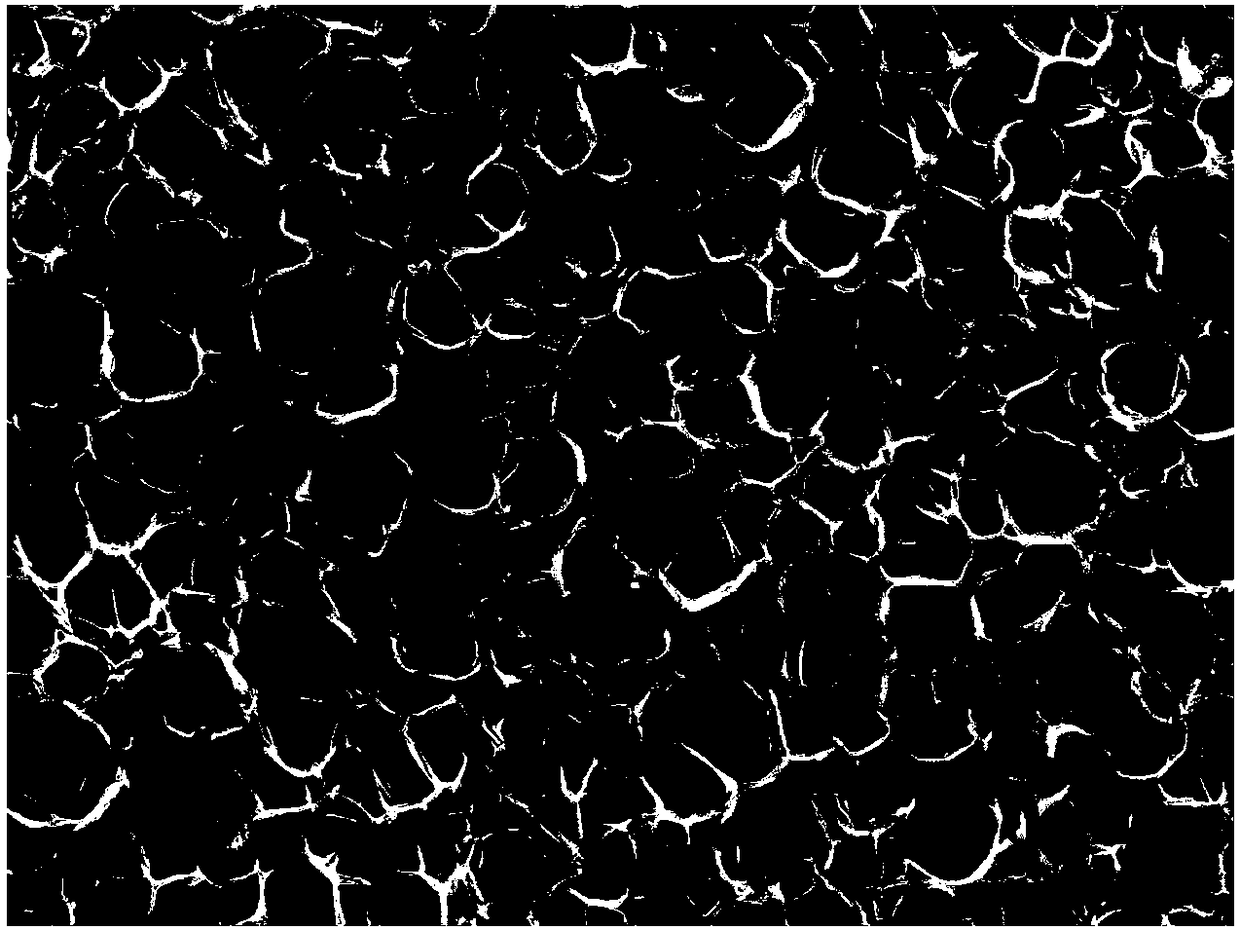
Examples
preparation example Construction
[0021] The preparation method of 2,5-furandicarboxylate copolyester foam material provided by the invention comprises the following steps:
[0022] (a) placing 2,5-furandicarboxylate copolyester plastic in a mold, and pressing it into a thin-plate-shaped preform, and then quenching the thin-plate-shaped preform;
[0023] (b) placing the quenched preform and the first foaming agent in a closed container; wherein, the first foaming agent is not in contact with the preform, and the first foaming agent is At least one of chloroform, acetone, ether, pentane, and hexafluoroisopropanol;
[0024] (c) feed a second blowing agent into the airtight container again, the second blowing agent is at least one of carbon dioxide and nitrogen, and keep the temperature in the airtight container at 40°C to 65°C , so that the first foaming agent changes from a liquid state to a gaseous state, while maintaining the pressure in the airtight container at 2MPa to 5MPa, and the pressure holding time i...
Embodiment 1
[0042] Place the PEFT-30 plastic granules in a vacuum oven and dry at 80°C for 10 hours to remove the moisture in the PEFT-30 plastic granules, so that the water content of the PEFT-30 plastic granules is ≤0.05wt.%.
[0043] Then put the PEFT-30 plastic particles in a mold, and press it into a thin plate-shaped preform with a thickness of 1mm on a molding machine at 200 ° C. The thin plate-shaped preform is in a molten state, and then the molten preform in the mold The preform together with the mold is placed in liquid nitrogen for quenching treatment for 5 minutes to obtain a quenched preform.
[0044] Place the quenched preform and the beaker containing ether together in the autoclave without contact, and use 1 mL of ether for every 50 g of the preform. Set the temperature inside the autoclave to 45°C to vaporize ether, and at the same time fill the autoclave with carbon dioxide gas to keep the pressure inside the autoclave at 4 MPa for 6 hours.
[0045] Quickly remove the ...
Embodiment 2
[0048] Place the PEFT-30 plastic granules in a vacuum oven and dry at 80°C for 10 hours to remove the moisture in the PEFT-30 plastic granules, so that the water content of the PEFT-30 plastic granules is ≤0.05wt.%.
[0049] Then put the PEFT-30 plastic particles in a mold, and press it into a thin plate-shaped preform with a thickness of 1mm on a molding machine at 200 ° C. The thin plate-shaped preform is in a molten state, and then the molten preform in the mold The preform together with the mold is placed in liquid nitrogen for quenching treatment for 6 minutes to obtain a quenched preform.
[0050] Place the quenched preform and the beaker containing ether together in the autoclave without contact, and use 1 mL of ether for every 50 g of the preform. Set the temperature inside the autoclave to 40°C to vaporize ether, and at the same time fill the autoclave with carbon dioxide gas to keep the pressure inside the autoclave at 4 MPa for 6 hours.
[0051] Quickly remove the ...
PUM
| Property | Measurement | Unit |
|---|---|---|
| thickness | aaaaa | aaaaa |
| size | aaaaa | aaaaa |
| size | aaaaa | aaaaa |
Abstract
Description
Claims
Application Information
 Login to View More