A Method for Predicting the Rate of Chemical Vapor Deposition

A chemical vapor deposition and prediction method technology, applied in the field of chemical vapor deposition rate prediction, can solve problems such as large errors and poor model universality

CN110598255BActive Publication Date: 2021-07-06SOUTH CHINA UNIV OF TECH
5 Cites 0 Cited by

Patent Information

Authority / Receiving Office
CN · China
Patent Type
Patents(China)
Current Assignee / Owner
Publication Date
2021-07-06

Smart Images

  • Figure 1
    Figure 1
  • Figure 2
    Figure 2
  • Figure 3
    Figure 3
Patent Text Reader

Abstract

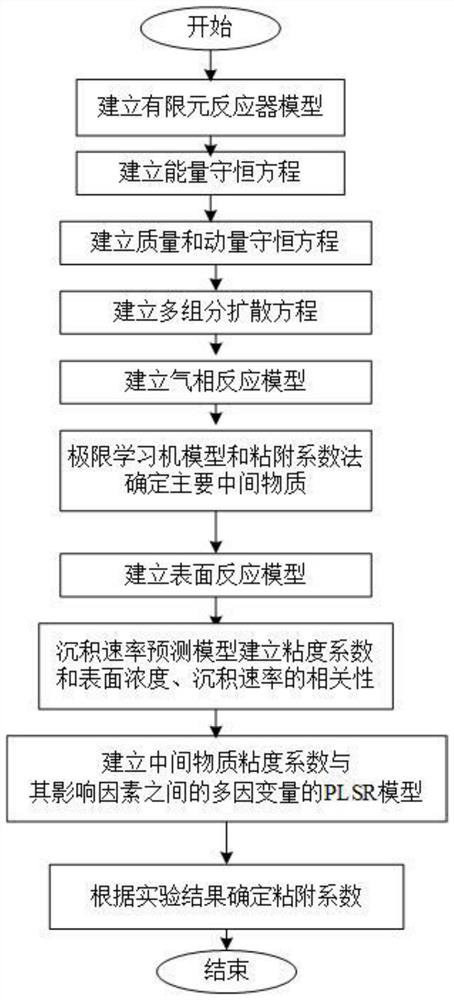
The invention discloses a chemical vapor deposition rate prediction method, which specifically relates to the field of chemical technology research. The specific prediction method is as follows: establishing a finite element reactor model; establishing an energy conservation equation; establishing mass conservation and momentum conservation equations; establishing multi-component diffusion Equation; establishment of gas phase reaction model; determination of main intermediate substances by extreme learning machine model and adhesion coefficient method; establishment of surface reaction model; deposition rate prediction model establishment of the correlation between viscosity coefficient, surface concentration and deposition rate; establishment of intermediate substance viscosity coefficient and its influence Multivariate PLSR model between factors; adhesion coefficient determined from experimental results. The invention combines the simulation technology of machine learning and computational fluid dynamics, which will greatly reduce the dependence of model parameters on human experience, and can accurately determine important intermediate phases and viscosity coefficients through a small number of experiments, and achieve high accuracy and reliability of prediction results. technical effect.
Need to check novelty before this filing date? Find Prior Art

Description

technical field

[0001] The invention relates to the technical field of chemical process research, and more specifically, the invention relates to a method for predicting chemical vapor deposition rate. Background technique

[0002] Ceramic matrix composites are a type of composite materials that use ceramics as a matrix and various fibers. The ceramic matrix can be high-temperature structural ceramics such as silicon nitride and silicon carbide. It retains the excellent properties of ceramic materials such as high temperature resistance, low density, high specific strength and oxidation resistance, and overcomes the fatal weaknesses of ceramic materials such as high brittleness and poor reliability. As a high-temperature structural material, it can be used in certain high-temperature and harsh environments. Known as "new materials facing the 21st century", it has received more and more attention.

[0003] At present, chemical vapor deposition (CVD) is the main method for pr...

Examples

Embodiment Construction

[0070] The following will clearly and completely describe the technical solutions in the embodiments of the present invention with reference to the accompanying drawings in the embodiments of the present invention. Obviously, the described embodiments are only part of the embodiments of the present invention, not all of them. Based on the embodiments of the present invention, all other embodiments obtained by persons of ordinary skill in the art without making creative efforts belong to the protection scope of the present invention.

[0071] according to figure 1 A chemical vapor deposition rate prediction method is shown, and the specific prediction method is as follows:

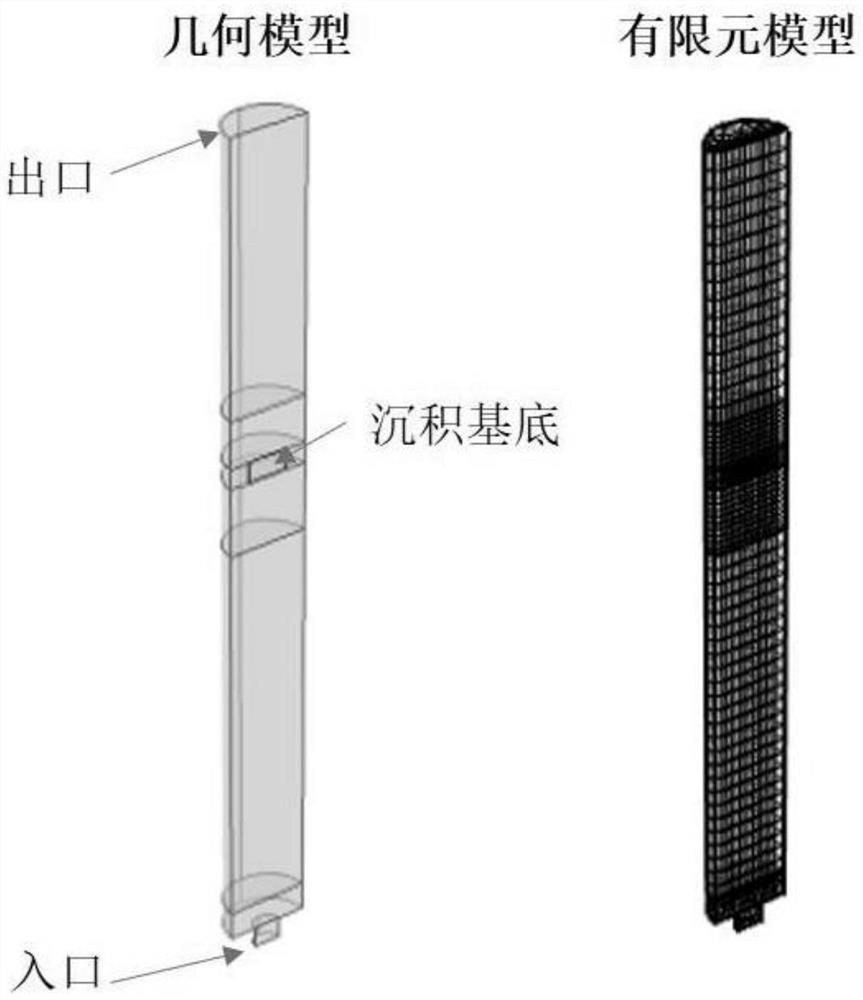
[0072] S1. Establish a finite element reactor model: simulate the reactor as a three-dimensional cylinder model according to the experimental conditions, then cut and divide the reactor into reactor cavity, air inlet and deposition base, and cut the cylinder in order to reduce the amount of calculation, on...