
Buffer solution and application thereof
A buffer and acetate buffer technology, which is used in the field of linker ligation buffer, buffer, and nucleic acid library construction, can solve the problem of the limited height of the ligation reaction platform, the limitation of high-throughput workflow construction, and the inability to advance the connection time. To improve the efficiency of the ligation reaction, reduce the amount of enzyme used in the system, and achieve a small inhibitory effect
- Summary
- Abstract
- Description
- Claims
- Application Information
AI Technical Summary
Problems solved by technology
Method used
Image

Examples
Embodiment 1
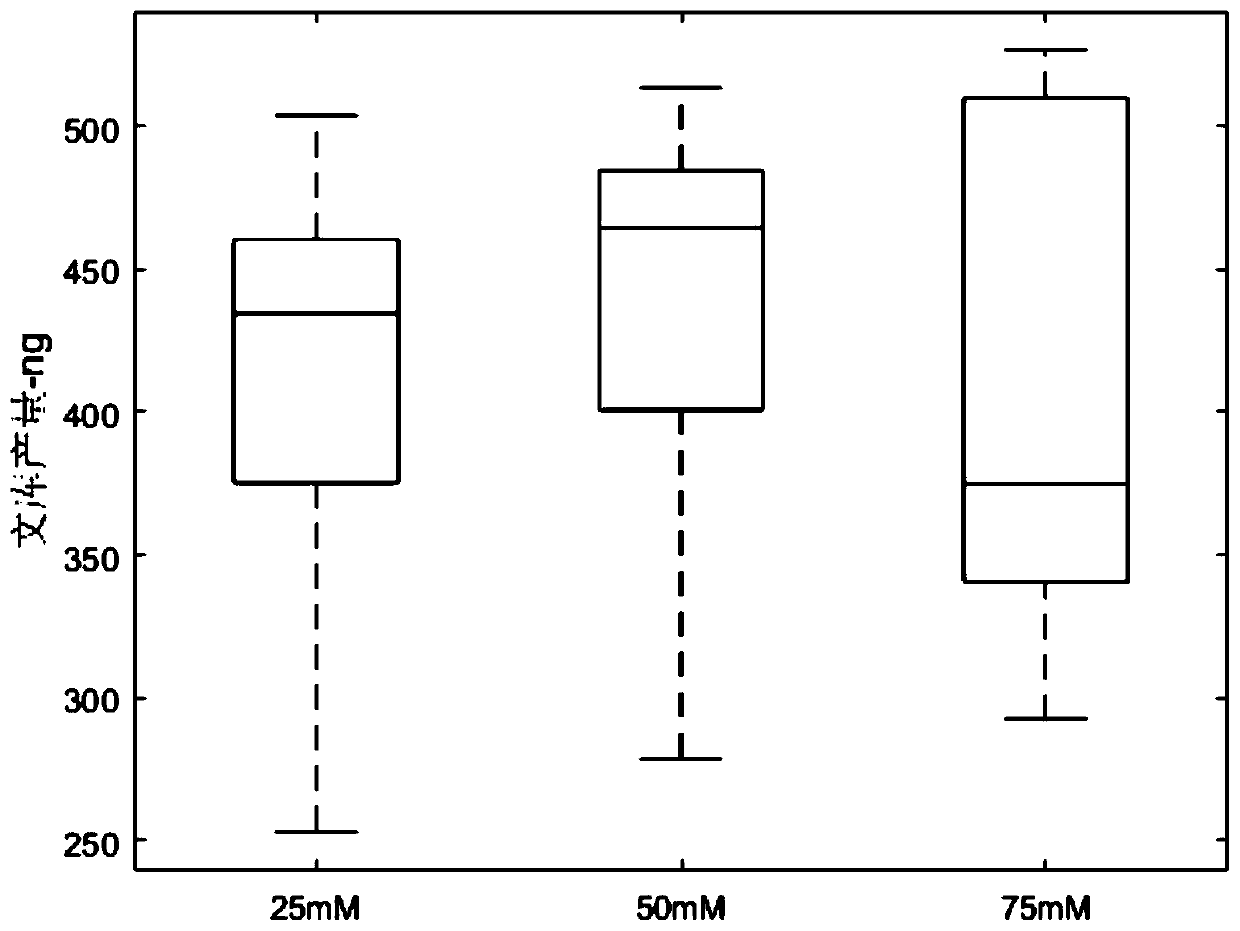
[0075] In this example, the effect of different concentrations of monovalent cations on the yield of the library in the presence of PEG was studied according to the above-mentioned general steps. Among them, the composition of the ligation buffer is 45mM Tris-AC buffer, 3mM Mg 2+ , Na + , 5mM dithiothreitol (DTT), 10% PEG4000-8000 and 1.5mM ATP, pH value is 8. Among them, the Na+ concentration in the connection buffer is shown in Table 1, and the details are as follows:
[0076] Table 1 Statistics of the number of self-connections of the joints under different Na+ concentrations
[0077]
[0078] As shown in Table 1, in the presence of 7.5% (w / v) PEG, the results are in line with the hypothesis. As the concentration of Na+ increases, the number of linkers self-ligates significantly. In the presence of 37.5mM Na+, the number of linkers self-ligates The amount is about 4 times that of 50mM Na+, and the number of self-linking linkers in the presence of 37.5mM Na+ is about 6.5 times th...
Embodiment 2
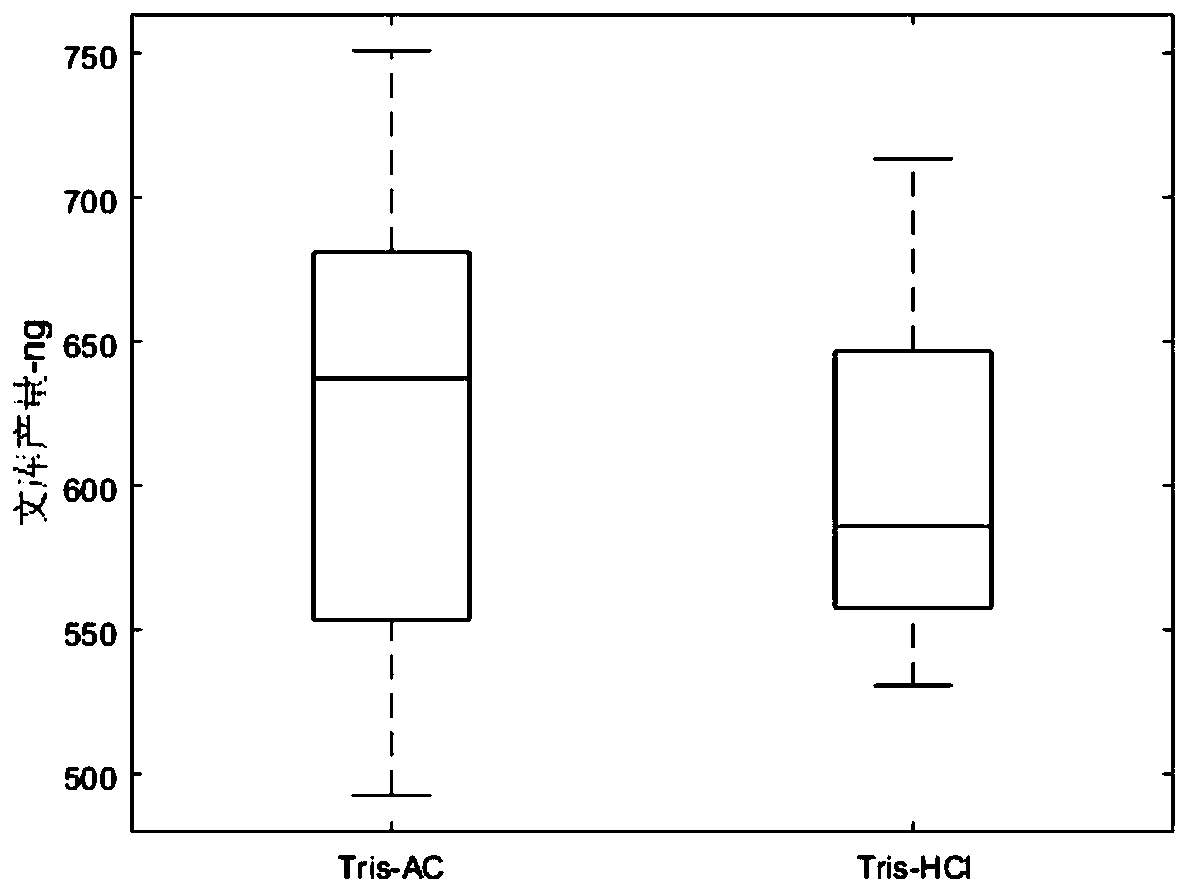
[0082] Since the negative ions of Tris-AC and Tris-HCl have different electronegativity, they have different effects on the interaction between enzymes and DNA, and the two buffering capabilities are also different. Furthermore, in this example, compare T4 DNA connection In the enzyme-mediated ligation reaction, the effect of Tris-AC and Tris-HCl buffer is carried out according to the above general steps. The composition of the ligation buffer is Tris-AC buffer, 3mM Mg 2+ , 50mM Na + , 5mM dithiothreitol (DTT), 10% PEG4000-8000 and 1.5mM ATP, pH value is 8. Only the Tris buffer in the connection buffer is Tris-AC and Tris-HCl. The buffer effect of the buffer is as follows image 3 As shown, in the presence of 7.5% (w / v) PEG, Tris-AC has a wide fluctuation range, but it has a positive effect on the increase in library yield.
Embodiment 3
[0084] In this example, according to the general method of constructing a nucleic acid library, the concentration of PEG in the ligation buffer was changed to compare the effects of 7.5% and 10% PEG on library construction. The composition of the ligation buffer is 45mM Tris-AC buffer, 3mMMg 2+ , 50mM Na + , 5mM dithiothreitol (DTT), PEG4000-8000 and 1.5mM ATP, pH value of 8, as follows:
[0085] Table 2 Library yield statistics under different PEG concentrations
[0086]
[0087] As shown in Table 2, when the concentration of PEG6000 is 10% and the connection time is 15 minutes, the library yield is 1.62 times that of the 7.5% concentration. When the premix was prepared and placed for 1 hour, the yield of the library under the condition of 10% PEG6000 was still higher than that of the concentration of 7.5% PEG6000.
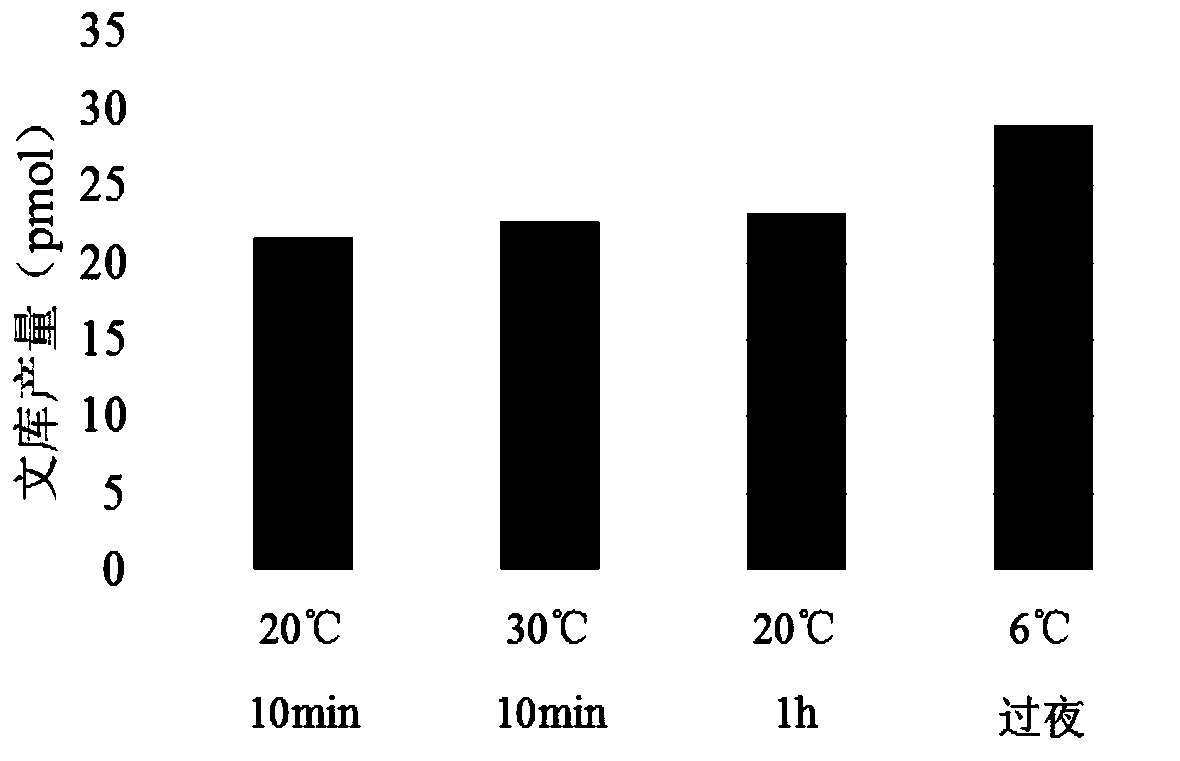
[0088] Among them, it should be noted that 15min means that the ligation time is 15min, and 15min* means that the ligation reaction reagent mixture (except the substra...
PUM
 Login to View More
 Abstract
Description
Claims
Application Information
 Login to View More