AI technical title is built by PatSnap AI team. It summarizes the technical point description of the patent document.
A technology of surface treatment agent and tooth root, applied in the direction of dental preparations, dentistry, dental prosthesis, etc., can solve the problems of poor treatment effect and achieve good reattachment effect
Active Publication Date: 2022-01-11
WUHAN UNIV
View PDF3 Cites 0 Cited by
Summary
Abstract
Description
Claims
Application Information
AI Technical Summary
This helps you quickly interpret patents by identifying the three key elements:
Problems solved by technology
Method used
Benefits of technology
Problems solved by technology
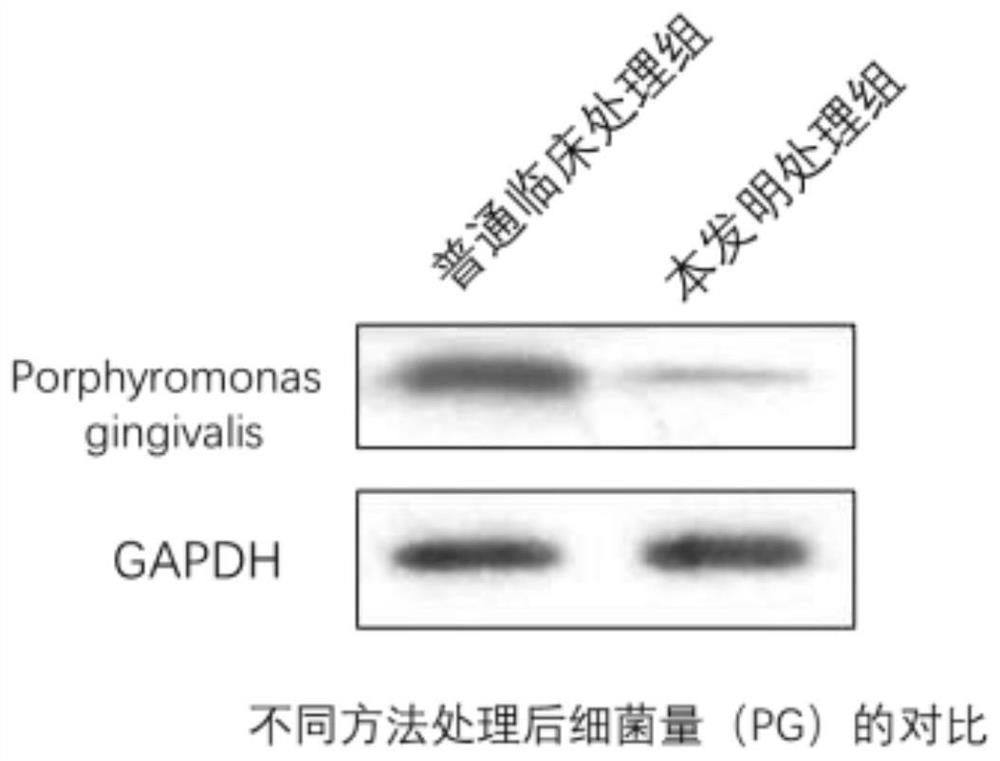
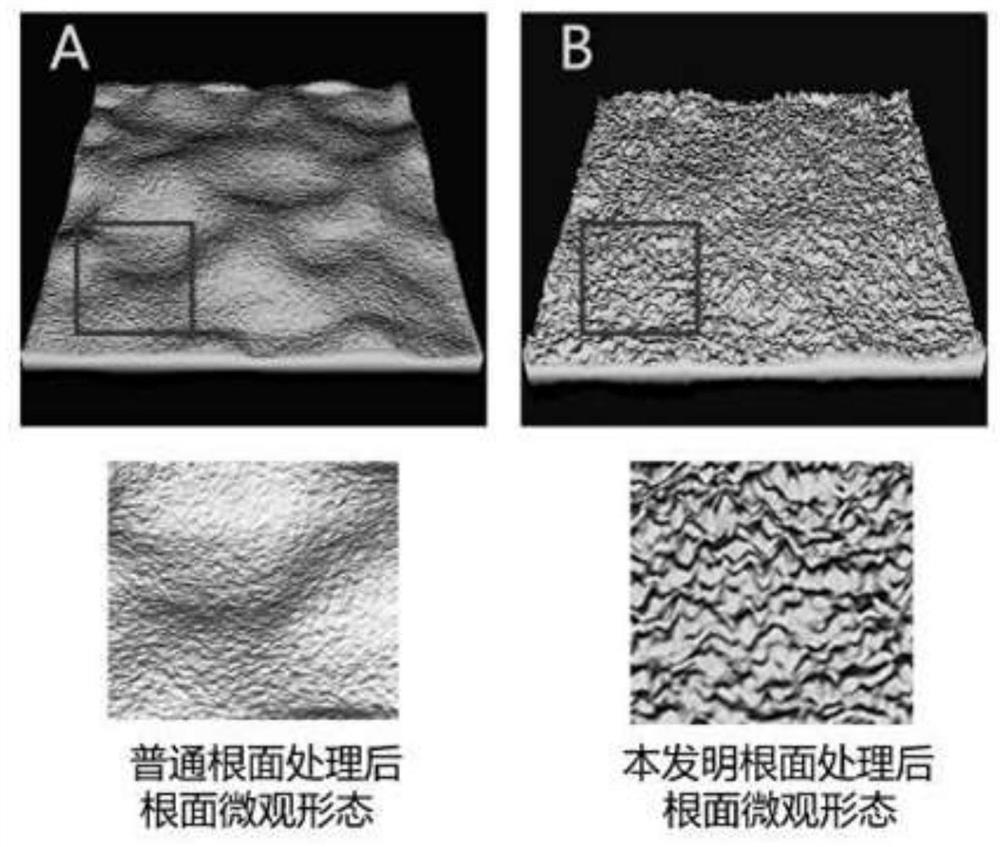
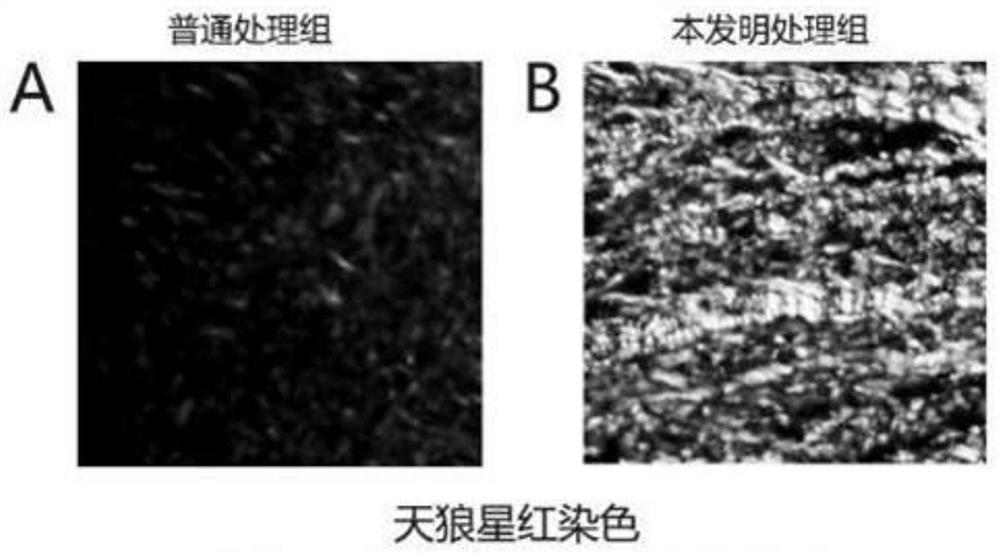
[0004] The main purpose of the present invention is to provide a novel and efficient tooth root surface treatment agent for the shortcomings of the existing root surface treatment effect.
Method used
the structure of the environmentally friendly knitted fabric provided by the present invention; figure 2 Flow chart of the yarn wrapping machine for environmentally friendly knitted fabrics and storage devices; image 3 Is the parameter map of the yarn covering machine
View more
Image
Smart Image Click on the blue labels to locate them in the text.
Viewing Examples
Smart Image
Click on the blue label to locate the original text in one second.
Reading with bidirectional positioning of images and text.
Smart Image
Examples
Experimental program
Comparison scheme
Effect test
Embodiment 1
[0031] A genome surface treatment agent, which includes detergent composition 1 and regeneration composition 2; specific preparation steps are as follows:
[0032] 1) Formulate the decontamination composition 1, according to the ratio, each component and the mass percentage are: poloxham 407 (finished) 15%, Triton X-1141%, propylene glycol 5%, glycerin 1%, tetrahydrotropate 2%, wild phylancanol 1%, remaining is deionized water; mixed components will be mixed uniform, preparing detergent composition 1;
[0033] 2) Formulate the regeneration composition 2, according to the ratio, each component and the mass percentage are: 1%, chloride, EMD (glaze substrate derivative), 5%, BMP2 (bone formationprotein) 2) 5%, BMP4 (bone formation protein 4) 10%, FGF2 (fibroblastgrowth factor 2) 1%, hydrochloride 2%, polyethyleneglycol diacrylate 0.4%, remaining is deionized water The respective components weighing are mixed uniform, and gel composition 2 is prepared.
Embodiment 2
[0053] A genome surface treatment agent, which includes detergent composition 1 and regeneration composition 2; specific preparation steps are as follows:
[0054] 1) Formulate the decontamination composition 1, according to the ratio, each component and the mass percentage are: poloxham 407 (finished) 15%, Triton X-1141%, propylene glycol 5%, glycerin 1%, tetrahydrotropate 2%, wild phwallnol 2%, remaining is deionized water; mixed components will be mixed uniform, produce composition 1;
[0055] 2) Formulate the regeneration composition 2, according to the ratio, each component and the mass percentage are: 2% chloride, EMD (glaze matrix derivative), 10%, BMP2 (bone formation protein) 2) 10%, BMP4 (bone formation protein 4) 10%, FGF2 (fibroblastgrowth factor 2) 1%, hydrochloride 2%, polyethyleneglycol diacrylate 0.4%, remaining is deionized water The respective components weighing are mixed uniform, and gel composition 2 is prepared.
[0056] The surface treatment agent obtained...
the structure of the environmentally friendly knitted fabric provided by the present invention; figure 2 Flow chart of the yarn wrapping machine for environmentally friendly knitted fabrics and storage devices; image 3 Is the parameter map of the yarn covering machine
Login to View More
PUM
Login to View More
Abstract
The invention discloses a tooth root surface treatment agent, which comprises a decontamination composition 1 and a regeneration composition 2; the components in the decontamination composition 1 and their mass percentages are: poloxamer 407 13-17% , Triton X-114 1-3%, propylene glycol 3-7%, glycerin 1-2%, tetrahydropiperine 1-2%, sycamore enol 1-3%, the rest is water; each of the regeneration composition 2 The components and their mass percentages are: 0.5-2% of chlorhexidine gluconate, 15-31% of regeneration agent, 1-3% of minocyclinehydrochloride, 0.3-0.5% of polyethyleneglycol diacrylate, and the remaining is water; the regeneration agent consists of enamel matrix derivatives, bone morphogenic protein 2, bone morphogenic protein 4, and fibroblastgrowth factor 2. The invention can realize high-efficiency cleaning of the tooth root surface, can improve the reattachment effect of gingival fibroblasts, and is suitable for popularization and application.
Description
Technical field [0001] The present invention belongs to the technical field, and more particularly to a root surface treatment agent. Background technique [0002] A healthy gums covers the surface of the entire eradic root, and the root of protecting the roots, stabilizing the teeth. Periodontitis is inflammation in tissues around the dental in the oral cavity. The gums retreat is an important symptom of periodontitis, causing the gums in the root surface to be displaced down. The gums retain the root surface that was originally covered by the gums not only led to aesthetics, but the patients showed an intellectuality; it would also cause the root acid pain sensitive; further development gums caused a lot of damage to the teeth, which eventually causes meant to fall. After the gums of the root surface, there will be some other questions: such as the root surface of the gingival coverage protection will be invaded, settled in the external bacteria; some bacteriametabolic waste a...
Claims
the structure of the environmentally friendly knitted fabric provided by the present invention; figure 2 Flow chart of the yarn wrapping machine for environmentally friendly knitted fabrics and storage devices; image 3 Is the parameter map of the yarn covering machine
Login to View More
Application Information
Patent Timeline
Application Date:The date an application was filed.
Publication Date:The date a patent or application was officially published.
First Publication Date:The earliest publication date of a patent with the same application number.
Issue Date:Publication date of the patent grant document.
PCT Entry Date:The Entry date of PCT National Phase.
Estimated Expiry Date:The statutory expiry date of a patent right according to the Patent Law, and it is the longest term of protection that the patent right can achieve without the termination of the patent right due to other reasons(Term extension factor has been taken into account ).
Invalid Date:Actual expiry date is based on effective date or publication date of legal transaction data of invalid patent.



 Login to View More
  Login to View More