
Application of peimisine in preparation of medicine for preventing and/or treating ulcerative colitis
A technology for ulcerative colitis and fritillary, applied in the field of medicine, can solve problems such as no anti-ulcerative colitis with fritillary, achieve excellent anti-ulcerative colitis activity, improve intestinal tissue pathological damage, prevent and intestinal tissue pathological damage
- Summary
- Abstract
- Description
- Claims
- Application Information
AI Technical Summary
Problems solved by technology
Method used
Image

Examples
Embodiment 1
[0049] Embodiment 1 Fritimin safety experiment
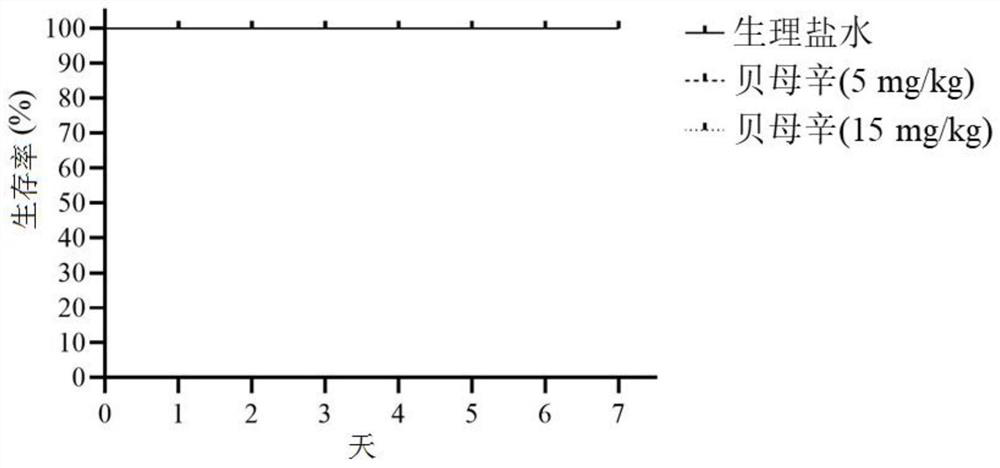
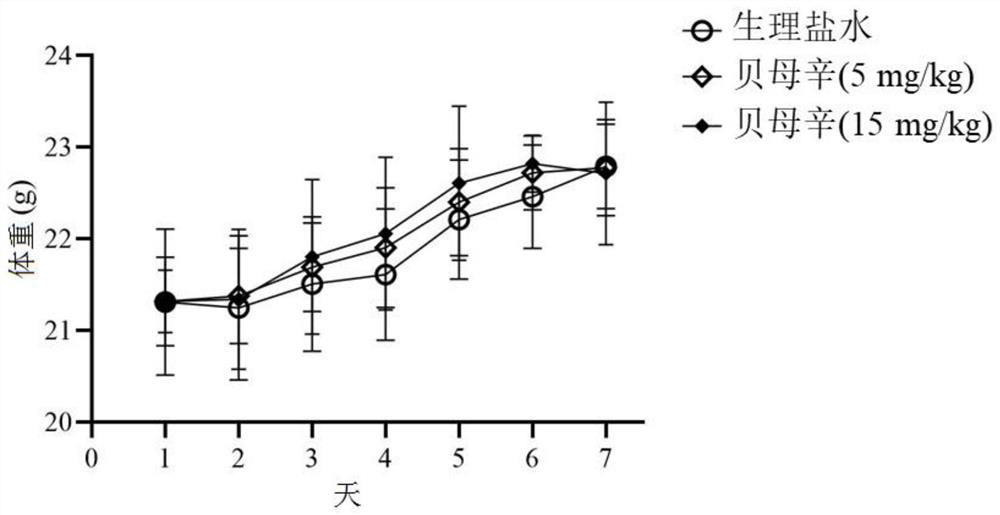
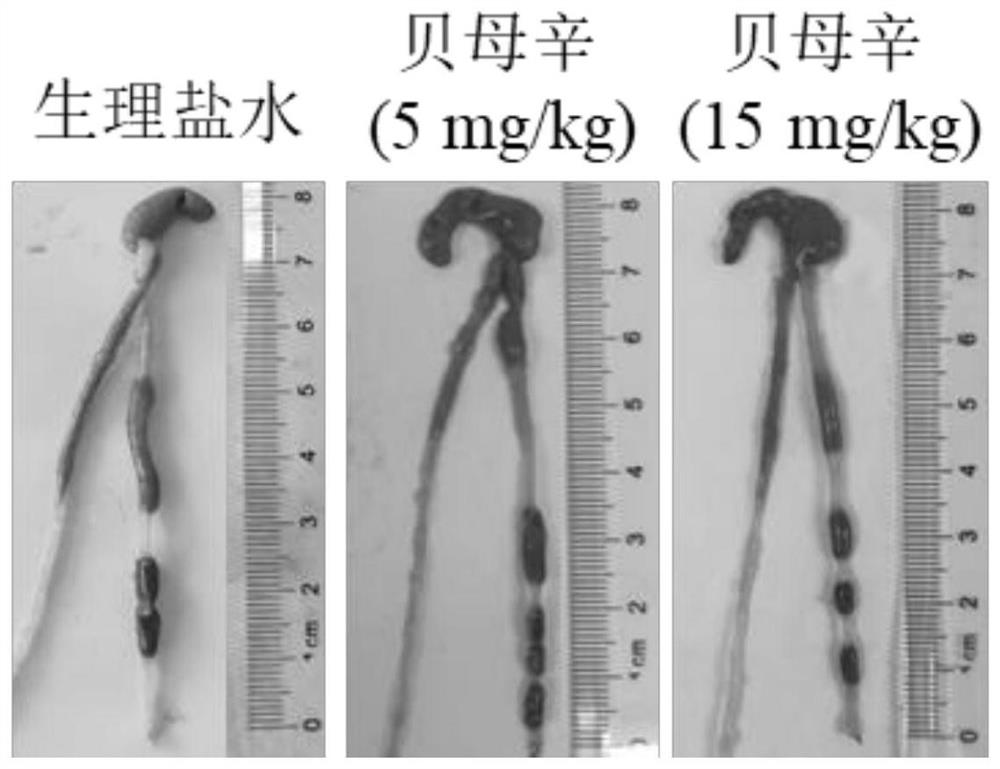
[0050] Eighteen healthy male C57BL / 6J mice with a body weight of about 20 g were randomly divided into 3 groups, 6 in each group, namely the control group, the fritillary (5 mg / kg) group and the fritillary (15 mg / kg) group. After a week of acclimatization. Prepare fritillaria with normal saline, and administer according to the body weight of the experimental mice every day. The fritillaria (5 mg / kg) group is given fritillaria by intraperitoneal injection of 5 mg / kg, and the fritillaria (15 mg / kg) group Intraperitoneal injection of 15 mg / kg of fritillaria was given, and 100 μL of normal saline was administered to the control group for 7 consecutive days. At the same time, the death, body weight, intestinal tissue, colon and cecum pathological conditions of the experimental mice in each group were recorded.
[0051] Experimental results such as figure 1 , figure 2 , image 3 and Figure 4 shown. The results showed that the ad...
Embodiment 2
[0052] The effect of embodiment 2 fritillaria on disease symptoms of ulcerative colitis mice
[0053] 50 healthy male C57BL / 6J mice with a body weight of about 20 g were randomly divided into 5 groups, 10 in each group, namely the control group, the model group, the positive drug group, the fritillary (5 mg / kg) group and the fritillary ( 15mg / kg) group. After adapting to the environment for one week, the mice were administered daily according to the body weight of the experimental mice. The control group drank normal water and injected 100 μL of normal saline intraperitoneally. , Fritimin (15mg / kg) group was administered with intraperitoneal injection of 15 mg / kg of fritillary, the model group was injected with 100 μL of normal saline, and the positive drug group was given 150 mg / kg of 5-aminosalicylic acid by intragastric administration, and continuously administered medicine for 7 days. After administration on the first day, 3% dextran sodium sulfate (Dextran Sulfate Sodiu...
PUM
 Login to View More
 Abstract
Description
Claims
Application Information
 Login to View More