Coke oven flue gas sharing

A technology for coke ovens and coke oven groups, which is applied to the heating of coke ovens, coke ovens, and combustible gas heating coke ovens, etc., can solve the problem that coke cannot absorb moisture.

CN1527872AInactive Publication Date: 2004-09-08SUNCOKE TECH & DEV LLC
4 Cites 71 Cited by

Patent Information

Authority / Receiving Office
CN · China
Patent Type
Applications(China)
Current Assignee / Owner
Publication Date
2004-09-08
Estimated Expiration
Not applicable · inactive patent

Smart Images

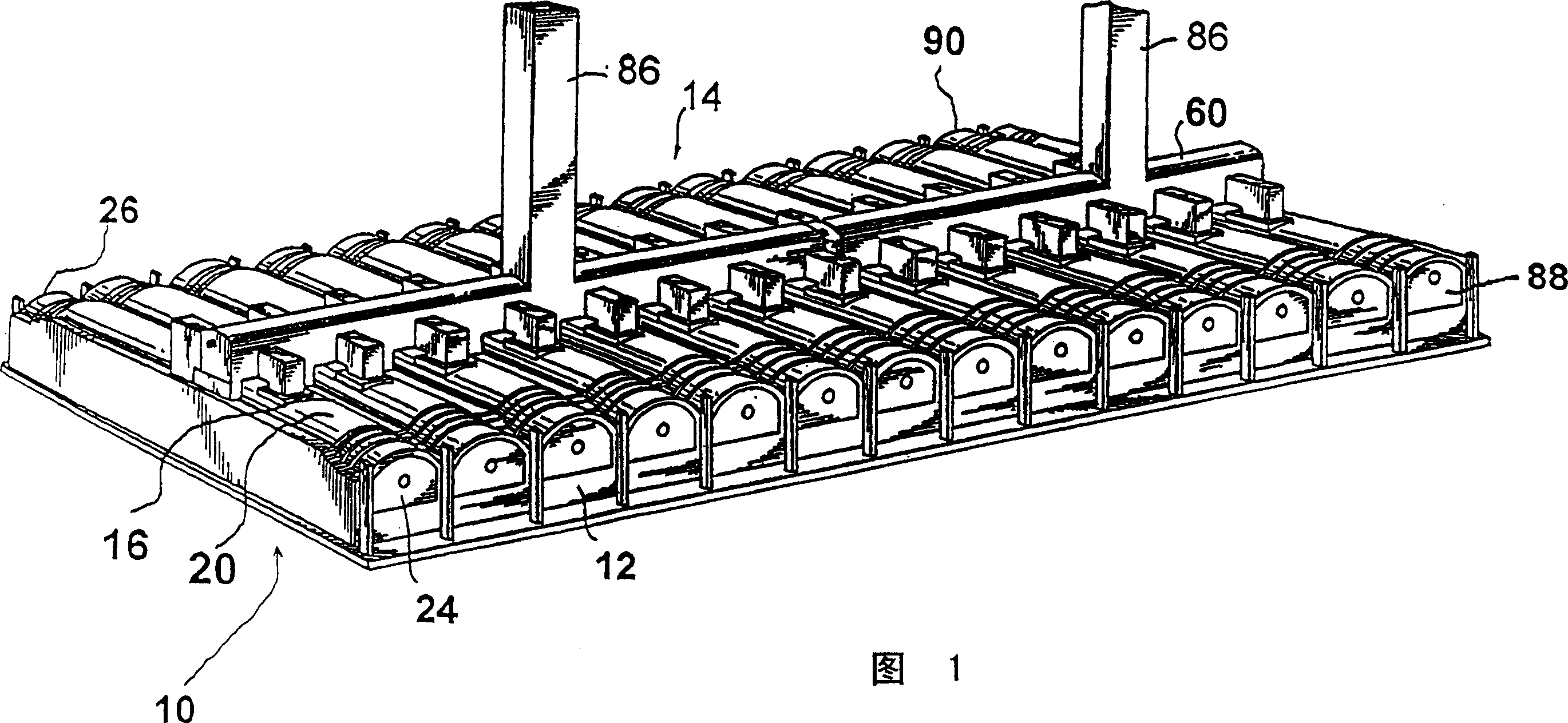
  • Figure 1
    Figure 1
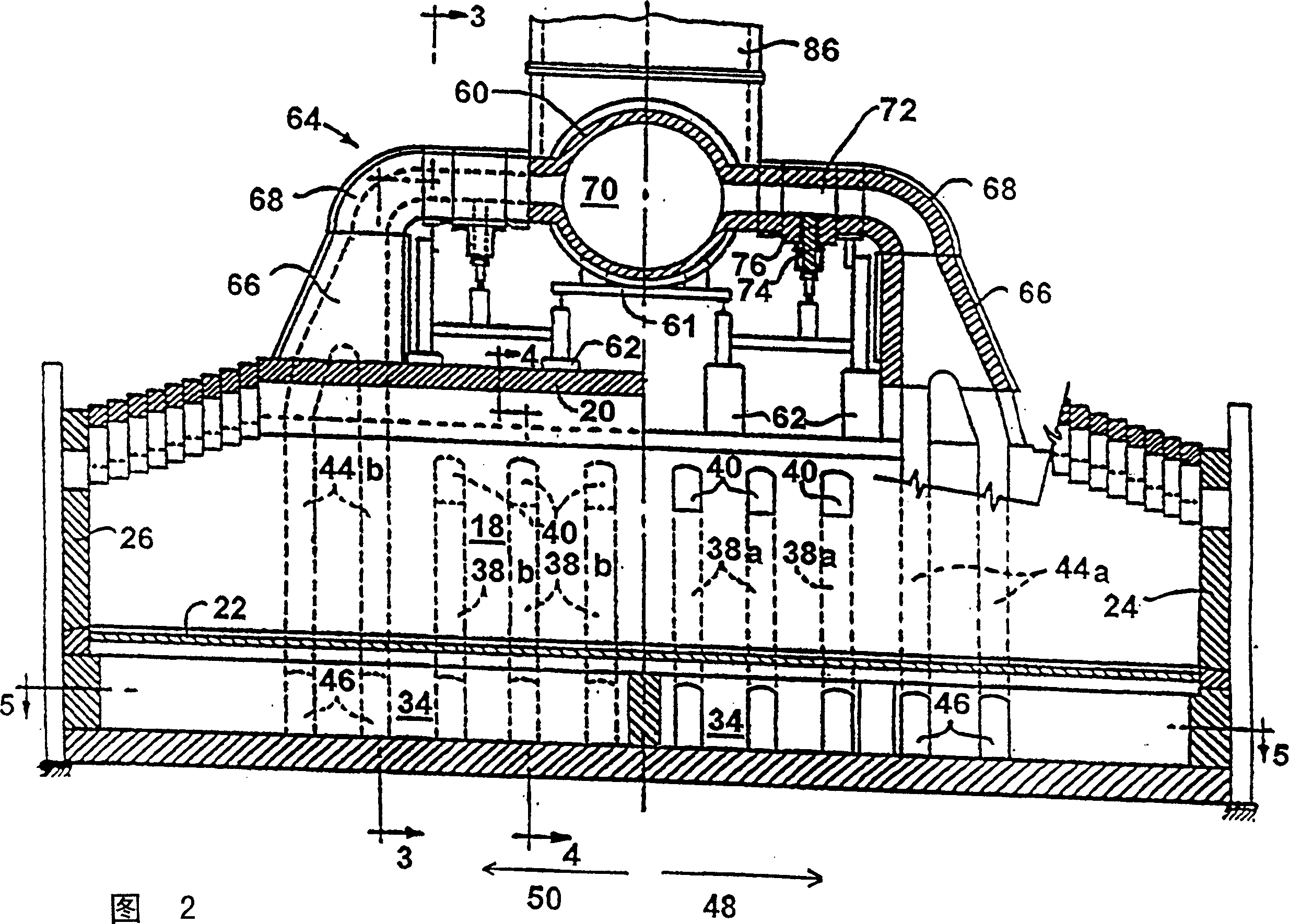
  • Figure 2
    Figure 2
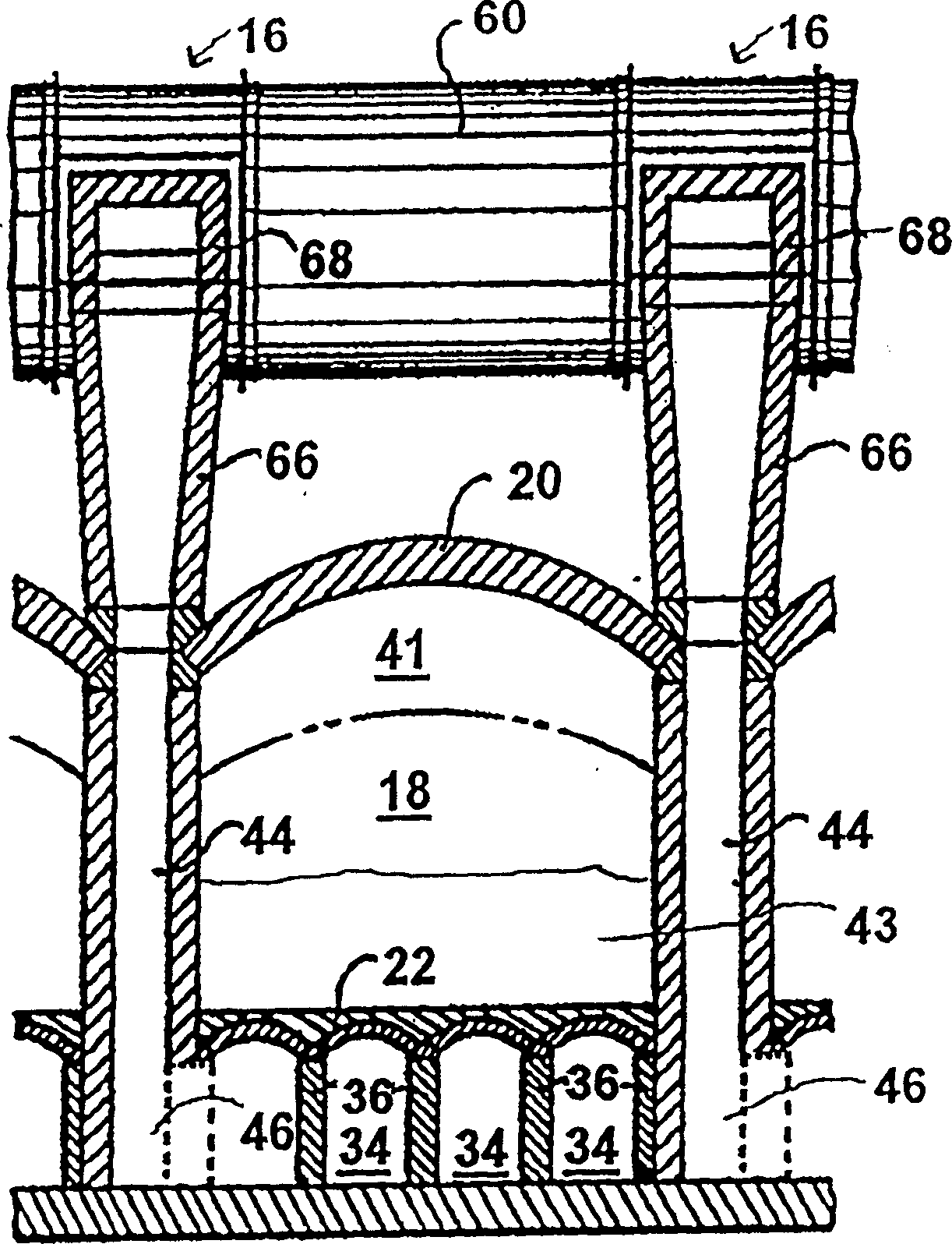
  • Figure 3
    Figure 3
Patent Text Reader

Abstract

The invention provide a method and apparatus for decreasing gas flow rates in a sole flue gas system for a coke oven during at least an initial coking operation after charging a coking oven with coal (43). The method includes providing a duct system (96, 98) between a first coke oven having a first coking chamber (18) and a second coke oven having a second coking chamber (18) to direct at least a portion of gas from a gas space (41) in first coking chamber (18) to the second coke oven thereby reducing a gas flow rate in the first sole flue gas system of the first coke oven. Reduction in sole flue gas flow rates has a beneficial effect on product throughput, the life of the coke oven and environmental control of volatile emissions from coke ovens.
Need to check novelty before this filing date? Find Prior Art

Description

Technical field

[0001] The present invention relates to coke ovens, and more particularly to methods and equipment for operating coke ovens which increase the life of the oven, reduce emissions and increase the coke yield of the oven. Background technique

[0002] Coke is a solid carbon fuel and source of carbon used to melt and reduce iron ore in steel production. During the iron-making process. Iron ore, coke, hot air and limestone or other fluxes are injected into the blast furnace. The hot air causes the coke to burn to provide a source of heat and carbon needed to reduce the iron oxide to iron. Limestone or other fluxes may be added to react with the acidic impurities, called slag, and remove them from the molten iron. Limestone impurities float on top of the molten iron and can be skimmed off.

[0003] In a process, known as "Thompson Coking," coke, used to refine metal ores, is produced by feeding pulverized coal in batches into a furnace that is sealed and heated...

Examples

Embodiment Construction

[0019] Illustrated in FIGS. 1 and 2 is a coal coking plant 10 comprising a plurality of coke ovens 12 , preferably configured in side-by-side relationship in a group 14 , with adjacent ovens 12 in the group preferably having a common side wall 16 . Each of the individual coke ovens 12 of the group 14 has an elongated coking chamber 18 defined by vertically oppositely extending side walls 16, a generally arcuate roof 20 supported on the side walls 16, and a support for the coal to be coked. Horizontal floor 22. The furnace is constructed such that chamber 18 is open at opposite ends and the ends are closable during coking by removable doors 24 and 26 (FIG. 2). Wherein the door 24 closes the charging end and the door 26 closes the coke discharge end of the furnace 12 . The side walls 16, roof 20, and floor 22 are formed of suitable heat resistant material, such as refractory bricks or castable refractory materials that are resistant to the high temperatures and thermal shock en...