

Fusion protein of tumour new-born blood vessel-specific bonding polypeptide and recombinant human Tum-5, and its preparation method
A technology of tumor neovascularization and fusion protein, which is applied in the field of tumor neovascularization-specific binding polypeptide and recombinant human Tum-5 fusion protein and its preparation, which can solve the problem of no anti-tumor effect
Patent Information
- Authority / Receiving Office
- CN · China
- Current Assignee / Owner
- Publication Date
- 2006-07-12
- Estimated Expiration
- Not applicable · inactive patent
Smart Images
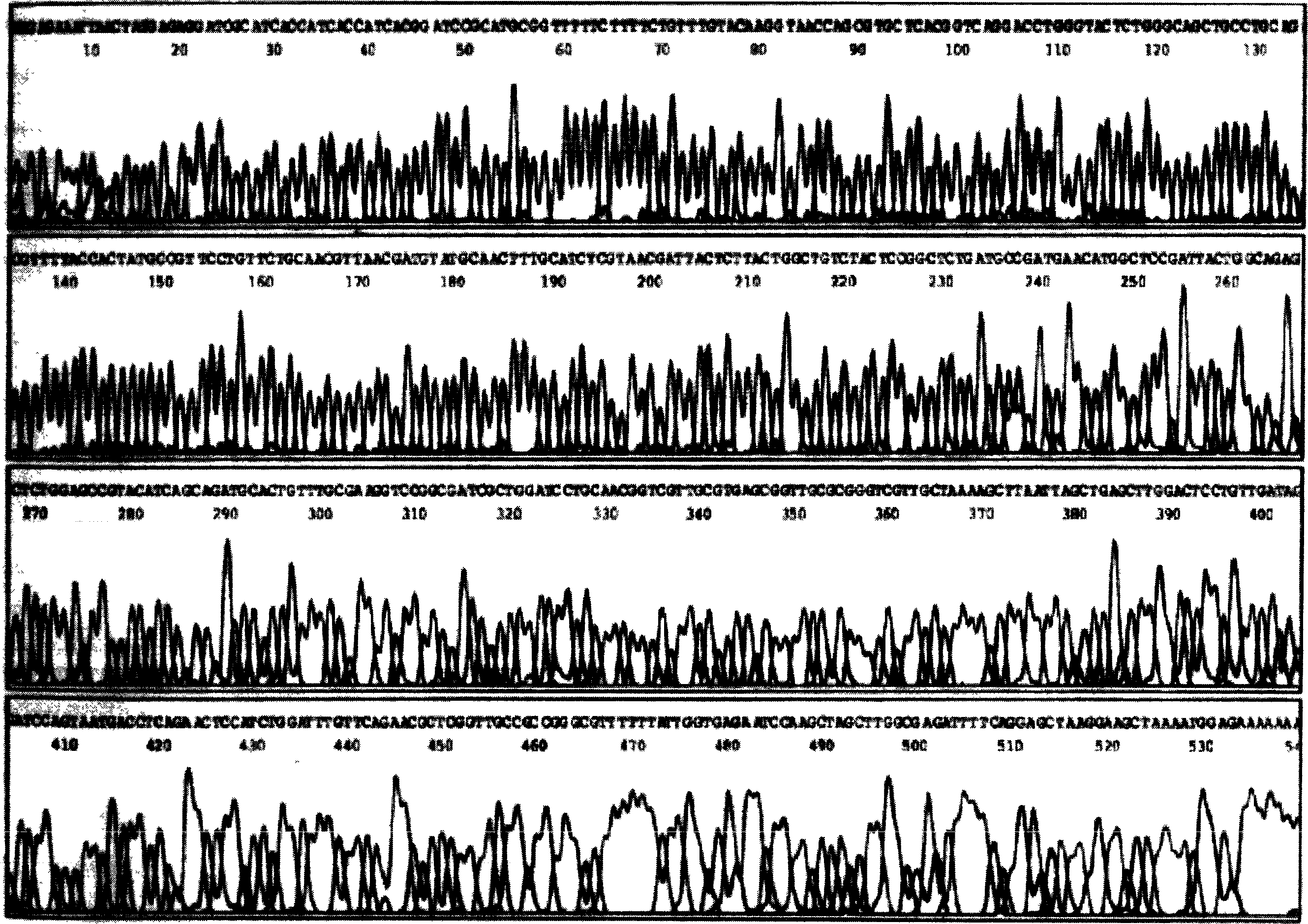
Figure 1 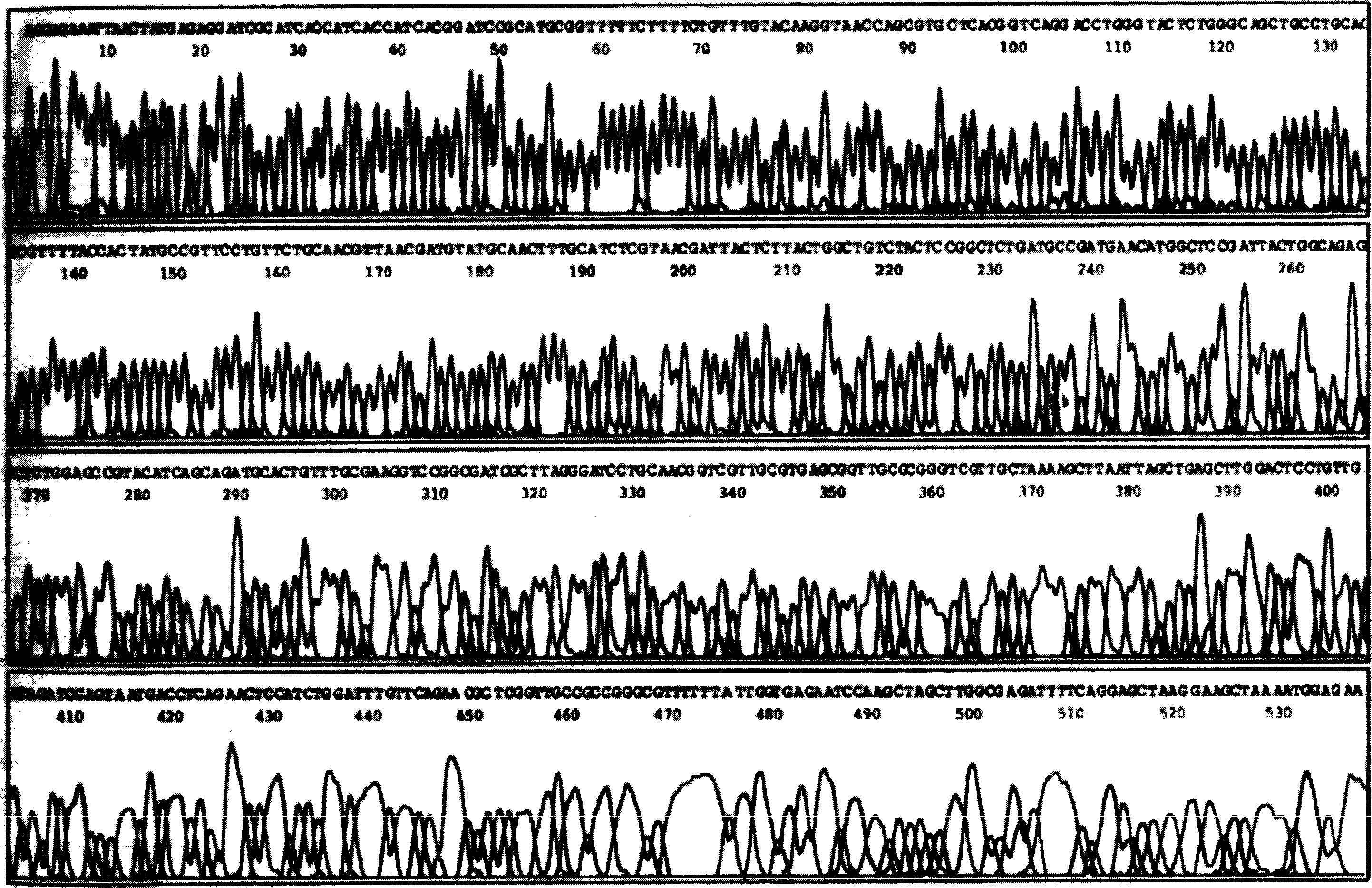
Figure 2 
Figure 3
Abstract
Description
technical field
[0001] The invention belongs to the field of medical biotechnology, including gene cloning, gene recombination, expression of exogenous gene in prokaryotic cells, purification of target protein, in vitro activity measurement and physicochemical analysis of tumor neovascularization-specific binding polypeptide and recombinant human Tum-5 fusion protein Character identification and other technologies relate to an anti-tumor drug and its preparation method, in particular to a tumor neovascularization-specific binding polypeptide capable of specifically binding to tumor tissue neovascularization endothelial cells and tumor cells and a recombinant human Tum-5 fusion protein (Tum -5-NGR) and its preparation method. Background technique
[0002] The application of the targeting peptide NGR has been introduced in detail in the patent "Tumor Angiogenesis-Specific Binding Polypeptide and Human α-Interferon Fusion Protein and Preparation" (pa...
Examples
Embodiment Construction
[0056] 1. Construction of Tum-5 and Tum-5-NGR His fusion gene prokaryotic expression vector
[0057] 1.1 Construction of prokaryotic expression vector of Tum-5His fusion gene
[0058] According to the human Tum-5 gene sequence published in GenBank, the codons encoding Tum-5 amino acids were replaced with codons commonly used in Escherichia coli (which is conducive to the high-efficiency expression of the target protein in Escherichia coli), and the codon was handed over to Shanghai Boya Biotechnology Co., Ltd. The company synthesized the whole gene, introduced the SphI restriction site upstream and the HindIII restriction site downstream, and cloned the target gene into the vector pMD-18T, named pMD-18T-Tum-5.
[0059] After pMD-18T-Tum-5 was double-digested with SphI and HindIII, small fragments were recovered; after plasmid pQE30 (product of Qiagen Company) was double-digested with SphI and BamH1, large fragments were recovered. The above two fragments were ligated with T4 ...