
Dual-polarized fractal antenna feed architecture employing orthogonal parallel-plate modes
a parallel plate mode and antenna feed technology, applied in the direction of polarised antenna unit combinations, antenna details, antennas, etc., can solve the problems of large upfront and operational costs, huge challenges, and increased installation costs of antennas, and achieve low-cost construction, excellent radiation characteristics, and high efficiency
- Summary
- Abstract
- Description
- Claims
- Application Information
AI Technical Summary
Benefits of technology
Problems solved by technology
Method used
Image

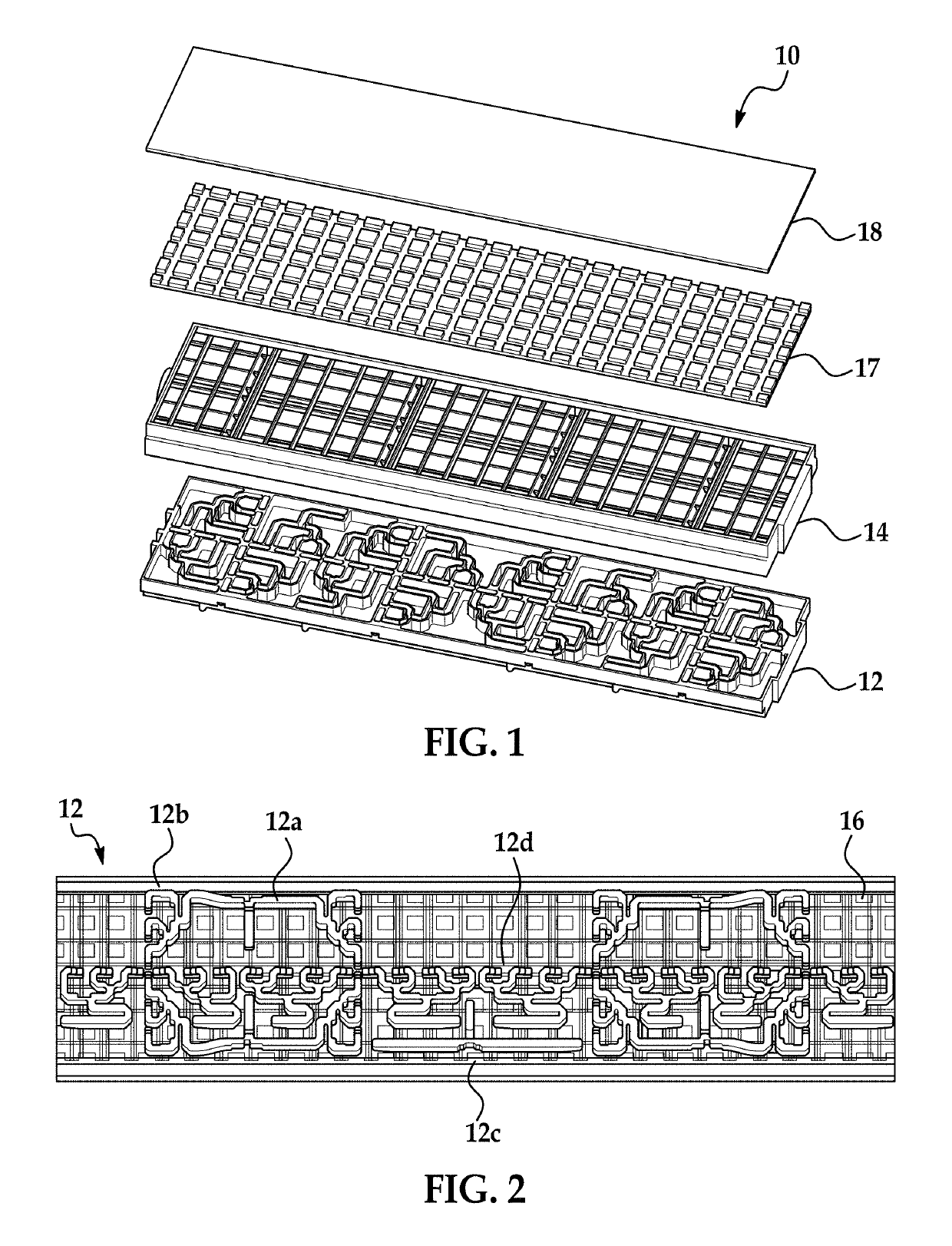
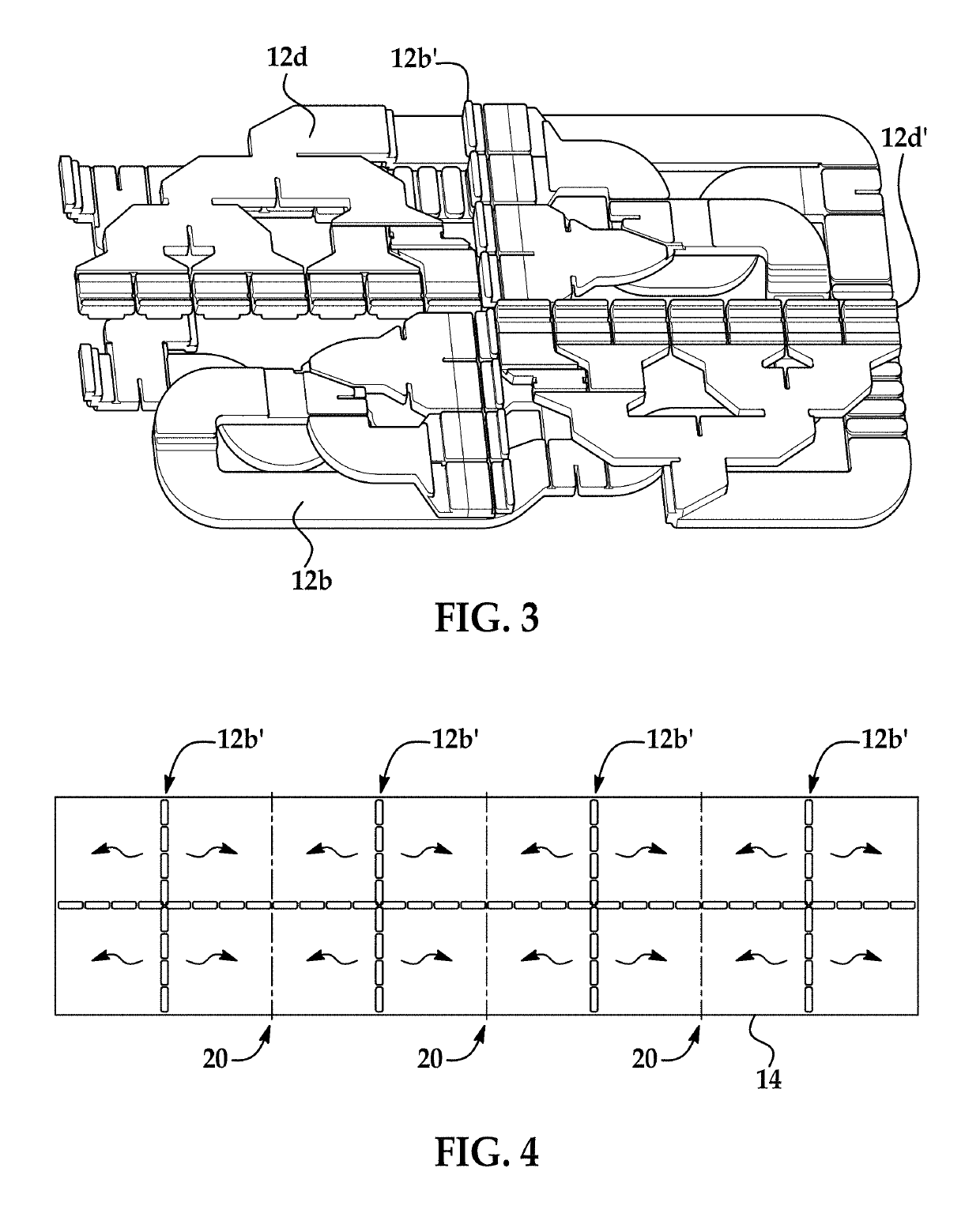
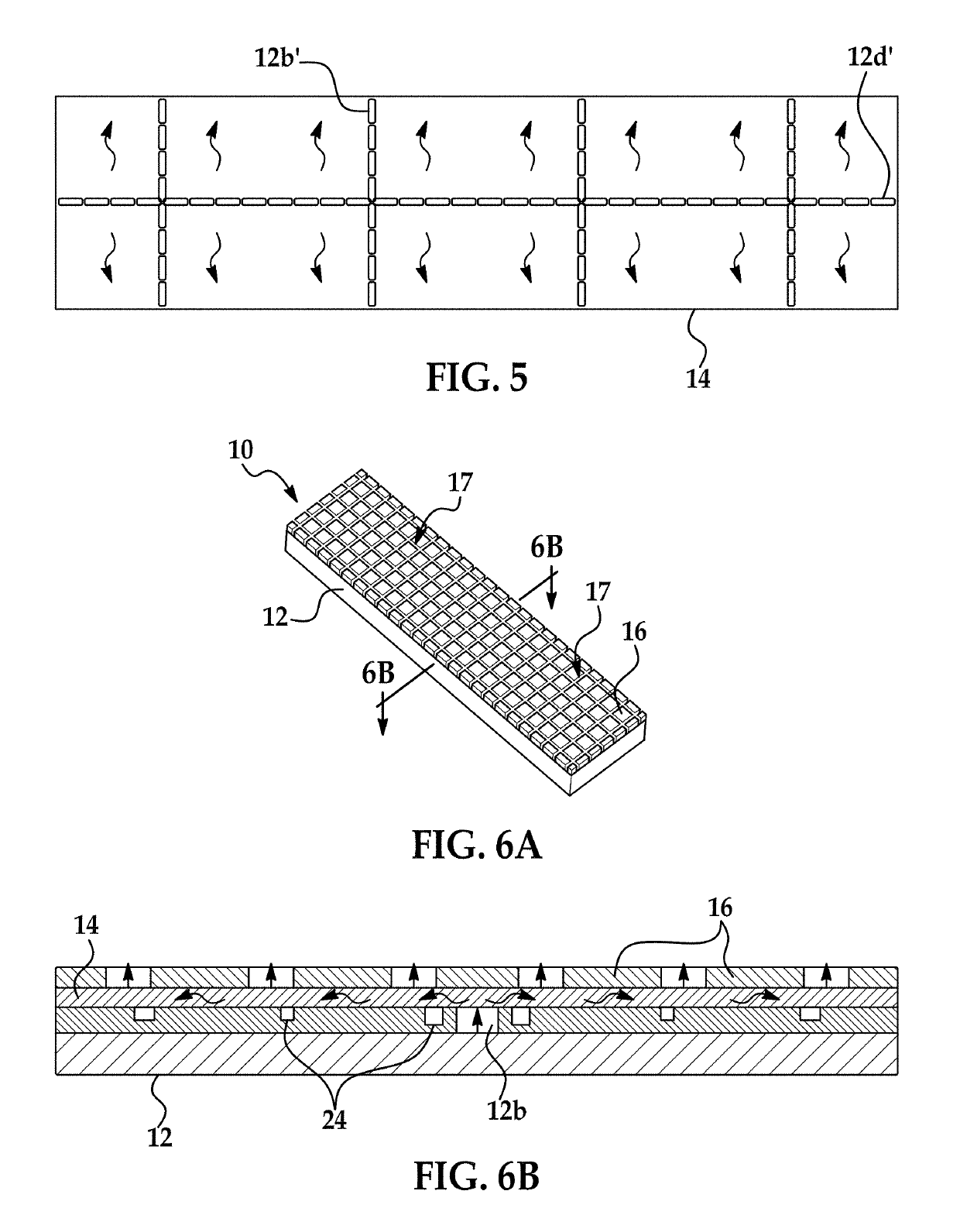
Examples
Embodiment Construction
[0039]An antenna in accordance with the present invention utilizes CTS technology to provide improved performance efficiencies and greater integration potential than conventional antenna elements. An antenna employing a CTS structure can make full use of a common active antenna area while supporting both Tx and Rx operating bands, leading to improved area efficiency, narrower antenna beamwidths and better adjacent satellite interference (ASI) performance. Further, CTS radiating and feeding structures are scalable in size to cover wideband frequency spectrums as needed. CTS antenna technology also enables cleaner, grating-lobe-free radiation patterns that can help reduce ASI.
[0040]Most antenna platforms are space-constrained and thus stacking separate Tx and Rx antennas to fit within a given footprint often leads to shadowing effects and integration issues. The poor area utilization arising from stacked or separate apertures also can lead to reduced antenna gain, larger GeoPlane beam...
PUM
 Login to View More
 Abstract
Description
Claims
Application Information
 Login to View More