
Exoskeleton cartridge case design for LW 30MM ammunition
a cartridge case and cartridge technology, applied in the field of insensitive munitions, can solve the problems of inacceptable detonation (type-i reaction), and achieve the effect of relieving internal round pressur
- Summary
- Abstract
- Description
- Claims
- Application Information
AI Technical Summary
Benefits of technology
Problems solved by technology
Method used
Image

Examples
example 1
Combustible Vent Plug
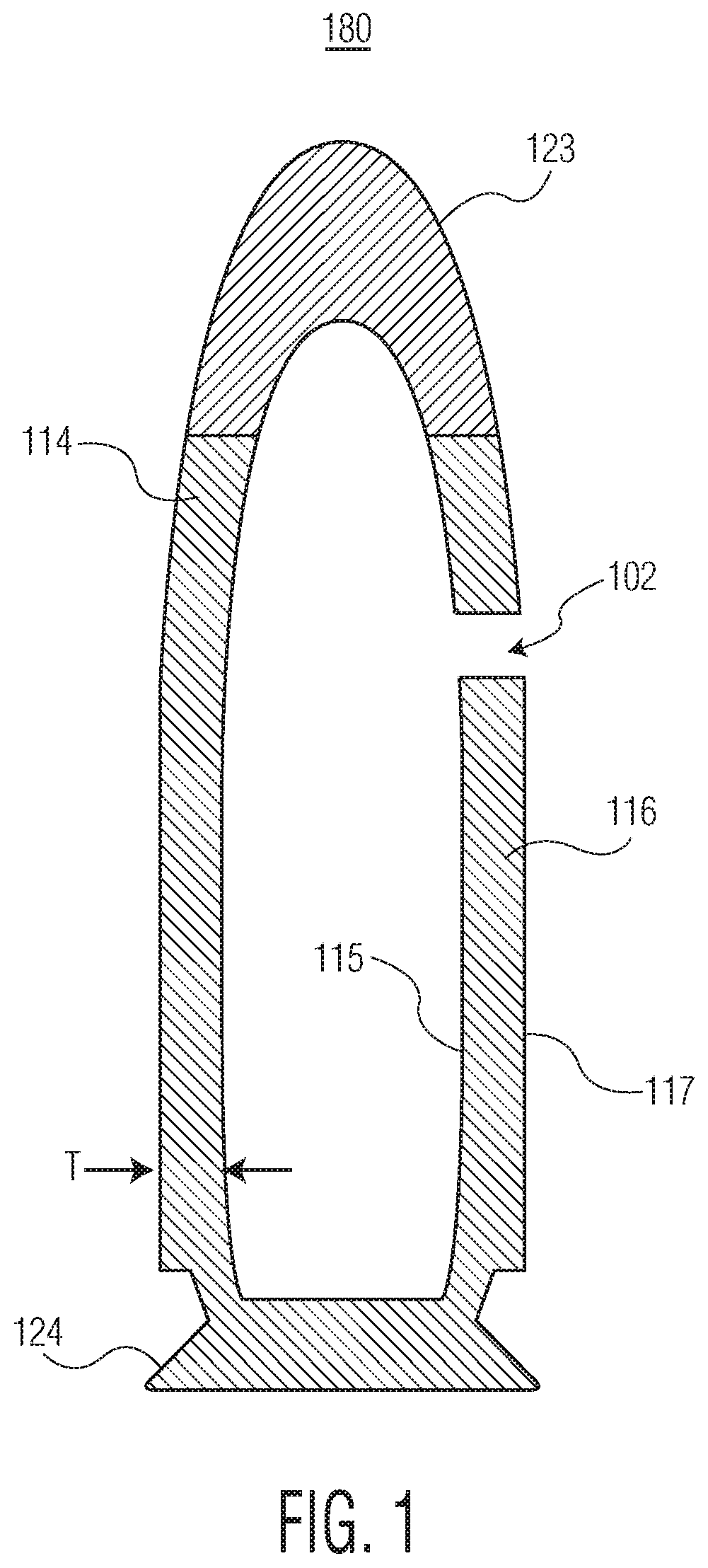
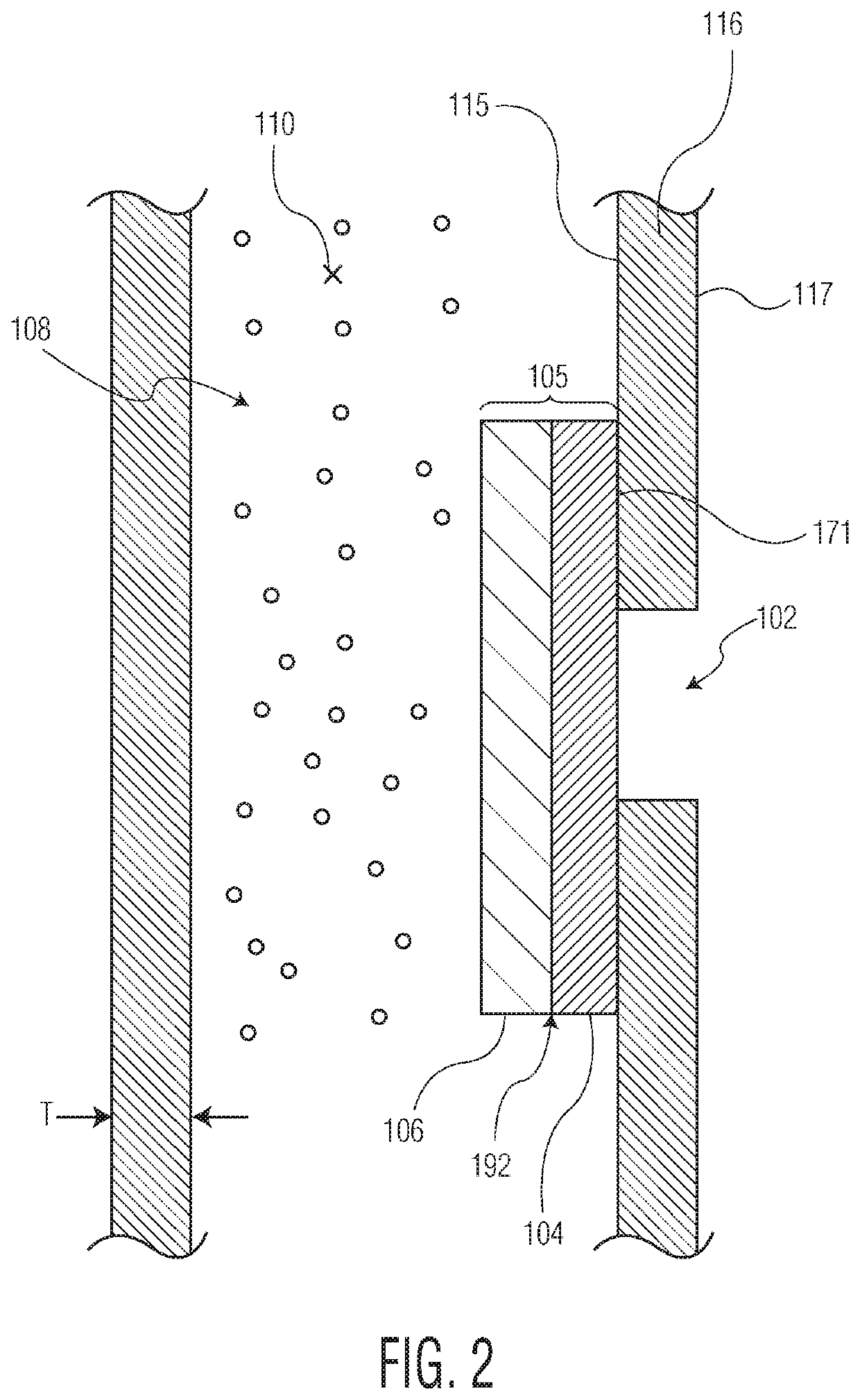
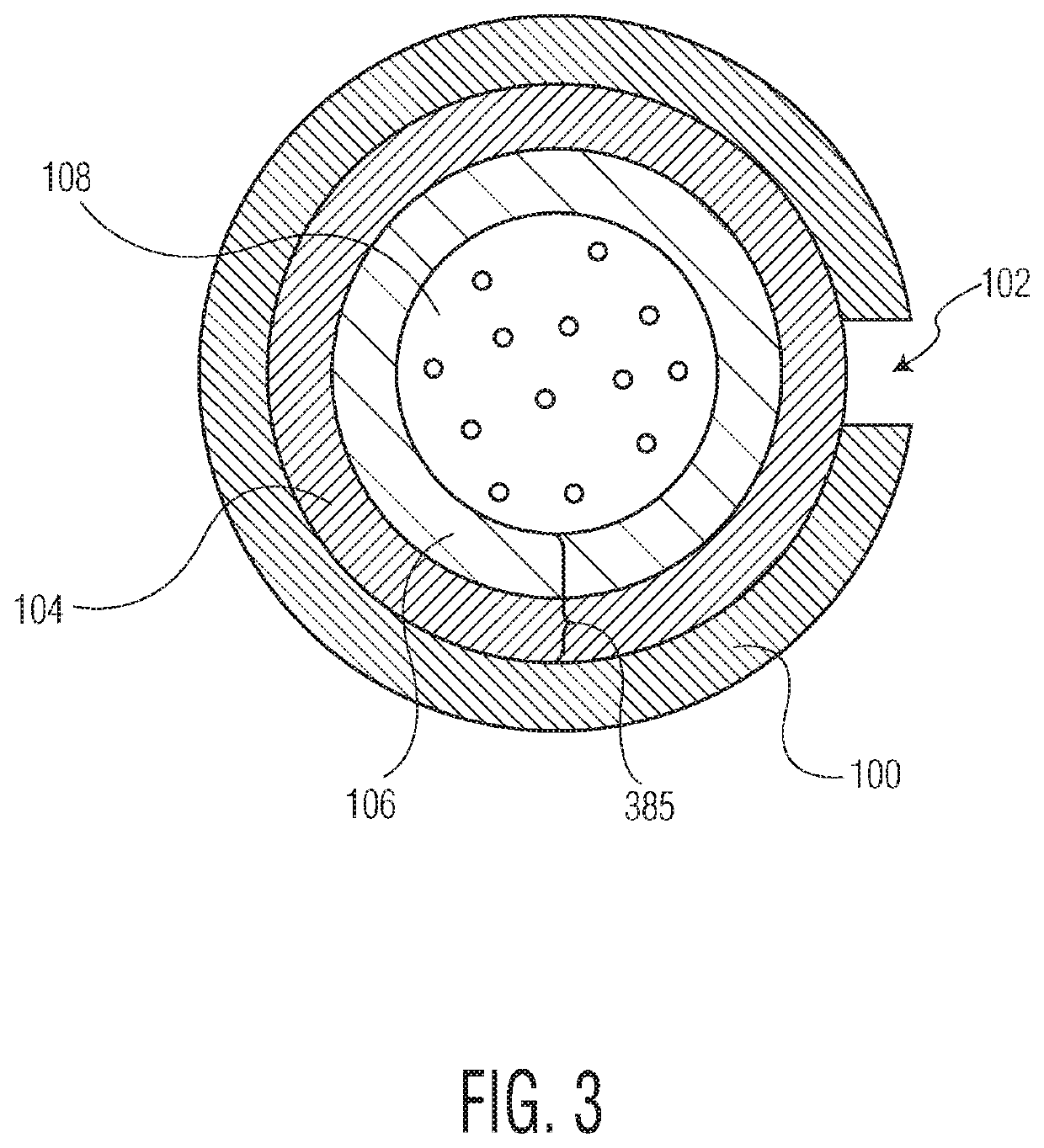
[0027]The laminated combustible vent plug consists of two layers, one of which is a material which can withstand the high temperatures found inside of a barrel or firing chamber but by itself is unable to contain any pressure, and a secondary material which is able to contain pressure during normal storage and handling environments but which becomes compromised during high temperature environments.
[0028]This plug provides the following benefits. A layer of material is located within the vent hole of a munitions container. The material is on its own so thin or weak that it is unable to retain pressure. As a consequence, it is likely unable to withstand the forces of routine handling. However, the material needs to be able to withstand the high temperatures found within a barrel or firing chamber and be chemically compatible with any chemicals that a munition is expected to come in contact with. The combustible material may consist of or include in its make up nit...
example 2
ncept of Inert and Combustible Material Together
[0029]The following steps were taken to cover the venting windows using a hybrid concept, with a combination of an inert and combustible material. In this example, celluloid sheet was used as a combustible material. The following process covers the vent hole, but covers the entire vent location, making it flush from the outside of the cartridge. Identify the proper location on the cartridge case. Drill through the cartridge, from one side to another making it symmetric using the specific drill size. Smooth the edges of the cut metal. A solvent-wet celluloid mixture was prepared by mixing industrial grade (<12% nitrogen content), camphor, stabilizer, and Part A (resin) epoxy in acetone+ethyl alcohol solvent. The mixture was spread in a mold to remove solvent to form a film / sheet of roughly 0.2 mm in thickness. An inert material such as polycarbonate (or Radel R-5000, etc.), non-combustible material, of 0.2 mm in sheet thickness was pre-...
example 3
o Make the Venting Windows and Cover Using Combustible Materials
[0030]The following steps were taken to cover the venting windows using a combustible material. In this example, celluloid sheet was used as a combustible material. The following process covers the vent hole, but does not cover the entire vent location, not making it flush from the outside of the cartridge. Identify the proper location on the cartridge case. Drill through the cartridge, from one side to another making it symmetric using the specific drill size. Smooth the edges of the cut metal. Celluloid sheet of known thickness and length was precisely cut into square dimensions; not too long that the sheet interferes with the projectile end, which gets inserted and crimped into the cartridge round. A known amount of Krazy-glue or adhesive or epoxy was used on one side of each square cut-away. The glue side of each celluloid sample is bonded on the inside of the cartridge, covering the vent holes through the opening o...
PUM
 Login to View More
 Abstract
Description
Claims
Application Information
 Login to View More