
Enhanced field emission from carbon nanotubes mixed with particles
a carbon nanotube and enhanced field technology, applied in the direction of electric discharge tube/lamp manufacturing, liquid/solution decomposition chemical coating, discharge tube luminescnet screen, etc., can solve the problems of poor growth uniformity, impede the utilization of low-temperature and generally inexpensive substrate materials, and none can practically deposit carbon nanotubes over large areas
- Summary
- Abstract
- Description
- Claims
- Application Information
AI Technical Summary
Benefits of technology
Problems solved by technology
Method used
Image

Examples
example 1
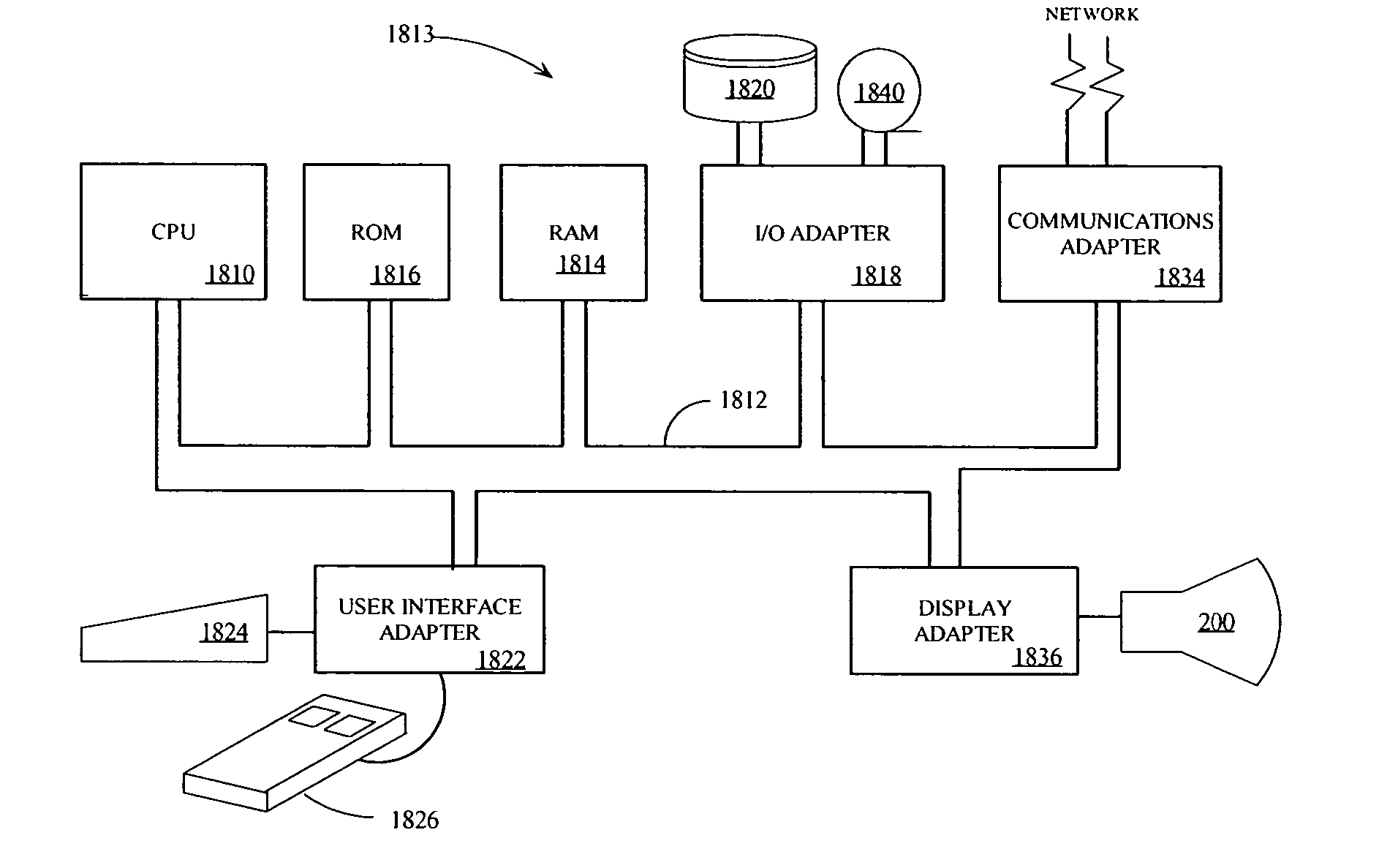
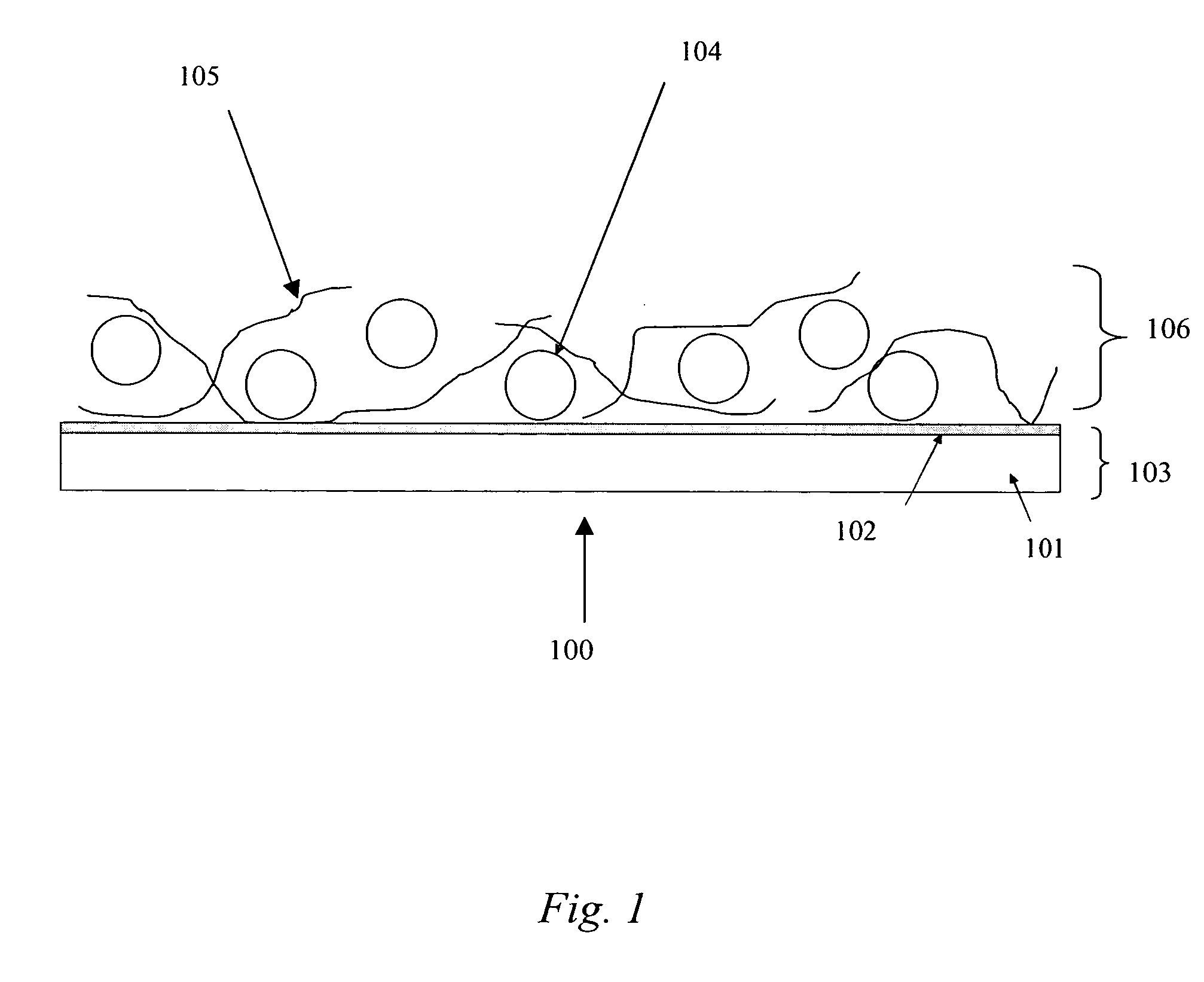
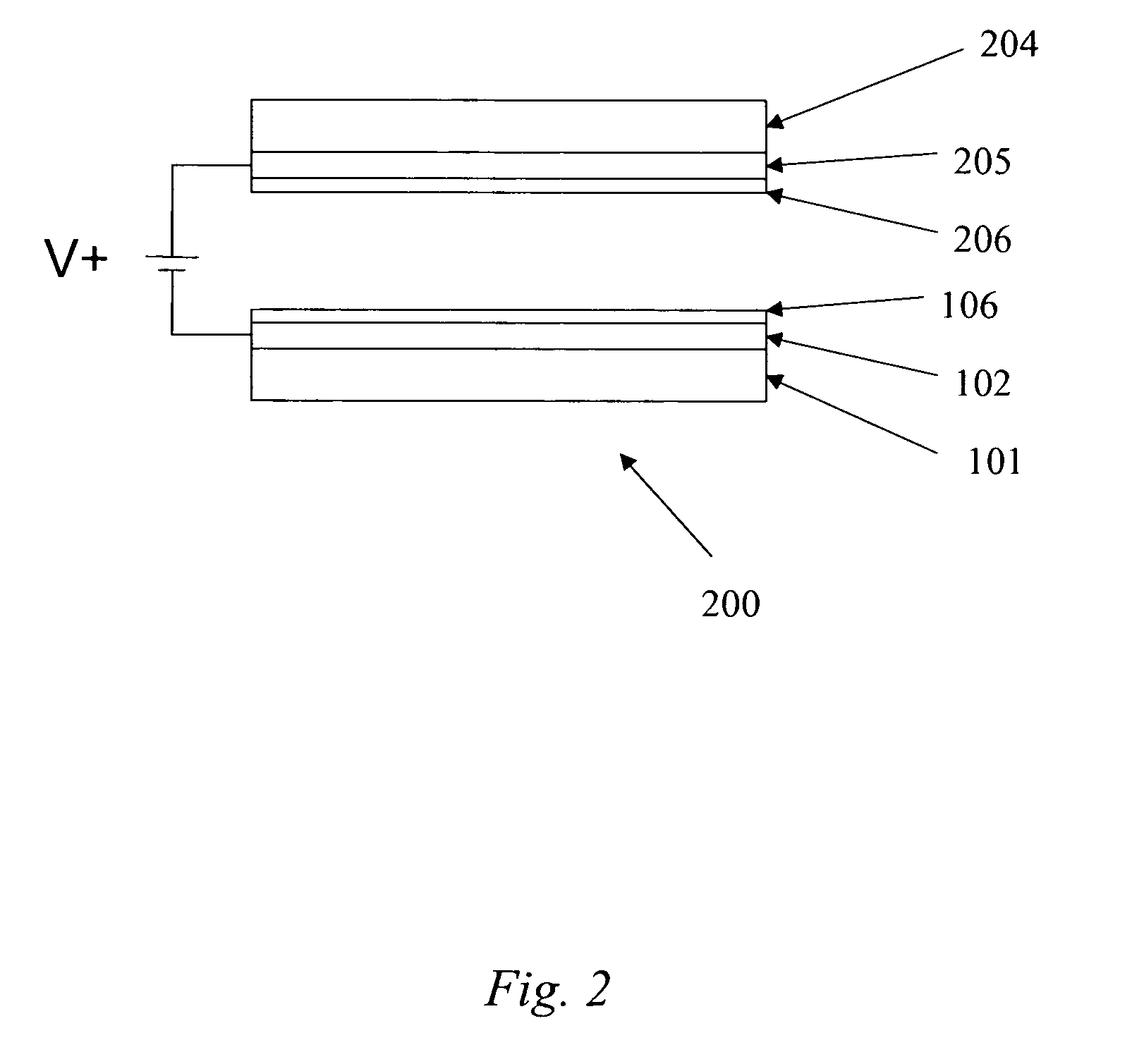
[0055] This example illustrates an embodiment of the present invention, wherein SWNTs are mixed with alumina (Al.sub.2O.sub.3) nanoparticles to achieve an appropriate density, and then applied to a substrate and used as the cathode in a field emission display (see FIGS. 2 and 13). A detailed example of this embodiment is given in an effort to better illustrate the invention.
[0056] SWNTs were obtained from CarboLex, Inc., Lexington, Ky., USA. These SWNTs were about 1-2 nm in diameter and about 5-20 .mu.m in length. For the purposes of this example, it will be understood that SWNTs are simply a subset of CNTs and that in many cases the terms can be used interchangeably. Al.sub.2O.sub.3 nanoparticles were obtained from Alfa Aesar, Ward Hill, Mass., USA. The nanoparticles are as small as 10-20 nm with a purity of 99.98%.
[0057] A simple ball mill was used to grind SWNT bundles. FIG. 3 is an illustrative diagram of this ball mill. The milling rate of this machine is on the order of about ...
example 2
[0063] This example illustrates how activation processes are used to further enhance the field emission properties of the cathode of the present invention.
[0064] In an earlier disclosure (commonly assigned, co-pending U.S. patent application Ser. No. 10 / 269,577, filed Oct. 11, 2002, incorporated herein by reference), a process of "activating" the CNT film by applying an adhesive tape material to the film and then pealing the adhesive tape away was described. This also has the effect of lowering the density of the CNT fibers. This activation process was tried in combination with the CNT / alumina powder mixture described above. The results were consistent.
[0065] After a mixture of SWNTs and Al.sub.2O.sub.3 is sprayed onto a substrate, an adhesive tape process was used to remove the top layer of the materials on the surface. In this method, clear tape was used to remove the mixture, although it is likely that there are many brands and varieties of adhesive tape that can be used with sim...
example 3
[0067] This example illustrates some embodiments of the present invention which utilize clay particles.
[0068] As stated earlier, particles may be nanoparticles and they may also include porous materials such as porous silicon or one of several varieties of zeolite minerals. These particles may also include layered materials, such as clay particles. Examples of clays include, but are not limited to laponite, bentonite or hectorite. Clays are layered materials with spaces between the layers that can absorb water molecules or positive and negative ions (cations or anions) and undergo exchange interaction of these ions with solvents. Clays have very unique properties. When they are dried, the molecules or ions between the layers can come out, the gaps between the layers can close and the layer stack can shrink significantly. Correspondingly, when the clay particles are rehydrated, as shown in FIG. 13, the space between the clay particle layers 1301 expands.
[0069] Clay particles disperse...
PUM
| Property | Measurement | Unit |
|---|---|---|
| thickness | aaaaa | aaaaa |
| diameters | aaaaa | aaaaa |
| diameters | aaaaa | aaaaa |
Abstract
Description
Claims
Application Information
 Login to View More