
System and method for performing processing in a testing system
a testing system and processing technology, applied in the field of test systems, can solve the problems of non-deterministic test, high total cost of ate systems, and inability to adapt to mass production, so as to improve the hardware associated with a tester more easily, the application is more easily created, and the effect of improving the hardwar
- Summary
- Abstract
- Description
- Claims
- Application Information
AI Technical Summary
Benefits of technology
Problems solved by technology
Method used
Image

Examples
programming example
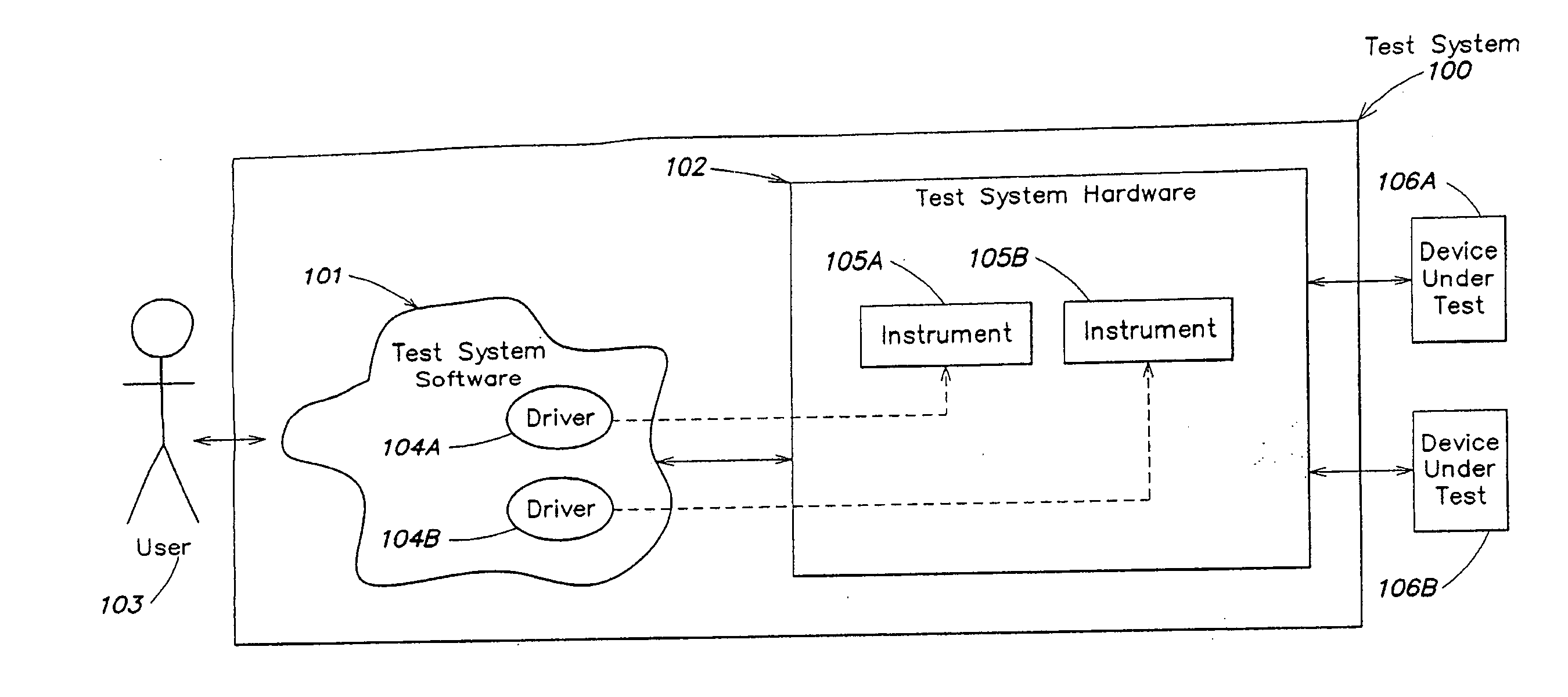
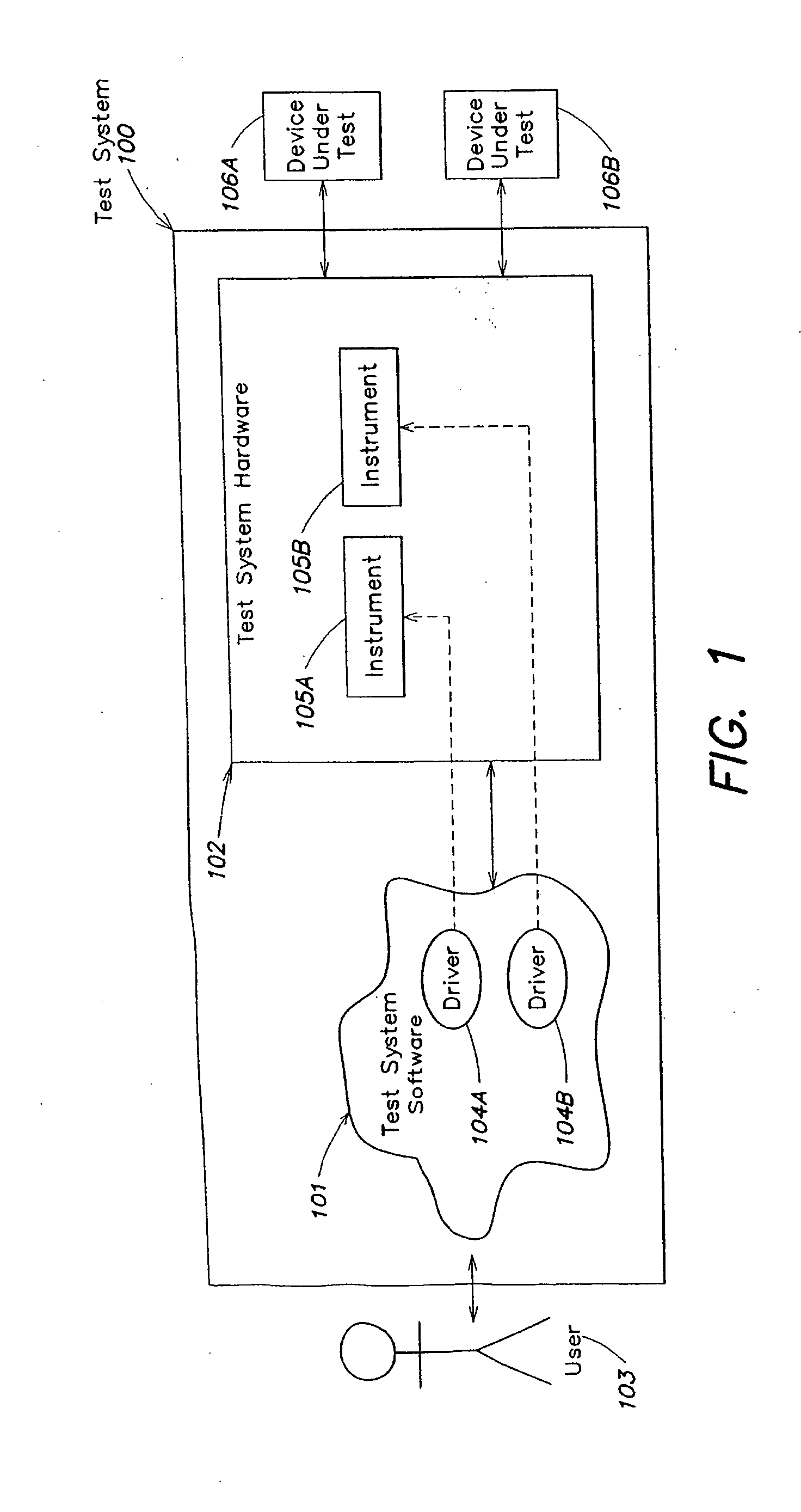
[0149] Instrument independence is an important feature of a test system architecture, according to one embodiment of the present invention. This feature allows independent improvements or modifications of each instrument without the need for coordinated simultaneous upgrades. In order to maintain this independence, the test system provides a system driver function via the system PI to manage the synchronization and triggering subsystem. In this scheme, the system PI acts as a mediator between instruments. The system PI manages the use and availability of signal lines, sets trigger connections and modes, and keeps delay information and does other housekeeping functions.
[0150] Starting with the user program or application (e.g., 901), the user program calls functions of the virtual multisite instruments (VMIs) which in turn call functions of the instrument physical drivers (or PIs). When PIs are created, they are provided access to the system PI for system level functions, calibratio...
PUM
 Login to View More
 Abstract
Description
Claims
Application Information
 Login to View More