3-D petri-dish for the culture and studies of cells

a cell culture and 3d technology, applied in the field of 3d petri-dish for the culture and study of cells, to achieve the effect of avoiding metabolite gradients and high mass exchang

US20090191631A1Inactive Publication Date: 2009-07-30BORNEMANN REIMHARD
6 Cites 56 Cited by

Patent Information

Authority / Receiving Office
US · United States
Patent Type
Applications(United States)
Current Assignee / Owner
Publication Date
2009-07-30
Estimated Expiration
Not applicable · inactive patent

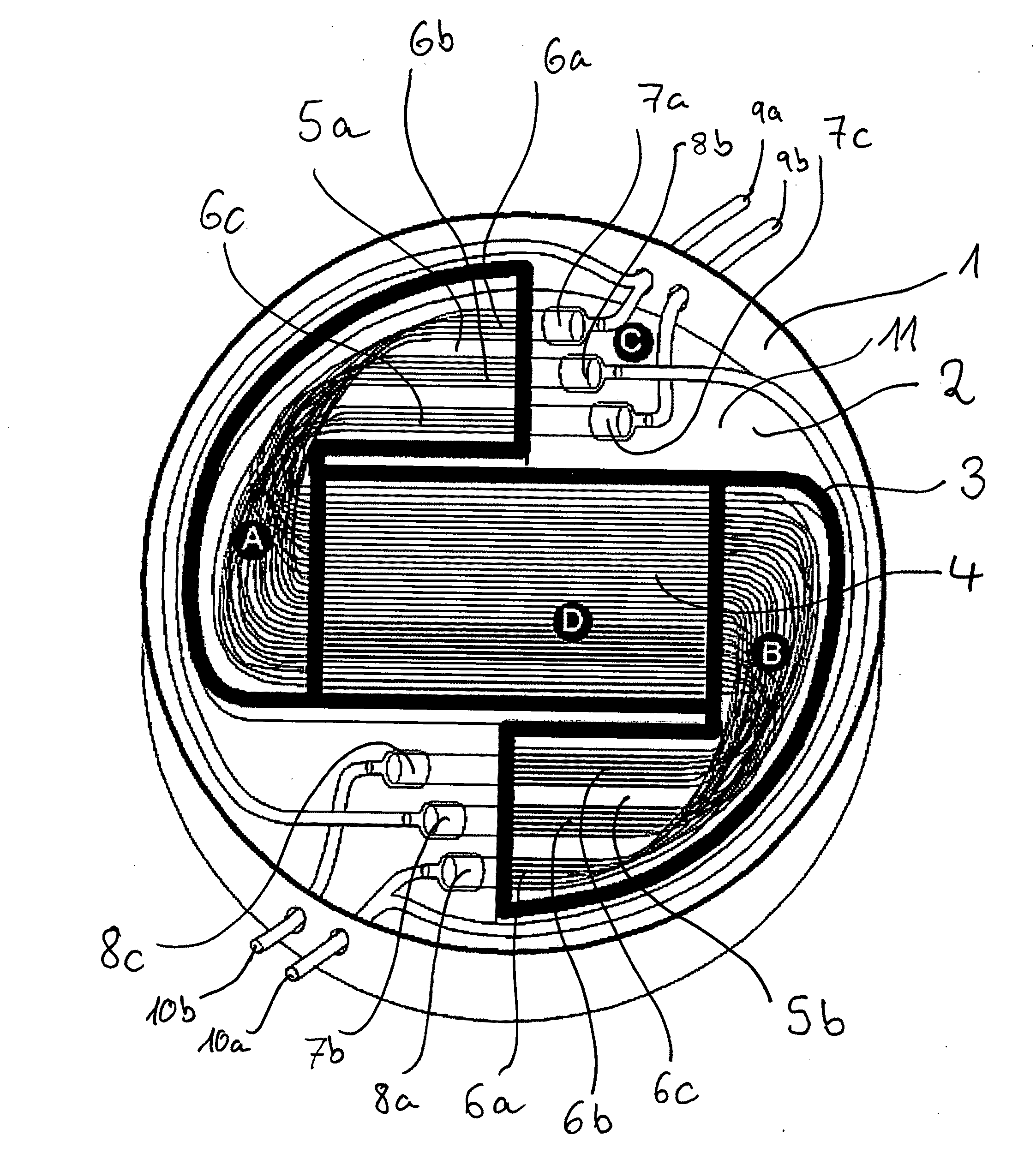
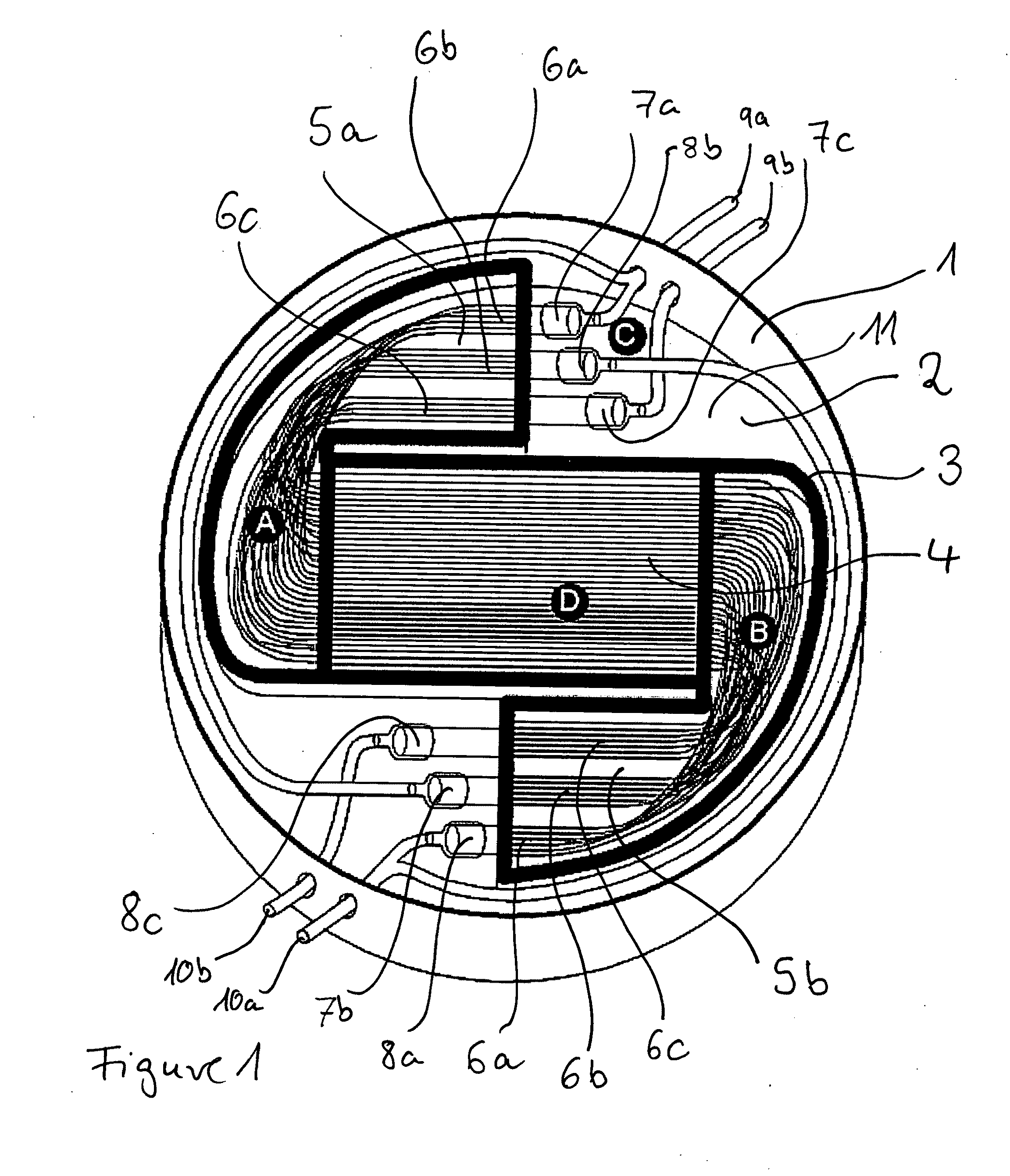
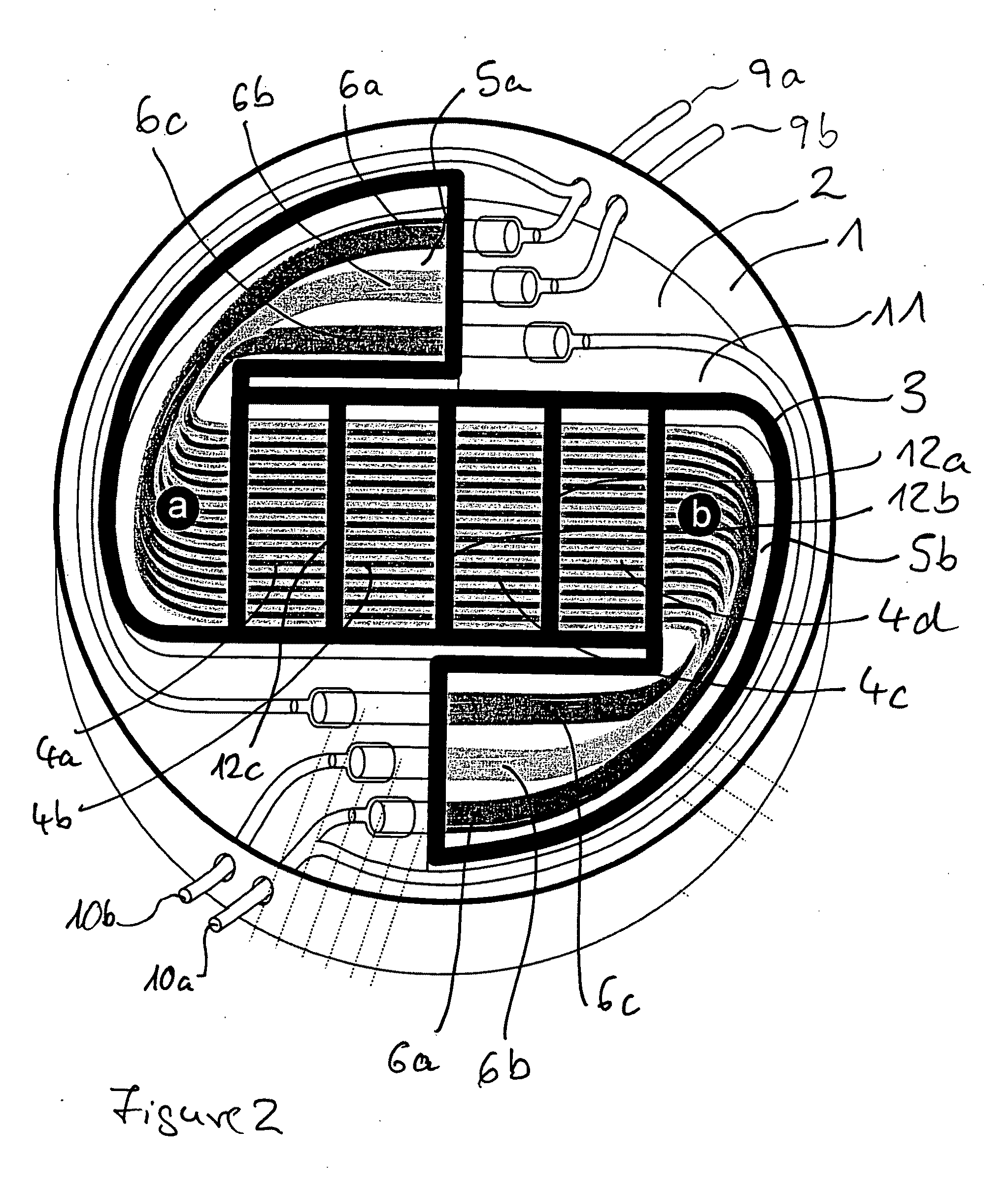
Smart Images

  • Figure 1
    Figure 1
  • Figure 2
    Figure 2
  • Figure 3
    Figure 3
Patent Text Reader

Abstract

A three-dimensional (3-D) culture “Petri-dish” for research in regenerative medicine, biotechnology and clinical translation is described. This 3-D perfusion culture dish is to advance in vitro culture tools from static 2-D to dynamic 3-D perfusion culture. Interwoven hollow fiber capillary membranes divide the “Petri-dish” culture space into a controllable 3-D pattern of different compartments, serving the functions of the organ's larger vasculature. These physically active scaffolds, which can be suitable for cell adhesion or cell aggregate immobilization, offer a supply of cells with high-performance mass exchange including gas supply and under perfusion conditions. In contrast to static and discontinuous medium supply, a dynamic culture can be achieved with continuous or alternating medium supply and integral oxygenation. They provide a more physiologic supply in the cell macro environment, including homeostasis of oxygen, pH, nutrition, soluble factors, and gradients of metabolites for the cells. Also, medium perfusion can be achieved. Consequently the invention was made for cultures at tissue density, especially stem cells and support cells, which strive to create their own stem cell niche.
Need to check novelty before this filing date? Find Prior Art

Description

FIELD OF THE INVENTION

[0001] Nature uses self-assembly, on the nano-micro- and macroscopic level to organize molecules and cells into complex tissues. Purpose of the invention was to provide a tool for in vitro cell culture research to study some of the involved physical and biological signals to recapitulate developmental and regenerative processes in cell-, tissue- and organ specific differentiation and morphogenesis. This is of special interest for in vitro stem cell culture.BACKGROUND

[0002] Stem cells divide into daughter cells that divide into tissue-typical cells, the first daughter cell divides into tissue-typical cells and the second cell retains the stem cell character and remains at the place of origin.

[0003] To better understand the control of stem cell differentiation and in vitro proliferation, several areas of research are of interest. Numerous groups are studying signaling at the cellular level. Most experience was gained studying soluble factor- and receptor interaction...

Examples

example

[0091]A production process for one embodiment of a modified Petri-dish according to the invention was developed. This example is illustrated in FIGS. 4, 5 and 6. The example leads to a culture dish with four circular culture spaces. This example compares to FIG. 3, except that the modified culture dish in FIG. 3 represents six culture spaces. The outer diameter of the produced embodiment is 140 mm, the height is 20 mm; each of the resulting four culture spaces exhibit an inner diameter of 25 mm.

[0092]FIG. 4 shows a perspective view of the core used to produce a mold for manufacturing the inner block of one embodiment of the modified culture dish. As a result of using that core, producing a mold and manufacturing the inner block with that mold, a structure for the casting of capillary membranes with three hollow fiber membrane systems was prepared. This facilitated production of the modified culture dish. This structure was filled with oxygenation hollow fiber membranes (Oxy+, Membra...