Pressure cascaded two-stage hydrocracking unit

a two-stage hydrocracking and pressure cascade technology, applied in the direction of hydrocarbon oil treatment, metal/metal-oxide/metal-hydroxide catalyst, molecular sieve catalyst, etc., can solve the problems of increased equipment expenditure, increased capital investment and manpower, and low product yield and quality. , to achieve the effect of enhancing hydrocracking, reducing equipment expenditure, and reducing capital investmen

US20110079541A1Active Publication Date: 2011-04-07SAUDI ARABIAN OIL CO
14 Cites 24 Cited by

Patent Information

Authority / Receiving Office
US · United States
Current Assignee / Owner
Publication Date
2011-04-07

Smart Images

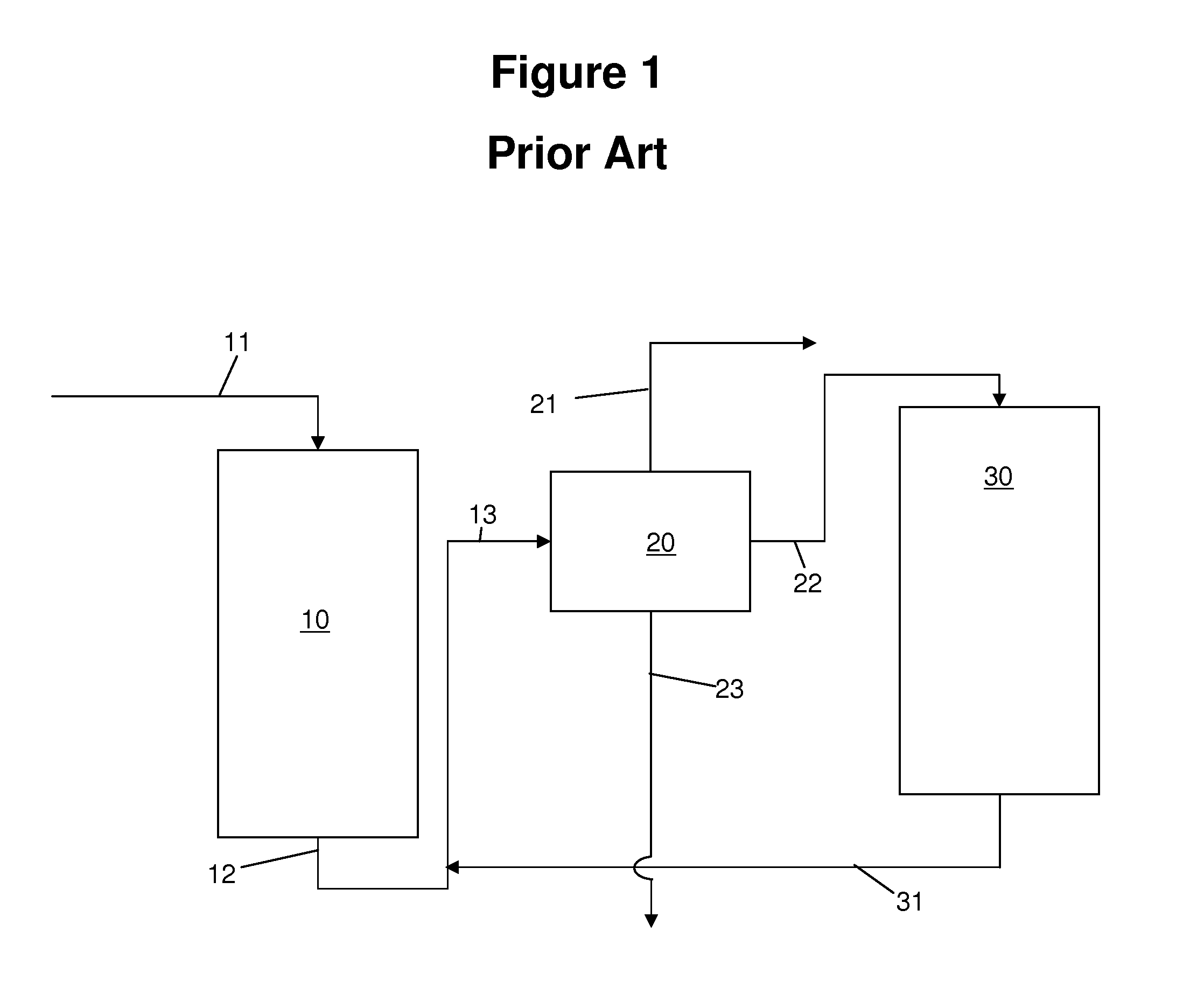
  • Figure 1
    Figure 1
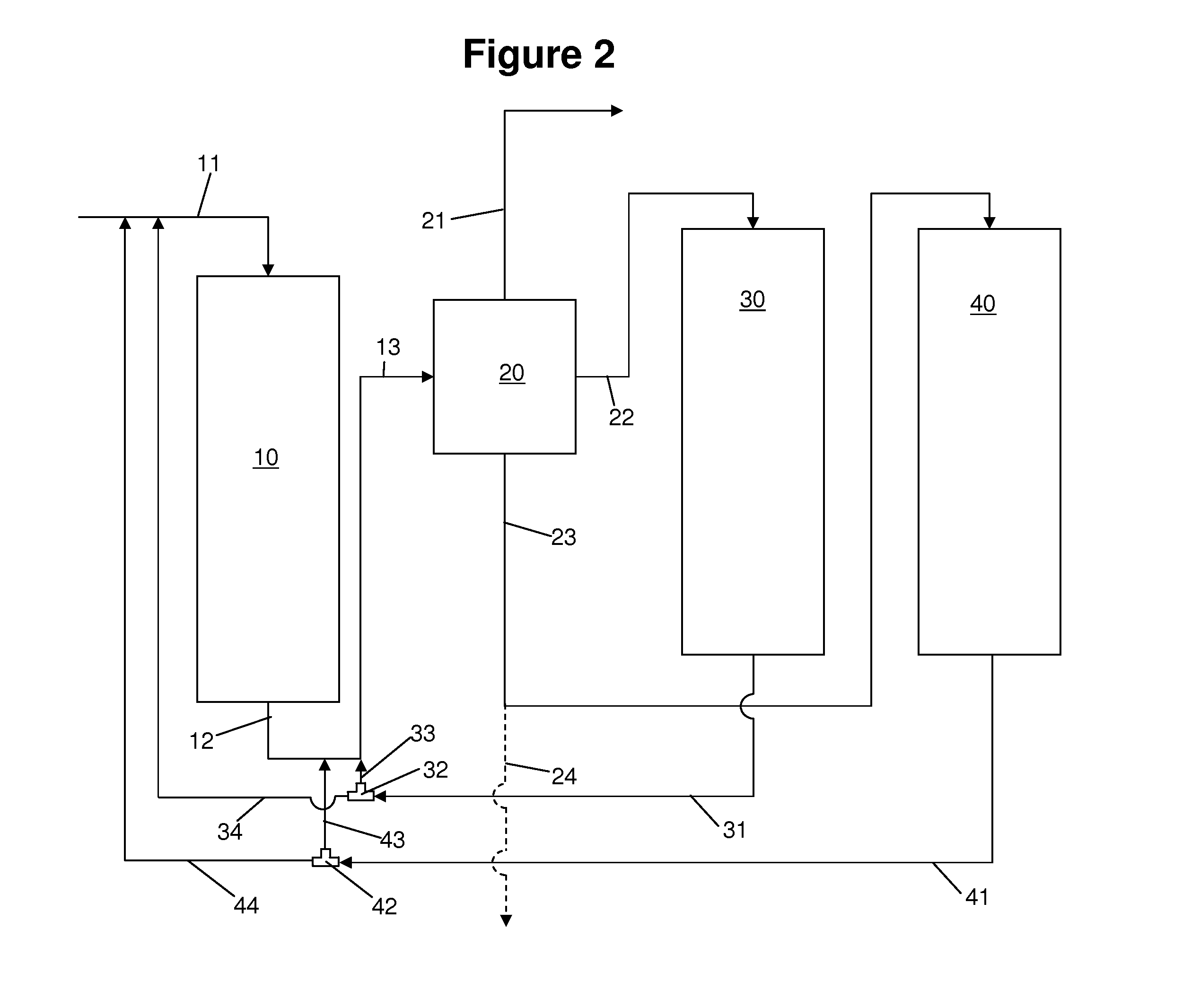
  • Figure 2
    Figure 2
  • Figure 3
    Figure 3
Patent Text Reader

Abstract

A method and apparatus for hydrocracking an oil feedstock to produce a light oil stream without build-up of heavy polynuclear aromatic (HPNA) hydrocarbons in the recycle stream is provided. The method includes the steps of (1) hydrocracking the oil feedstock with a hydrotreating catalyst in a first reactor to produce an effluent stream; (2) fractionating the effluent stream into first, second and third product streams, wherein the first product stream includes C1-C4, naphtha and diesel boiling in the range of 36-370° C., the second product stream includes hydrocarbon components with an initial nominal boiling point of 370° C. and a final boiling point ranging from 420-480° C., and the third product stream that includes HPNA hydrocarbons and other hydrocarbons boiling above about 420° C. to about 480° C., depending upon the final boiling point of the second product stream; (3) cracking the second product stream in a second reactor; and (4) cracking the third product stream in a third reactor at a higher operational pressure than the second reactor.
Need to check novelty before this filing date? Find Prior Art

Description

RELATED APPLICATIONS

[0001] Not applicable.BACKGROUND OF THE INVENTION

[0002] 1. Field of the Invention

[0003] This invention relates to an apparatus and a method for processing hydrocarbon by-products that include heavy polynuclear aromatics (HPNA) for the purpose of increasing the production of lighter hydrocarbon fuels, such as gasoline and diesel, in conjunction with the operation of a hydrocracking process.

[0004] 2. Description of Related Art

[0005] Hydrocracking processes are used commercially in a large number of petroleum refineries. They are used to process a variety of feeds boiling in the range of 370° C. to 520° C. in conventional hydrocracking units and boiling at 520° C. and above in the residue hydrocracking units. In general, hydrocracking processes split the molecules of the feed into smaller, i.e., lighter, molecules having higher average volatility and economic value. Additionally, hydrocracking processes typically improve the quality of the hydrocarbon feedstock by increa...

Examples

example

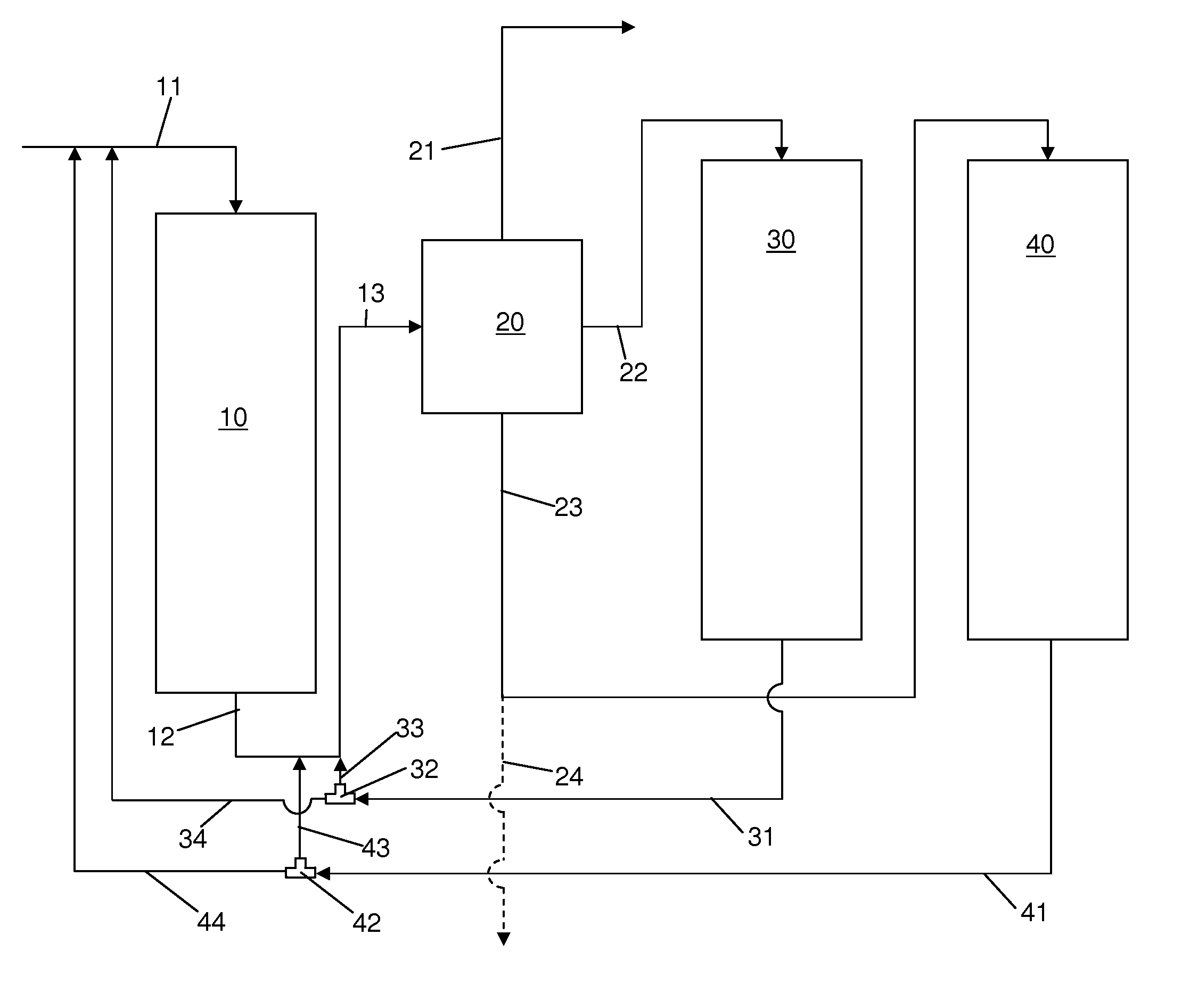
[0051]An apparatus having the configuration described and illustrated in FIG. 2 was provided. A feedstock blend containing 15% by volume of demetalized oil (“DMO”) and 85% by volume of vacuum gas oil (“VGO”) has the distillation characteristics shown in Table 1. The feedstock was introduced at a rate of 300 m3 of feedstock over 1000 m3 of catalyst per hour and subjected to hydrocracking over a catalytic system of amorphous zeolite support catalyst promoted with Ni, W and Mo metals at various temperatures to obtain 30, 50 and 80 volume % conversion of hydrocarbons boiling above 370° C. at 125 kg / cm2 hydrogen partial pressure. The H2S, NH3 and light gases were separated from the reactor effluent and the effluent fractionated into two fractions. The cut point between the fractions was varied at 20° C. intervals between 420° C. and 500° C. The lighter cut was sent to the second reactor 30 containing zeolite based cracking catalysts for further cracking. The bottom fraction containing th...