Ultrasound guided robot for flexible needle steering

a flexible needle and ultrasound technology, applied in the field of ultrasound guided robots for flexible needle insertion, can solve the problems of difficult to see the needle shaft, difficult to interpret such ultrasound images, and difficulty in resolving needles, so as to avoid radiation hazards, reduce costs, and be more general.

US20110112549A1Active Publication Date: 2011-05-12TECHNION RES & DEV FOUND LTD
17 Cites 49 Cited by

Patent Information

Authority / Receiving Office
US · United States
Patent Type
Applications(United States)
Current Assignee / Owner
Publication Date
2011-05-12

Smart Images

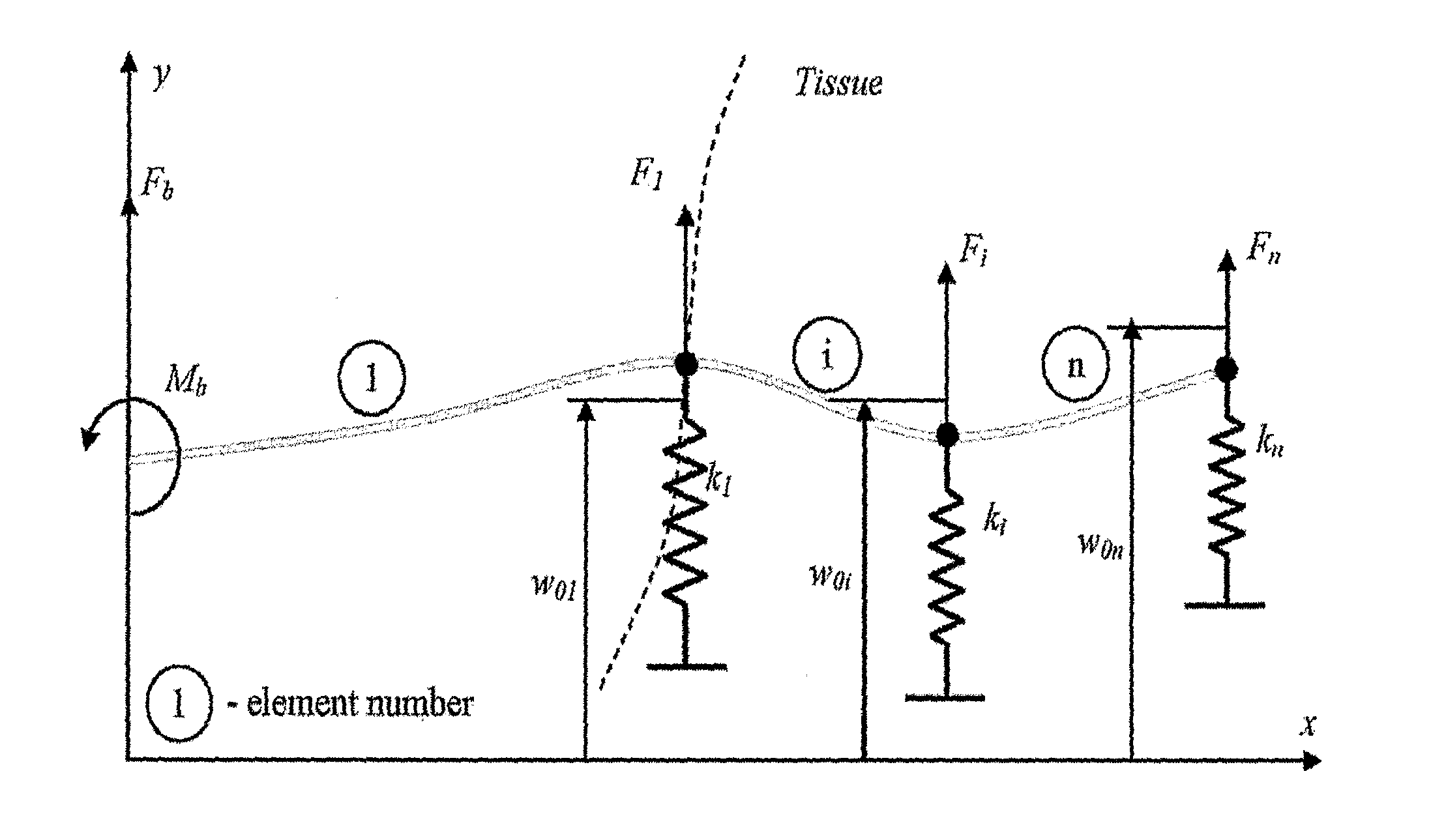
  • Figure 1
    Figure 1
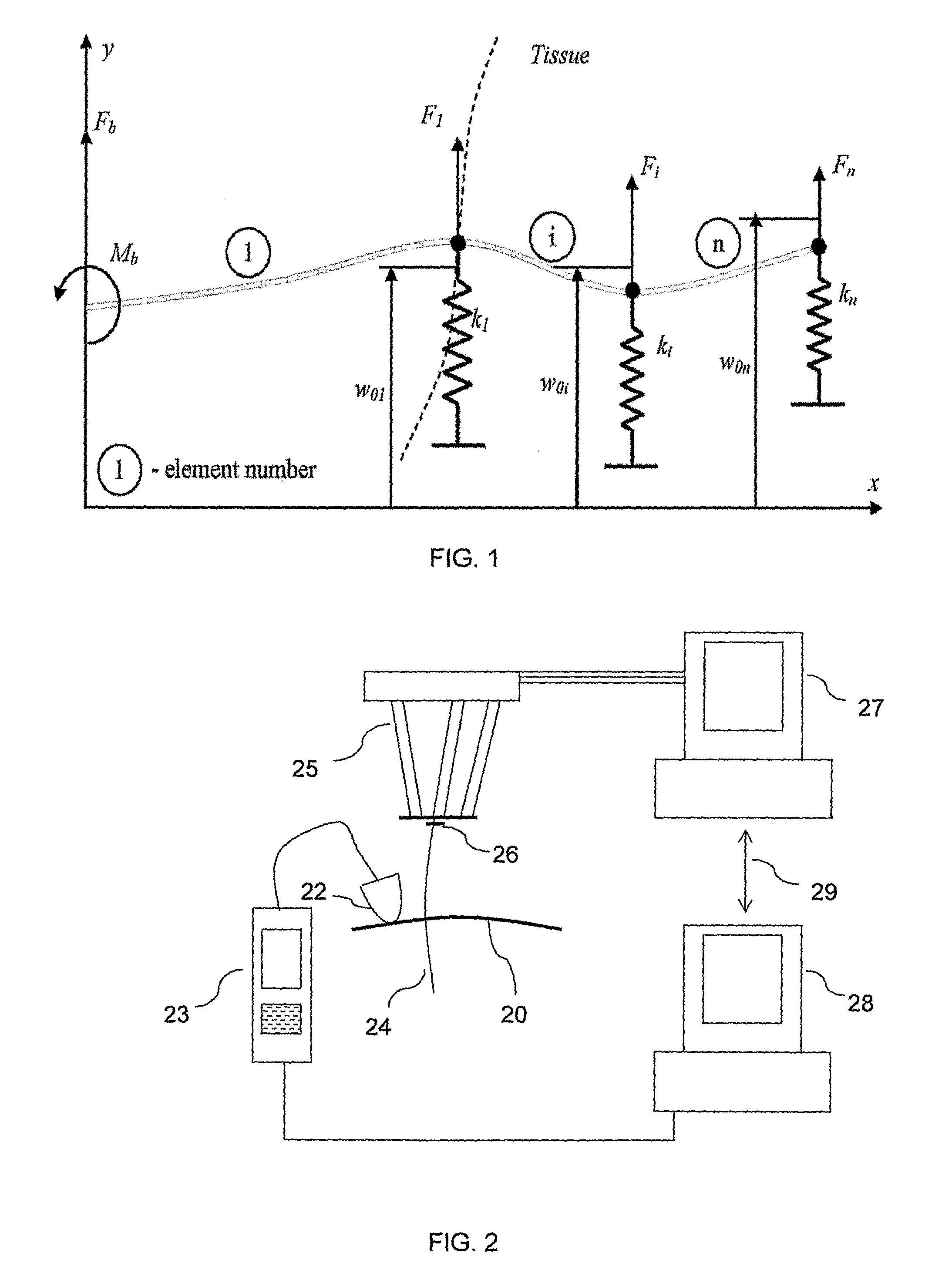
  • Figure 2
    Figure 2
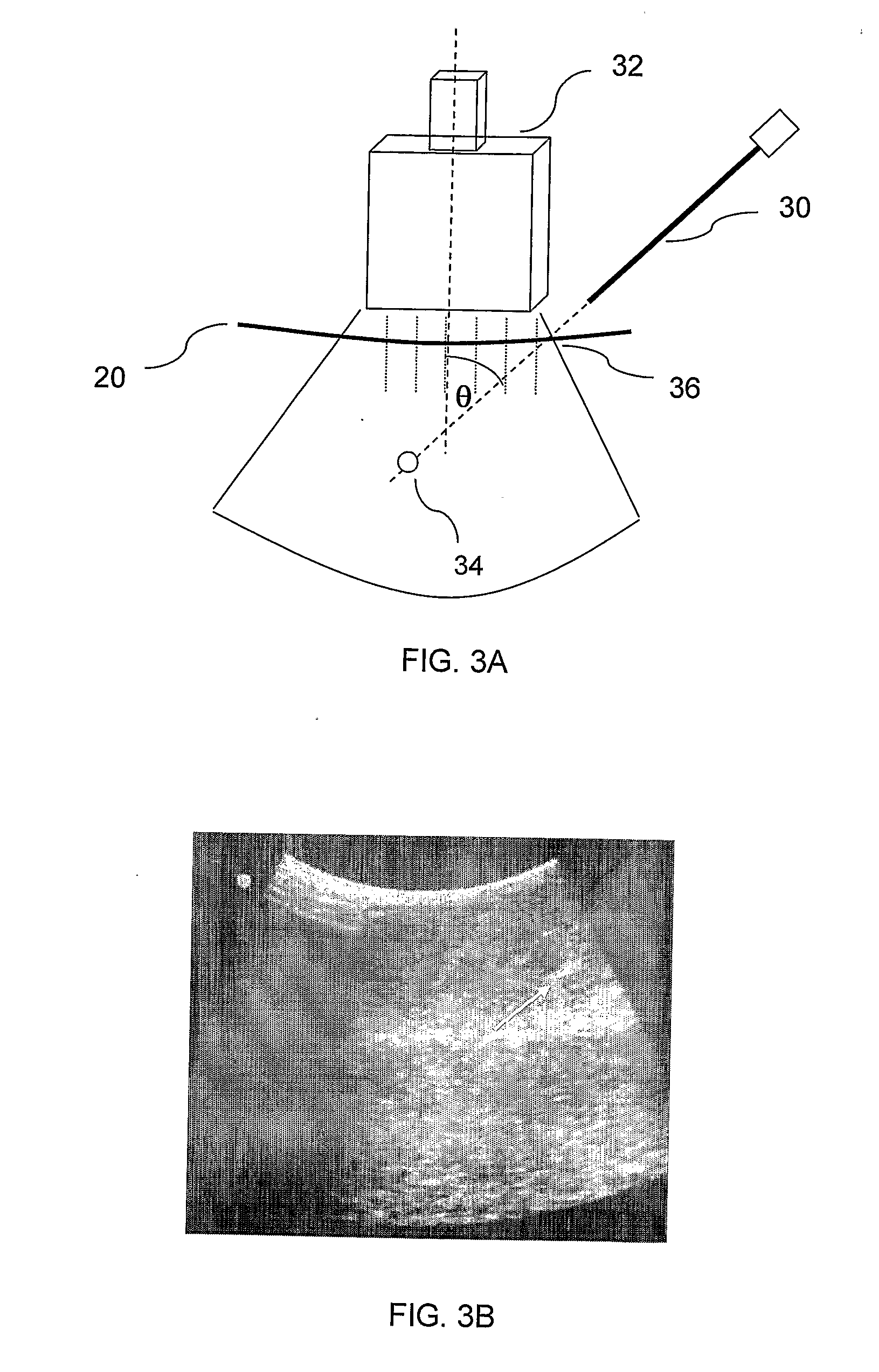
  • Figure 3
    Figure 3
Patent Text Reader

Abstract

A robotic system for flexible needle steering under ultrasound imaging. A robot is used to steer the needle along a predetermined curved trajectory by maneuvering the needle base. The needle tip position is detected by an ultrasound sensor and the tracking error of the needle tip from a predetermined needle path is input to a controller which solves the inverse kinematic based on the needle position, and the needle and tissue properties. The control algorithm uses a novel method to detect the elastic properties of the tissue by analyzing tissue motion at the region in front of the needle tip. The inverse kinematic solution may be performed on a model of the needle as a flexible beam having laterally connected virtual springs to simulate lateral forces exerted by the tissue elasticity. The system is able to direct the needle to a target within the tissue while circumventing forbidden regions.
Need to check novelty before this filing date? Find Prior Art

Description

FIELD OF THE INVENTION

[0001] The present invention relates to the field of the control of the insertion of flexible needles into a tissue, and especially when the insertion of the needle is observed by ultrasound imaging.BACKGROUND OF THE INVENTION

[0002] Numerous clinical procedures involve needle insertion for diagnostic and therapeutic purposes. Such procedures include biopsies, regional anesthesia, drug delivery, blood sampling, prostate brachytherapy and ablation. These procedures require navigation and accurate placement of the needle tip at an organ, vessel or a lesion. The validity of a diagnosis or the success of a therapeutic treatment is highly dependent on the needle insertion accuracy. For example, in brachytherapy where radioactive seeds are deposited into the tumor by a needle, the effectiveness of the, treatment is directly related to the accuracy of the needle placement. The same is obviously true in biopsy where needle misplacement may lead to misdiagnosis.

[0003] Physi...

Examples

Embodiment Construction

[0081]Reference is now made to FIG. 2, which is a schematic illustration of an exemplary system for performing the controlled needle insertion methods described in this application. The flexible needle 24 is shown held in the insertion robot 25 and the insertion progress into the subject's tissue 20 is shown being monitored by an ultrasound (US) imaging system, including the ultrasound probe 22 and its control and display system 23. The probe may generally incorporate both the ultrasound transducer and the sensor system for the US energy returned from the needle and tissue. The US control system 23 may generally include the US power supply and the signal processing routines for analyzing the signals received and for generating the US image therefrom.

[0082]The robot 25 used for holding the needle 24, and for aligning and propelling it into the patient's tissue 20 may be an RSPR 6DOF parallel robot, such as that described in the article entitled “Image-guided Robot for Flexible Needle...