
Separation of particles in liquids by use of a standing ultrasonic wave
a standing ultrasonic wave and particle technology, applied in separation processes, laboratories, instruments, etc., can solve the problems of unsuitable milk sample microscopy, inability to detect particles in samples, and inability to transmit infrared spectroscopy transmission losses, etc., to reduce the amount of reagents, reduce the requirement of reagents, and reduce the sensitivity.
- Summary
- Abstract
- Description
- Claims
- Application Information
AI Technical Summary
Benefits of technology
Problems solved by technology
Method used
Image

Examples
Embodiment Construction
[0034]In following a number of embodiments will be presented, with their respective benefits in relation to the subclaims.
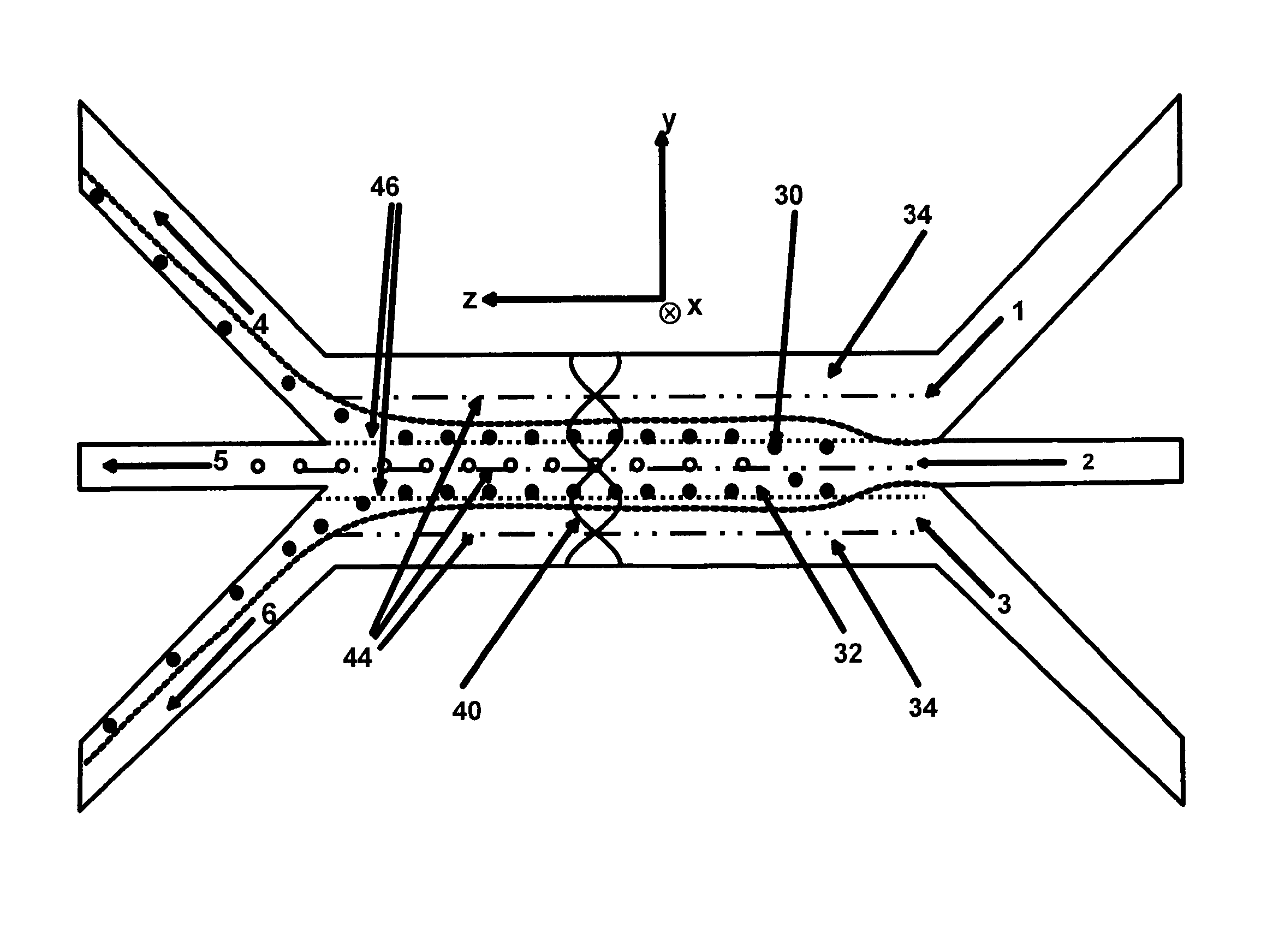
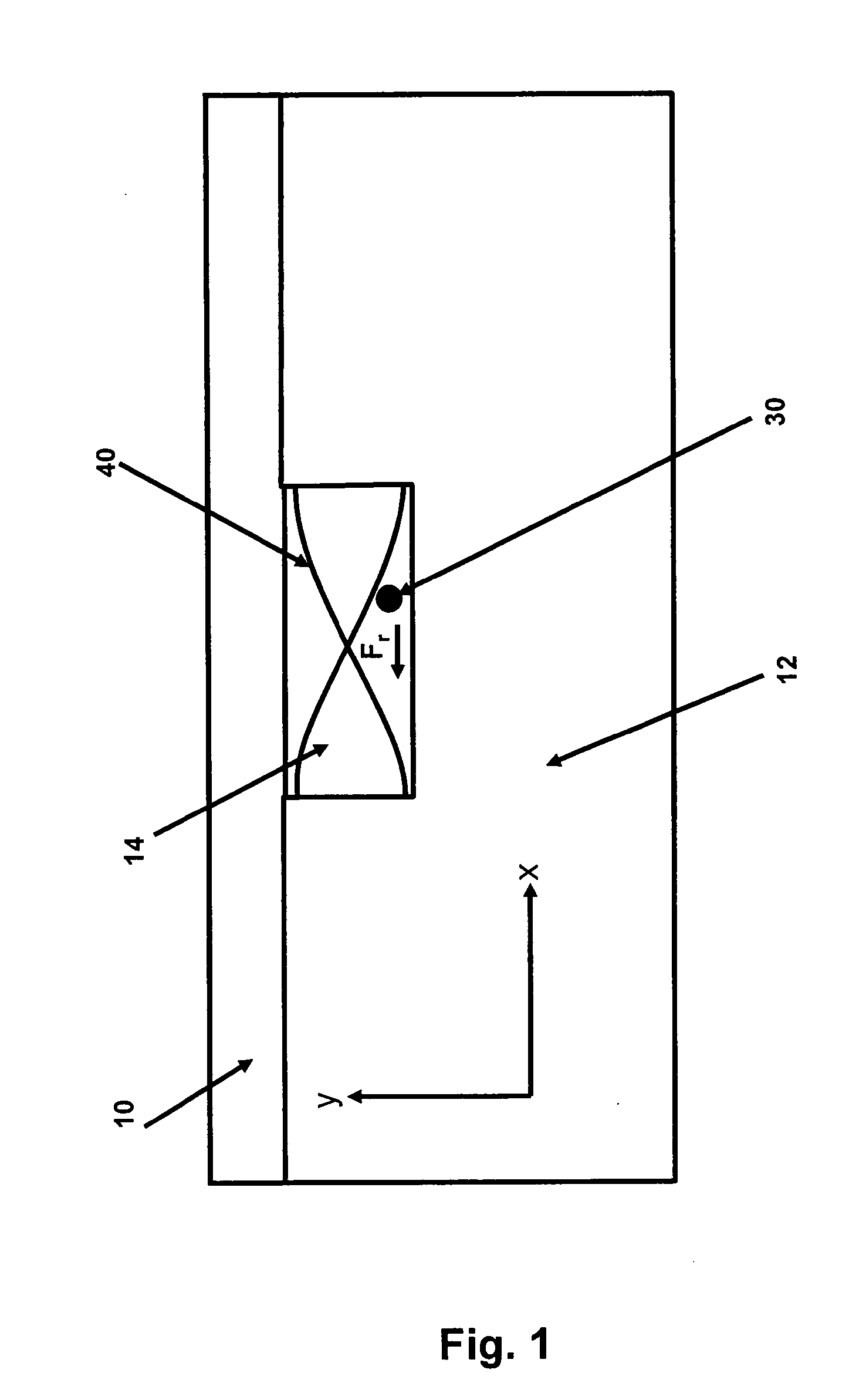
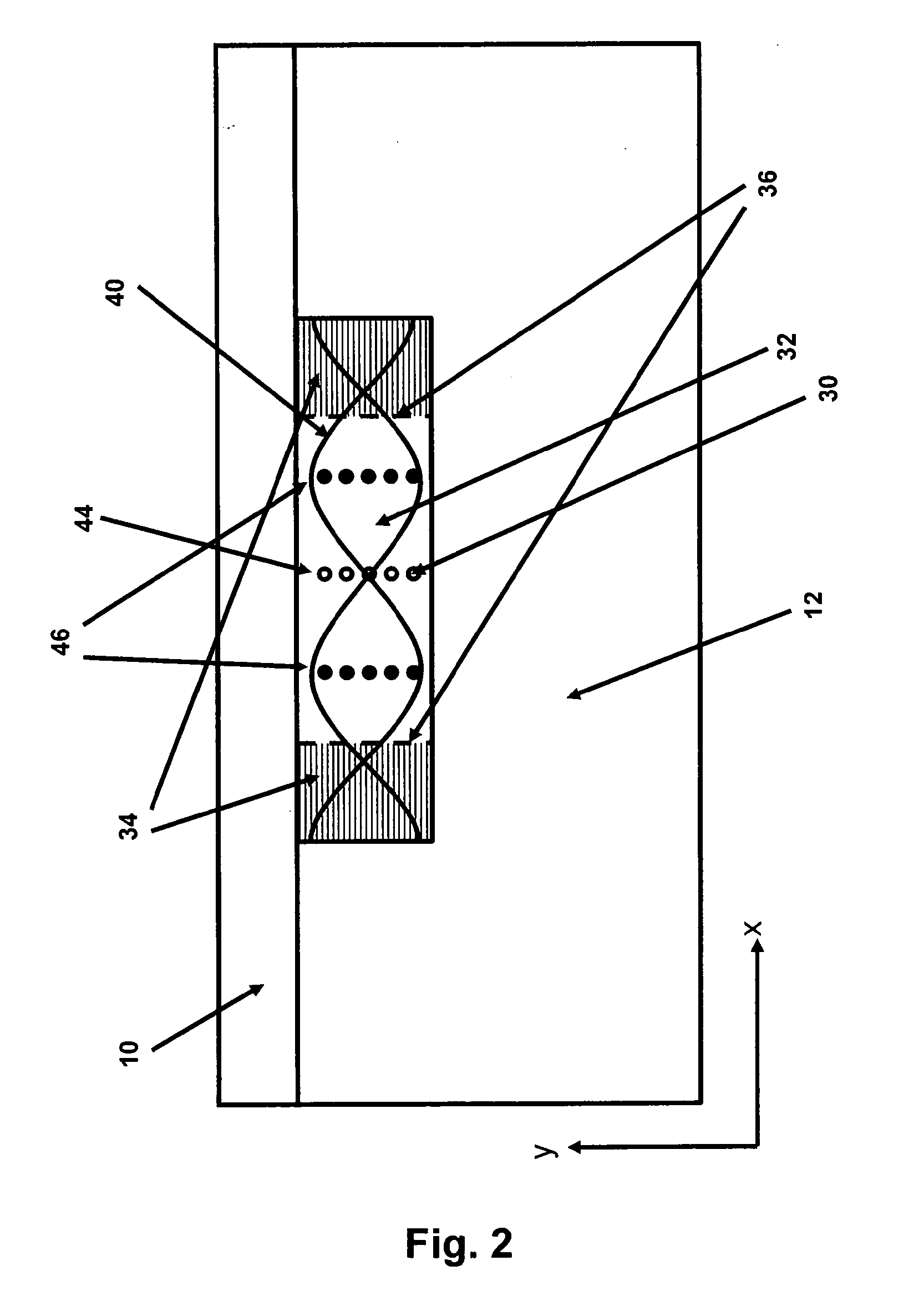
[0035]In a first embodiment of the invention a flow of sample liquid, such as milk, is separated from a compartment wall by a flow of sheath liquid. The sample liquid will contain two types of particles; low density particles such as fat globules and high density particles such as somatic cells. The compartment is connected to a source of ultrasound in a way causing a transfer of ultrasound to the liquid, such as on the side or on the top of the compartment and the size and shape of the compartment must support to a fundamental or higher order ultrasonic standing wave with a channel width corresponding to a whole multitude of λ / 2, i.e. it must have a width of approximately n·λ / 2 (n=1, 2, 3 . . . ) and a height less than λ / 2. In this case the fat globules in the milk will be driven towards the anti-node planes and the cells in the milk towards the node planes. Thi...
PUM
| Property | Measurement | Unit |
|---|---|---|
| frequency | aaaaa | aaaaa |
| frequencies | aaaaa | aaaaa |
| flow rate | aaaaa | aaaaa |
Abstract
Description
Claims
Application Information
 Login to View More