[0015]It is an objective of the present invention to provide an improved minimally invasive device and method for treating
Benign Prostate Hyperplasia, wherein a device and method provided to allow for performance of coagulative as well as ablative BPH treatment in one session by using two types of delivery systems embedded: a coagulative
system, which is essentially placed and left in place during the necessary time to achieve sufficient coagulation; and an ablative
system, that can be moved and manipulated by the surgeon during the treatment to assure tissue removal in the critical locations providing fast
symptom relief.
[0016]It is also an objective of the present invention to provide a device and method for effective BPH treatment in an office setting that can minimize procedure duration, patient discomfort and recurrence of symptoms and complications.
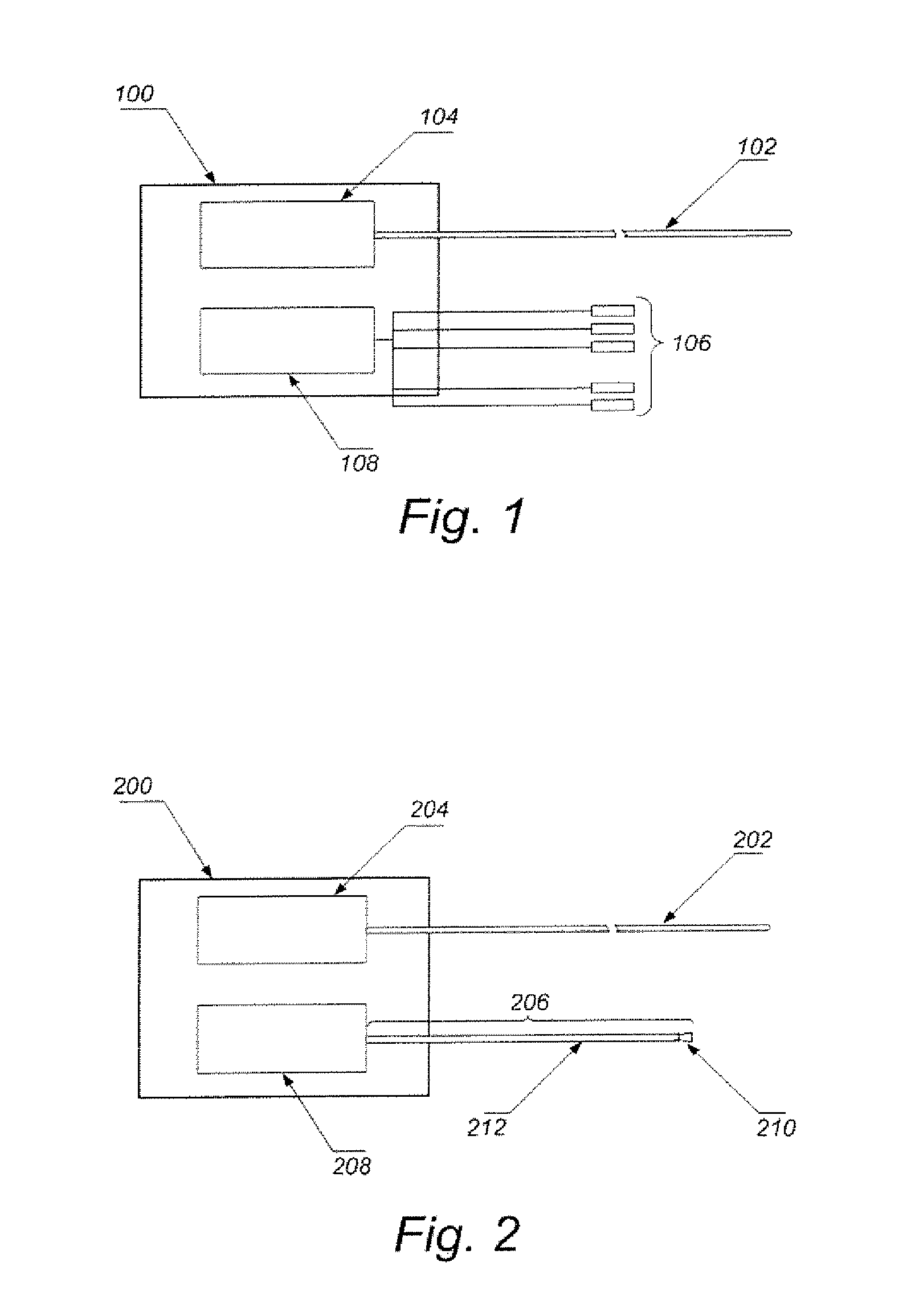
[0020]Briefly stated, a device / system and a method for the treatment of enlarged prostate and other urologic abnormalities are presented. This system enables the simultaneous attachment of several interstitial coagulative treatment probes as well as an ablative
fiber to perform a
combined treatment utilizing the intervention time and the time of the localized
anesthesia effect in an optimal manner. The amount of tissue removed by the urologist by
vaporization can be kept to a minimum, thanks to the (delayed) improvement of the achieved symptom scores resulting from the denaturalizing effect of the interstitial coagulative fibers. In one preferred embodiment, two or more types of delivery systems are embedded in a single device for achieving optimal
tissue ablation and coagulation effects including at least one non-
laser source such as
microwave energy, capable of producing
radiation energy to coagulate tissue and at least one
laser source capable of producing radiation to ablate tissue. In another preferred embodiment, device comprises two or more laser sources which emit at adjustable wavelengths controllable by physician according to ablative and coagulative needs and
tissue penetration needs depending on their effective absorption in different tissue components. Wavelengths ranges are chosen such that tissue absorption properties change sensibly with small variations of such wavelengths, based on a steep region of the
absorption curve.
Radiation may be applied in continuous, semi-continuous or
pulsed wave, in different combinations. In another preferred embodiment,
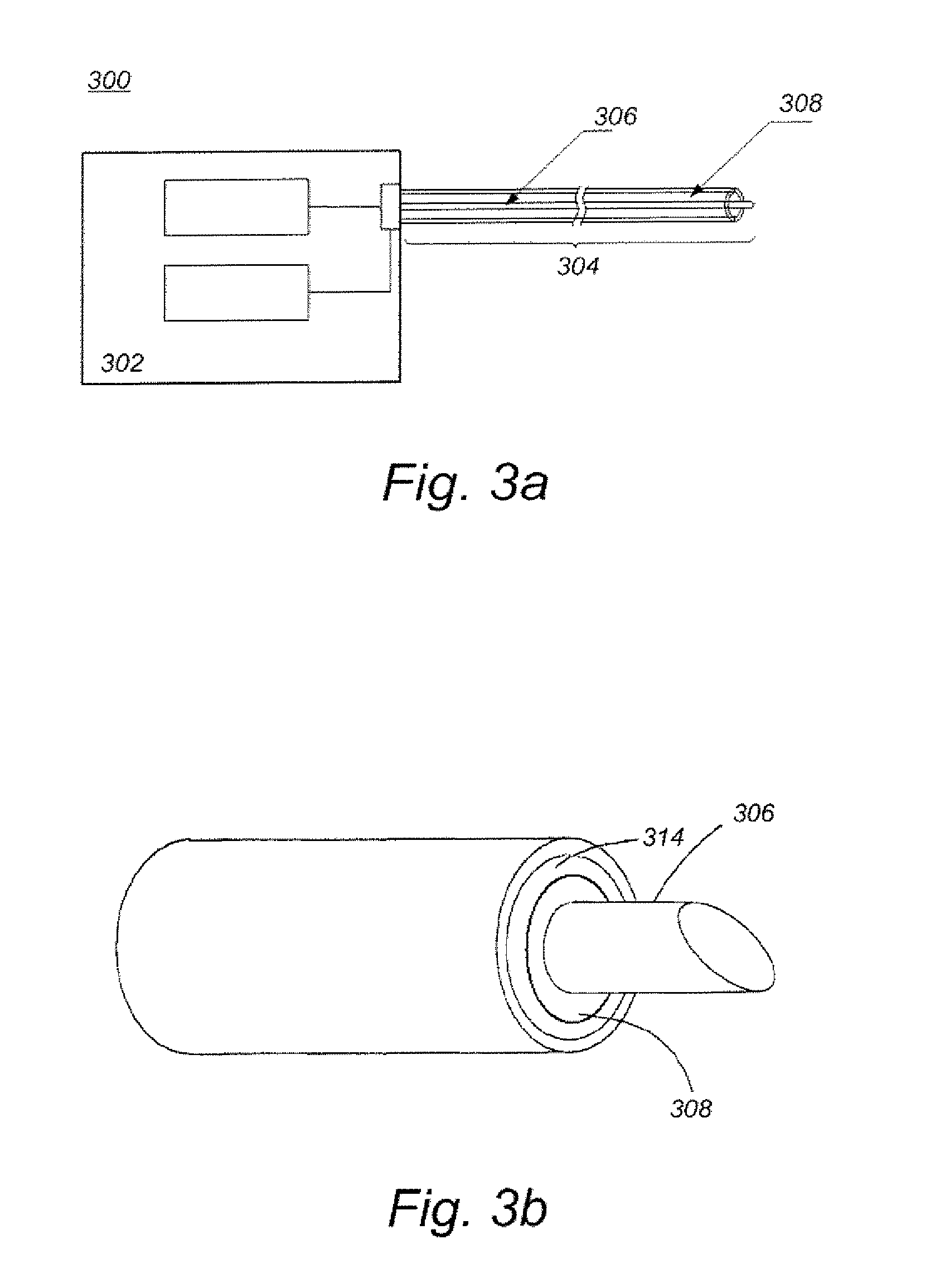
optical fiber has a central core for transmitting laser radiation, and a cladding layer about the core that may further transmit other laser radiation of a different or a same
wavelength as the core. Fibers used in various embodiments may be, but are not limited to those comprising a side-firing distal end, a radial firing end, or an off-axis firing end. In a preferred embodiment, device includes a control mechanism which allows for the delivery of
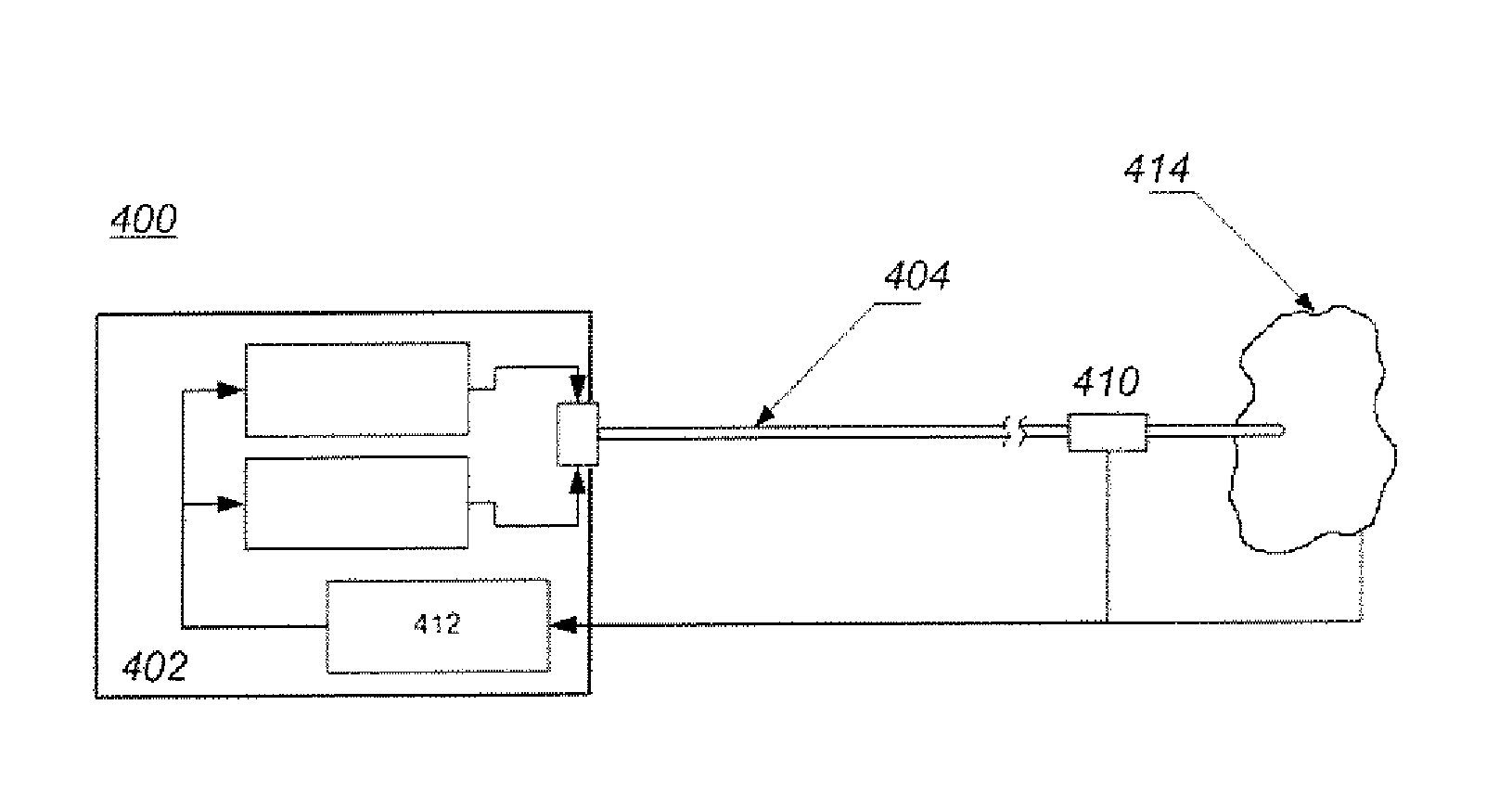
constant power density based on feedback regarding speed of fiber movement and local structural tissue parameters. In various embodiments, the coagulative
irradiation can be done by a radiofrequency or other radiant
thermal source.


 Login to View More
  Login to View More