Intraoral apparatus for treating upper airway disorders

a technology for airway disorders and intraoral devices, which is applied in the field of oral appliances and dental orthotics, can solve the problems of narrowing of the upper airway, insufficient muscle tone in the upper airway dilator muscles, physical impairment, etc., and achieves the effect of reducing resistance to air flow, reducing the position, configuration and freedom of movement, and ensuring the proper oral systemic balan

US20110232651A1Active Publication Date: 2011-09-29TNT LABS
16 Cites 18 Cited by

Patent Information

Authority / Receiving Office
US · United States
Patent Type
Applications(United States)
Current Assignee / Owner
Publication Date
2011-09-29

Smart Images

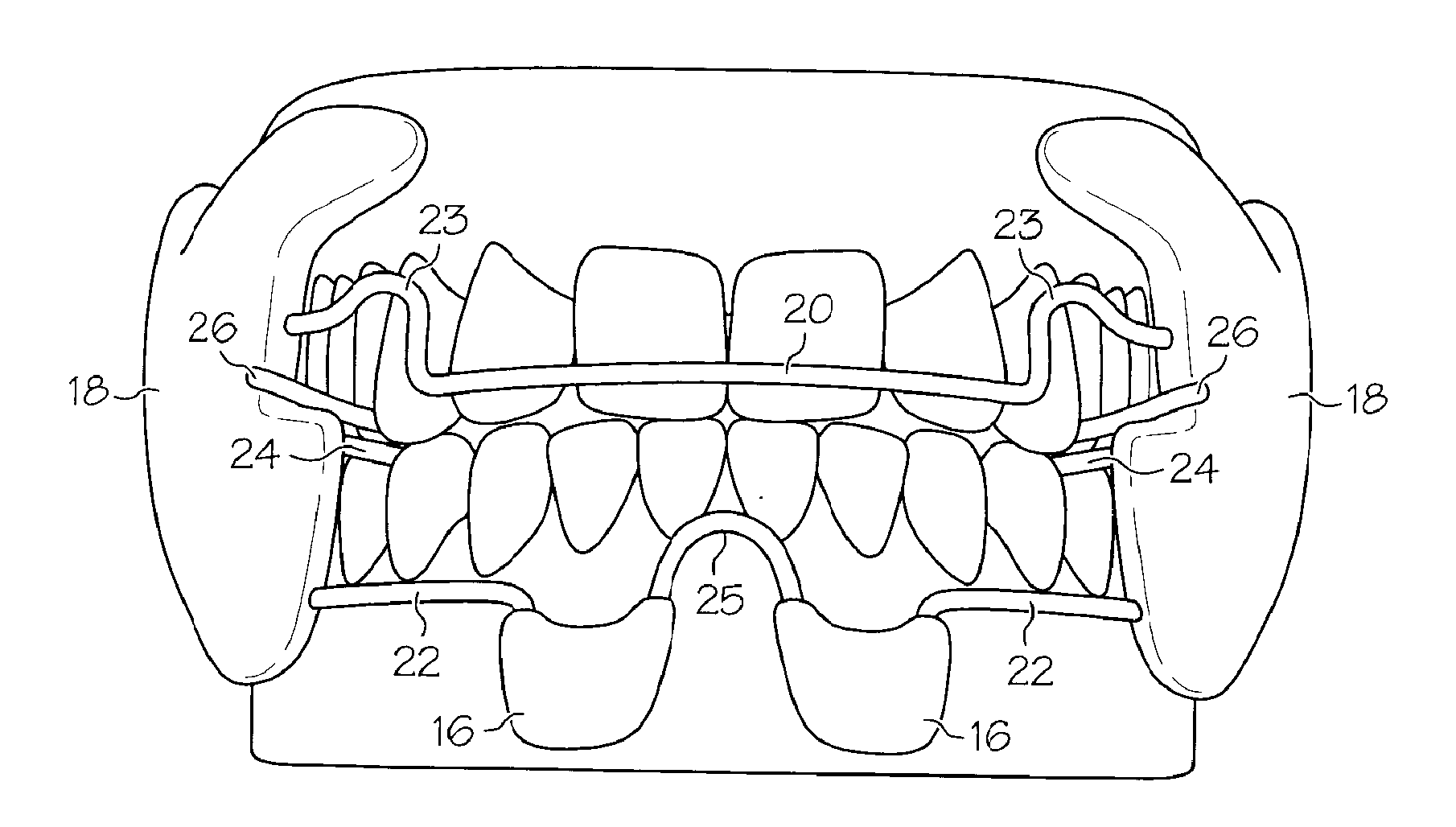
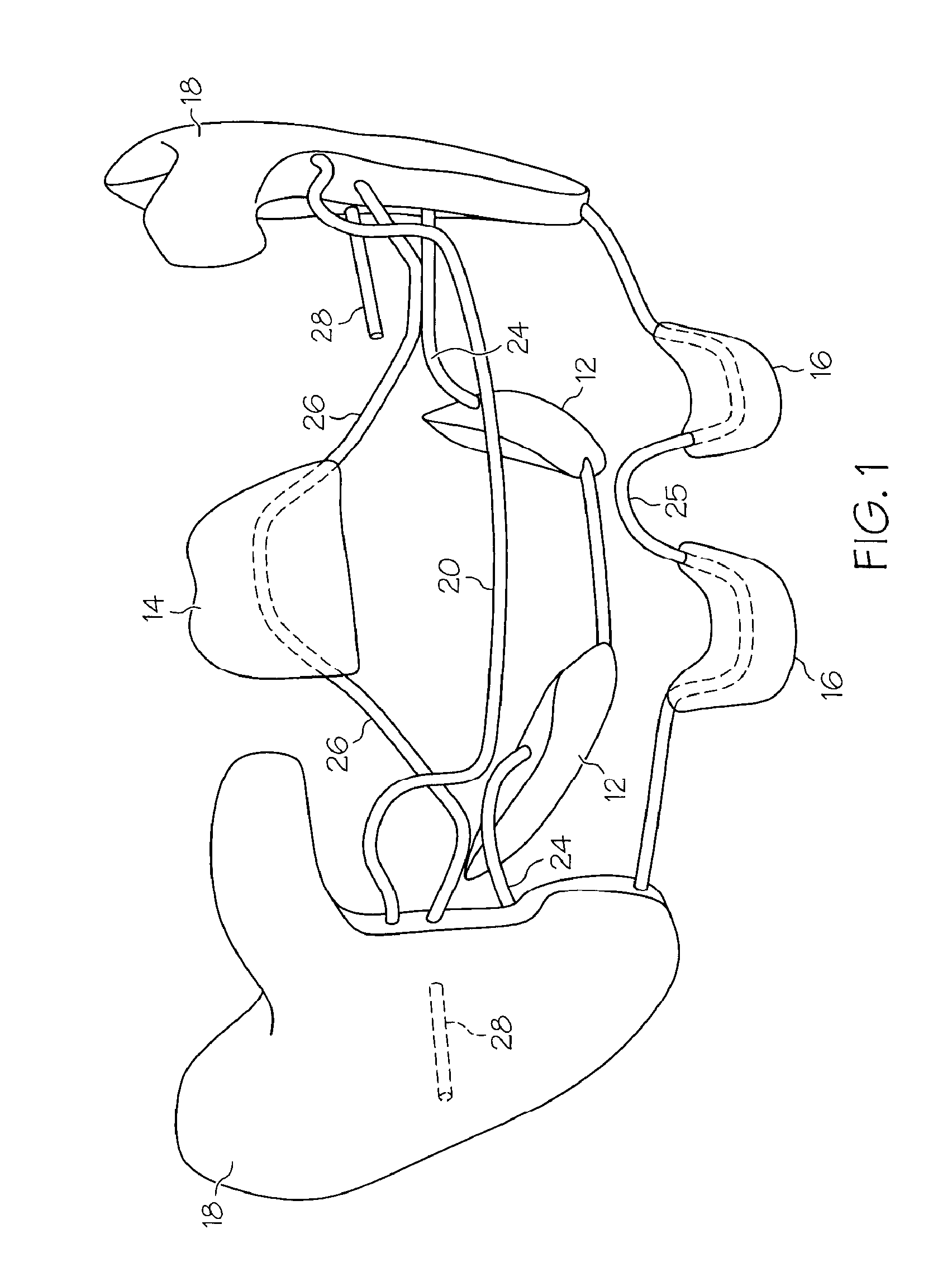
  • Figure 1
    Figure 1
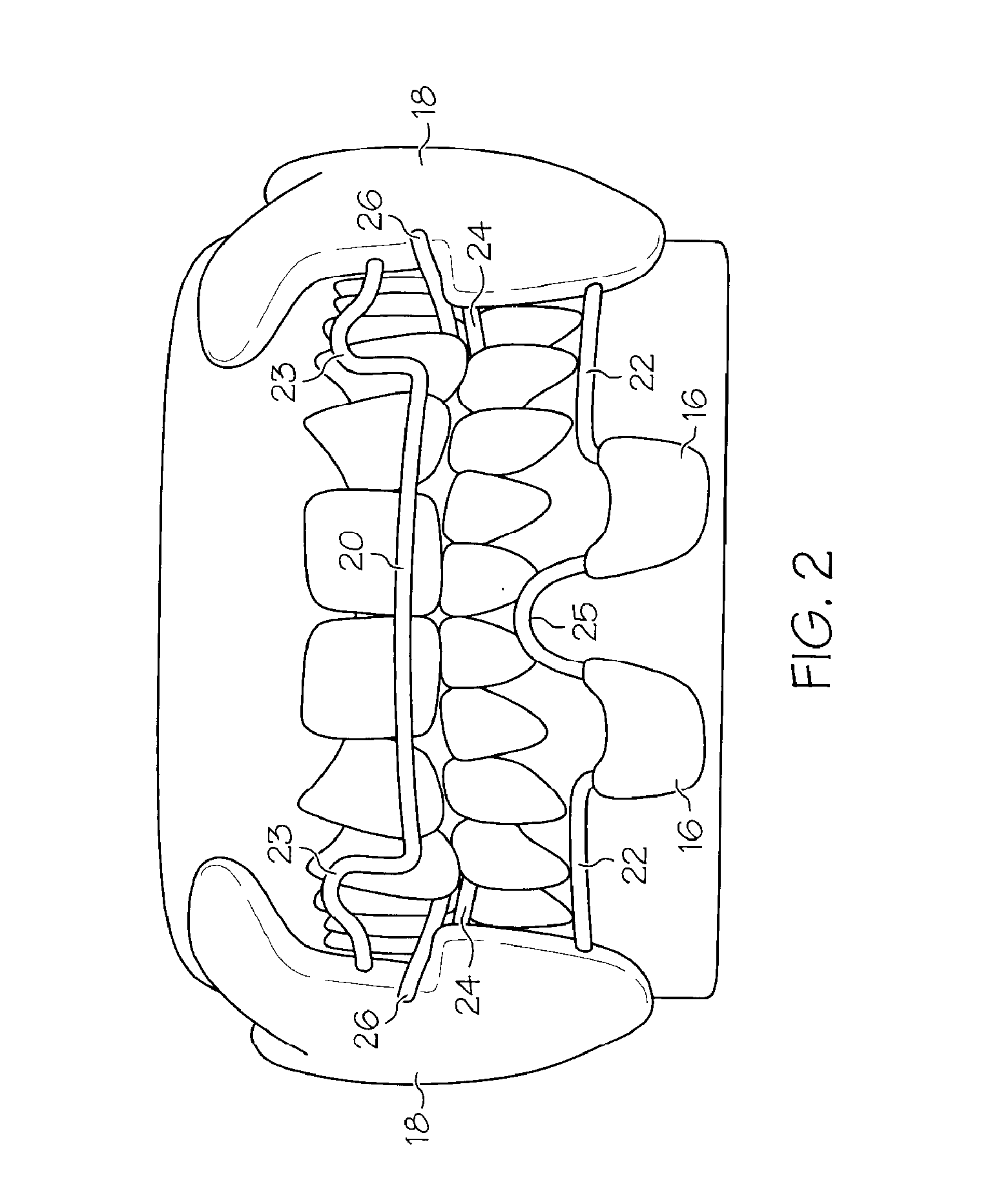
  • Figure 2
    Figure 2
  • Figure 3
    Figure 3
Patent Text Reader

Abstract

A removable intraoral apparatus for improving airway patency is described. Wearing the apparatus alters the position, configuration and freedom of movement of the tongue, the muscles of mastication, as well as the pharyngeal and facial muscles. The apparatus is useful for correcting snoring and / or obstructive sleep apnea due to intermittent closures or partial obstructions occurring in the oropharynx during sleep. The apparatus of the invention can improve various types of airway disorders and improve oral functions by changing the position, configuration and freedom of movement of selected portions of the tongue and mouth, reducing the resistance to air flow in the mouth and pharynx, re-orienting and reprogramming the muscles of the mouth and tongue, and maintaining a proper oral systemic balance.
Need to check novelty before this filing date? Find Prior Art

Description

FIELD OF THE INVENTION

[0001] This invention relates to the field of oral appliances and dental orthotics. In particular, the present invention relates to a wearable intraoral apparatus for relieving upper airway disorders including snoring, obstructive sleep apnea and related problems.BACKGROUND OF THE INVENTION

[0002] Upper airway disorders in patients can result in a variety of difficulties, such as obstructive sleep apnea, snoring, labored breathing, oxygen starvation, and the resulting physical impairments arising from such disorders including headaches, chronic fatigue, sleep problems, and problems chewing, swallowing and speaking. The pathogenesis of airway obstruction that characterizes upper airway disorders can include both anatomic and functional abnormalities of the upper airway that result in increased air flow resistance. Such abnormalities may include narrowing of the upper airway due to suction forces created during inspiration, the effect of gravity pulling the tongue b...

Examples

Embodiment Construction

[0018]The present invention teaches a novel tissue-borne apparatus (i.e. having minimal contact with the teeth, as opposed to a tooth-borne appliance) for improving airway patency. Wearing the apparatus alters the position, configuration and freedom of movement of the tongue, the muscles of mastication, as well as the pharyngeal and facial muscles. The apparatus is useful for correcting snoring and / or obstructive sleep apnea due to intermittent closures or partial obstructions occurring in the hypopharynx and oropharynx during sleep. The apparatus generally functions to open the airway by repositioning the mandible in a more inferior and anterior position, causing the jaw to be more open and to protrude more, as compared to the normal closed position of the jaw. Since the apparatus is tissue-borne, it typically rests in the user's mouth without engaging or moving the teeth, but rather seeks stabilization and retention in the various grooves or troughs of the oral cavity. The apparat...