Instant Entropy System

US20140265348A1Inactive Publication Date: 2014-09-18IENTROPIA SPA
4 Cites 2 Cited by

Patent Information

Authority / Receiving Office
US · United States
Current Assignee / Owner
Publication Date
2014-09-18
Estimated Expiration
Not applicable · inactive patent

Smart Images

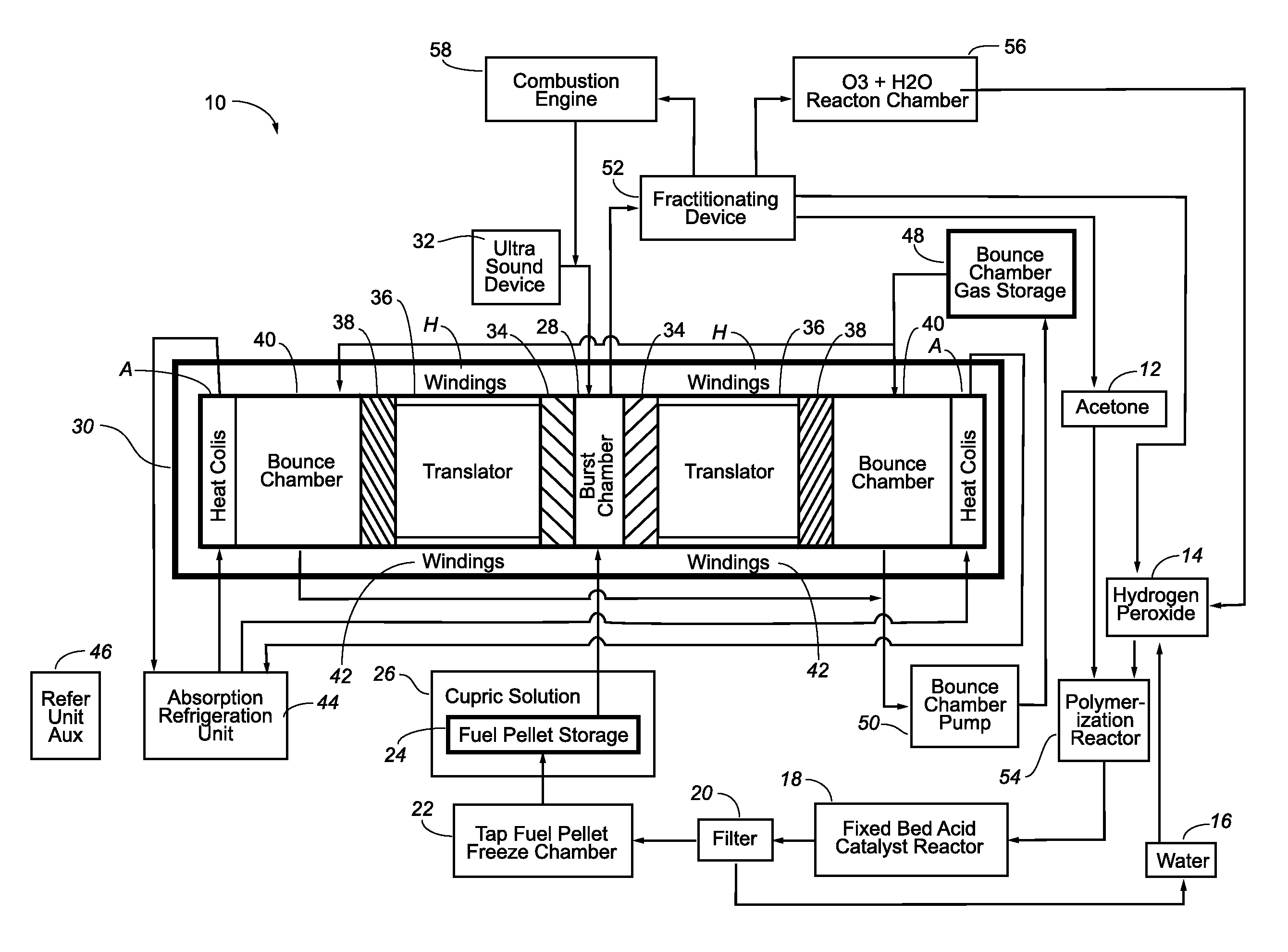
  • Figure 1
    Figure 1
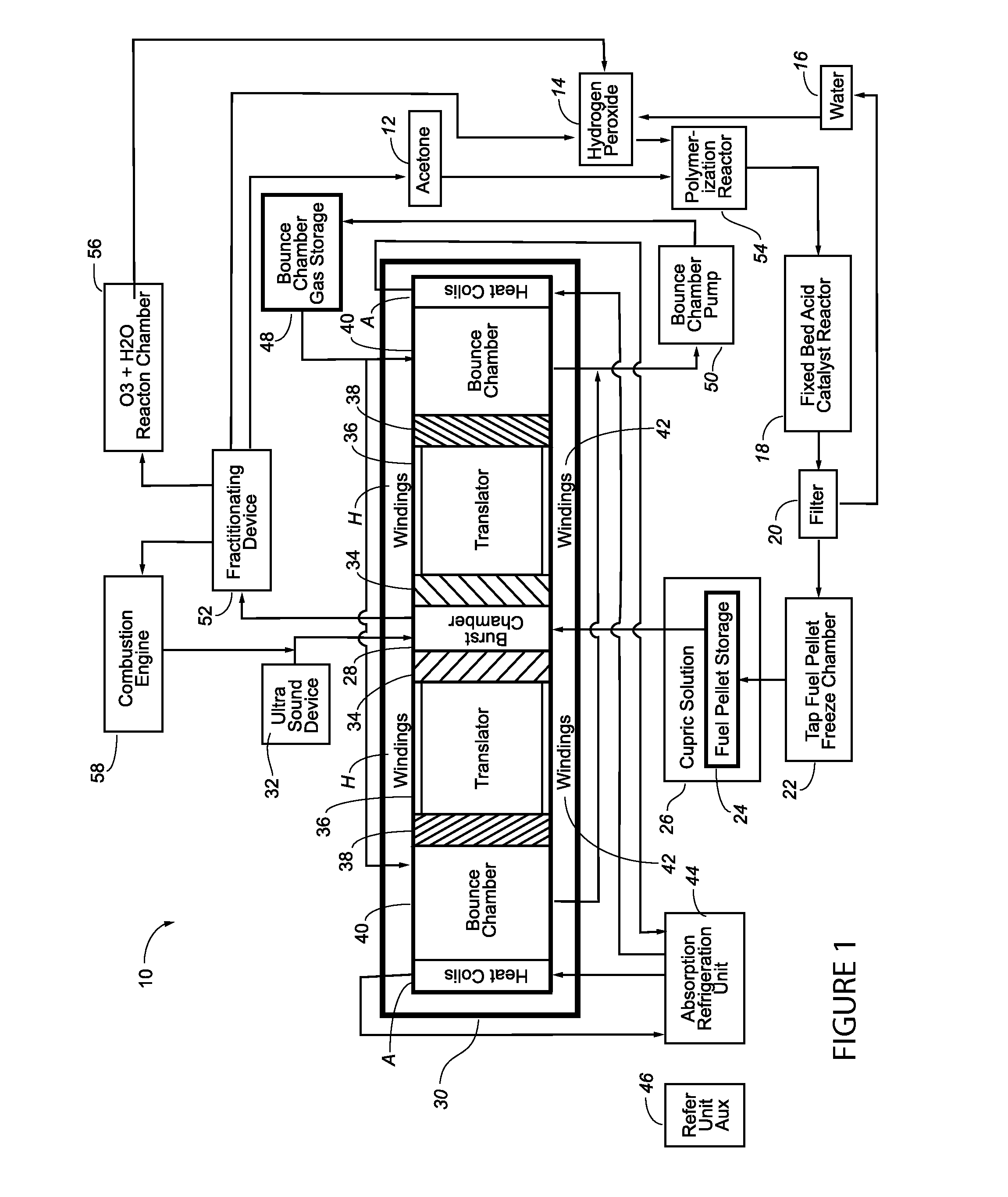
  • Figure 2
    Figure 2
Patent Text Reader

Abstract

The instant invention is to a new fuel system, which will allow operation of large scale electrical power generating facilities at a fraction of the cost of coal or natural gas fueled facilities and will not produce significant heat, exhaust emission gases, or particulate pollution. Because of the nature of the chemical reaction exploited in the system, it is denominated an instant entropy system (“IES”). The fuel used by the inventive IES produces gas expansion, but not from an oxidation / combustion reaction, and it does not produce oxidative exothermic heat. The IES utilizes a material first developed in the early part of the twentieth century—triacetone triperoxide (TAP).
Need to check novelty before this filing date? Find Prior Art

Description

CROSS REFERENCES TO RELATED APPLICATIONS

[0001] This application claims the benefit of U.S. Provisional Application 61 / 778,981, filed Mar. 13, 2013, entitled Instant Entropy System, which is incorporated herein by reference.BACKGROUND OF THE INVENTION

[0002] 1. Field of the Invention

[0003] The present invention relates generally to electrical energy production and fuels for the same, and more particularly to an entropy burst fuel for use in electrical power generation facilities, and more particularly still to a system for using triacetone triperoxide pellets in an entropy burst generator for use in generating electricity.

[0004] 2. Background Discussion

[0005] Modern society is based on (and largely depends on) the production of electricity from the combustion of carbon based fuels, principally coal and natural gas. These fuels are combusted / oxidized in central electrical power generation facilities that operate at fuel to electricity conversion efficiencies of less than 40%. The hot exhaus...

Examples

Embodiment Construction

[0023]Referring now to FIG. 1, there is schematically illustrated in block diagrammatic form a preferred embodiment of the inventive IES. The system 10 preferably utilizes an opposed piston tubular linear generator (“OPTLG”) to generate electrical power. However, the IES will work in all internal combustion engines or turbine engines. It is particularly well suited for use in Prandtl turbines, also known as boundary layer turbines or Tesla turbines. The illustration herein represents the IES formation, work production, and gas recovery of the “entropy burst” (EB) of triacetone triperoxide (TAP).

[0024]TAP formation component chemicals are stored at 12 acetone, hydrogen peroxide 14, and water 16. The acetone and hydrogen peroxide are metered into a temperature controlled polymerization reactor 13. Once acetone polymerization has occurred, the acetone / water solution is metered through the fixed bed acid catalyst reactor 18. This reactor is held at a constant temperature, pressure, and ...