Flow conduit system for a biochemical sensor

US20150192574A1Active Publication Date: 2015-07-09CREOPTIX

Patent Information

Authority / Receiving Office
US ยท United States
Current Assignee / Owner
CREOPTIX
Publication Date
2015-07-09

Smart Images

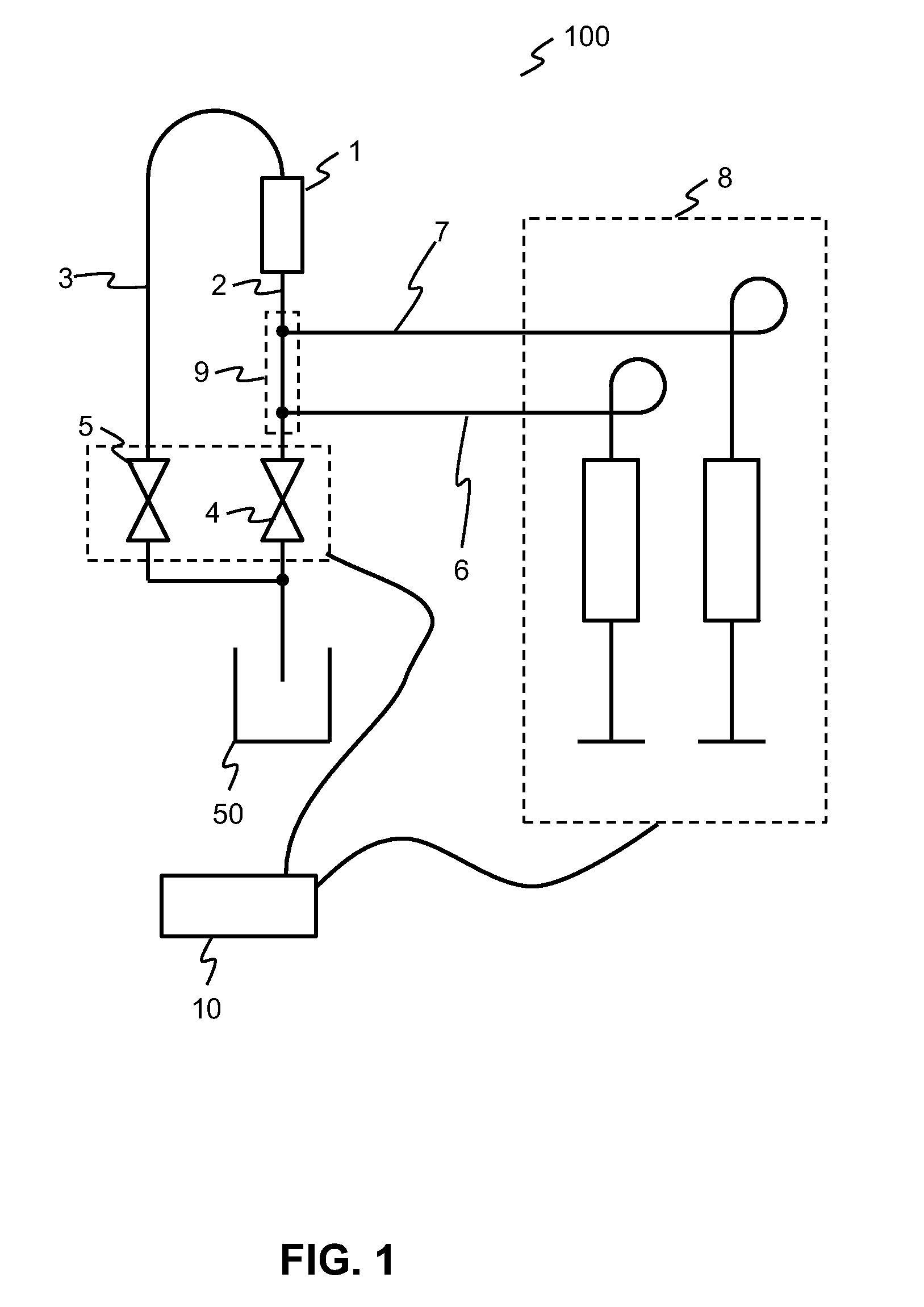
  • Figure 1
    Figure 1
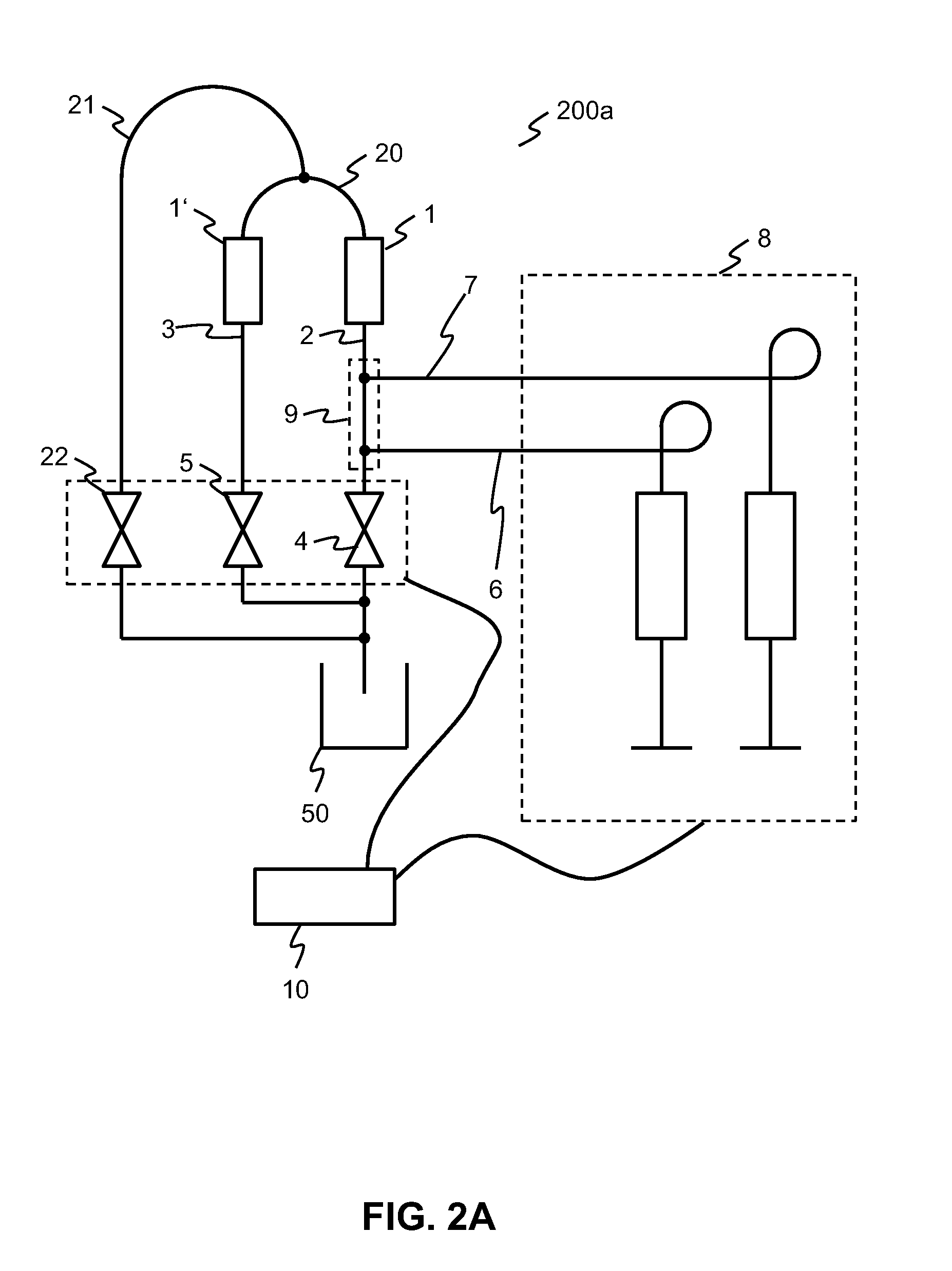
  • Figure 2
    Figure 2
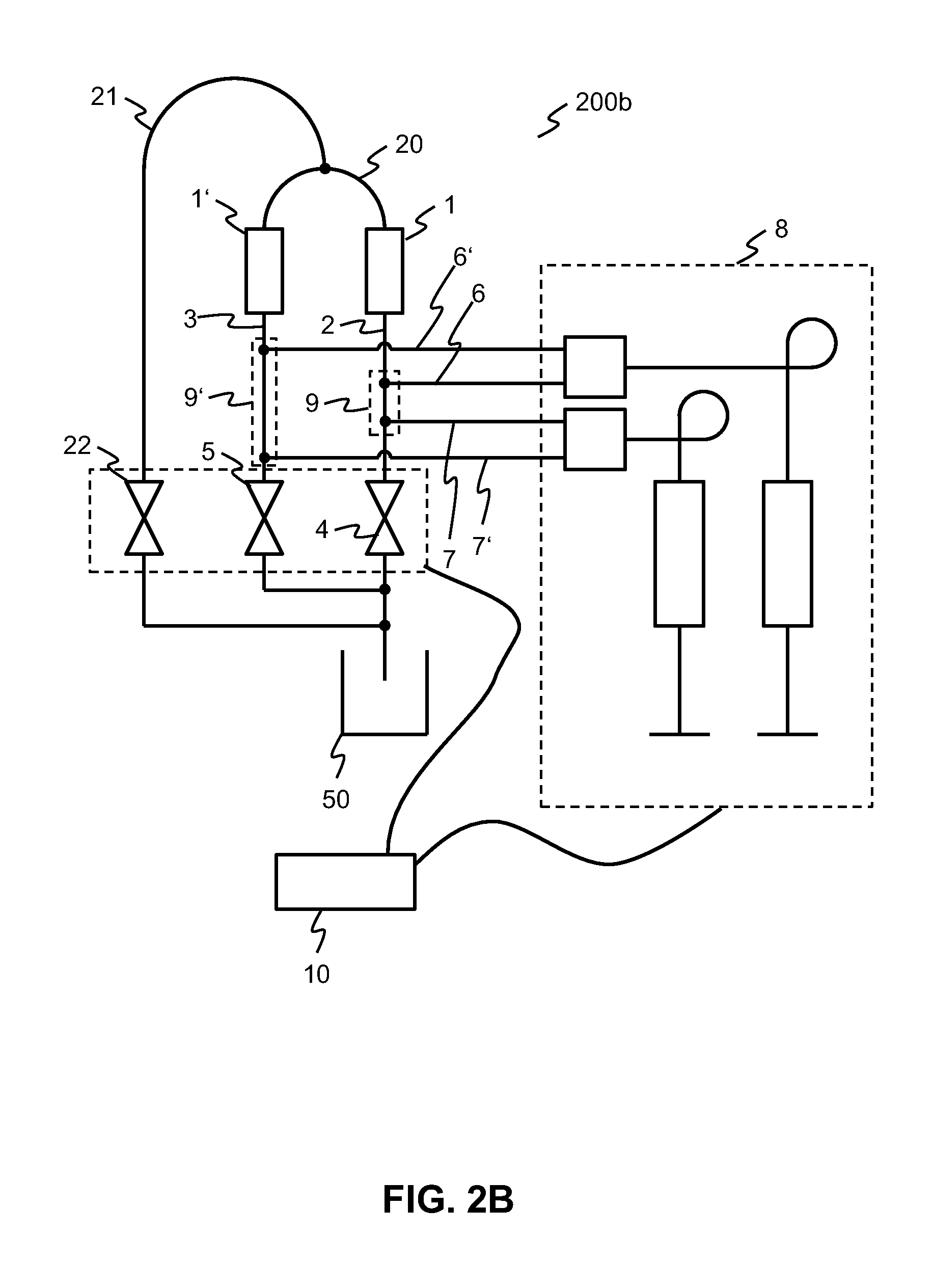
  • Figure 3
    Figure 3
Patent Text Reader

Abstract

A flow conduit system (100,200a,200b) suitable for biochemical sensing, the flow conduit system (100,200a,200b) comprising, a first flow cell conduit (1) comprising one or more sensing areas for biochemical sensing; a first selector valve (4); a first inlet / outlet conduit (2) which fluidly connects the first flow cell conduit (1) to the first selector valve (4); a first injection conduit (6) having a first end and a second end; a second injection conduit (7) having a first end and a second end; a fluid injecting means (8) fluidly connected to the second ends of each of the first and second injection conduits (6, 7) so that the fluid injecting means can selectively inject fluids into the first and / or second injection conduits (6,7); wherein the first injection conduit (6) is fluidly connected, at its first end, to the first inlet / outlet conduit (2) by a valveless junction (9), and the second injection conduits (6) is fluidly connected, at its first end, to the first inlet / outlet conduit (2) by a valveless junction (9).
Need to check novelty before this filing date? Find Prior Art

Description

[0001] The invention is related to the field of label-free optical sensors with high sensitivity, large measuring range, high readout speed, simple device handling, low maintenance requirements and high robustness with respect to manufacturing tolerances, particularly consisting of integrated-optical waveguides, flow chambers and a readout device, and their application to (bio-) chemical sensor units, as they find use, for example, in pharmacology or in diagnostics.DESCRIPTION OF RELATED ART

[0002] Sensing devices for the measurement of molecular interactions (biochemical sensors) can be split into two categories; namely label-free sensors and sensors which operate using a marker. These sensors are generally known in the field of life sciences, and are mainly used for the characterization of interactions of biologic or biochemical molecules. These characterizations commonly involve bringing two or more different types of sample molecules into physical contact with each other for a set ...

Claims

the structure of the environmentally friendly knitted fabric provided by the present invention; figure 2 Flow chart of the yarn wrapping machine for environmentally friendly knitted fabrics and storage devices; image 3 Is the parameter map of the yarn covering machine
Login to View More