
Catheter systems
a catheter system and catheter technology, applied in the field of catheter systems, can solve the problems of delayed therapeutic confirmation, inability to assess instantaneous success of electroporation therapy, and severe limitations of using electroporation therapy in ep applications, so as to improve the accuracy of electrode temperature measurement and increase the selectivity of what tissu
- Summary
- Abstract
- Description
- Claims
- Application Information
AI Technical Summary
Benefits of technology
Problems solved by technology
Method used
Image

Examples
Embodiment Construction
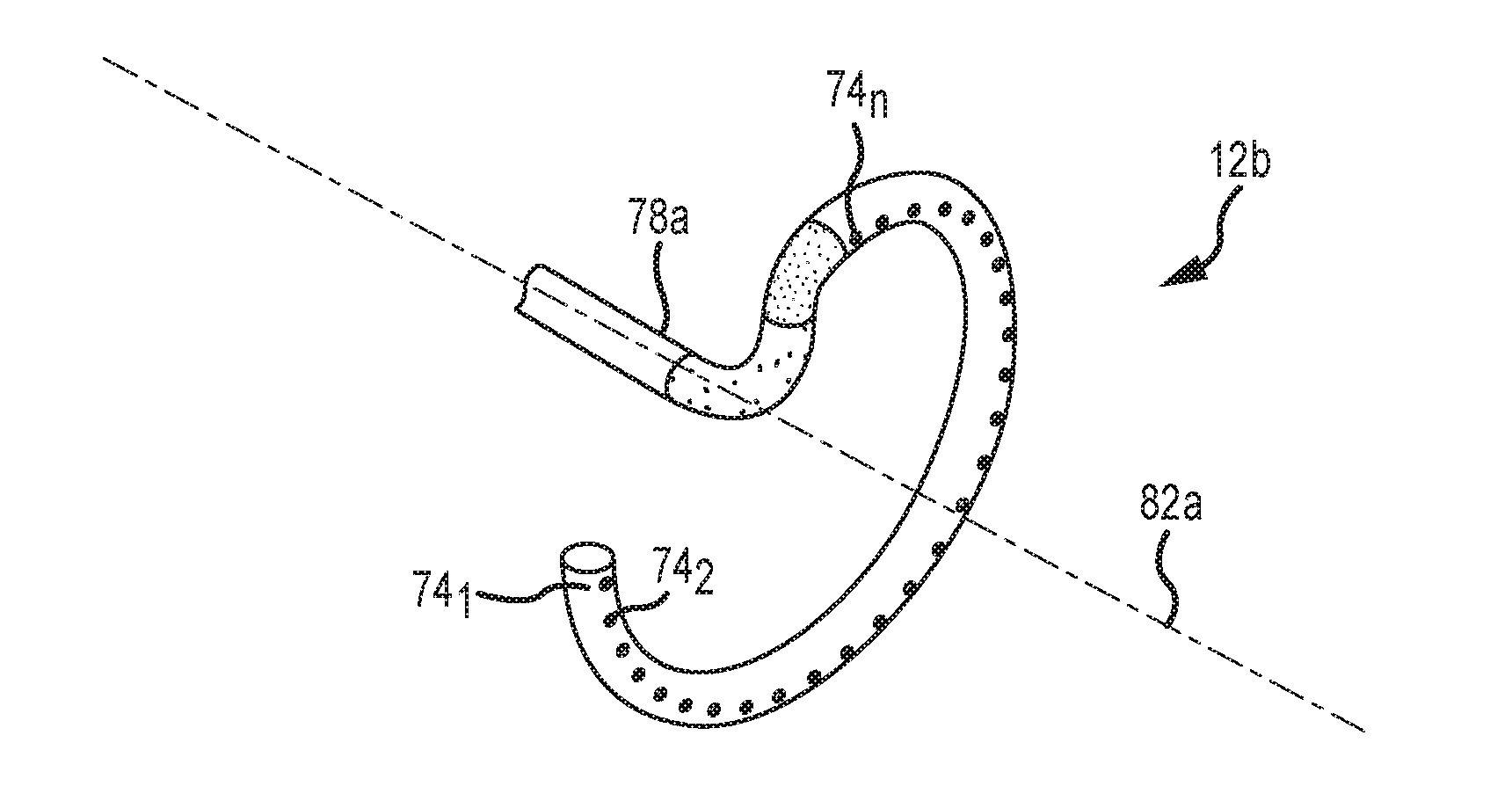
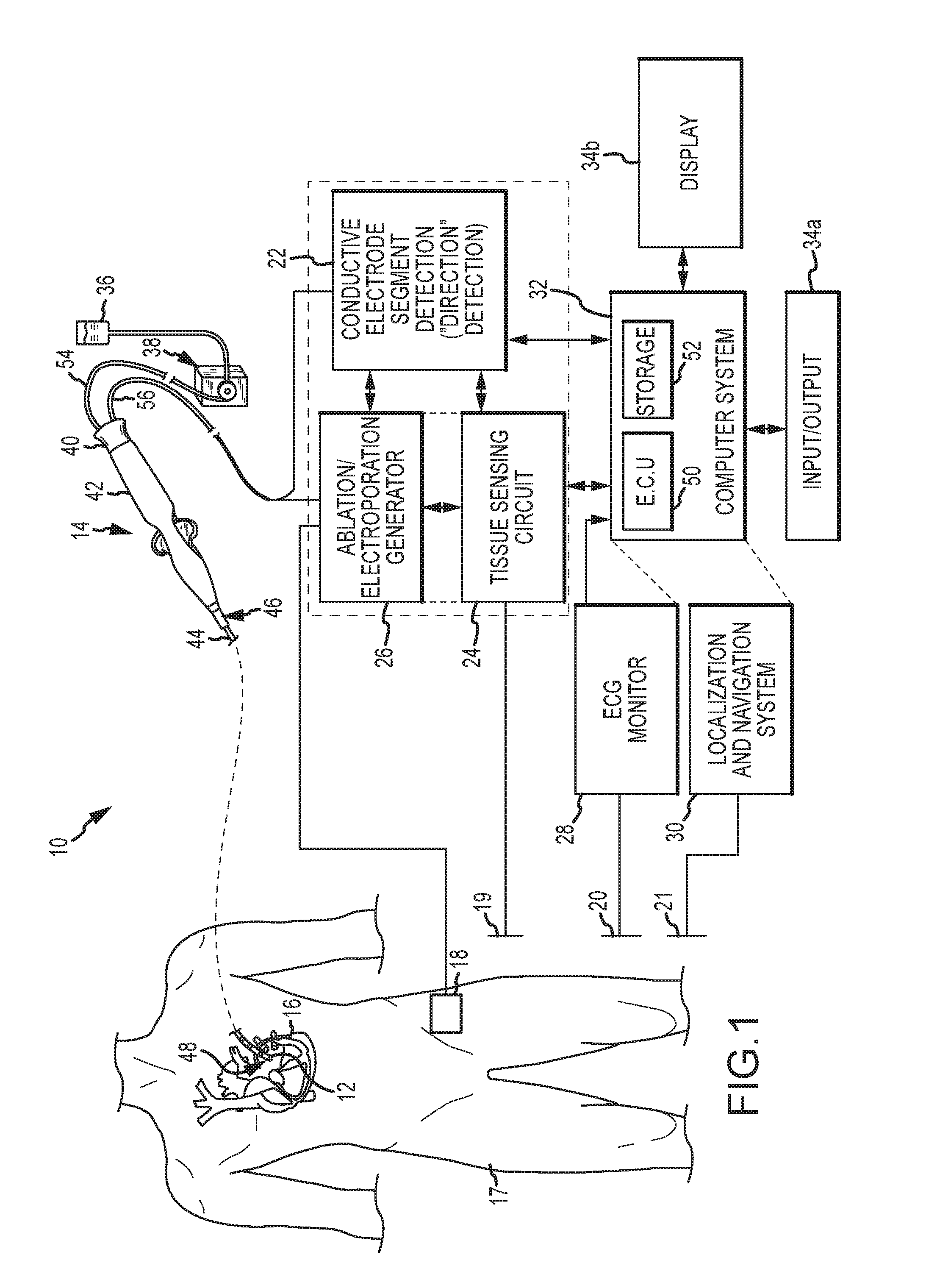
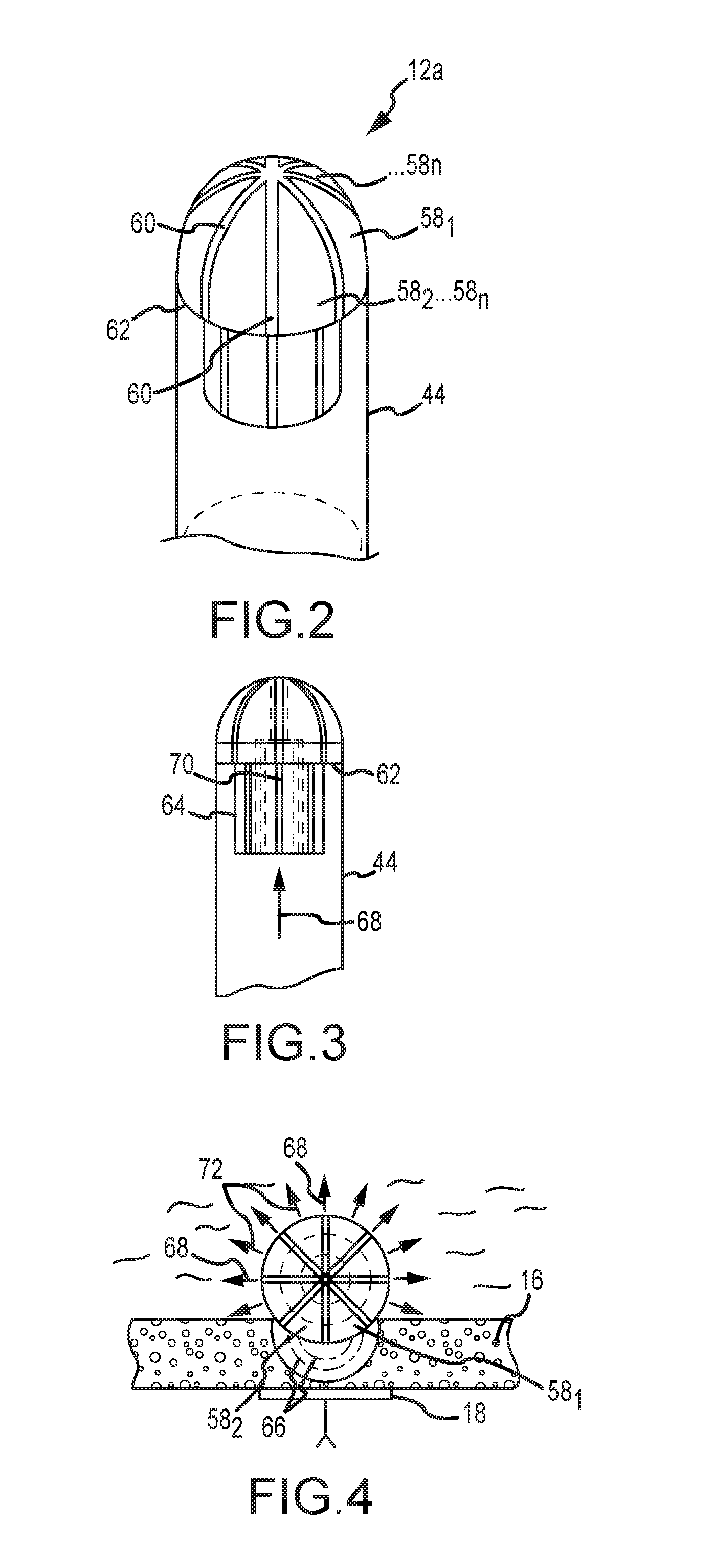
[0031]Referring now to the drawings wherein like reference numerals are used to identify identical components in the various views, FIG. 1 is a diagrammatic and block diagram view of a system 10 in connection with which direction-sensitive multi-polar or multi-array electrode assemblies for electroporation therapy may be used. In general, the various embodiments include an electrode assembly disposed at the distal end of a catheter. The electrode assembly comprises a plurality of individual, electrically-isolated electrode elements. Each electrode element is individually wired such that it can be selectively paired or combined with any other electrode element to act as a bipolar or a multi-polar electrode for both sensing (more below) and electroporation energization purposes. FIGS. 2-17 show various embodiments featuring direction-sensitive multi-polar or multi-array electrode assemblies. In the sensing mode, the electrode elements are electrically scanned to detect or identify whi...
PUM
 Login to View More
 Abstract
Description
Claims
Application Information
 Login to View More