
Controlling local fluid age in a stirred reactor
a technology of stirred tank reactor and local residence time, which is applied in the direction of liquid/fluent solid measurement, fluorescence/phosphorescence, instruments, etc., can solve the problem of little patent literature on methods to achieve appropriate local residence times in continuous stirred tank reactors
- Summary
- Abstract
- Description
- Claims
- Application Information
AI Technical Summary
Benefits of technology
Problems solved by technology
Method used
Image

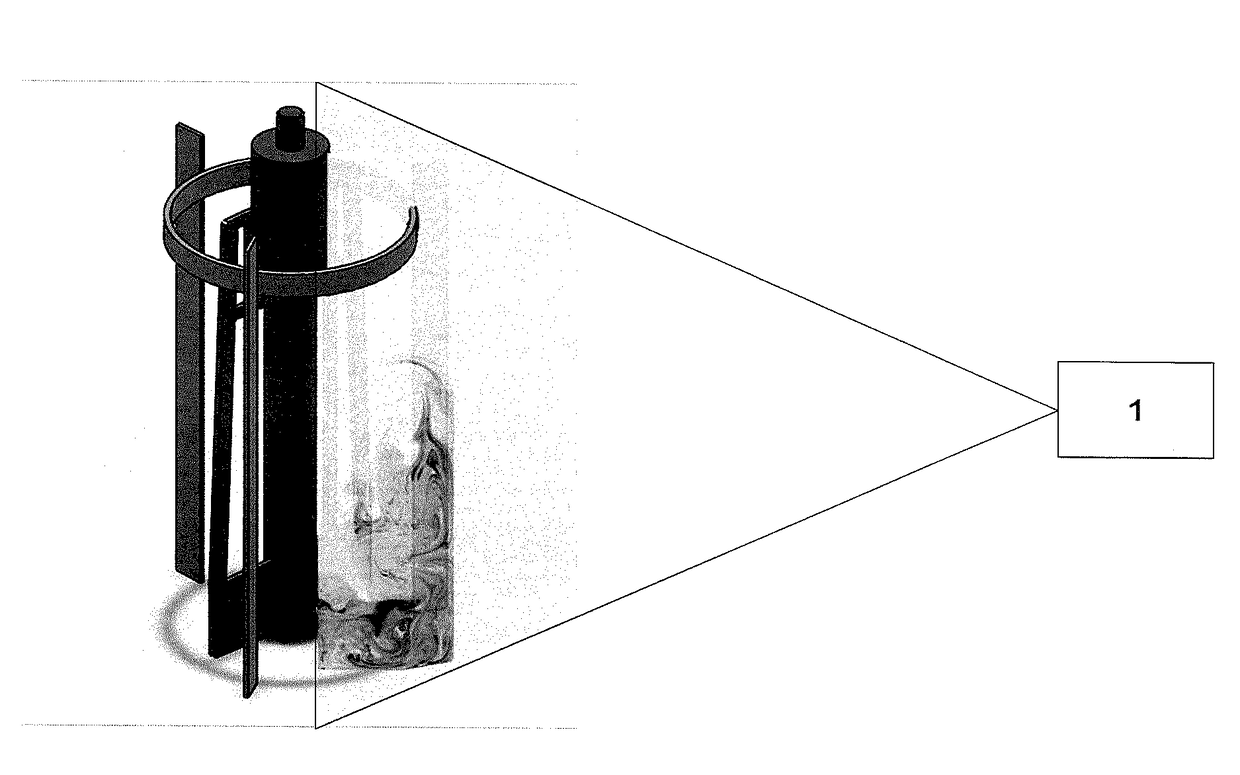
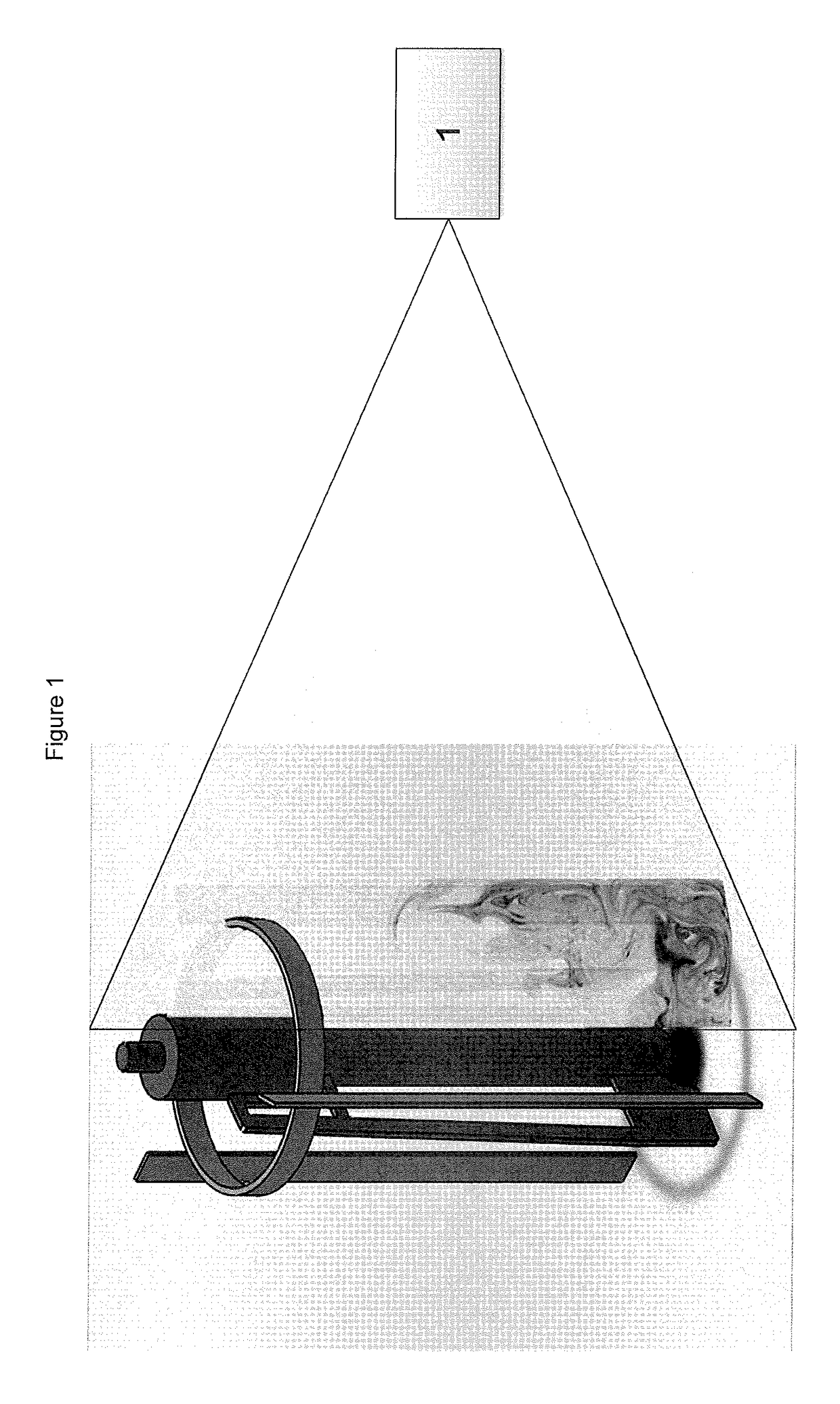
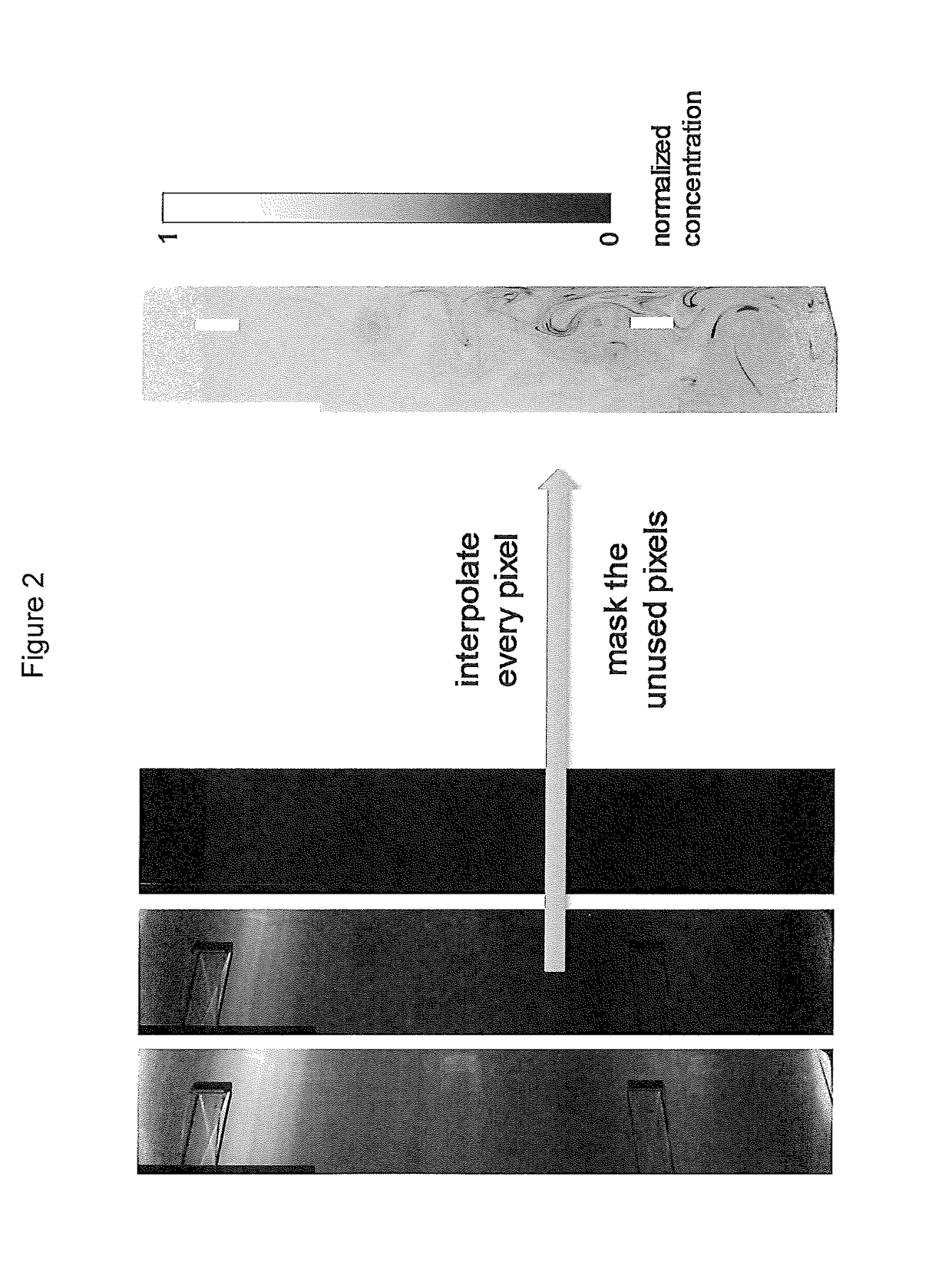
Examples
example
[0165]The present invention will now be illustrated by the following non-limiting example.
[0166]The apparatus consists of
[0167]1. A transparent acrylic reactor body that has a 4-inch cylindrical interior and a square exterior. The square exterior minimizes the refractive distortion of the images. The reactor height is 2.14 times the inside diameter, and the reactor has a bottom inlet on the centreline, another inlet in the side wall, and an outlet in the upper head.
[0168]2. A MaxBlend impeller designed for this unusually tall tank. (MaxBlend impellers are normally installed in tanks with aspect ratios from 1 to 1.5).
[0169]3. A test fluid of 74% glycerol in water, giving it a viscosity of about 0.03 Pa·s. Half of this fluid was dyed with 0.25 mg / L sodium fluorescein.
[0170]4. All necessary fluid reservoirs and pumps, calibrated for the current test fluid.
[0171]5. A continuous-wave argon-ion laser emitting light at 488 nm.
[0172]6. A CCD camera equipped with a Schott Optical Glass Long ...
PUM
| Property | Measurement | Unit |
|---|---|---|
| pressure | aaaaa | aaaaa |
| temperature | aaaaa | aaaaa |
| pressure | aaaaa | aaaaa |
Abstract
Description
Claims
Application Information
 Login to View More