This helps you quickly interpret patents by identifying the three key elements:
Problems solved by technology
Method used
Benefits of technology
Benefits of technology
The patent text describes compounds that have cleavable groups and become pharmaceutically active in vivo. These compounds can be administered as prodrugs, which are inactive forms that are converted to active compounds by solvolysis or under physiological conditions. Examples of prodrugs include cholineester derivatives and N-alkylmorpholine esters. The compounds described in the patent are effective in treating or preventing conditions in humans or animals. The text also describes the therapeutically and prophylactically effective amounts of the compounds.
Problems solved by technology
Unfortunately the duration of response to targeted kinase inhibitors is typically less than 2 years, and most lung tumors do not express an oncogene that is targeted by an available drug.
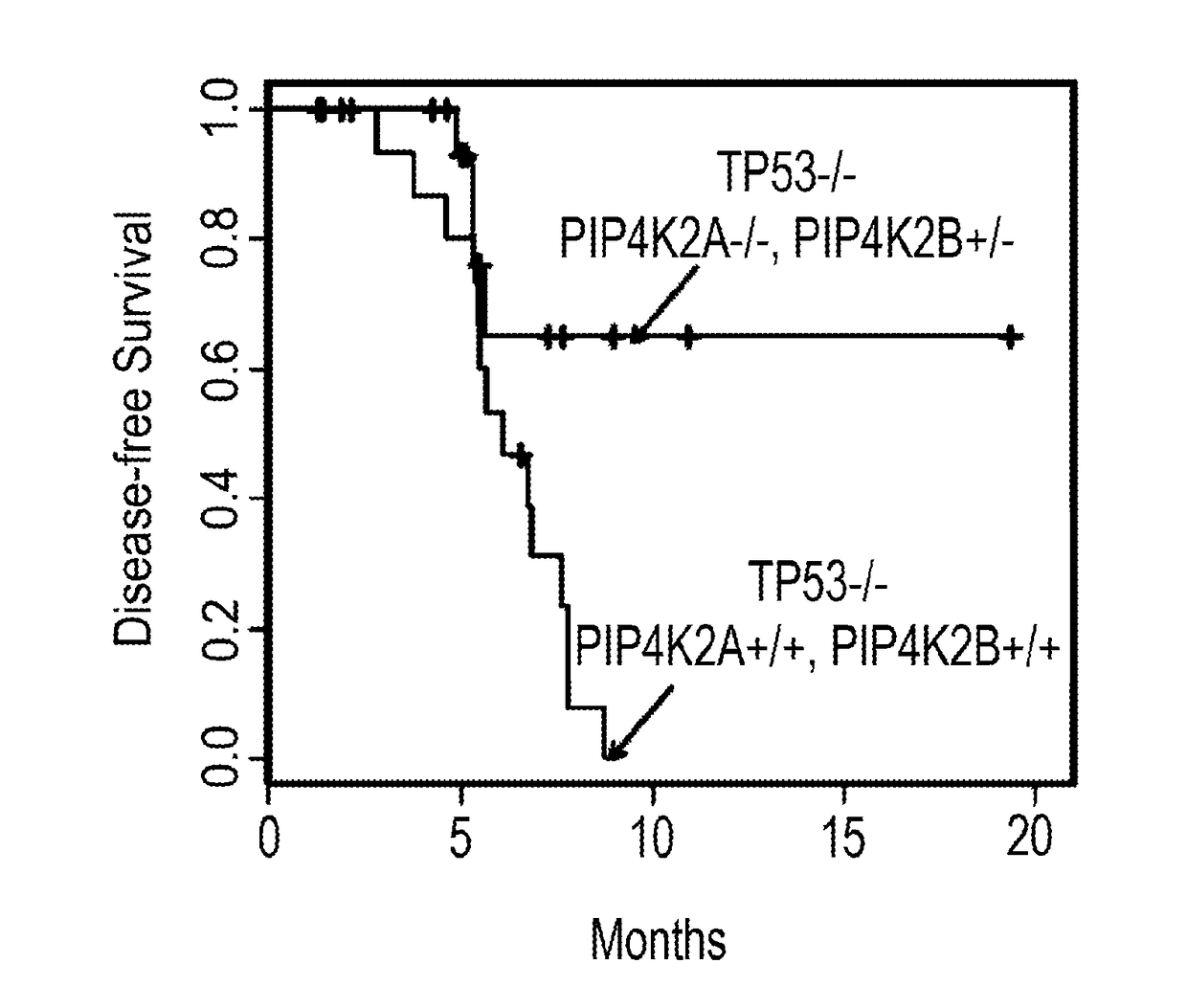
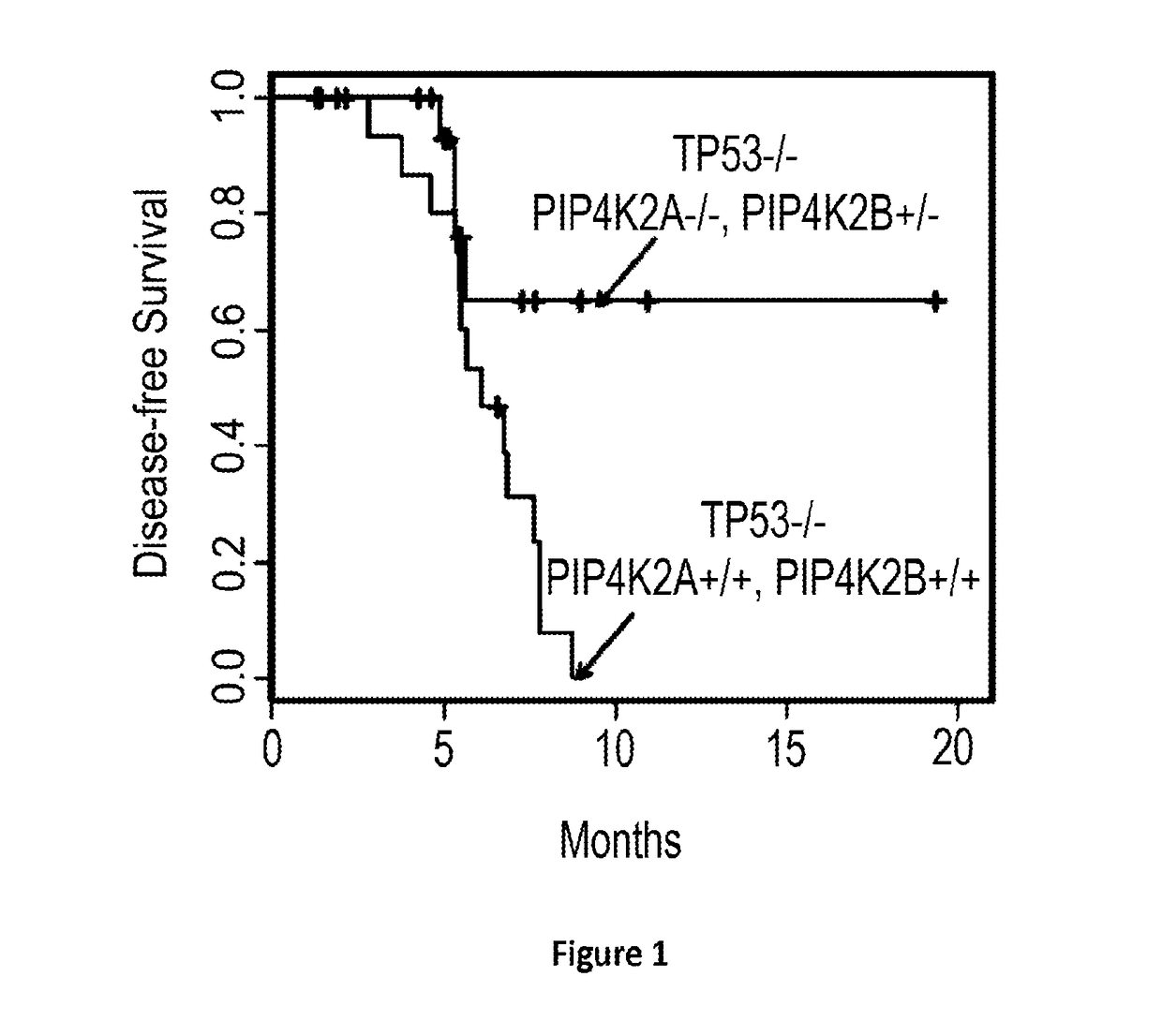
For example, loss of p53 is a common event in lung cancer, but there are currently limited drugs that can exploit its loss.
Method used
the structure of the environmentally friendly knitted fabric provided by the present invention; figure 2 Flow chart of the yarn wrapping machine for environmentally friendly knitted fabrics and storage devices; image 3 Is the parameter map of the yarn covering machine
View more
Image
Smart Image Click on the blue labels to locate them in the text.
Viewing Examples
Smart Image
Click on the blue label to locate the original text in one second.
Reading with bidirectional positioning of images and text.
Smart Image
Examples
Experimental program
Comparison scheme
Effect test
example 1
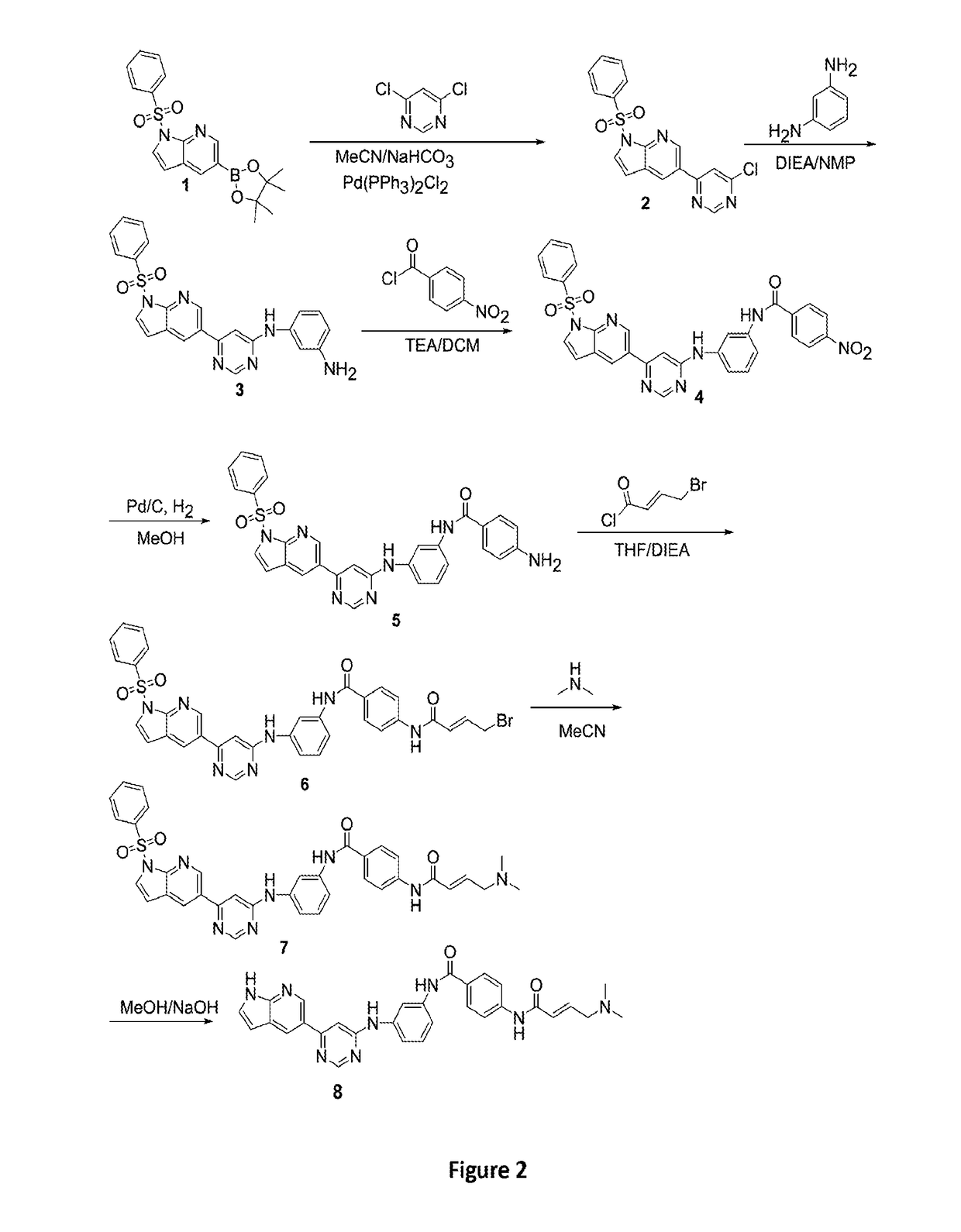
esis of (E)-N-(3-((6-(1H-pyrrolo[2,3-b]pyridin-5-yl)pyrimidin-4-yl)amino)phenyl)-4-(4-(dimethylamino)but-2-enamido)benzamide
[0374]
[0375]Compound 8 was prepared according to the method described in Scheme 1 or the method described below.
[0376]Compound numbers 1 to 8 recited in Example 1 apply only to Example 1, and FIGS. 2, 3A to 3D, 4A, 4B, 5A, and 5B. To a solution of 5-bromo-1H-pyrrolo[2,3-b]pyridine (10 g, 50.7 mmol) in pyridine (100 mL) was added benzenesulfonyl chloride (44.8 g, 253.8 mmol). The resulting mixture was heated to 80° C. for 4h and then concentrated under vacuum. The residue was diluted with EtOAc (300 mL). The pH of the solution was adjusted to 3 with 1M HCl and the resulting mixture was washed with NaHCO3 and water. The organic layer washed with water and brine, dried (Na2SO4), and concentrated. The residue was purified by a silica gel column to afford (15 g, 88%) of the title compound (1) as a slig...
[0385]Compound numbers 1 to 8 recited in Example 2 apply only to Example 2. To a stirred suspension of 5-(6-chloropyrimidin-4-yl)-1-(phenylsulfonyl)-1H-pyrrolo[2,3-b]pyridine (2.0 g, 54 mmol) in NMP, cyclohexane-1,3-diamine (0.74 g, 65 mmol) and DIEA (0.85 g, 65 mmol) was added and the solution was then heated at 150° C. overnight. The solution was cooled down to room temperature and then was diluted with 300 mL of ethyl acetate. The resulted solution was washed with water and brine. After drying with Na2SO4, the solvent was then removed, and the product was obtained by flash chromatography with dichloromethane / methanol (50 / 1) as eluent (1 g, yield 42%).
[0391]Compound numbers 1 to 6 recited in Example 3 apply only to Example 3. To a stirred suspension of 3-bromo-1-(phenylsulfonyl)-1H-indole (5.0 g, 14.87 mmol) in THF (50 mL) was added n-BuLi (2.5 M, 13 mL) at −98° C. and stirred for 5 minutes. Triisopropyl borate (3.37 g, 17.85 mmol) was then added dropwise at the same temperature. After 5 minutes, the reaction was quenched with aqueous HCl (10%), and the pH was adjusted to 6-7 with Na2CO3 (3.6 g, 29.74 mmol), and tetrakis(triphenylphosphine)platinum (1 g) and 4,6-dichloropyrimidine (2.44 g, 16.36 mmol) were added directly, and the solution was refluxed overnight under nitrogen. Ethyl acetate and water were added, and the reaction mixture was filtered over CELITE. The ethyl acetate layer was dried by Na2SO4, the solvent was then removed, and the product was obtained by flash chromatography with petroleumether / dichloromethane=(1 / 2) as eluent (2.8 g, yi...
the structure of the environmentally friendly knitted fabric provided by the present invention; figure 2 Flow chart of the yarn wrapping machine for environmentally friendly knitted fabrics and storage devices; image 3 Is the parameter map of the yarn covering machine
Login to View More
PUM
Property
Measurement
Unit
Cell growth
aaaaa
aaaaa
Login to View More
Abstract
The present invention provides novel compounds of Formula (I), and pharmaceutically acceptable salts, solvates, hydrates, polymorphs, co-crystals, tautomers, stereoisomers, isotopically labeled derivatives, prodrugs, and compositions thereof. Also provided are methods and kits involving the inventive compounds or compositions for treating or preventing proliferative diseases (e.g., cancers (e.g., lungcancer, breast cancer, leukemia, lymphoma, melanoma, multiple myeloma, Ewing's sarcoma, osteosarcoma, brain cancer, neuroblastoma), benign neoplasms, angiogenesis, inflammatory diseases, autoinflammatory diseases, and autoimmune diseases) in a subject. Treatment of a subject with a proliferative disease using a compound or composition of the invention may inhibit the aberrant activity of a kinase (e.g. a proteinkinase (e.g. a cyclin-dependent kinase (CDK) (e.g. CDK7, CDKl2, or CDKl3) or a lipid kinase such as a phosphatidylinositol-5-phosphate 4-kinase (PIP4K) (e.g., PI5P4Kα, PI5P4Kβ, or PI5P4Kγ)) in the subject.
Description
RELATED APPLICATION[0001]The present application claims priority under 35 U.S.C. § 119(e) to U.S. provisional application, U.S. Ser. No. 62 / 185,334, filed Jun. 26, 2015, which is incorporated herein by reference.GOVERNMENT SUPPORT[0002]This invention was made with government support under grant number R01CA197329 awarded by the National Institutes of Health. The government has certain rights in the invention.BACKGROUND OF THE INVENTION[0003]Lungcancer is the leading cancer killer worldwide accounting for 1.37 million deaths annually. In the United States, lung cancer causes more deaths than the next three most common cancers combined (colon, breast and pancreatic) and in 2014, an estimated 159,260 Americans will die from lung cancer. Lung cancer arises as a result of environmental exposures, such as smoking, combined with genetic alterations such as deregulation of oncoproteins, including Myc and RAS, and loss of tumor suppressors, such as p53. The vast majority of patients that de...
Claims
the structure of the environmentally friendly knitted fabric provided by the present invention; figure 2 Flow chart of the yarn wrapping machine for environmentally friendly knitted fabrics and storage devices; image 3 Is the parameter map of the yarn covering machine
Login to View More
Application Information
Patent Timeline
Application Date:The date an application was filed.
Publication Date:The date a patent or application was officially published.
First Publication Date:The earliest publication date of a patent with the same application number.
Issue Date:Publication date of the patent grant document.
PCT Entry Date:The Entry date of PCT National Phase.
Estimated Expiry Date:The statutory expiry date of a patent right according to the Patent Law, and it is the longest term of protection that the patent right can achieve without the termination of the patent right due to other reasons(Term extension factor has been taken into account ).
Invalid Date:Actual expiry date is based on effective date or publication date of legal transaction data of invalid patent.



 Login to View More