
Testing facility for ageing exhaust gas systems
a technology of exhaust gas system and testing facility, which is applied in the direction of exhaust gas recirculation, exhaust treatment, structural/machine measurement, etc., can solve the problems of ash-forming components oxidizing or degenerating, extremely small diameter, and ash turning into ash, so as to increase the significance of measured values and simplify the effect of regulation
- Summary
- Abstract
- Description
- Claims
- Application Information
AI Technical Summary
Benefits of technology
Problems solved by technology
Method used
Image

Examples
example a
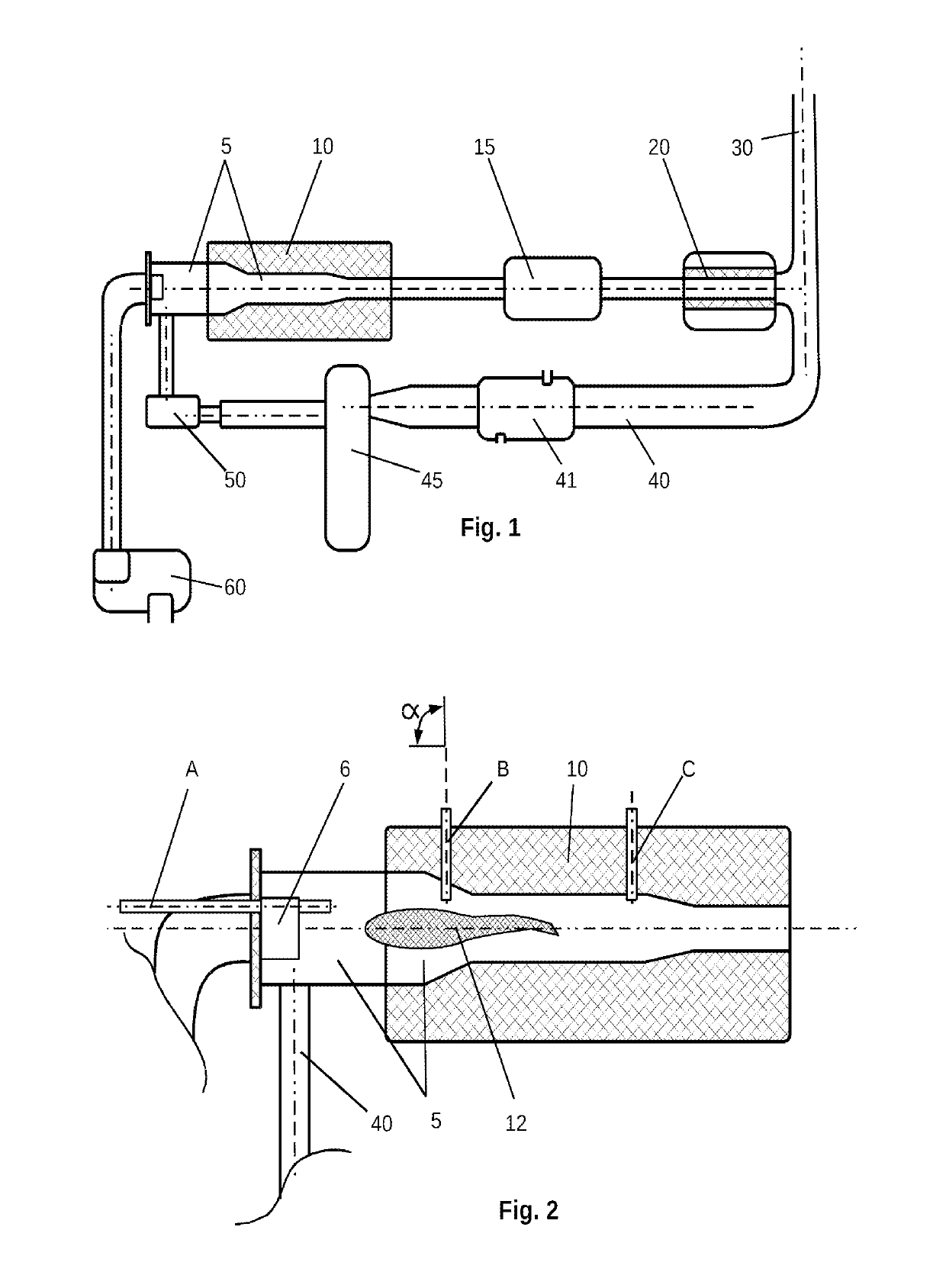
[0029 can be advantageous since the ash-forming component is injected into the cold region of the burner 5 and thus the danger of carbonization in the ash-forming component inflow itself, such as for example through deposits on the inside wall or nozzle thereof, is minimized. The example B, supply inflow into the flame, can be preferred since the ash-forming component is oxidized immediately and substantially completely and converted into ash with great reliability. Equally, injection can take place after the flame 12 (see Example C) since it is here again somewhat cooler. Where applicable, an additional after-burn can be required.
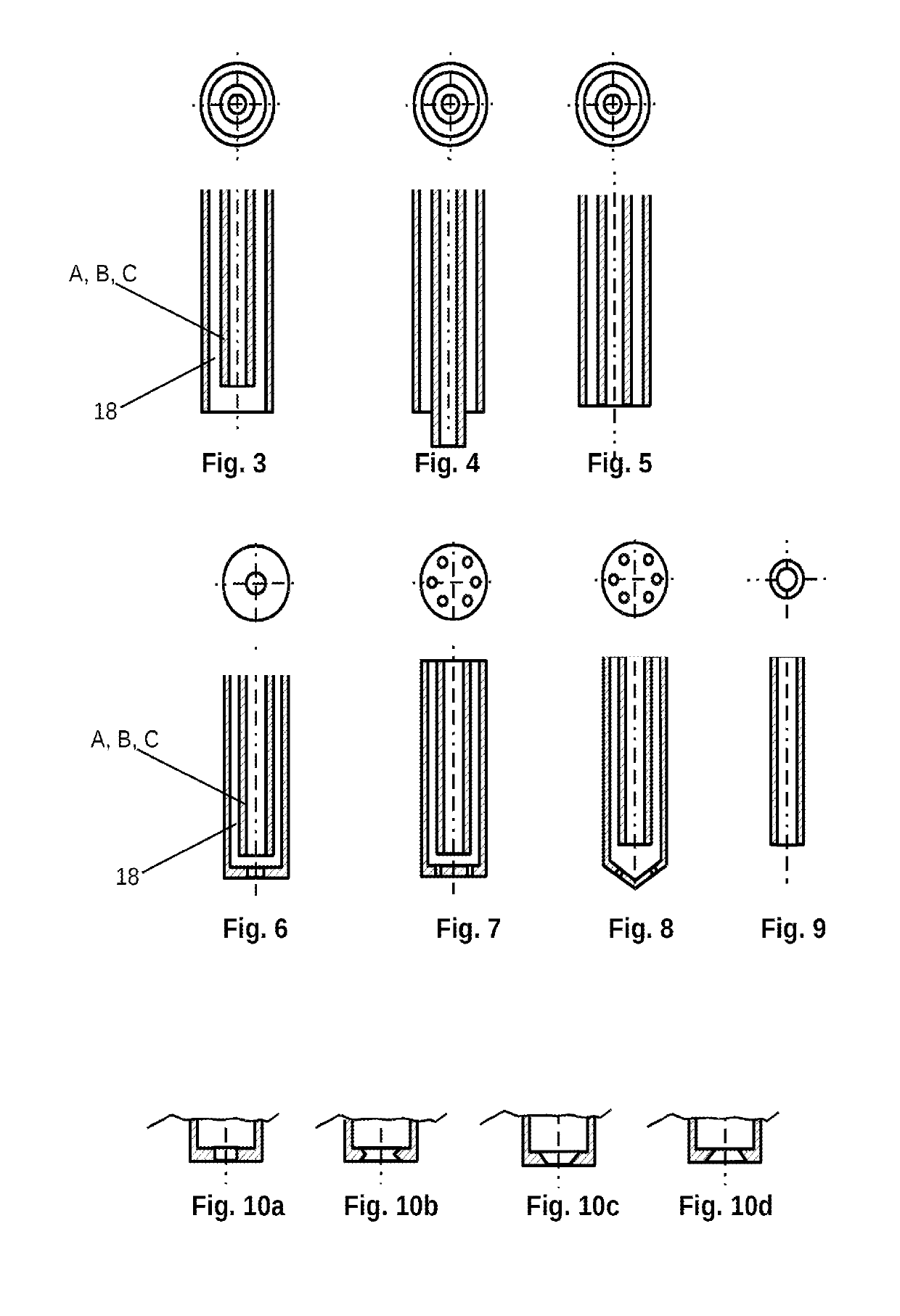
[0030]FIGS. 3 to 9 show different nozzles wherein the corresponding nozzle is shown in a view from below in the upper part of each figure. FIG. 9 shows the simplest case already mentioned where the ash-forming component inflow is designed only as a pipe with an open blunt end. This design is particularly suitable at position A since here no high temperatur...
PUM
 Login to View More
 Abstract
Description
Claims
Application Information
 Login to View More