Unlock instant, AI-driven research and patent intelligence for your innovation.

High-throughput imaging-based methods for predicting cell-type-specific toxicity of xenobiotics with diverse chemical structures

a xenobiotic and chemical structure technology, applied in the field of in vivo cell-specific toxicity prediction of compounds, can solve the problems of long turnaround time, damage to ptcs, becs, avcs, acute kidney/lung injury or chronic kidney/lung disease, etc., and achieve the effect of accurate cell-type specificity and cost-effectiveness

Inactive Publication Date: 2020-10-01
AGENCY FOR SCI TECH & RES
View PDF3 Cites 0 Cited by
  • Summary
  • Abstract
  • Description
  • Claims
  • Application Information

AI Technical Summary

Benefits of technology

The invention provides a way to quickly and accurately predict the toxic effects of various chemicals on different types of cells. This approach is affordable and can be used with a wide variety of chemicals.

Problems solved by technology

After uptake, xenobiotics and their metabolites / intermediates may damage the PTCs, BECs, and AVCs; and lead to acute kidney / lung injuries or chronic kidney / lung diseases.
Animal testing is a standard approach, but suffers from the problems of long turnaround time, low throughput, and sometimes poor prediction of human toxicity (Krewski et al., J Toxicol Environ Health Part B 13: 51-138 (2010)).
This approach is especially unsuitable for evaluating the large numbers of existing and ever-increasing numbers of novel synthetic compounds, such as chemicals and nanoparticles.
However, most QSAR models do not consider the biological contexts of compound exposure, and therefore have limited applications in predicting the complex biological responses, such as organ-specific toxicity, of compounds with diverse chemical structures.
However, most of the current cell-based assays were either tested with very small numbers of nephrotoxicants (usually Mol Pharm 11: 1933-1948 (2014)), or were poorly predictive of organ-specific toxicity in large-scale studies (Lin and Will Toxicol Sci 126: 114-127 (2012)).
Therefore, accurate prediction of nephrotoxicity remains challenging, and there is currently no regulatory approved in vitro test for nephrotoxicity.
Furthermore, the RNA isolation and qPCR steps of the IL-6 / 8 measurements used in our previous studies are difficult and costly to be automated for high-throughput applications.
However, they have very poor prediction of in vivo toxicity even for moderate numbers of pulmonary toxic compounds (˜5-10) (Seagrave et al., Exp Toxicol Pathol 57: 233-238 (2005); Sayes et al., Toxicol Sci 97(1): 163-180 (2007)).
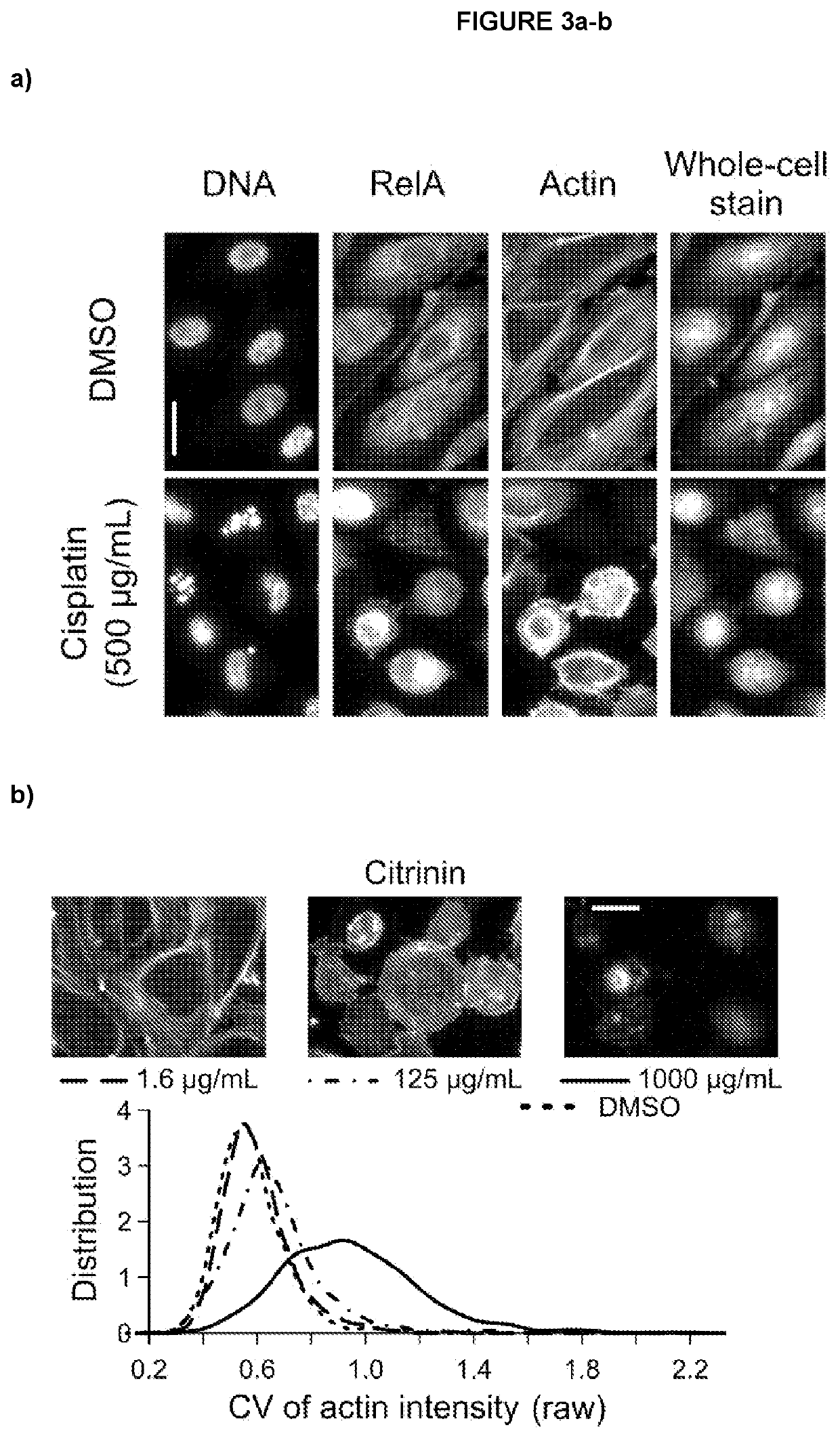
Xenobiotic-induced injuries impair cellular functions and lead to changes in cellular phenotypes, such as reorganization and changes in cellular and subcellular structures.
There are two key limitations of these previous imaging-based toxicity assays.
First, most of them only extract spatial-independent features from the cellular images.
Due to these two limitations, most of these previous works either did not evaluate or obtained very poor performances in predicting organ-specific toxicity.

Method used

the structure of the environmentally friendly knitted fabric provided by the present invention; figure 2 Flow chart of the yarn wrapping machine for environmentally friendly knitted fabrics and storage devices; image 3 Is the parameter map of the yarn covering machine
View more

Image

Smart Image Click on the blue labels to locate them in the text.
Viewing Examples
Smart Image
  • High-throughput imaging-based methods for predicting cell-type-specific toxicity of xenobiotics with diverse chemical structures
  • High-throughput imaging-based methods for predicting cell-type-specific toxicity of xenobiotics with diverse chemical structures
  • High-throughput imaging-based methods for predicting cell-type-specific toxicity of xenobiotics with diverse chemical structures

Examples

Experimental program
Comparison scheme
Effect test

examples

Reference Compounds for Nephrotoxicity Study

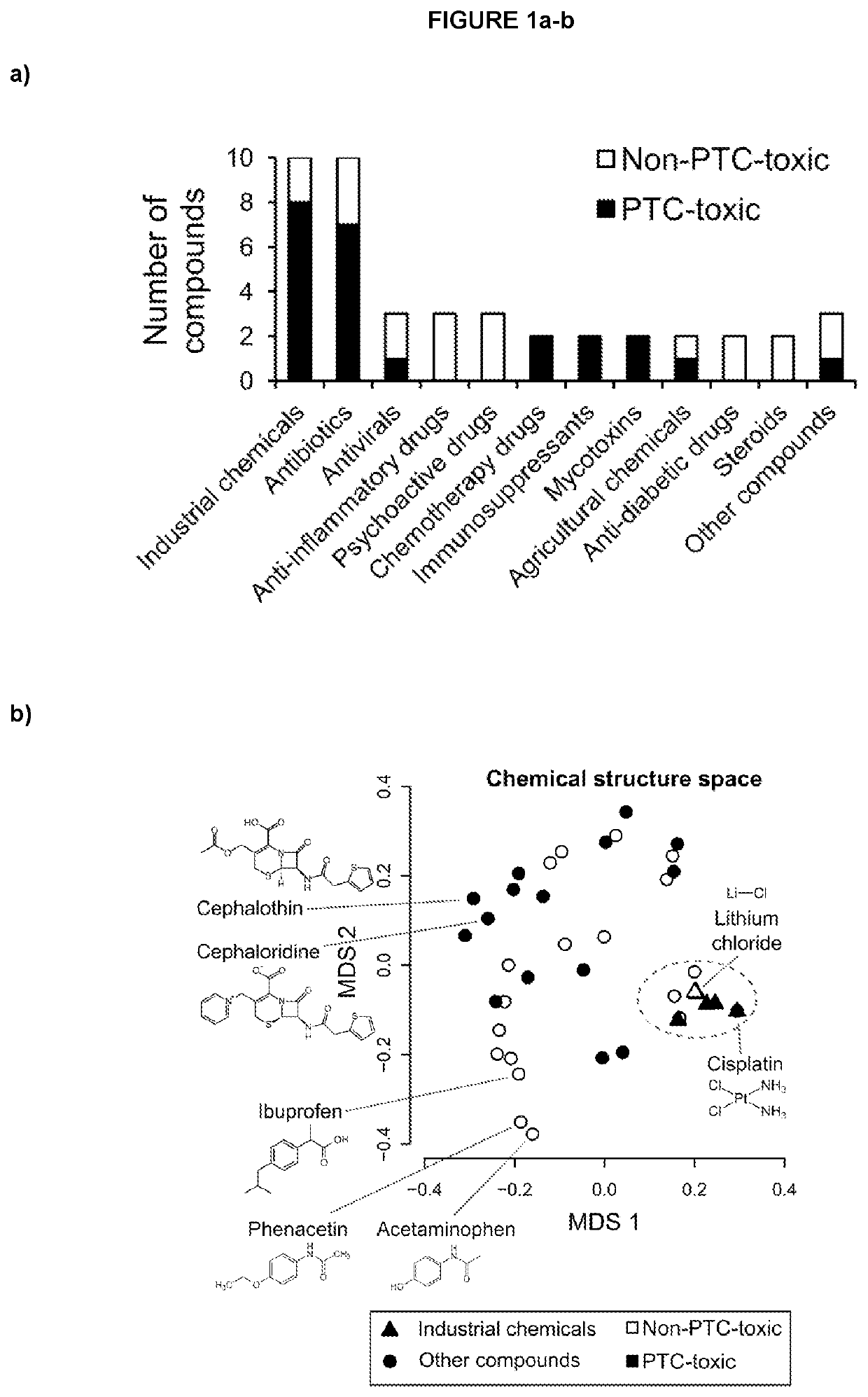
[0134]For the HPTC-A dataset (DNA / RelA / actin / WCS), we used 44 xenobiotic compounds. The “PTC-toxic” group had 24 nephrotoxicants known to damage human proximal tubular cells (PTCs), and the “non-PTC-toxic” group had 12 nephrotoxicants not known to damage PTCs and 8 non-nephrotoxicants (detailed information on the PTC toxicity of most of the compounds can be found in our reports (Li et al., Mol Pharm 11: 1982-1990 (2014); Kandasamy et al., Sci Rep. doi: 10.1038 / srep12337 (2015)). For the HPTC-B and HK-2 datasets (DNA / γH2AX / actin / WCS), 42 of the compounds were used (excluding lead acetate and hydrocortisone). The compounds were dissolved in either DMSO at a stock concentration of 50 mg / mL, or water at a stock concentration of 10 mg / mL. The full list of reference compounds and their sources, solvents, and known human kidney and liver toxicity are provided in Table 1.

TABLE 1Reference nephrotoxic compounds.CASPTC-NephroHepatoHPTC-HPTC-Drug name...

the structure of the environmentally friendly knitted fabric provided by the present invention; figure 2 Flow chart of the yarn wrapping machine for environmentally friendly knitted fabrics and storage devices; image 3 Is the parameter map of the yarn covering machine
Login to View More

PUM

No PUM Login to View More

Abstract

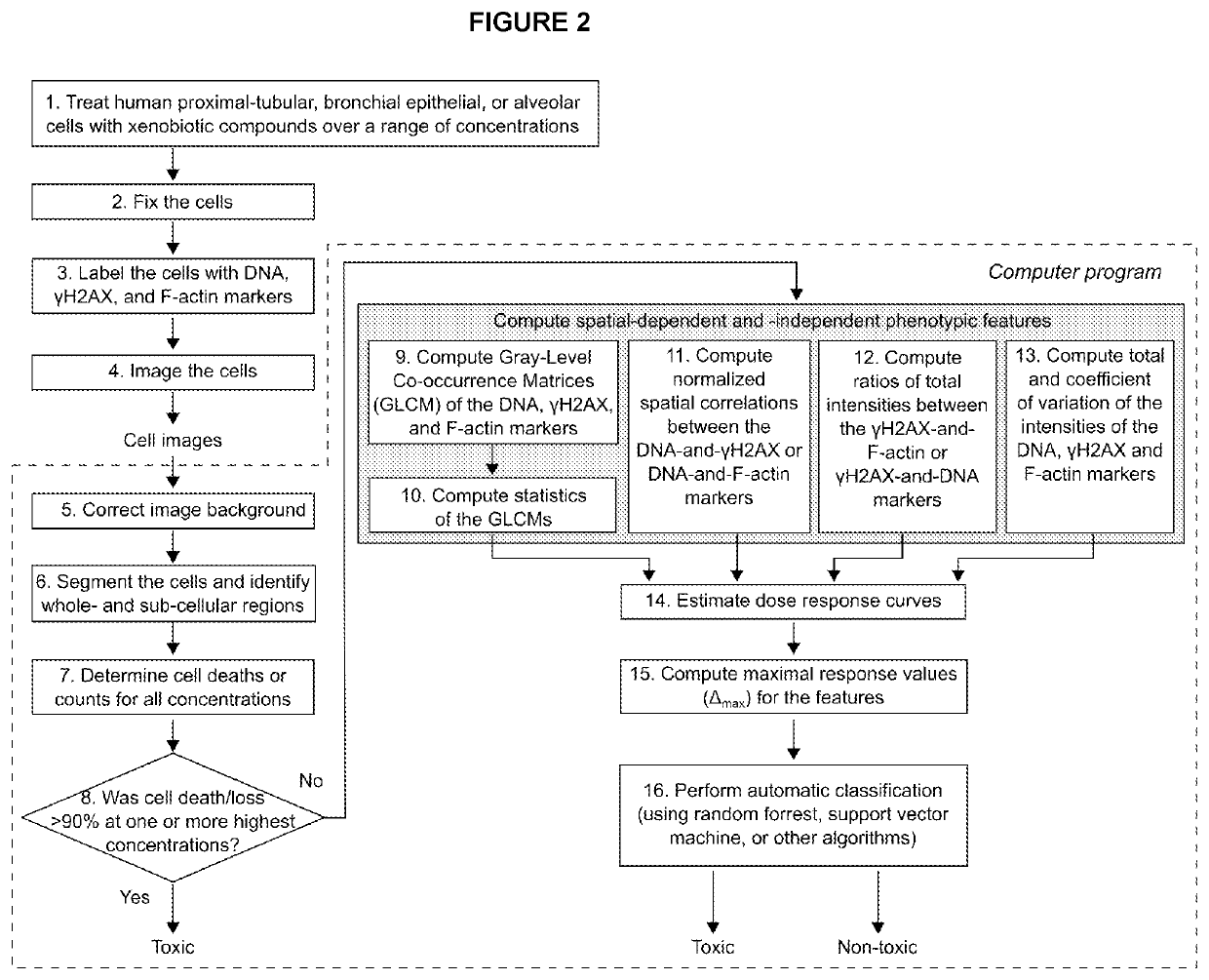
The present invention provides methods for the prediction of in vivo cell-specific toxicity of a compound that combines high-throughput imaging of cultured cells, quantitative phenotypic profiling, and machine learning methods. More particularly, the invention provides a method for the prediction of in vivo renal proximal tubular-, bronchial-epithelial-, and alveolar-cell-specific toxicities of a soluble or particulate compound that comprises contacting cultured human kidney and pulmonary cells with the compound at a range of concentrations, then labeling the cells with DNA, γH2AX and actin markers and obtaining textural features, spatial correlation features, ratios of the markers, intensity features, cell count and morphology, estimating dose response curves and performing automatic classification of the compound using a random-forest algorithm.

Description

FIELD OF THE INVENTION[0001]The present invention provides methods for the prediction of in vivo cell-specific toxicity of a compound that combines high-throughput imaging of cultured cells. More particularly, the invention provides a method for the prediction of in vivo renal proximal-tubular-, bronchial-epithelial-, and alveolar-cell-specific toxicities of a soluble or particulate compound that combines high-throughput imaging of cultured human kidney and pulmonary cells.BACKGROUD OF THE INVENTION[0002]The kidney and lung play an important role in the metabolism and / or elimination of xenobiotics from the plasma. Foreign compounds originating from medicine, food, or the environment are transported and metabolized by the renal proximal tubular cells (PTCs), bronchial epithelial cells (BECs), and alveolar cells (AVCs). After uptake, xenobiotics and their metabolites / intermediates may damage the PTCs, BECs, and AVCs; and lead to acute kidney / lung injuries or chronic kidney / lung diseas...

Claims

the structure of the environmentally friendly knitted fabric provided by the present invention; figure 2 Flow chart of the yarn wrapping machine for environmentally friendly knitted fabrics and storage devices; image 3 Is the parameter map of the yarn covering machine
Login to View More

Application Information

Patent Timeline
no application Login to View More
IPC IPC(8): G01N33/50G01N1/30G06T7/00G06T7/10G01N21/64G16B20/00
CPCG01N21/6428G06T7/0012G06T2207/30024G01N1/30G01N2021/6439G06T2207/10056G01N33/5014G06T7/10G01N2001/302G06T2207/10064G16B20/00
Inventor LOO, LIT-HSINLEE, JIA YINGSU, RANZINK, DANIELEXIONG, SIJING
Owner AGENCY FOR SCI TECH & RES