Check patentability & draft patents in minutes with Patsnap Eureka AI!

Novel substituted tricyclic compounds as indoleamine 2,3-dioxygenase inhibitors

a technology of indoleamine and tricyclic compounds, which is applied in the field of new substituted tricyclic compounds as indoleamine 2, 3dioxygenase inhibitors, can solve the problem that the fetus cannot fully explain the survival of fetal allografts

Pending Publication Date: 2021-12-30
MERCK SHARP & DOHME LLC
View PDF0 Cites 0 Cited by
  • Summary
  • Abstract
  • Description
  • Claims
  • Application Information

AI Technical Summary

Benefits of technology

This patent documents the discovery of new chemical compounds that can inhibit a protein called IDO. These compounds have potential to treat or prevent diseases and disorders associated with IDO. The patent also includes uses of these compounds and compositions containing them for the prevention or treatment of IDO-related diseases or disorders.

Problems solved by technology

Anatomic separation of mother and fetus and antigenic immaturity of the fetus cannot fully explain fetal allograft survival.

Method used

the structure of the environmentally friendly knitted fabric provided by the present invention; figure 2 Flow chart of the yarn wrapping machine for environmentally friendly knitted fabrics and storage devices; image 3 Is the parameter map of the yarn covering machine
View more

Image

Smart Image Click on the blue labels to locate them in the text.
Viewing Examples
Smart Image
  • Novel substituted tricyclic compounds as indoleamine 2,3-dioxygenase inhibitors
  • Novel substituted tricyclic compounds as indoleamine 2,3-dioxygenase inhibitors
  • Novel substituted tricyclic compounds as indoleamine 2,3-dioxygenase inhibitors

Examples

Experimental program
Comparison scheme
Effect test

examples 1-2

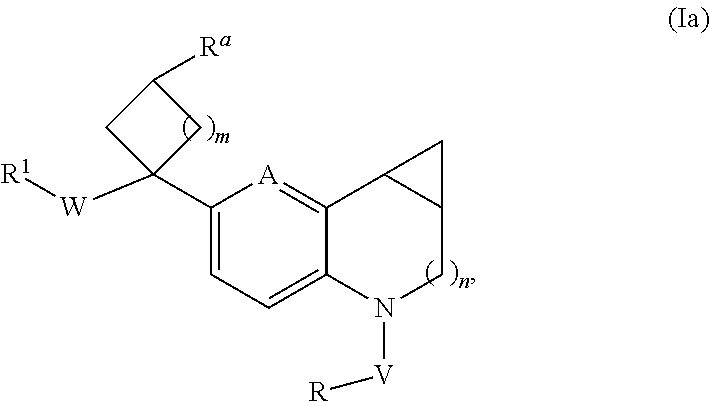
1-((1aR,7bS)-3-(2-methylpyrimidin-4-yl)-1a,2,3,7b-tetrahydro-1H-cyclopropa[c]quinolin-6-yl)cyclopropyl)benzamide (Isomer 1 and Isomer 2)

[0404]

Step 1: 6-bromo-1a,2,3,7b-tetrahydro-1H-cyclopropa[c]quinoline

[0405]

[0406]1a,2,3,7b-Tetrahydro-1H-cyclopropa[c]quinoline (2500 mg, 17.22 mmol) was added to a vial. To this was added 15 mL of DMF and it was then cooled to 0° C. in an ice bath. N-Bromosuccinimide (3064 mg, 17.22 mmol) was added dropwise in 8 mL of DMF and it was stirred for five min and checked by LCMS. After 30 min, the reaction was diluted with water (15 mL) and EtOAc (25 mL). The organics were separated and extracted with 2×25 mL EtOAc. The combined organics were washed with brine, dried with magnesium sulfate, filtered, and then evaporated in vacuo to afford a crude material. The crude was purified on a silica gel column (Hexanes: EtOAc 9:1-7:3) to afford the title compound as a an oil. MS (ESI) m / z calc'd for C10H11BrN [M+H]+ 224. found 224.

Step 2: tert-butyl 1a,2-dihydro-1...

examples 3-4

ropanecarbonyl)-1a,2,3,7b-tetrahydro-1H-cyclopropa[c]quinolin-6-yl)-N-(4-fluorophenyl)cyclobutanecarboxamide (Isomers 1 and 2)

[0427]

Step 1: cyclopropyl(1a,2-dihydro-1H-cyclopropa[c]quinolin-3(7bH)-yl)methanone

[0428]

[0429]1a,2,3,7b-Tetrahydro-1H-cyclopropa[c]quinoline (0.30 g, 2.066 mmol) was added to a vial along with potassium carbonate (0.857 g, 6.20 mmol). To this was added 4 mL of DCM, and it was then cooled to 0° C. in an ice bath. Cyclopropanecarbonyl chloride (0.376 ml, 4.13 mmol) was added dropwise to this cooled mixture, and it was allowed to slowly warm to RT while stirring overnight for 15 h. When done, the mixture was filtered through a pad of Celite and then evaporated in vacuo to afford a crude material which was then purified via column chromatography (Hexanes: EtOAc 9:1-8:2) to afford the title compound as an oil. MS (ESI) m / z calc'd for C14H16NO [M+H]+ 214.12. found 214.2.

Step 2: (6-bromo-1a,2-dihydro-1H-cyclopropa[c]quinolin-3(7bH)-yl)(cyclopropyl)methanone

[0430]

[0...

example 5

N-(1-(3-(2-methylpyrimidin-4-yl)-1,2,2a,3,8,8a-hexahydrocyclobuta[b]quinolin-6-yl)cyclopropyl)benzamide

[0445]

Step 1: benzyl 8-hydroxy-2,2a,8,8a-tetrahydrocyclobuta[b]quinoline-3(1H)-carboxylate

[0446]

[0447]To a solution of benzyl 8-oxo-2,2a,8,8a-tetrahydrocyclobuta[b]quinoline-3(1H)-carboxylate (5 g, 16.27 mmol) in MeOH (60 mL) was added sodium tetrahydroborate (0.739 g, 19.52 mmol) at 0° C. for 30 min. Then the mixture was quenched with water (30 mL), the solvent was removed in vacuo, extracted with EtOAc (30 mL×3). The organic layers were collected, washed with brine, and dried over Na2SO4. After filtration, the filtrate was concentrated in vacuo to give the crude title compound as an oil, which was used directly in the next step without further purification. MS (ESI) m / z calc'd for C19H20NO3 [M+H]+ 310.14 found 310.0.

Step 2: benzyl 2,2a,8,8a-tetrahydrocyclobuta[b]quinoline-3(1H)-carboxylate

[0448]

[0449]To a solution of benzyl 8-hydroxy-2,2a,8,8a-tetrahydrocyclobuta[b]quinoline-3(1H...

the structure of the environmentally friendly knitted fabric provided by the present invention; figure 2 Flow chart of the yarn wrapping machine for environmentally friendly knitted fabrics and storage devices; image 3 Is the parameter map of the yarn covering machine
Login to View More

PUM

No PUM Login to View More

Abstract

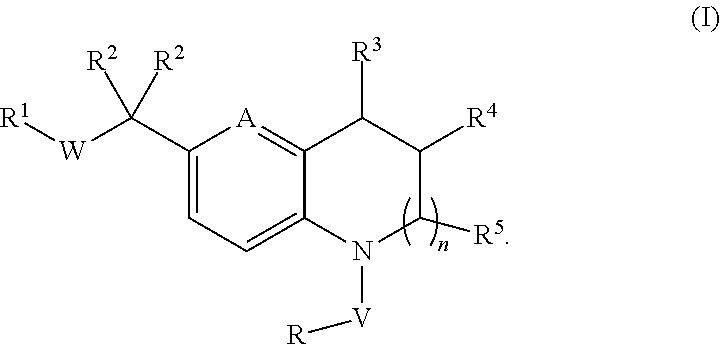
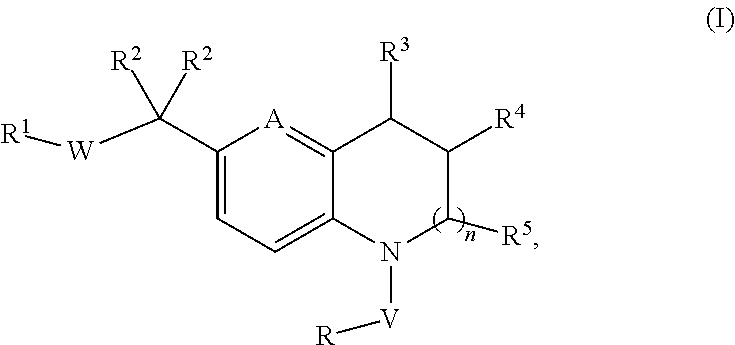
Disclosed herein are compounds of formula (I) which are inhibitors of an IDO enzyme: Formula (I). Also disclosed herein are uses of the compounds in the potential treatment or prevention of an IDO-associated disease or disorder. Also disclosed herein are compositions comprising these compounds. Further disclosed herein are uses of the compositions in the potential treatment or prevention of an IDO-associated disease or disorder.

Description

BACKGROUND OF THE INVENTION[0001]Tryptophan (Trp) is an essential amino acid required for the biosynthesis of proteins, niacin and the neurotransmitter 5-hydroxytryptamine (serotonin). The enzyme indoleamine 2,3-dioxygenase (IDO) catalyzes the first and rate limiting step in the degradation of L-tryptophan to N-formyl-kynurenine. In human cells, a depletion of Trp resulting from IDO activity is a prominent gamma interferon (IFN-γ)-inducible antimicrobial effector mechanism. IFN-γ stimulation induces activation of IDO, which leads to a depletion of Trp, thereby arresting the growth of Trp-dependent intracellular pathogens such as Toxoplasma gondii and Chlamydia trachomatis. IDO activity also has an antiproliferative effect on many tumor cells, and IDO induction has been observed in vivo during rejection of allogeneic tumors, indicating a possible role for this enzyme in the tumor rejection process (Daubener, et al, 1999, Adv. Exp. Med. Biol, 467: 517-24; Taylor, et al, 1991, FASEB J....

Claims

the structure of the environmentally friendly knitted fabric provided by the present invention; figure 2 Flow chart of the yarn wrapping machine for environmentally friendly knitted fabrics and storage devices; image 3 Is the parameter map of the yarn covering machine
Login to View More

Application Information

Patent Timeline
no application Login to View More
IPC IPC(8): C07D471/04C07D401/04C07D215/14C07D209/94C07D403/04
CPCC07D471/04C07D401/04C07D403/04C07D209/94C07D215/14C07D221/16C07D471/08A61P35/00A61P31/12A61P31/14A61P25/24A61P25/28A61P27/12A61P37/06A61P35/02
Inventor HAN, YONGXINBENNETT, DAVID JONATHANBHARATHAN, INDUGUO, LIANGQINHOPKINS, BRETT A.HUANG, XIANHAILI, DERUNLU, MINPASTERNAK, ALEXANDERSLOMAN, DAVID L.ZHANG, HONGJUNZHOU, HUA
Owner MERCK SHARP & DOHME LLC
Features
  • R&D
  • Intellectual Property
  • Life Sciences
  • Materials
  • Tech Scout
Why Patsnap Eureka
  • Unparalleled Data Quality
  • Higher Quality Content
  • 60% Fewer Hallucinations
Social media
Patsnap Eureka Blog
Learn More