
66 kDa antigen from Borrelia
a technology of borrelia and kda, applied in the direction of snake antigen ingredients, bacterial antigen ingredients, peptide sources, etc., can solve the problems of complex diagnosis of lyme disease, ineffective antimicrobial therapy, and ineffective antimicrobial therapy
- Summary
- Abstract
- Description
- Claims
- Application Information
AI Technical Summary
Benefits of technology
Problems solved by technology
Method used
Image

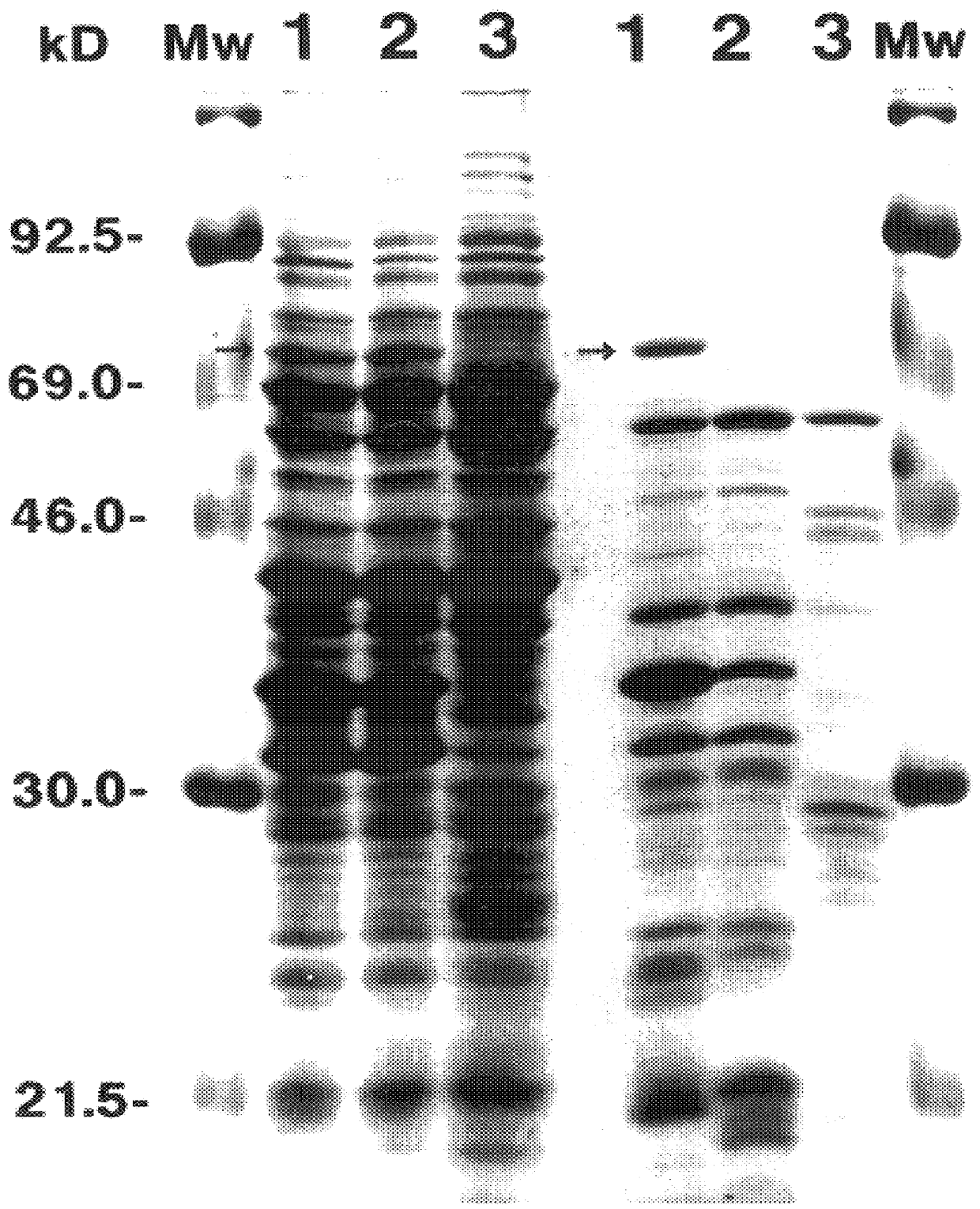
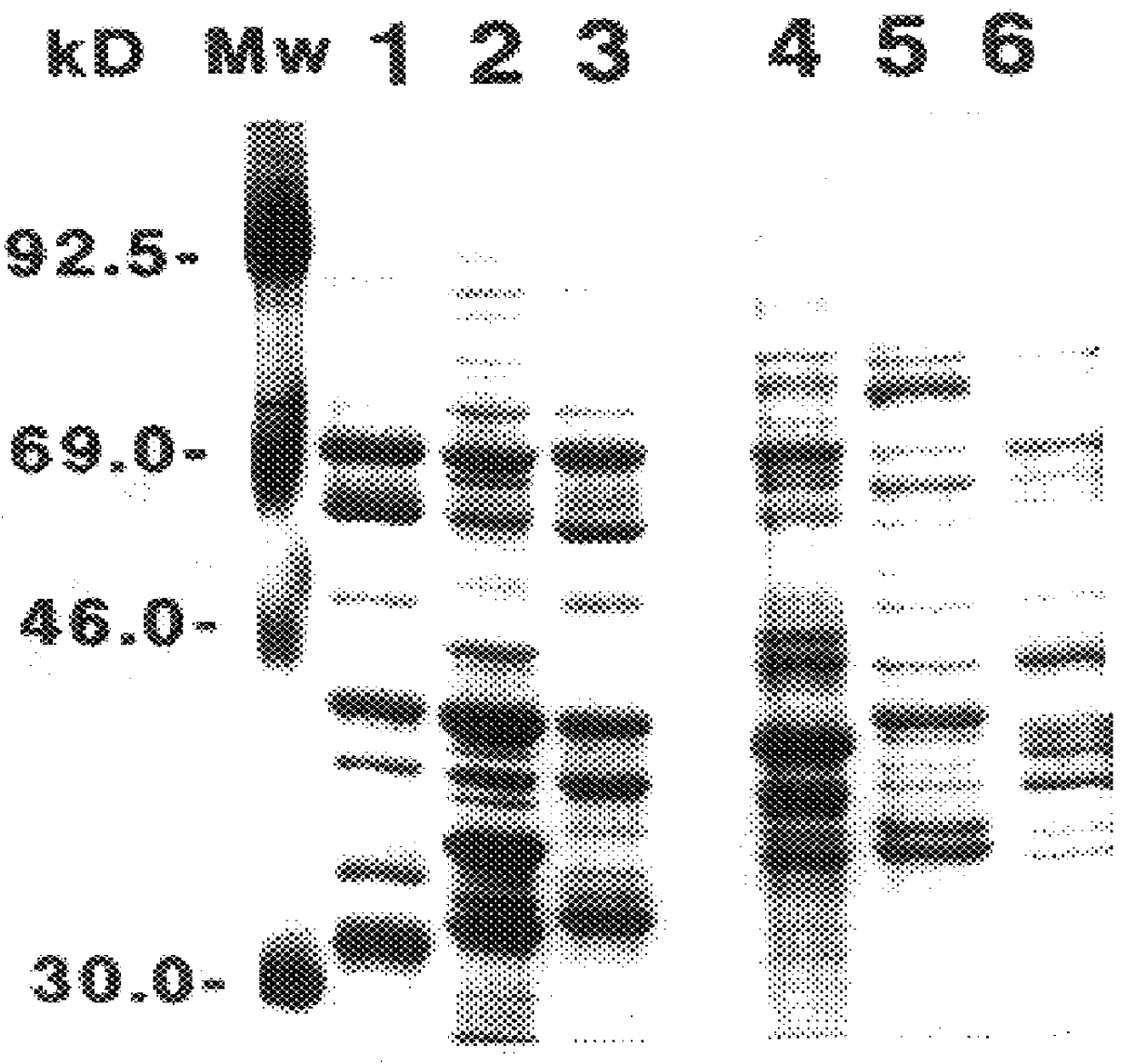
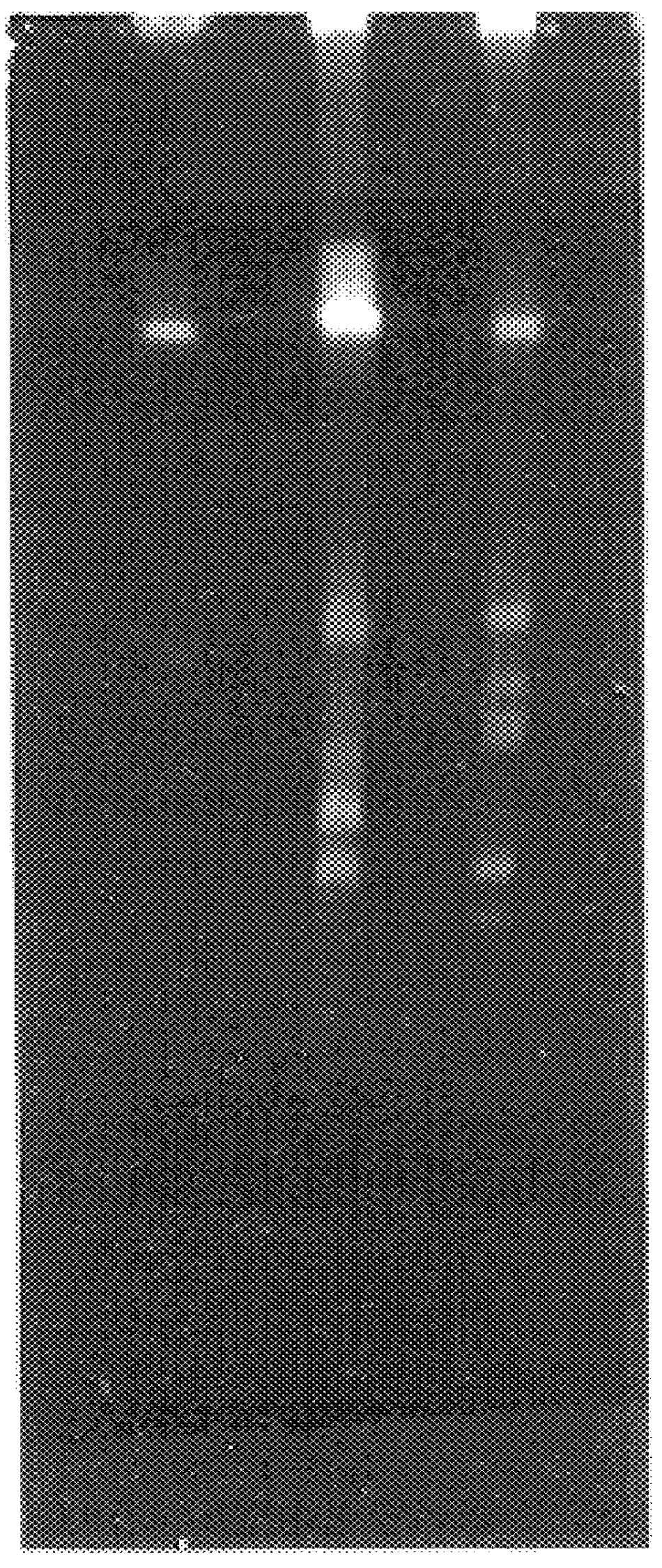
Examples
example 1
Preparation of Borrelia proteins, sodium dodecyl sulphate-polyacrylamide gel electrophoresis (SDS-PAGE), and Western blot.
1.1 Preparation of Borrelia proteins.
For the whole-cell protein preparations, bacteria harvested from 200 ml of BSK II medium were washed twice with phosphate-buffered saline-5mM MgCl.sub.2, (PBS-Mg). The pellet was suspended in 2 ml of PBS, sonicated and the supernatant was collected after centrifugation at 10,000 rpm for 30 min. In some experiments whole-cell lysate was obtained by boiling washed bacteria for 3 min in SDS-PAGE sample buffer.
The subcellular fraction of borreliae outer membrane components (designated Fraction B) was prepared as described elsewhere (WO 90 / 04411). Briefly, cells harvested from 1.5 1 of the culture were washed three times with 10 mM Tris-HCl (pH 7.4), 150 mM NaCl and 5 mM MgCl.sub.2. (TSM buffer). Octyl-.beta.-D-glucopyranoside (OGP) (Sigma St. Louis, Mo.) was added to a final concentration of 2% in 10 ml TSM buffer and the suspensi...
example 2
Preparation of antiserum against 66 kDa.
2.1 Purification of 66 kDa
The 66 kDa protein was purified by 12.5% SDS-PAGE of Fraction B obtained from the B. garinii IP90 spirochaetes. The appropriate band was visualized by staining the gel with 0.05% CB in water without fixation in MeOH and Acetic acid. The protein band contained approximately 100 .mu.g of 66 kDa.
2.2 Immunization of rabbits.
Approximately 100 .mu.g of the 66 kDa protein prepared as described above was homogenised and used in each of four immunizations of one rabbit performed in one and two (for the last immunization) months intervals. Seven serum samples were obtained during a 5 months period, and serum was diluted 1:1,000 when used for Western blot analysis.
example 3
Cell surface proteolysis of Borrelia cells.
3.1 Protease treatment of borreliae cells.
Cell surface proteolysis of B. afzelii ACAI cells was conducted as previously described (Barbour et al. 1984). Briefly, washed spirochaetes were resuspended in PBS-Mg at a concentration of 2.times.10.sup.9 cells / ml. To 950 .mu.l of the cell suspension was added 50 .mu.l of one of the following: distilled water, proteinase K (Sigma, St Louis, Mo.) (4 mg / ml in water) or trypsin (Gibco BRL, Gaithesburg, Md.) (1 mg / ml in 10.sup.-3 M HCl). After incubation for 40 min at 20.degree. C. the proteolytic treatment was stopped by the addition of 10 .mu.l from a solution of the peptidase inhibitor phenylmethylsulfonyl fluoride (PMSF) (Sigma, St. Louis, Mo.) (50 mg of PMSF per 1 ml of isopropanol), and the cells were centrifuged and washed twice with PBS-Mg. The pellets were resuspended in TSM buffer. One-third of the cell suspension of each preparation was subjected to the whole cell protein extraction by boili...
PUM
| Property | Measurement | Unit |
|---|---|---|
| molecular weights | aaaaa | aaaaa |
| molecular weights | aaaaa | aaaaa |
| molecular weight | aaaaa | aaaaa |
Abstract
Description
Claims
Application Information
 Login to View More