

Electrically switchable polymer dispersed liquid crystal materials including transmissive holographic gratings
a liquid crystal material and polymer technology, applied in the field of improved polymer dispersed liquid crystal systems, can solve the problems of inability to change the optical characteristics of the prior art device, the majority of the prior art devices are complex to manufacture, and the offer is not successful, so as to reduce the switching voltage of the subwavelength grating, clear and orderly separation, and high quality holographic gratings
- Summary
- Abstract
- Description
- Claims
- Application Information
AI Technical Summary
Benefits of technology
Problems solved by technology
Method used
Image

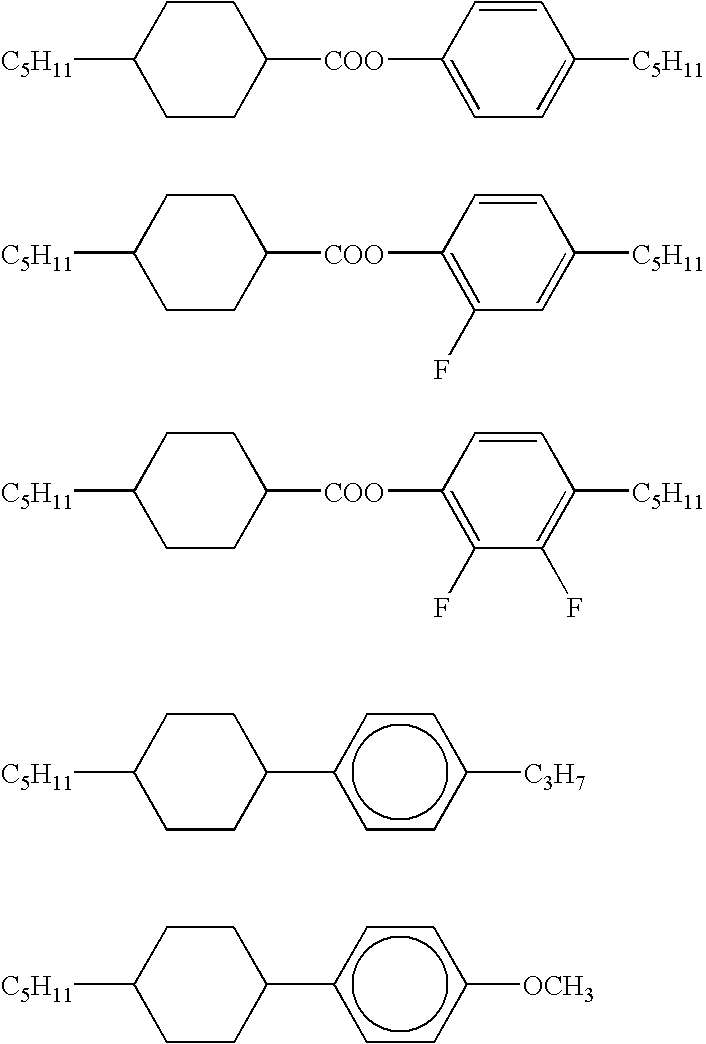

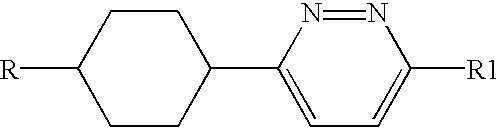
Examples
Embodiment Construction
. Copending patent applications Ser. Nos. 08 / 273,436 now abandoned, and 08 / 273,437, U.S. Pat. No. 5,698,343, Sutherland et al., titled "Switchable Volume Hologram Materials and Devices," and "Laser Wavelength Detection and Energy Dosimetry Badge," respectively, also incorporated herein by reference include background material on the formation of transmission gratings inside volume holograms.
The process by which a hologram is formed according to the invention is controlled primarily by the choice of components used to prepare the homogeneous starting mixture, and to a lesser extent by the intensity of the incident light pattern. The preferred polymer-dispersed liquid crystal ("PDLC") material employed in the practice of the present invention creates a switchable hologram in a single step. A new feature of the preferred PDLC material is that illumination by an inhomogeneous, coherent light pattern initiates a patterned, anisotropic diffusion (or counter diffusion) of polymerizable mon...
PUM
| Property | Measurement | Unit |
|---|---|---|
| thickness | aaaaa | aaaaa |
| voltages | aaaaa | aaaaa |
| wt % | aaaaa | aaaaa |
Abstract
Description
Claims
Application Information
 Login to View More