
Apparatus and averaging method for equalizing signals
a technology of equalizing signals and averaging methods, applied in the field of methods and apparatus for adaptive equalizing signals, can solve the problems of reducing costs and lowering power consumption, and achieve the effect of reducing power consumption
- Summary
- Abstract
- Description
- Claims
- Application Information
AI Technical Summary
Benefits of technology
Problems solved by technology
Method used
Image

Examples
Embodiment Construction
[0027]Throughout the specification, and in the claims, the term “connected” means a direct electrical connection between the things that are connected, without any intermediary devices. The term “coupled” means either a direct electrical connection between the things that are connected, or an indirect connection through one or more passive or active intermediary devices. The term “circuit” means one or more passive and / or active components that are arranged to cooperate with one another to provide a desired function. The term “signal” means at least one current signal, voltage signal or data signal.
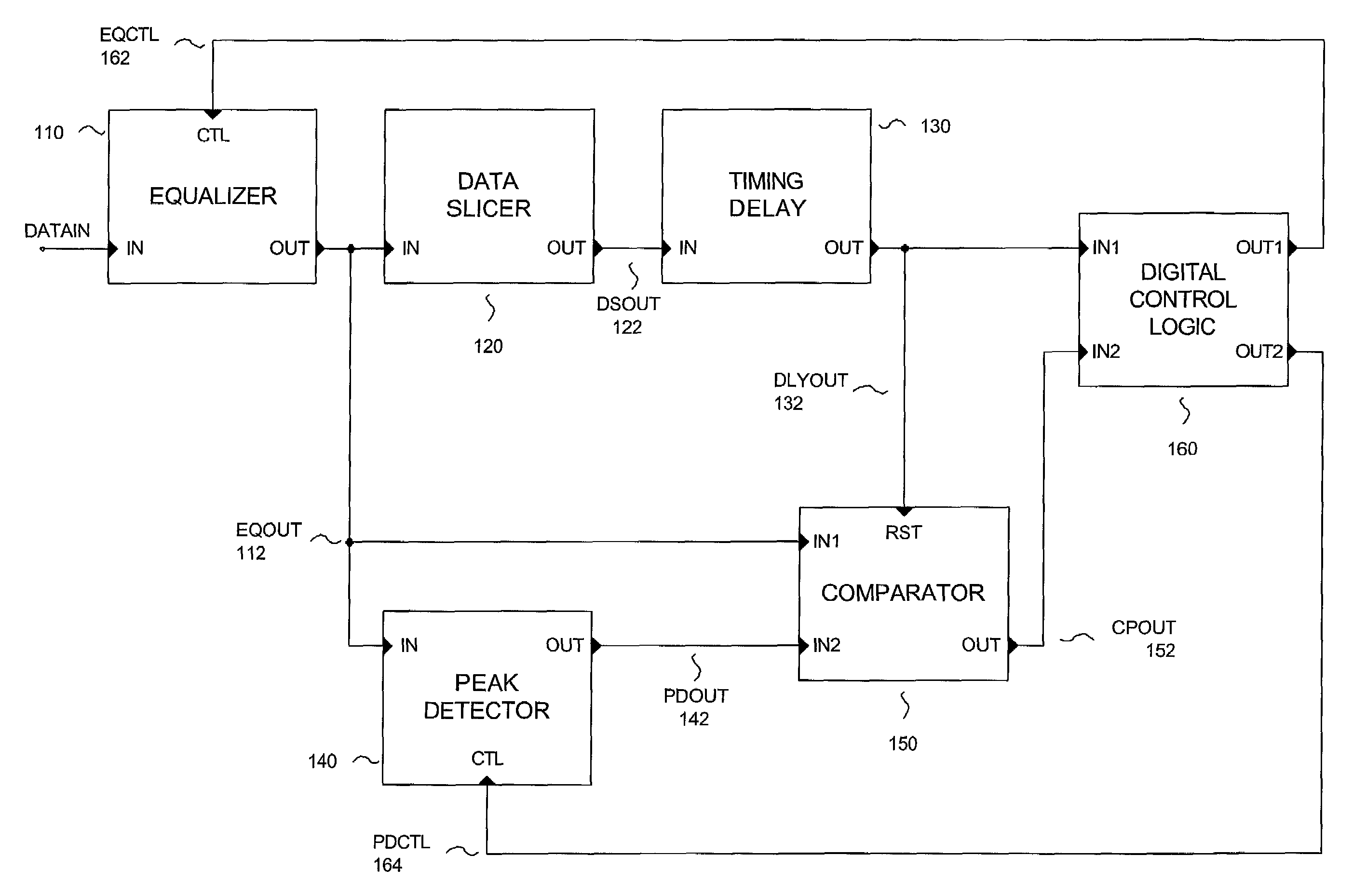
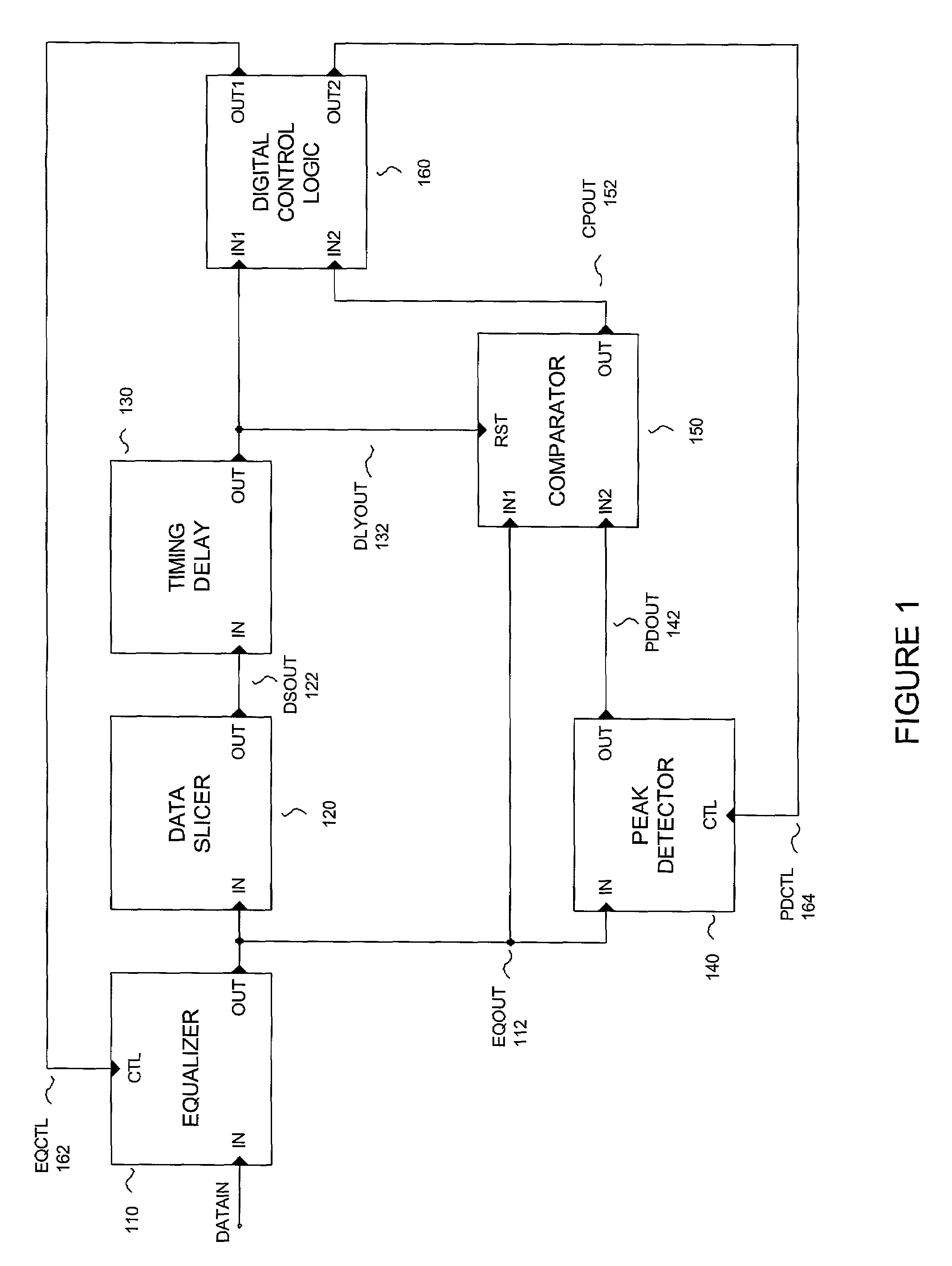
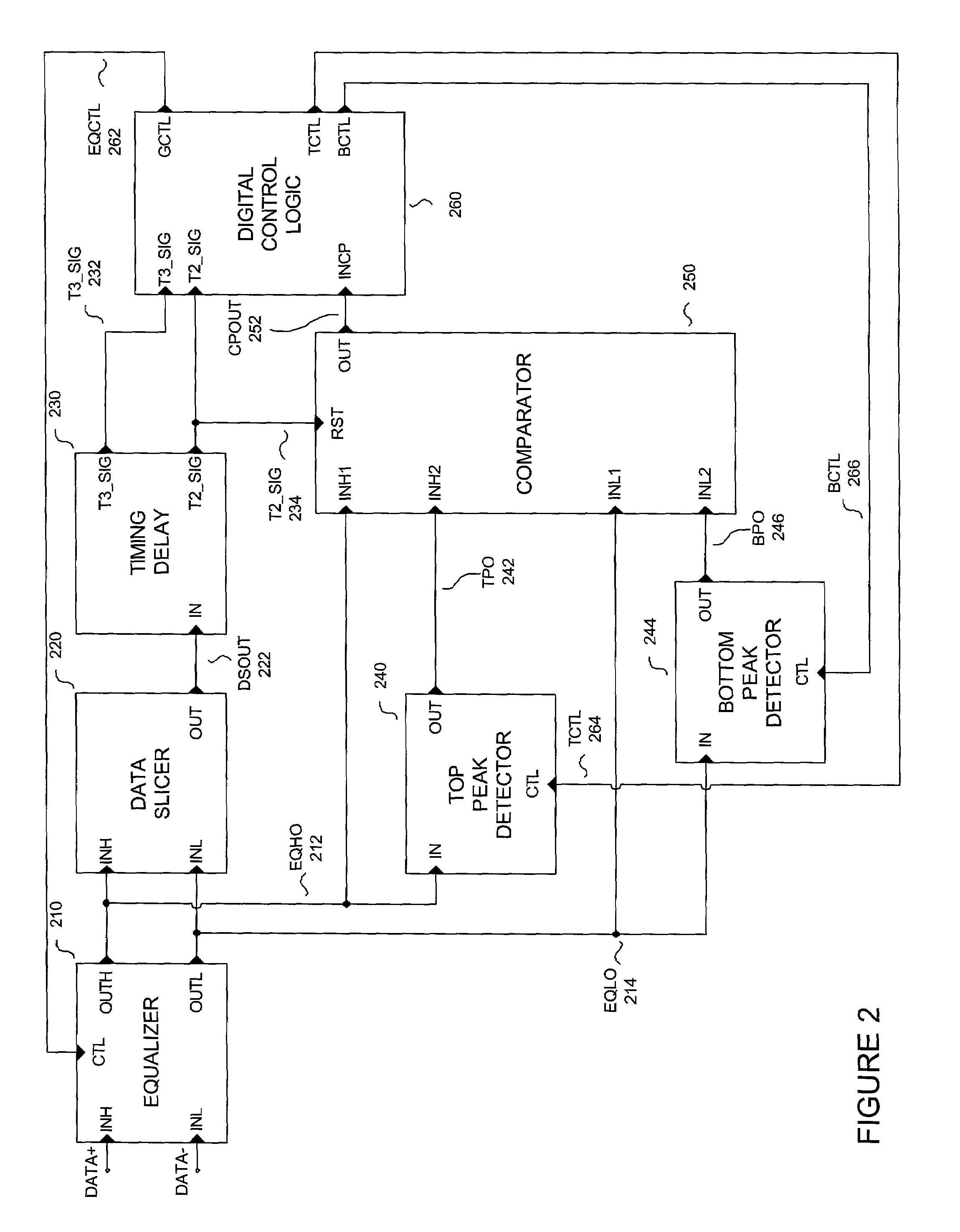
[0028]The present invention relates to a data receiver that receives an input signal. The data receiver includes an equalizer and various electronic circuits that control the equalizer. The electronic circuits adjust the equalization level based upon the received input signal. Digital control logic is utilized to change various control signals to adjust the equalization level. A peak dete...
PUM
 Login to View More
 Abstract
Description
Claims
Application Information
 Login to View More