
Method for producing self-aligned mask, articles produced by same and composition for same
a mask and self-aligning technology, applied in the field of patterns, can solve the problems of reducing and accelerating the passage of interconnect signals, so as to reduce the electromigration attributes of metal lines, maximize the propagation speed of interconnect signals, and reduce the effective dielectric constant of interconnect structures.
- Summary
- Abstract
- Description
- Claims
- Application Information
AI Technical Summary
Benefits of technology
Problems solved by technology
Method used
Image

Examples
Embodiment Construction
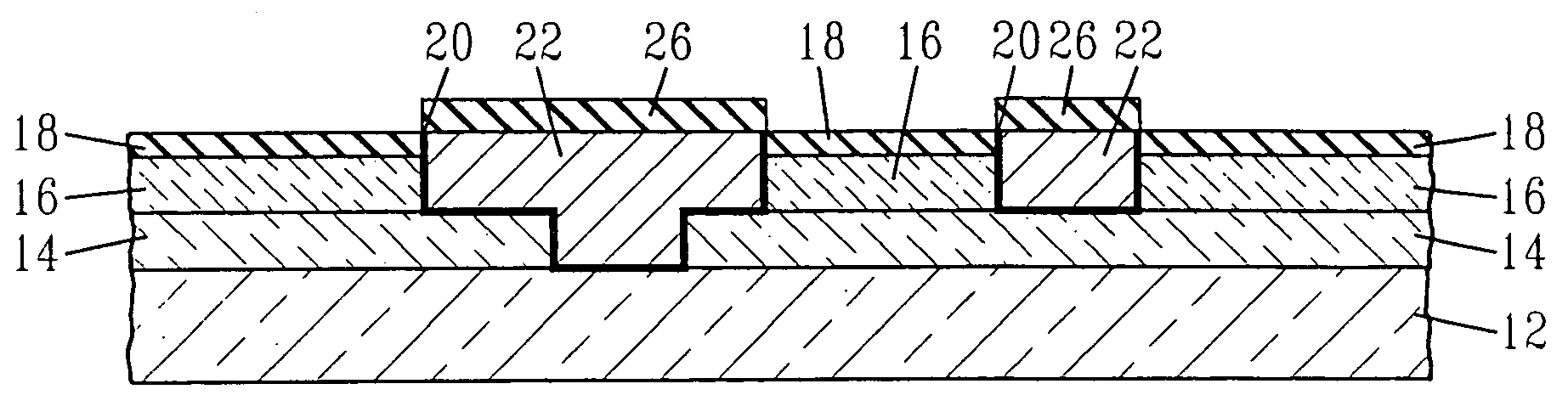
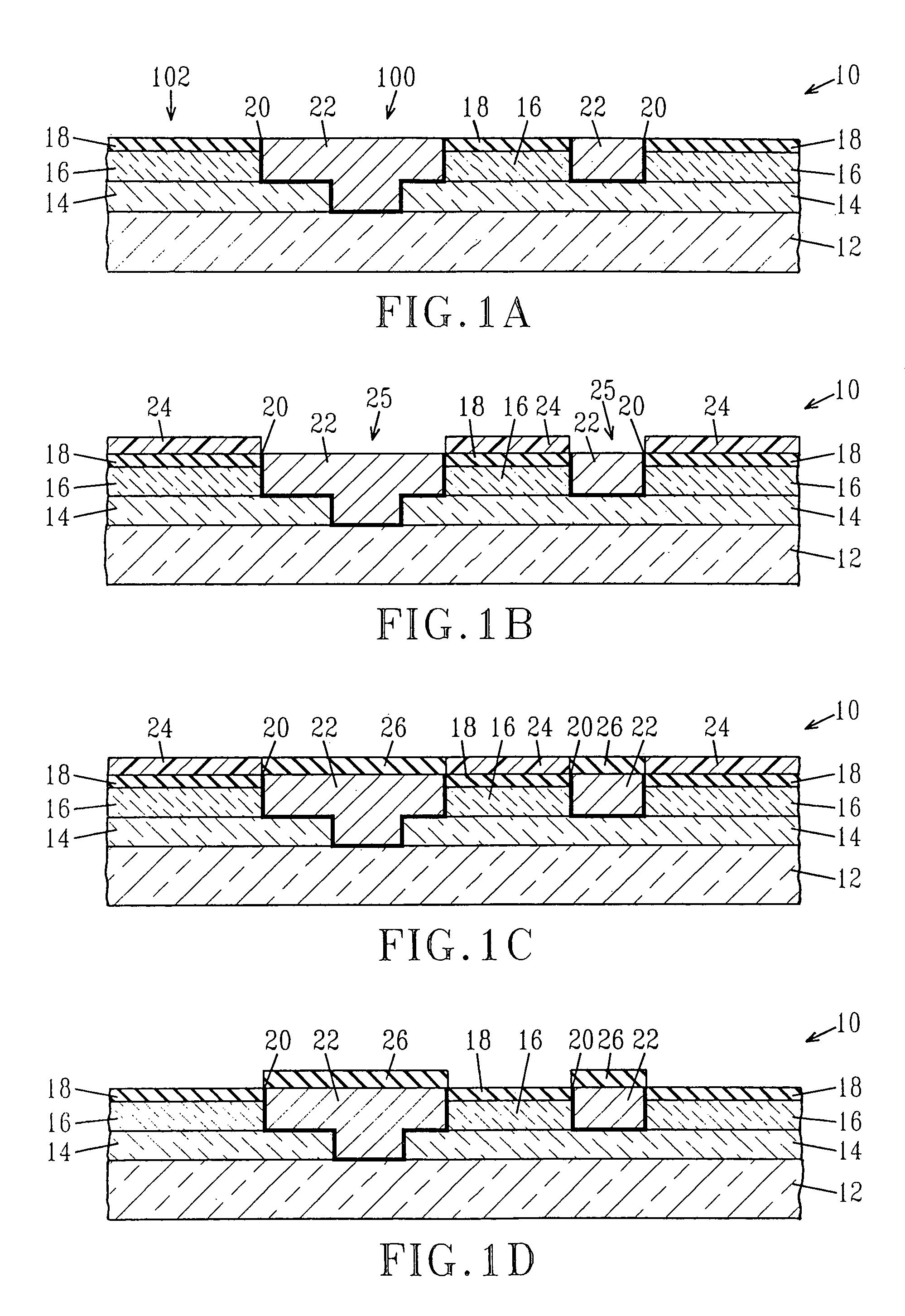
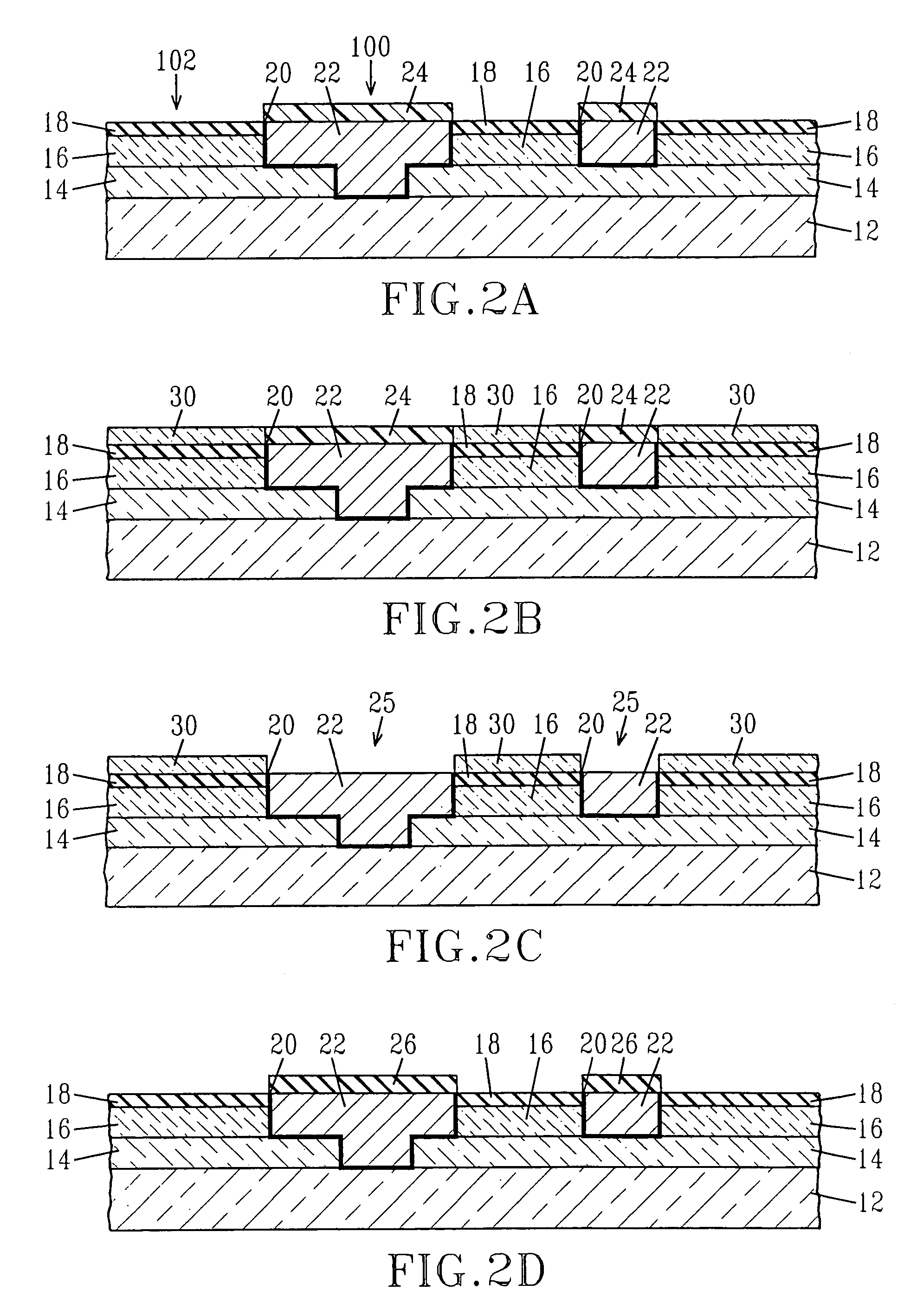
[0027]As stated above, the present invention provides a patterned substrate containing structures having two or more distinct components processed by a route whereby masking layers can be applied to selected component surfaces. These masking layers can be generated by a number of self-assembly approaches described below and can be used as a mask for subsequent treatment or material deposition onto the intended component surfaces. These structures can be sacrificial and, in general, do not remain in the final structure.
[0028]The use of masks for the generation of self assembled barrier layers can proceed by a number of different routes including: blanket deposition, followed by lift-off, blanket deposition followed by chemical mechanical polishing (CMP), and enhancement of selective electrochemical and electroless metal deposition processes. It will be clear to one skilled in the art that the application of a self-aligned masking layer by any of the approaches described herein can be...
PUM
| Property | Measurement | Unit |
|---|---|---|
| dielectric constant | aaaaa | aaaaa |
| dielectric constant | aaaaa | aaaaa |
| wavelength | aaaaa | aaaaa |
Abstract
Description
Claims
Application Information
 Login to View More