
Explosive device utilizing flux compression generator
a technology of flux compression and explosive device, which is applied in the direction of white arms/cold weapons, protective equipment, weapons, etc., can solve the problems that conventional shaped charges and explosively formed penetrators (efp) cannot always cannot meet the requirements of multiple roles, and requires very large lengths and weights, so as to achieve greater efficiency in converting explosive energy
- Summary
- Abstract
- Description
- Claims
- Application Information
AI Technical Summary
Benefits of technology
Problems solved by technology
Method used
Image

Examples
Embodiment Construction
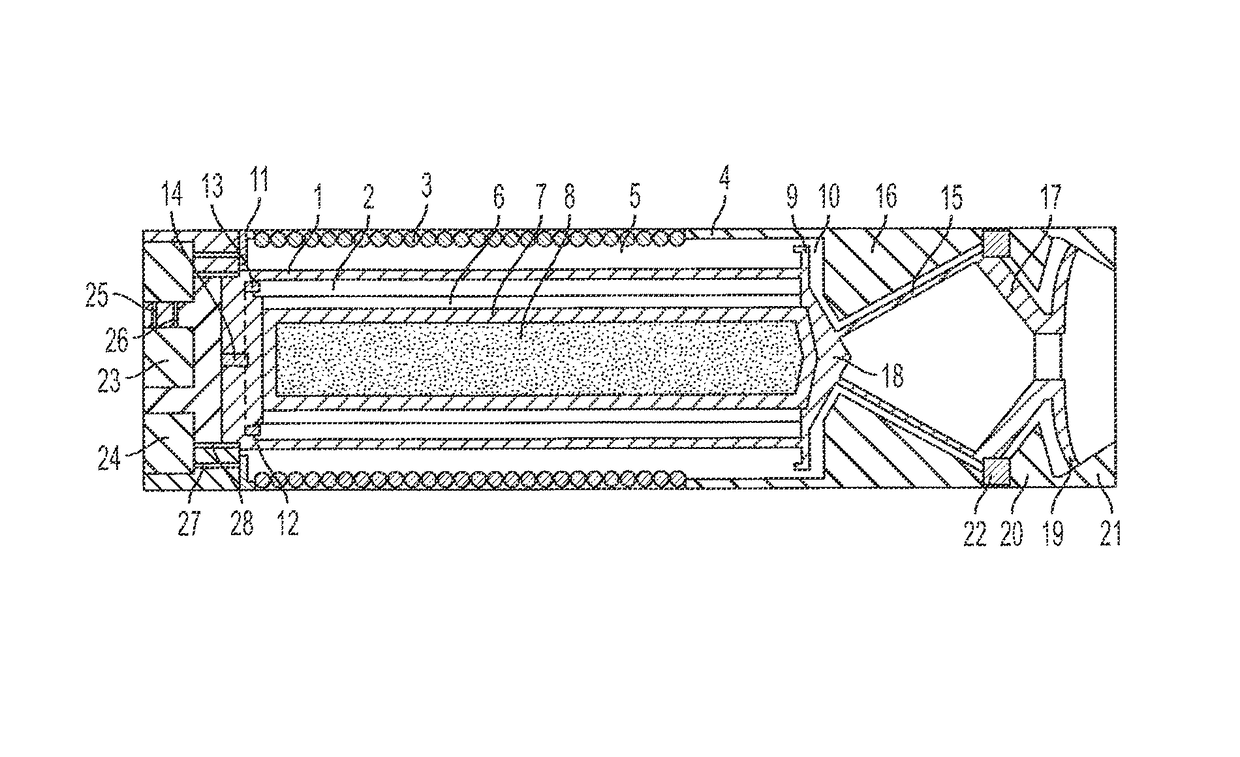
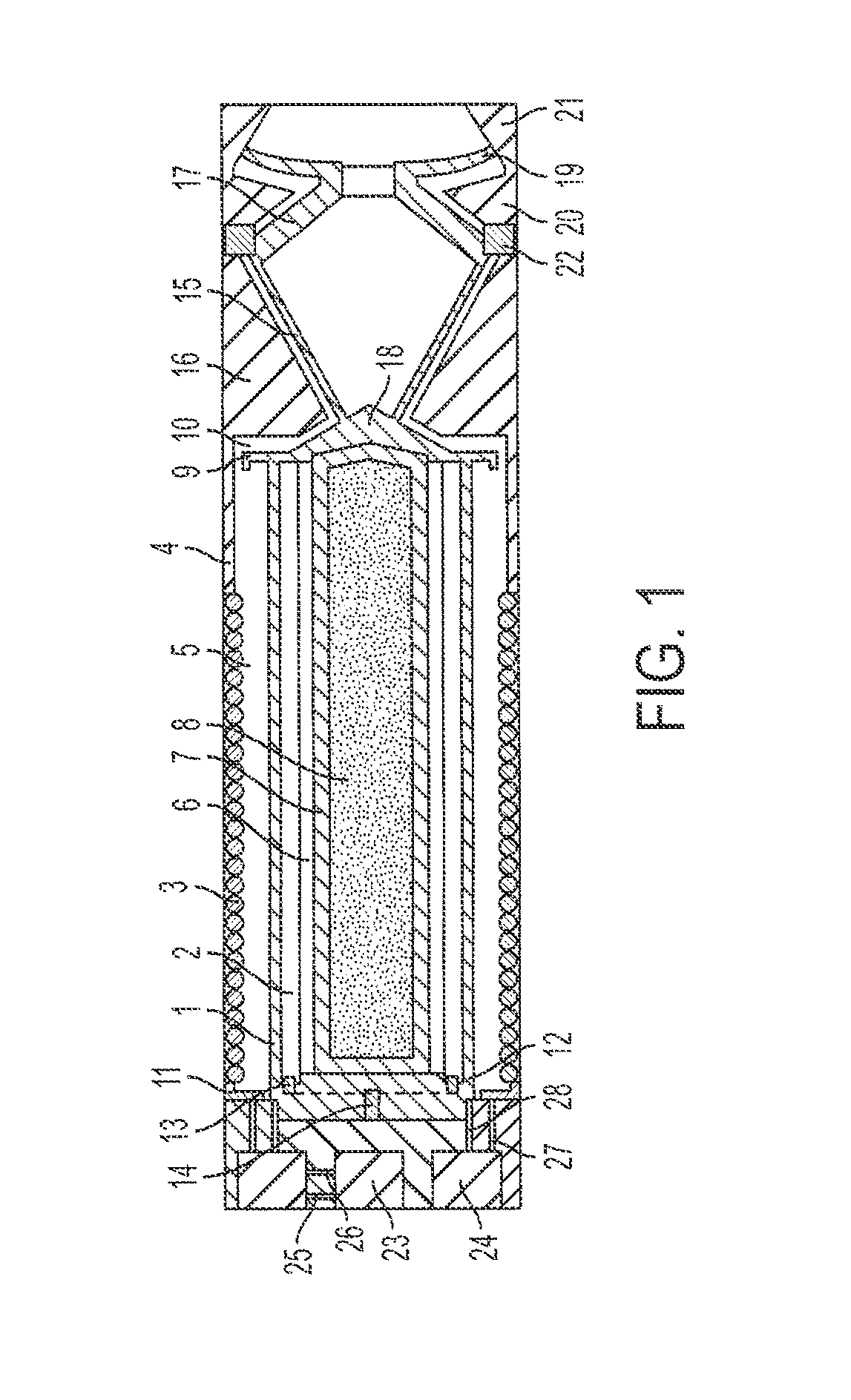
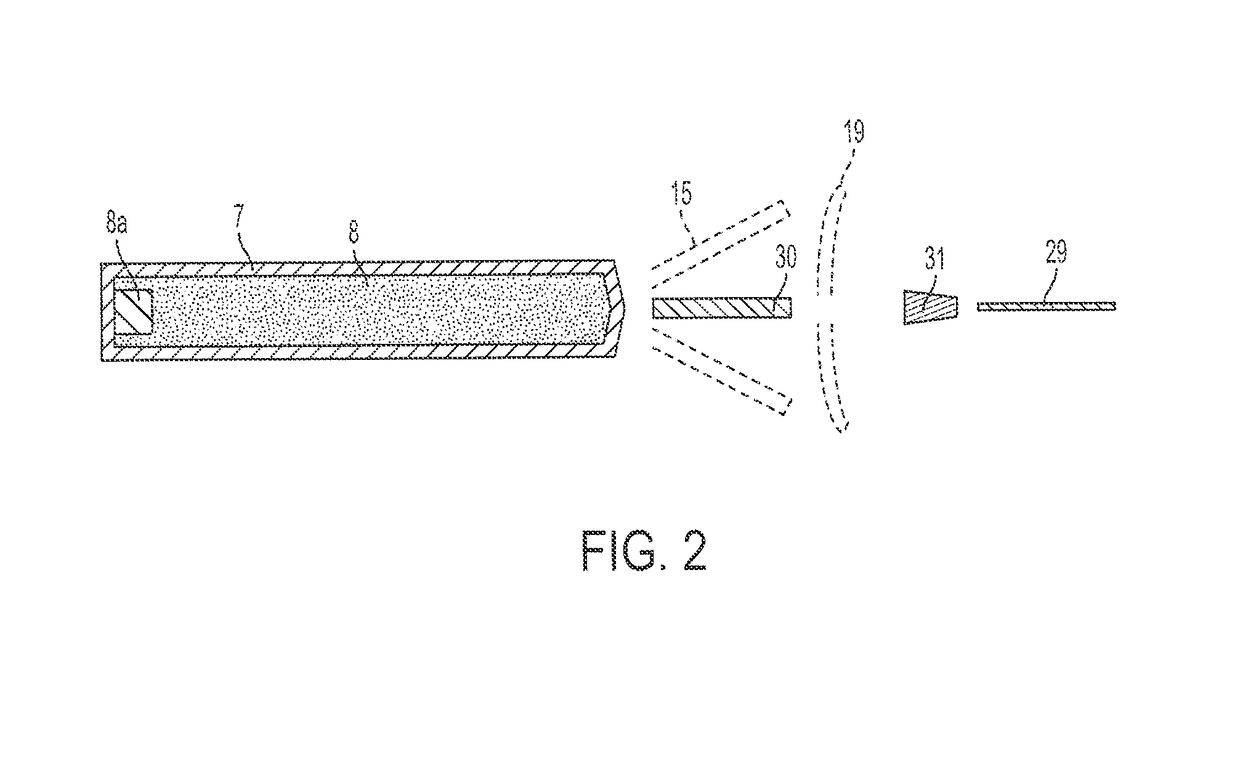
[0031]The basic components of an explosive device for launching kinetic energy according to the invention are shown in FIGS. 1 and 3. The device includes a flux compression generator, electrical loads composed of two shaped charge liners, a central munition, a means to detonate the high explosives, and an electronic unit to produce starting current for the generator.
[0032]As shown, the FCG portion of the system has an armature 1, an annular shell of high explosives (HE) 2 enclosed by armature 1, a helical wound stator 3 surrounding armature 1, a stator 4 aligned with, and electrically connected to, stator 3, and a cavity 5. A buffer 6 separates high explosives 2 from the centrally located munition having a metallic casing 7 that is filled with explosive 8 having its own detonator 8a. The generator output end, to the right in FIG. 1, contains an armature glide rail 9 and an insulated channel 10. The initiation end that is opposite to the output end utilizes glide rail 11 together wit...
PUM
 Login to View More
 Abstract
Description
Claims
Application Information
 Login to View More