
Corrosive capable of displaying ultra low carbon steel solidification arborescent structure and preparation method thereof
A technology of dendritic structure and ultra-low carbon steel, which is applied in the field of corrosive agent and preparation for showing solidified dendritic structure of ultra-low carbon steel, and achieves the effect of lowering the requirements of smoothness, clear dendrite morphology and reducing labor intensity.
- Summary
- Abstract
- Description
- Claims
- Application Information
AI Technical Summary
Problems solved by technology
Method used
Image

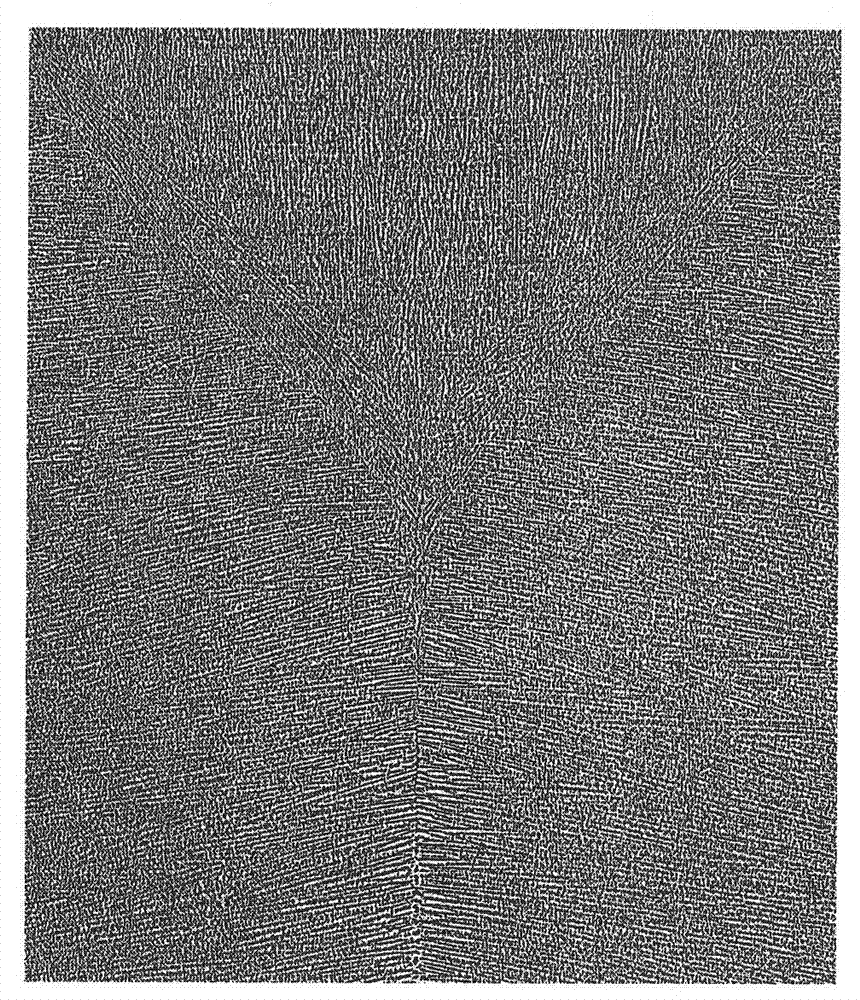
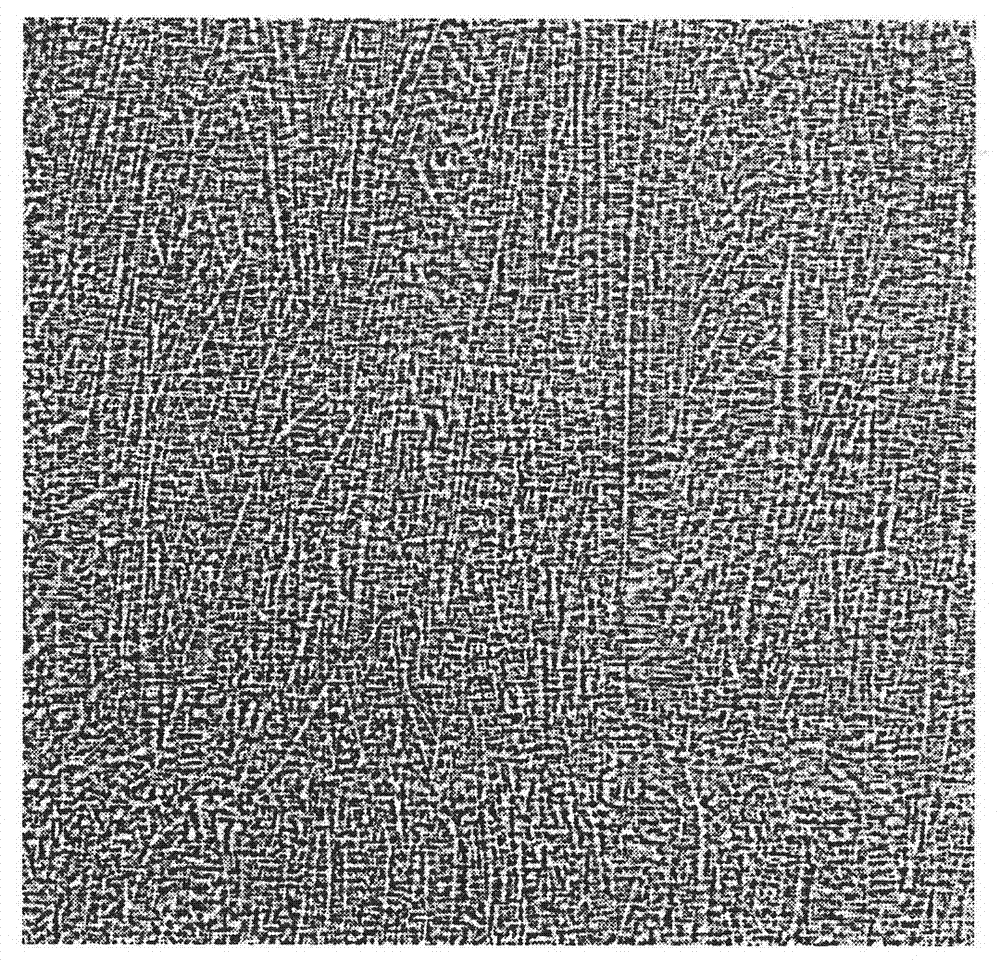
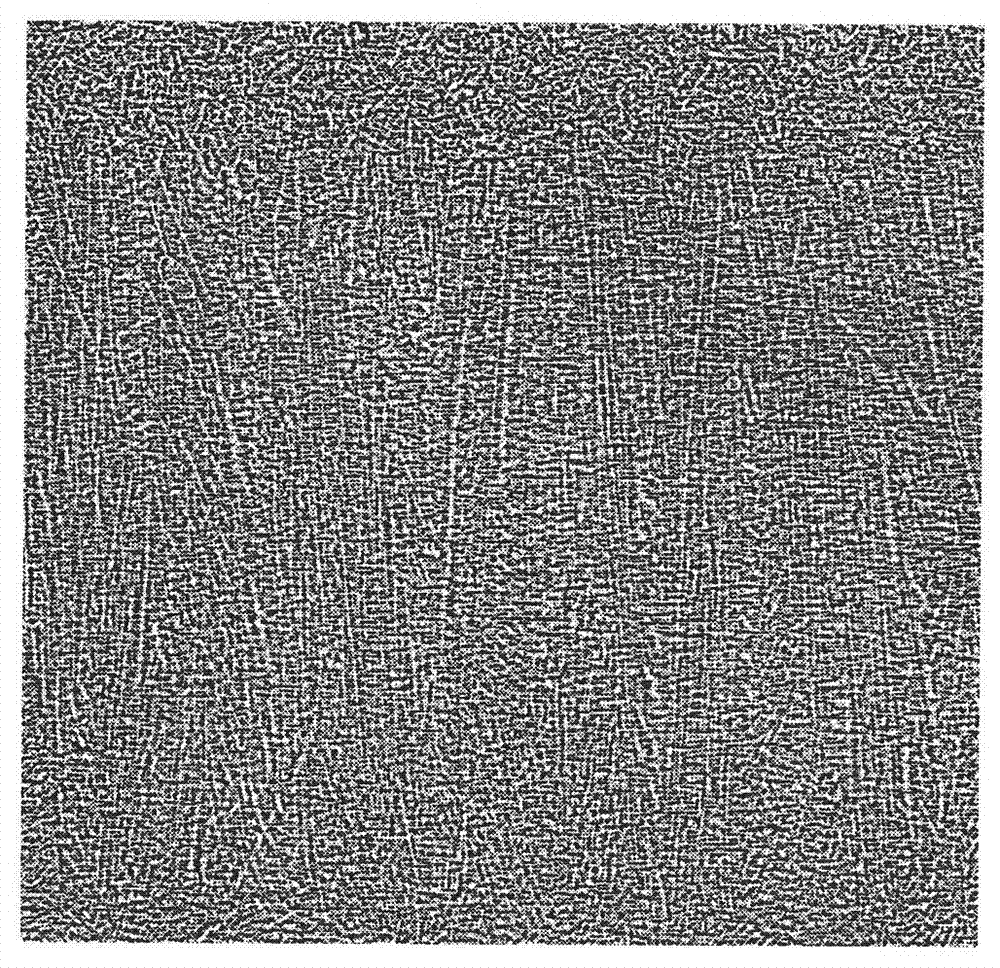
Examples
Embodiment 1
[0028] The corrosion agent and the preparation method are used for detecting the dendrite morphology of ultra-low carbon steel continuous casting slabs containing 0.001% to 0.006% of C and containing a small amount of S.P.
[0029] Mix 4 grams of picric acid, 1.5 grams of stannous chloride, and 3.5 grams of copper chloride in a glass container, take 1000 ml of distilled water, divide it evenly into two parts, add one part to the glass container, and the other part for later use. Add 60 ml of absolute ethanol to the spare distilled water. Take 40 ml of 36% hydrochloric acid by weight and add it to the ethanol aqueous solution. Pour the ethanol and hydrochloric acid aqueous solution into the aqueous solution containing the solid medicament and stir thoroughly, then add 50 ml of surfactant and continue to stir evenly to form a comprehensive medicinal solution I, which is used after 30 hours of passivation.
[0030] Wipe the surface of the sample with cotton wool dipped in the co...
Embodiment 2
[0032] The corrosion agent and preparation method are used for detecting the dendrite morphology of ultra-low carbon steel continuous casting slabs with a C content of 0.004% to 0.008%, low S and P contents, and trace alloy elements V, Ti and Ni.
[0033] Mix 3 grams of picric acid, 1.5 grams of stannous chloride, and 2 grams of copper chloride in a glass container, take 1000 ml of distilled water, and divide it into two parts, one part is added to the glass container, and the other part is used for later use. Add 60 ml of absolute ethanol to the spare distilled water. Take 30 ml of 36% hydrochloric acid by weight and add it to the ethanol aqueous solution. Pour the ethanol and hydrochloric acid aqueous solution into the aqueous solution containing the solid medicament and stir thoroughly, then add 40 ml of surfactant and stir evenly to form medicinal solution II, which is used after 30 hours of passivation.
[0034] Wipe the surface of the sample with a cotton swab dipped in...
Embodiment 3
[0036] Corrosion agent and preparation method for detecting dendritic morphology of ultra-low carbon steel continuous casting slabs containing 0.008% to 0.012% C, low S.P content, but containing trace amounts of V, Ti, Ni, Cr and other alloying elements.
[0037] Mix 4 grams of picric acid, 1.5 grams of stannous chloride, and 4 grams of copper chloride into a glass container, take 1000 ml of distilled water, and divide it into two parts evenly, one part is added to the glass container, and the other part is used for later use. Add 80 ml of absolute ethanol to the spare distilled water. Take 40 ml of hydrochloric acid and add it to the aqueous ethanol solution. Pour the ethanol + hydrochloric acid aqueous solution into the aqueous solution containing the solid drug and stir thoroughly, then add 50 ml of surfactant and stir evenly to form medicinal solution III, which is used after 30 hours of passivation.
[0038] Wipe the surface of the sample with a cotton swab dipped in liq...
PUM
 Login to View More
 Abstract
Description
Claims
Application Information
 Login to View More