
Microorganism plant vaccine capable of controlling tomato bacterial wilt disease
A technology for tomato bacterial wilt disease and plant vaccine, which is applied in the field of microbial plant vaccines, can solve the problems of lack of effective means of preventing and controlling tomato bacterial wilt disease, and great influence on tomato market development, and achieves low investment in fixed assets, low cost, and endogenous growth. good performance
- Summary
- Abstract
- Description
- Claims
- Application Information
AI Technical Summary
Problems solved by technology
Method used
Image

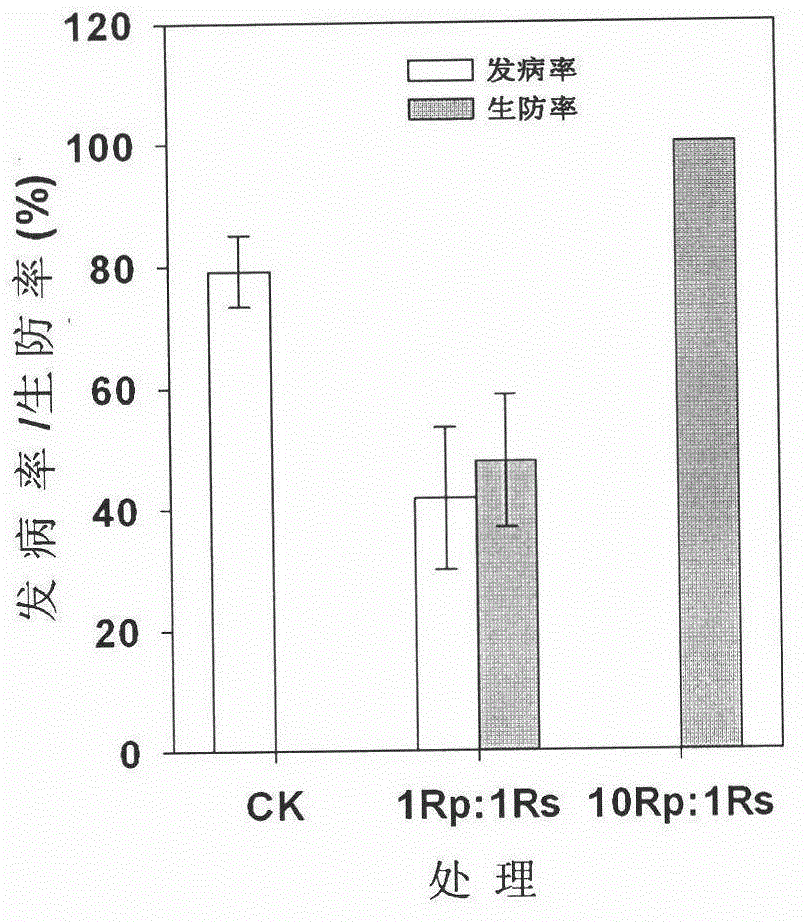
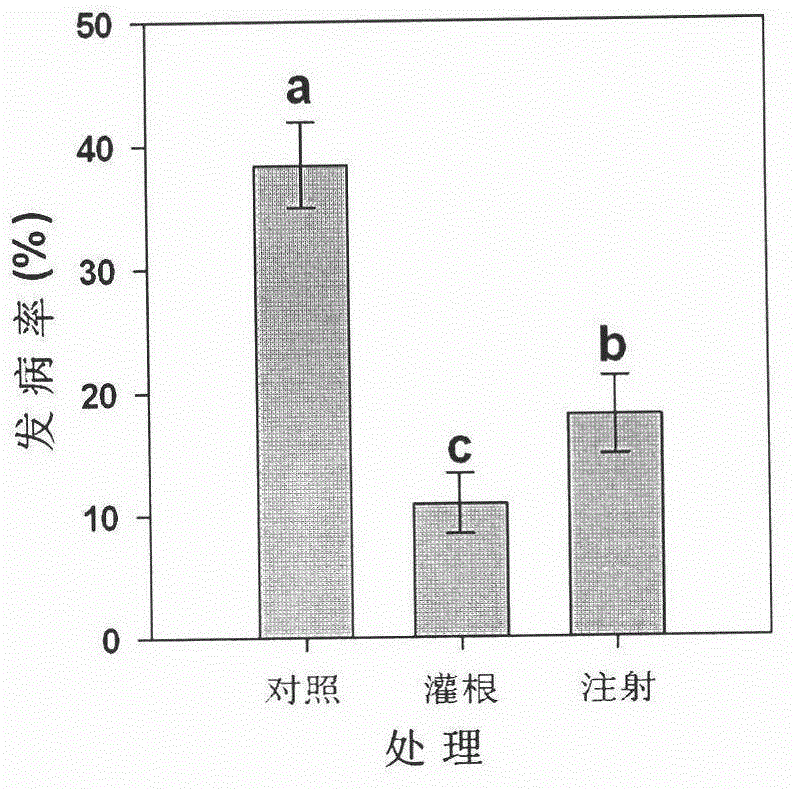
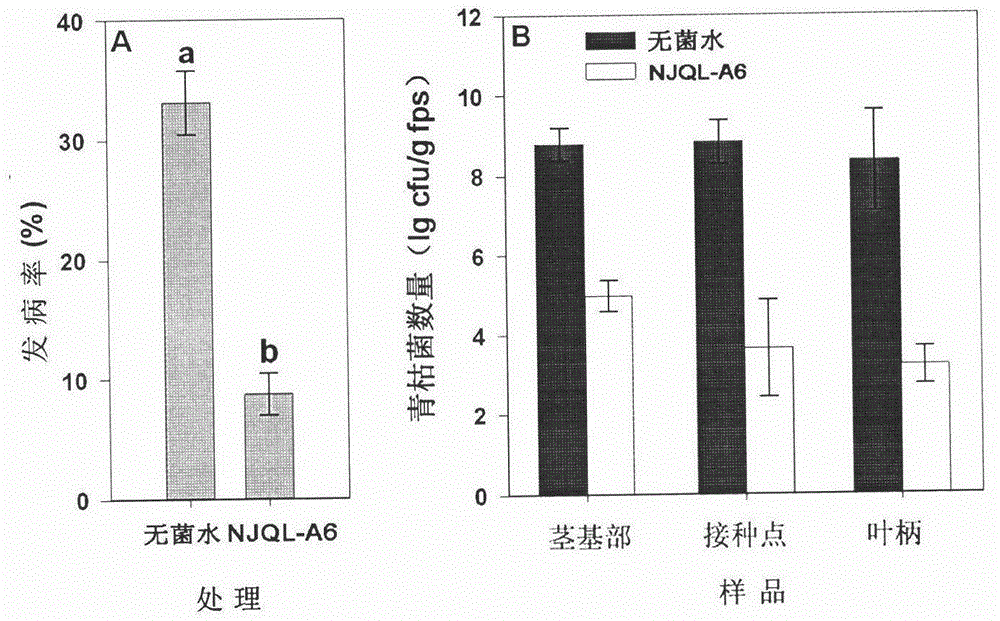
Examples
Embodiment Construction
[0021] (1) Isolation and identification of strains
[0022] The plant vaccine NJQL-A6 for preventing continuous cropping tomato bacterial wilt is isolated from the rhizosphere soil of healthy tomato plants in fields where continuous cropping tomato bacterial wilt occurs. By collecting continuous cropping obstacles and tomato bacterial wilt disease plants and the surrounding soil, the samples were stored at low temperature, and the M-SMSA bacterial wilt selective medium was used to obtain pathogenic strains and a large number of test biocontrol bacteria (suspected non-pathogenic) solanacearum), use CPG, TZC and M-SMSA medium to pass the plate confrontation test for primary screening, rhizosphere and stem base colonization ability test for re-screening, and finally determine the highly effective biocontrol strains through pot experiments, identify genus, species, and bacteria Freeze-dried and stored at -20°C.
[0023] The strain NJQL-A6 belongs to Ralstonia pickettii (Ralstonia...
PUM
 Login to View More
 Abstract
Description
Claims
Application Information
 Login to View More