
Preparation method for 1-heptene
A technology of heptene and ethylene, applied in the field of preparation of 1-heptene, achieves the effects of controlled reaction conditions, high activity, and simple and easy-to-operate preparation methods
- Summary
- Abstract
- Description
- Claims
- Application Information
AI Technical Summary
Problems solved by technology
Method used
Image

Examples
Embodiment 1
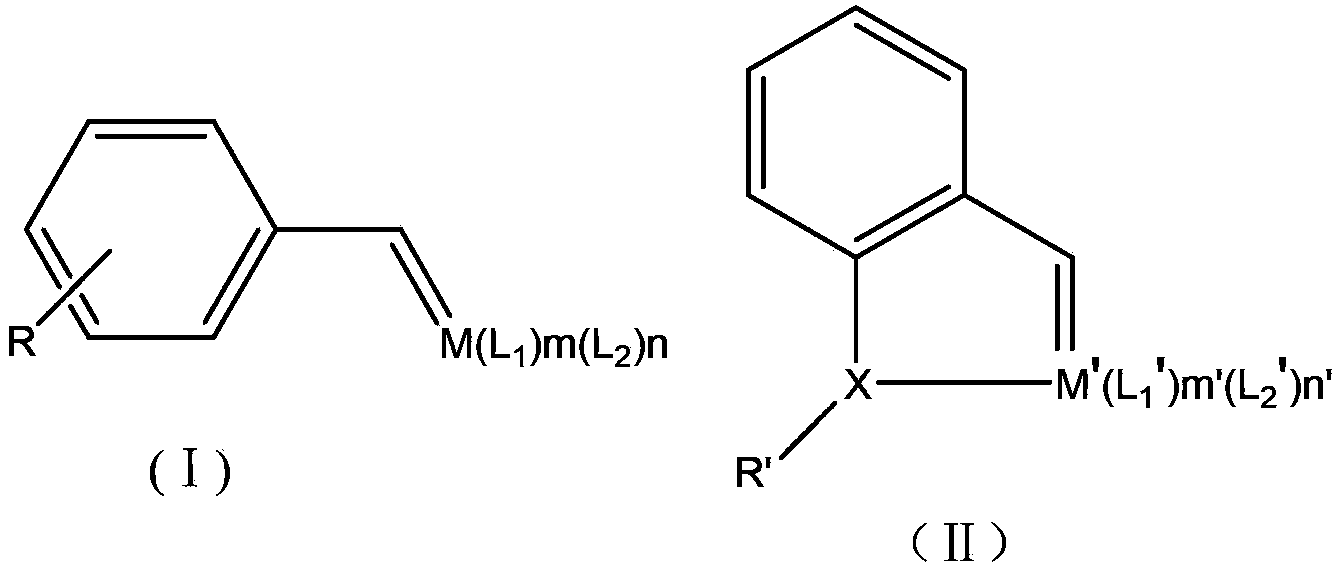
[0030] In the glove box under inert atmosphere, according to the molar ratio of 2-octene and ruthenium catalyst is 4500:1, the 2-octene of 4.26ml is dissolved in the toluene of 26ml, 5mg ruthenium catalyst A (catalyst 1 is formula I The catalyst of the structure, wherein R is H, M is metal ruthenium, L 1 is chlorine, L 2 It is tricyclohexylphosphine, m and n are both 2) dissolved in 20ml of toluene, respectively added to two glass syringes, sealed and taken out from the glove box. The reaction device adopts a 100ml autoclave reaction device. Heat the autoclave to 30°C, vacuumize and replace it with ethylene several times, open the vent valve, then quickly add 2-octene into the reaction kettle, and then add the ruthenium catalyst into the reaction kettle. Then close the vent valve, pre-mix and stir for 2 minutes, set the pressure at 0.5 MPa, feed ethylene into it for reaction, and the reaction time is 0.5 h. After the reaction is completed, the liquid phase product is collec...
Embodiment 2
[0032] The experimental method is the same as in Example 1, the reaction temperature is changed to 40°C, and the remaining experimental conditions are unchanged. The test reaction results are as follows: 1-heptene yield: 91.3%, 2-octene conversion rate: 76.5%, selectivity: 80.1 %, catalyst activity: 8.61×10 5 g / mol·Ru·h. Please refer to Table 1 for details.
Embodiment 3
[0034] The experimental method is the same as in Example 1, the reaction time is changed to 10min, and all the other experimental conditions are unchanged. The test reaction results are as follows: 1-heptene yield: 81.7%, 2-octene conversion rate: 44.9%, selectivity: 71.5% , catalyst activity: 4.66×10 5 g / mol·Ru·h. Please refer to Table 1 for details.
PUM
 Login to View More
 Abstract
Description
Claims
Application Information
 Login to View More