Check patentability & draft patents in minutes with Patsnap Eureka AI!

Saccharomyces cerevisiae genetically-engineered bacterium capable of realizing ethanol accumulation reduction and application thereof

A technology of genetically engineered bacteria and Saccharomyces cerevisiae, applied in fermentation, fungi, microorganism-based methods, etc., can solve the problems of carbon metabolism flow and NADH cofactor loss, affecting the efficiency of carboxylic acid accumulation, etc.

Inactive Publication Date: 2014-10-15
JIANGNAN UNIV
View PDF1 Cites 20 Cited by
  • Summary
  • Abstract
  • Description
  • Claims
  • Application Information

AI Technical Summary

Problems solved by technology

Therefore, the production of ethanol leads to the loss of carbon metabolic flux and NADH cofactor, which seriously affects the accumulation efficiency of carboxylic acid by Saccharomyces cerevisiae

Method used

the structure of the environmentally friendly knitted fabric provided by the present invention; figure 2 Flow chart of the yarn wrapping machine for environmentally friendly knitted fabrics and storage devices; image 3 Is the parameter map of the yarn covering machine
View more

Image

Smart Image Click on the blue labels to locate them in the text.
Viewing Examples
Smart Image
  • Saccharomyces cerevisiae genetically-engineered bacterium capable of realizing ethanol accumulation reduction and application thereof
  • Saccharomyces cerevisiae genetically-engineered bacterium capable of realizing ethanol accumulation reduction and application thereof
  • Saccharomyces cerevisiae genetically-engineered bacterium capable of realizing ethanol accumulation reduction and application thereof

Examples

Experimental program
Comparison scheme
Effect test

Embodiment 1

[0034] Example 1 Construction of Saccharomyces cerevisiae Engineering Bacteria with Low Ethanol Production

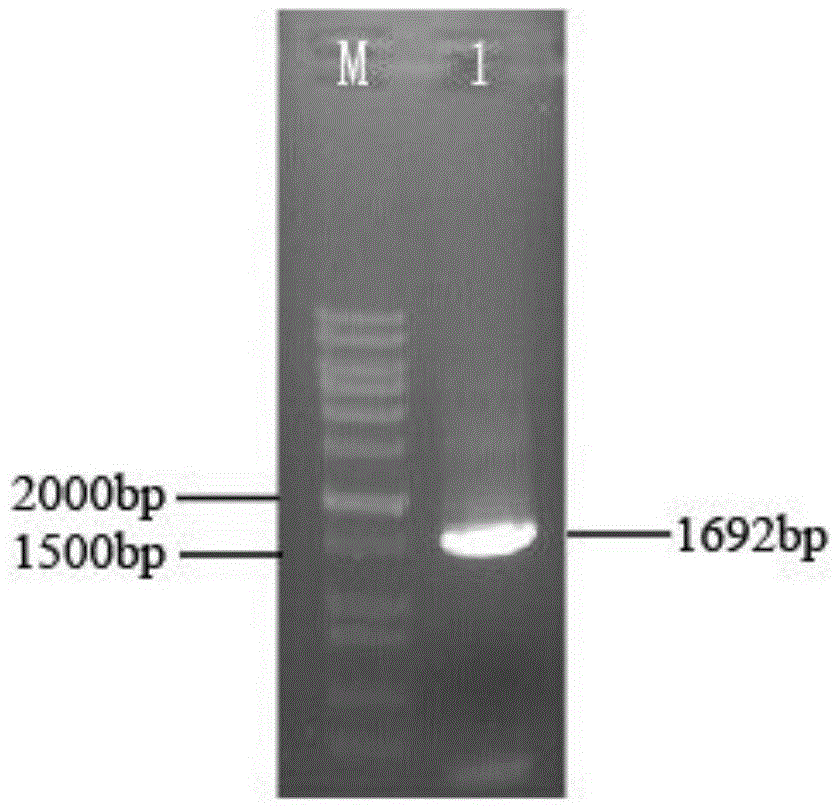
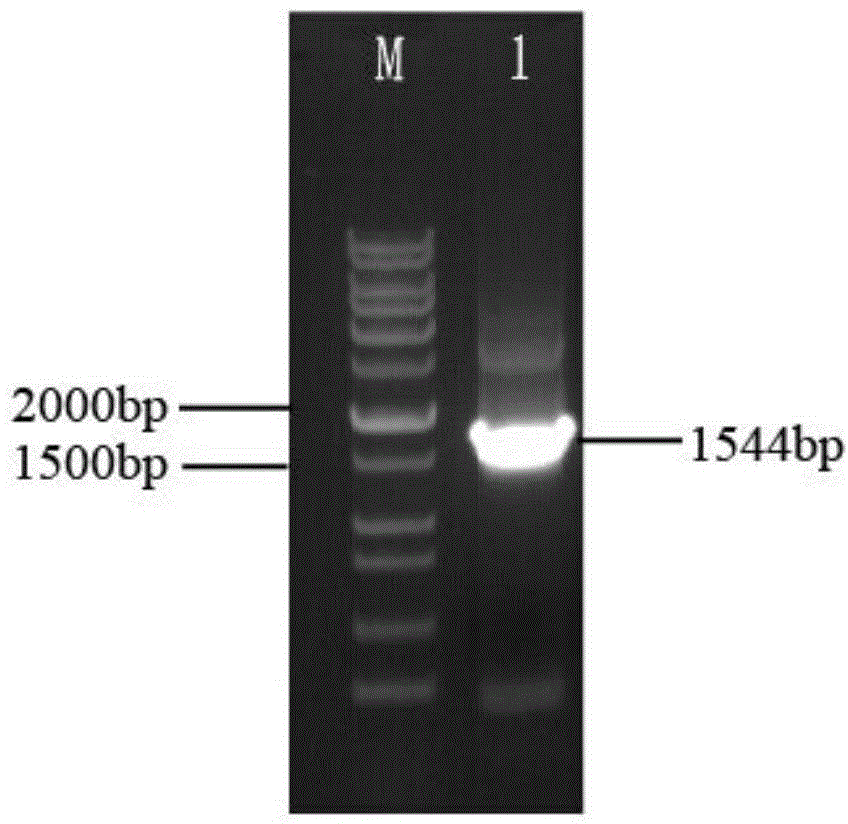
[0035]Pyruvate decarboxylase gene PDC1 and alcohol dehydrogenase gene ADH1 were knocked out on the basis of wild type.

[0036] 1. Strains and plasmids

[0037] Saccharomyces cerevisiae (S.cerevisiae) CEN.PK2-1C was purchased from EUROSCARF (http: / / web.uni-frankfurt.de / fb15 / mikro / euroscarf / data / cen.html), and its genotype was MATa; ura3- 52; trp1-289; leu2-3,112; his3Δ1; MAL2-8 C ;SUC2. For the construction method of the knockout cassette template pUG27 plasmid (containing the HIS3 marker gene) and the Cre expression plasmid pSH47 (used for marker recovery), please refer to the literature "Guldener U, Heck S, Fielder T, et al. A new efficient gene disruption cassette for repeated use in budding yeast[J].Nucleic Acids Res,1996,24(13):2519-2524" and "Guoqiang Xu,Qiang Hua, et al.Regulation of thiamine synthesis in Saccharomyces cerevisiae for improved pyruvate producti...

Embodiment 2

[0044] Example 2 Fermentation method to study the yield of ethanol

[0045] The seeds of genetically engineered bacteria cultured at 30°C and 220rpm for 24 hours were used to start the OD 600 The inoculum size of =0.2 was transferred to the fermentation culture based on the conditions of 30°C and 220rpm for 96h, and samples were taken at regular intervals to measure OD, and 1mL samples were taken and centrifuged for storage to measure ethanol production.

the structure of the environmentally friendly knitted fabric provided by the present invention; figure 2 Flow chart of the yarn wrapping machine for environmentally friendly knitted fabrics and storage devices; image 3 Is the parameter map of the yarn covering machine
Login to View More

PUM

No PUM Login to View More

Abstract

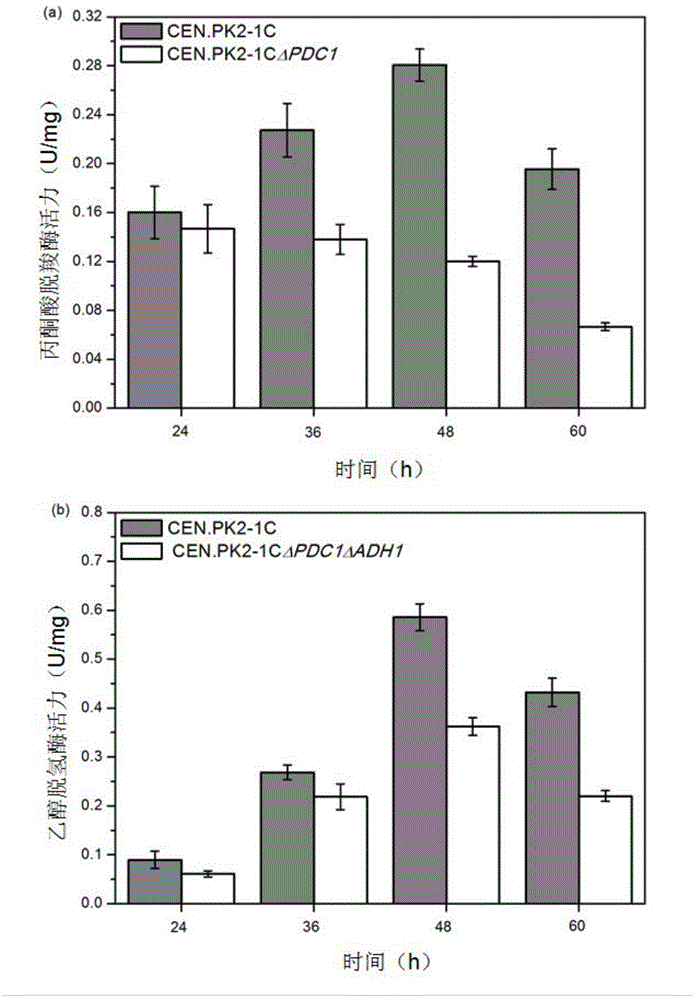
The invention discloses a saccharomyces cerevisiae genetically-engineered bacterium capable of realizing ethanol accumulation reduction and an application thereof and belongs to the field of genetic engineering and fermentation engineering. According to the bacterium, an ADH1 (alcohol dehydrogenase 1) gene is knocked out on the basis of knocking out of a PDC1 (pyruvate decarboxylase 1) to obtain a pdc1adh1 double-deleted strain, the enzyme activity is measured, after the PDC1 is deleted, the enzyme activity of a PDC is reduced by 57.1%, and after the ADH1 gene is further deleted, the enzyme activity of an ADH is reduced by 38.2%. After culture medium optimization, compared with a contrast strain, the pdc1adh1 double-deleted strain has the advantages that the ethanol yield is reduced by 57.3%. By the aid of the genetically-engineered bacterium and the application thereof, the loss of the carbon flow can be effectively reduced, conditions are created for construction of engineered saccharomyces cerevisiae for efficient production of C4 dicarboxylic acid, and the genetically-engineered bacterium has very good industrial application values and prospects.

Description

technical field [0001] The invention relates to a Saccharomyces cerevisiae gene engineering bacterium with reduced ethanol accumulation and application thereof, belonging to the fields of genetic engineering and fermentation engineering. Background technique [0002] As a eukaryotic model microorganism, Saccharomyces cerevisiae has the following advantages: rich genetic information, convenient metabolic transformation operation; simple nutritional requirements, low cost of separation and extraction process; good growth under low pH conditions (even pH<3.0); Able to tolerate high concentrations of substrates; certified by the FDA as GRAS (General Regarded As Safe) microorganisms, fermented products have the advantages of safety and become fermented to produce carboxylic acids (lactic acid, pyruvic acid, malic acid, fumaric acid, succinic acid, α - Potentially optimal microorganisms for ketoglutarate, etc.). However, Saccharomyces cerevisiae produces a large amount of etha...

Claims

the structure of the environmentally friendly knitted fabric provided by the present invention; figure 2 Flow chart of the yarn wrapping machine for environmentally friendly knitted fabrics and storage devices; image 3 Is the parameter map of the yarn covering machine
Login to View More

Application Information

Patent Timeline
no application Login to View More
IPC IPC(8): C12N1/18C12P7/40C12P7/56C12P7/46C12P7/50C12R1/865
Inventor 徐国强吴满珍蒋伶活
Owner JIANGNAN UNIV
Features
  • R&D
  • Intellectual Property
  • Life Sciences
  • Materials
  • Tech Scout
Why Patsnap Eureka
  • Unparalleled Data Quality
  • Higher Quality Content
  • 60% Fewer Hallucinations
Social media
Patsnap Eureka Blog
Learn More