
Strain for highly effectively degrading phorbol ester and application of strain in fermenting detoxifying jatropha curcas cake meal
A technology of Jatropha curcas cake and phorbol ester, which is applied to bacteria, microorganism-based methods, microorganisms, etc., can solve the problems of low efficiency of physical detoxification, destruction of nutrients, and complicated process, so as to improve the feeding value, The effect of amino acid content balance
- Summary
- Abstract
- Description
- Claims
- Application Information
AI Technical Summary
Problems solved by technology
Method used
Image

Examples
Embodiment 1
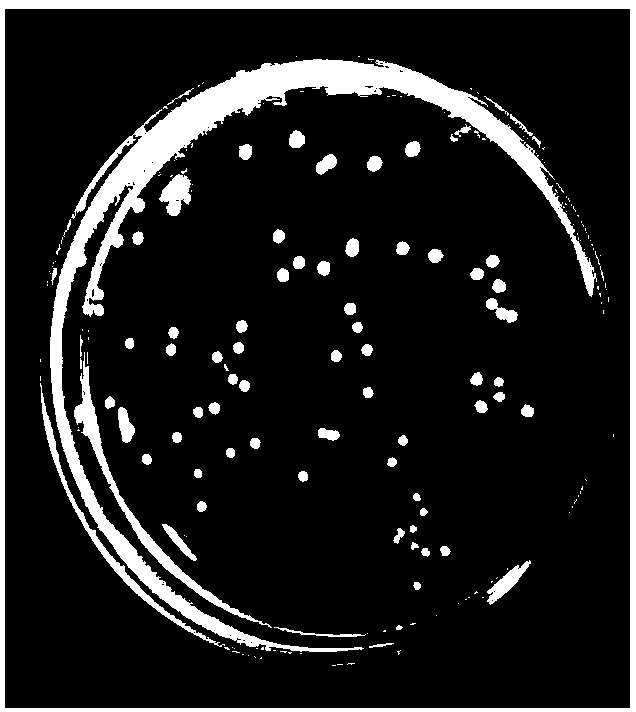
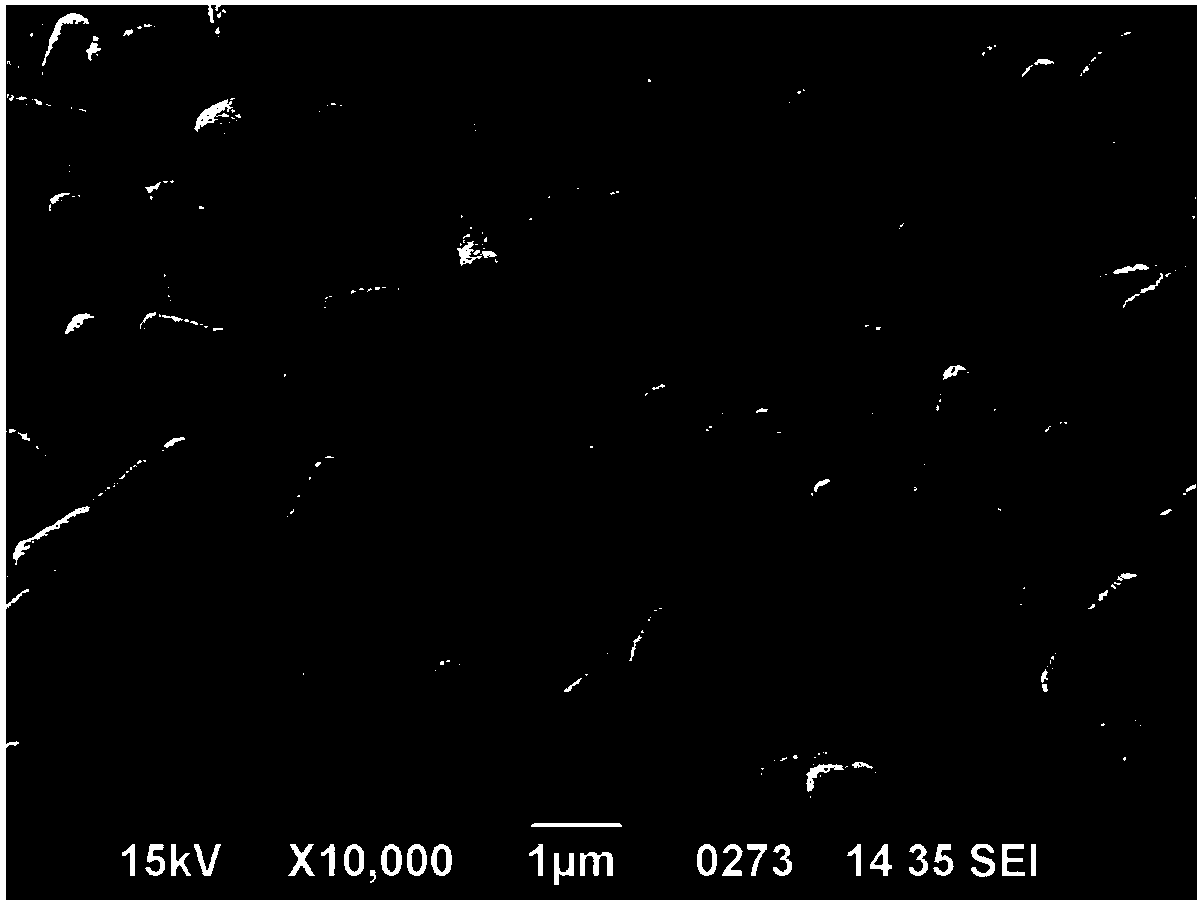
[0027] Soil samples were obtained from 5-10 cm below the soil surface of Jatropha curcas root system in the Jatropha curcas plantation area of Panzhihua City, Sichuan Province. After enrichment, screening, purification and cultivation, 28 strains that could tolerate phorbol ester in Jatropha curcas cake were obtained. strain. The obtained strains were inoculated into Jatropha curcas cakes for shaking flask culture, and the strains with the best degradation effect on phorbol esters were screened out by measuring the content of phorbol esters in the fermented cakes, which were recorded as Enterobacter Z11, The colony growth results of the strain on LB medium are as follows: figure 1 shown. The scanning electron microscope image of Enterobacter Z11 is shown in figure 2 .
[0028] Gram staining and physiological and biochemical identification were performed on the strain numbered Z11, and Z11 was determined to be Enterobacter cloacae according to the color reaction. Some r...
Embodiment 2
[0037] The three factors of inoculation amount, initial water addition and fermentation time were selected for the experiment, and the experimental factors and levels are shown in Table 2.
[0038] Table 2 Factors and levels of experimental design
[0039]
[0040]
[0041] The research object of the experiment is the degradation rate of phorbol ester, which is recorded as variable Y, and the three factors of inoculum size, initial water content and fermentation time are the research objects, which are respectively recorded as variables X1, X2, and X3. Design 3 factors and 3 levels (inoculum size 15%, 20%, 30%; initial water content 30%, 50%, 80%; fermentation time 4d, 5d, 6d) fermentation experiment. The results of the 17 groups of tests are shown in Table 3.
[0042] Table 3 Response surface design and measured value of phorbol ester degradation rate
[0043]
[0044]
Embodiment 3
[0046] Inoculate the activated Enterobacter Z11 in the Jatropha curcas solid-state fermentation medium (after drying the Jatropha curcas cake, pass through 40 mesh, take 5g, add 5mL of deionized water, natural pH, sterilize at 121°C for 20min), and inoculate the strain Under the conditions of 20% dosage and 50% humidity, the fermentation was carried out for 5 days. After the fermentation, the content of anti-nutritional factors in the Jatropha curcas cake before and after fermentation was detected. The results are shown in Table 4. According to the results, the phorbol ester content in the Jatropha curcas cake decreased by 51.6%, the phytic acid content decreased by 82.56%, the tannin content decreased by 37.80%, the trypsin inhibitor content decreased by 90.45%, and the lectin content decreased by 88.90%.
[0047] Table 4 Contents of anti-nutritional factors of Jatropha curcas cake before and after fermentation
[0048]
[0049] According to the above experimental results,...
PUM
 Login to View More
 Abstract
Description
Claims
Application Information
 Login to View More