
Nucleic acid aptamer and application thereof to detect pathogenic vibrio alginolyticus
A technology of nucleic acid aptamer and vibrio alginolyticus, which is applied in the direction of measuring devices, biochemical equipment and methods, instruments, etc., can solve the problems of non-pathogenic vibrio alginolyticus detection and diagnosis, and achieve good application prospects, The effect of short preparation cycle and small molecular weight
Patent Information
- Authority / Receiving Office
- CN · China
- Patent Type
- Applications(China)
- Current Assignee / Owner
- Publication Date
- 2019-01-08
Smart Images
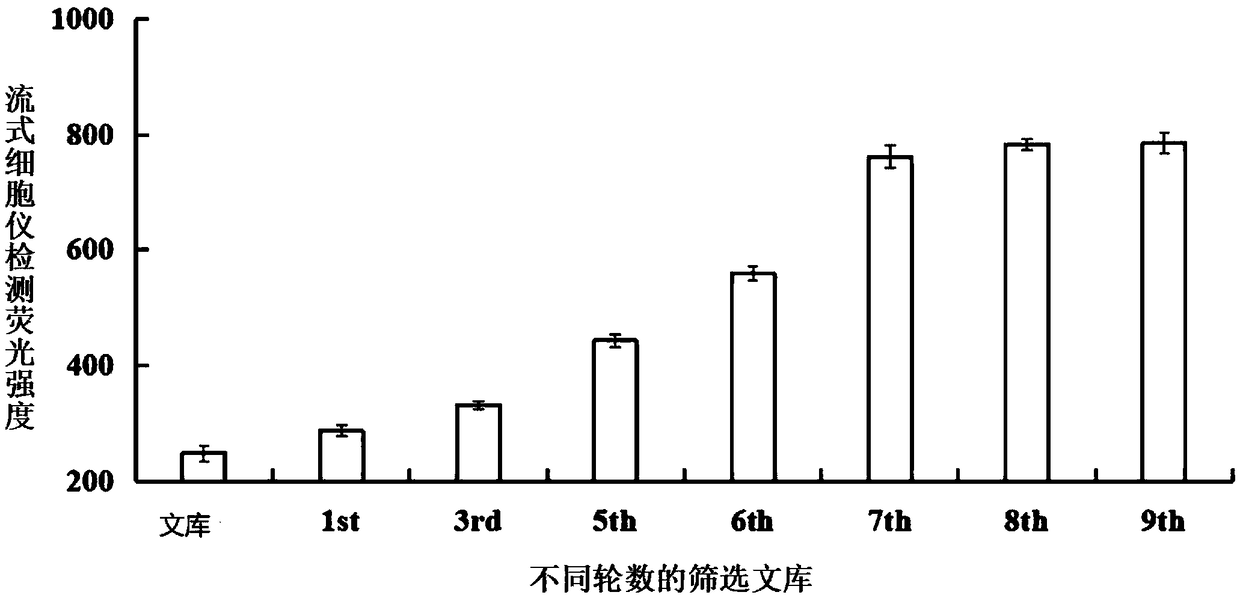
Figure 1 
Figure 2 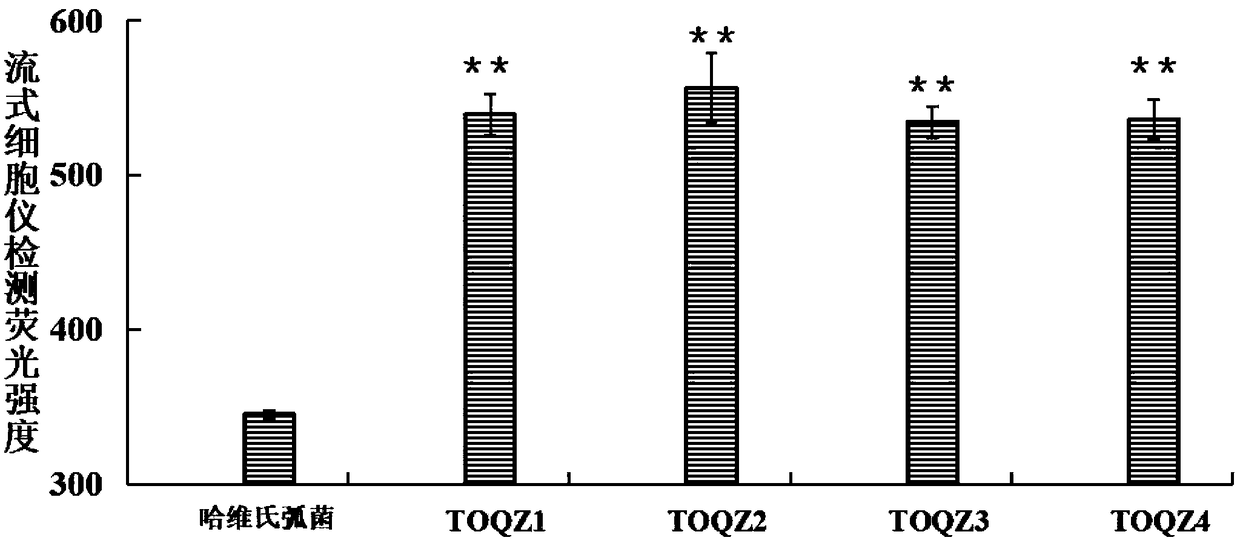
Figure 3
Abstract
Description
technical field
[0001] The invention relates to an ssDNA nucleic acid aptamer and its screening method, detection method and application, in particular to an ssDNA nucleic acid aptamer and its application in detecting pathogenic Vibrio alginolyticus. Background technique
[0002] As a big country in aquaculture, my country's aquaculture volume accounts for 70% of the world's total aquatic product farming. However, the outbreak and prevalence of bacterial pathogens in recent years have caused huge economic losses to the aquaculture industry in my country. In Guangxi and other coastal areas of South China, Vibrio alginolyticus is one of the main pathogenic bacteria that cause bacterial fish diseases in seawater cultured fish. The fish diseases caused by it have rapid onset, high mortality and wide prevalence. Aquaculture development is seriously threatened. At present, the diagnosis of fish bacterial diseases in the world mainly adopts traditional observation methods, immuno...
Examples
Embodiment 1
[0035] The preparation method of embodiment 1ssDNA nucleic acid aptamer is as follows:
[0036] Step 1: Synthesize a random ssDNA library and primers shown in the sequence below
[0037] Random library Library50:
[0038] 5'-GACGCTTACTCAGGTGTGACTCG(50N)CGAAGGACGCAGATGAAGTCTC;
[0039] 5' primer: 5'-FAM-GACGCTTACTCAGGTGTGACTCG-3';
[0040] 3' primer: 5'-Biotin-GAGACTTCATCTGCGTCCTTCG-3';
[0041]Step 2: Dissolve 10 nmol of the above random library in 500 μl PBS, place in a constant temperature water bath at 92°C for 5 minutes, then quickly insert it into ice, and place it in an ice bath for 10 minutes, and incubate the treated random library with Vibrio alginolyticus live bacteria on ice for 1 hour; incubate After the binding is completed, remove the supernatant by centrifugation, wash the Vibrio alginolyticus live bacteria with 10mL of PBS, bathe in a constant temperature water bath at 92°C for 10 minutes, and collect the supernatant by centrifugation at 12000g, which is the...
Embodiment 2
[0068] According to the steps of Example 1, a rapid detection method (AFMP) for pathogenic Vibrio alginolyticus derived from pompano ovata based on the nucleic acid aptamer of SEQ ID NO: 1 was constructed and 4 different strains of Vibrio alginolyticus were detected.
[0069] Such as image 3 As shown, the above-mentioned rapid detection method (AFMP) can specifically identify four different strains of Vibrio alginolyticus (TOQZ01, TOQZ02, TOQZ03, TOQZ04), but no obvious identification of Vibrio harveyi in the control group occurred.
Embodiment 3
[0071] The secondary structure of the nucleic acid aptamer was predicted online by MFOLD software.
[0072] The secondary structure prediction results of the nucleic acid aptamer of SEQ ID NO: 1 are as follows Figure 4 As shown, the nucleic acid aptamer forms a special stem-loop structure and hairpin structure.