Acceptor materials for non-fullerene organic solar cells based on Yinda province and dithiophene
What is AI technical title?
AI technical title is built by Patsnap AI team. It summarizes the technical point description of the patent document.
A technology of solar cells and dithiophene, applied in the field of solar cell materials
Active Publication Date: 2021-09-14
SHAANXI NORMAL UNIV
View PDF6 Cites 0 Cited by
Summary
Abstract
Description
Claims
Application Information
AI Technical Summary
This helps you quickly interpret patents by identifying the three key elements:
Problems solved by technology
Method used
Benefits of technology
Problems solved by technology
The traditional classic small moleculeorganic solar cell acceptor material - fullerene, has been proved that many of its shortcomings cannot be avoided and improved, such as energy level and ultraviolet absorption problems
Method used
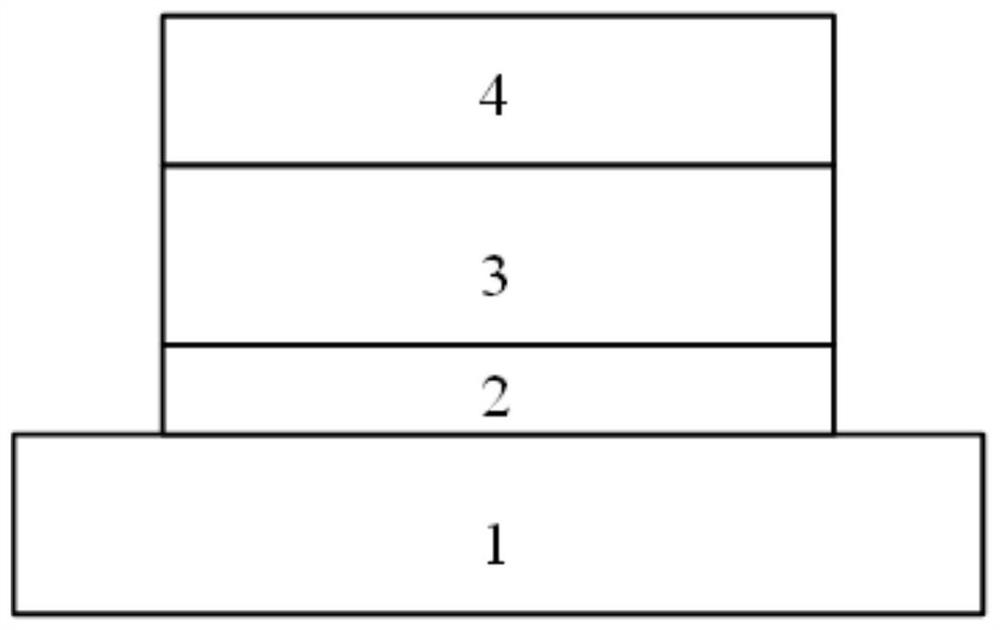
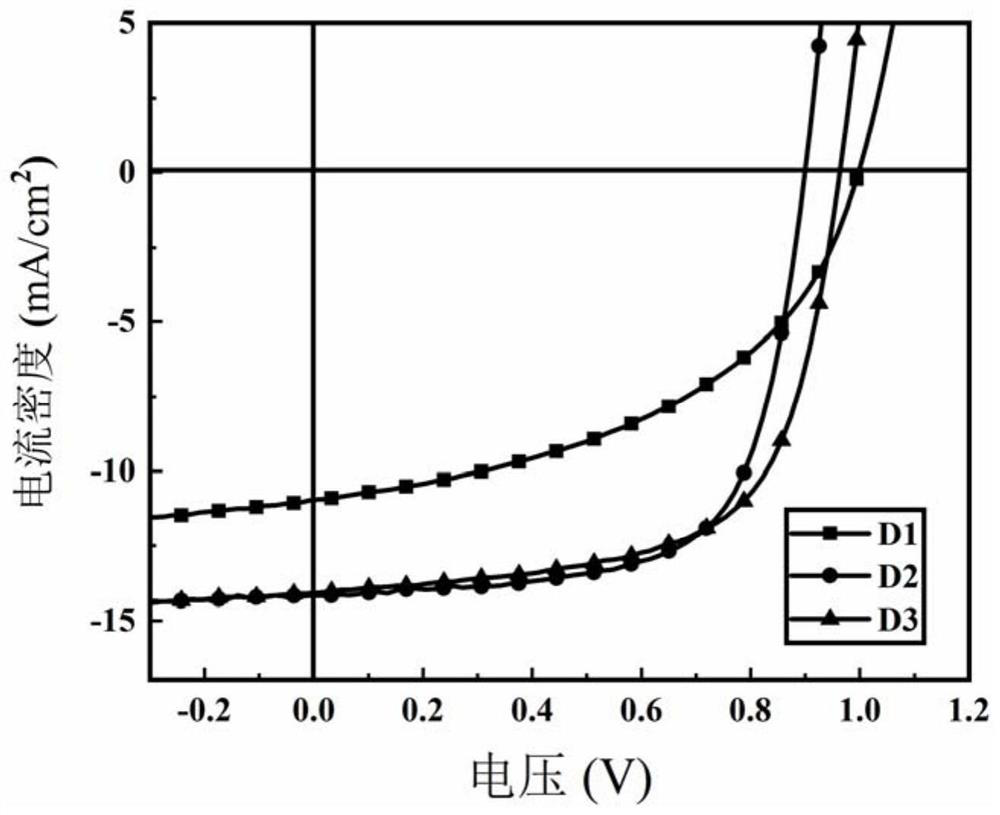
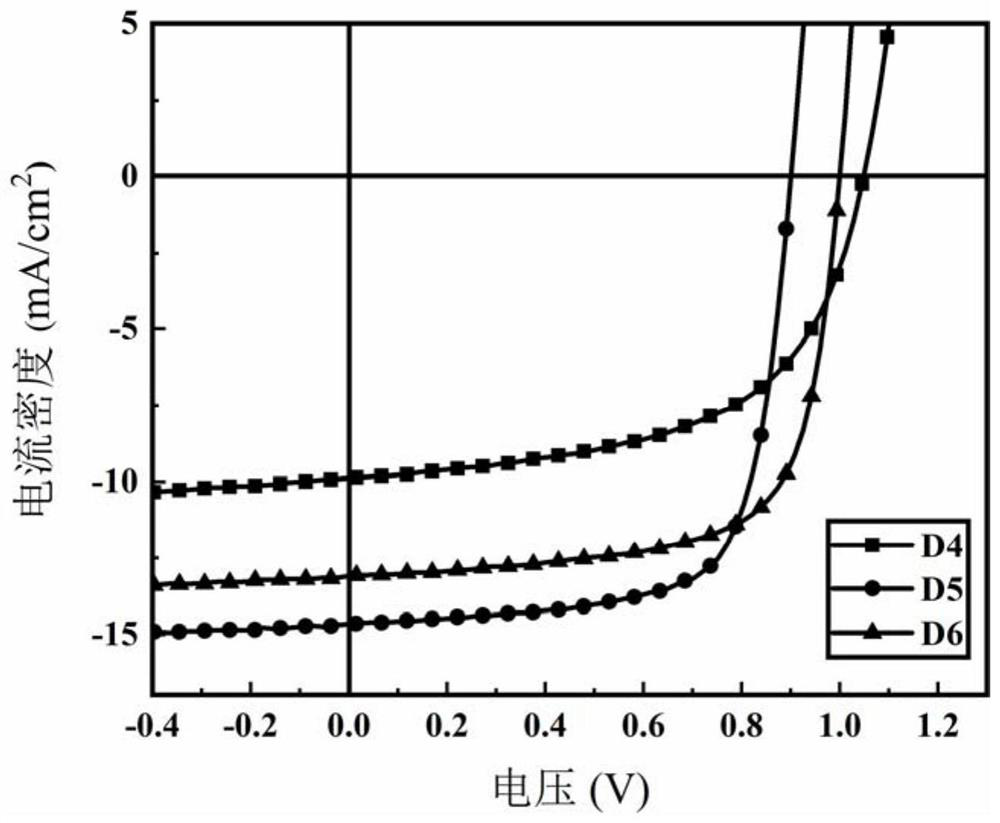
the structure of the environmentally friendly knitted fabric provided by the present invention; figure 2 Flow chart of the yarn wrapping machine for environmentally friendly knitted fabrics and storage devices; image 3 Is the parameter map of the yarn covering machine
View more
Image
Smart Image Click on the blue labels to locate them in the text.
Viewing Examples
Smart Image
Click on the blue label to locate the original text in one second.
Reading with bidirectional positioning of images and text.
[0027] Accurately weigh 0.488g (0.4mmol) of 4,4,9,9-tetrahexadecyl-4,9-dihydro-S-indacene[1,2-b:5,6-b' ] Dithiophene-2,7-dialdehyde, 0.388g (2.0mmol) 3-(dicyanomethylene) indoketone, 0.006g (0.07mmol) β-alanine, put into 250mL two round bottoms In the flask, keep the condition protected from light, and carry out vacuum operation. After vacuuming, blow nitrogen into the flask, repeat the above operation at least 3 times, measure 50mL of 1,2-dichloroethane and 25mL of methanol with a graduated cylinder, inject them into the flask through a syringe, and keep stirring during this process. The temperature of the oil bath was raised to 80°C, the reaction was refluxed for 12 hours, the heating was turned off, and the stirring was continued until the temperature of the reaction system returned to room temperature. Next, the product was extracted with dichlorom...
[0031] In this embodiment, the 3-(dicyanomethylene) indoketone used in Example 1 is replaced with 5,6-difluoro-3-(dicyanomethylene) indoketone in the amount of the same substance, The other steps were the same as in Example 1, and the dark blue-black powder acceptor material IDT-IC2F was obtained with a yield of 67.3%, and the structural characterization data were: 1 H NMR (400MHz, CDCl 3 )δ(ppm):8.97(s,2H),8.64-8.47(m,2H),7.72(s,2H),7.71-7.63(m,2H),7.60(s,2H),2.06(t,J =13.6Hz,4H),1.98-1.86(m,4H),1.14(dd,J=24.9,15.7Hz,104H),0.92-0.73(m,20H); MS(ESI)m / z:1645.10[M +H]+.
Embodiment 3
[0033] Preparation of non-fullerene organic solar cell acceptor material with the following structural formula
[0034]
[0035] In this example, the 3-(dicyanomethylene) indoketone used in Example 1 is replaced with thienindanone in the same amount of substances, and the other steps are the same as in Example 1 to obtain dark blue black powderreceptor Material IDT-ICTh, the yield is 75.4%, and the structural characterization data are: 1 H NMR (400MHz, CDCl 3 )δ(ppm):8.90(s,2H),8.39(s,2H),7.95(s,2H),7.68(s,2H),7.58(s,2H),2.05(t,J=13.1Hz, 4H), 1.93(t, J=12.4Hz, 4H), 1.11(d, J=17.5Hz, 104H), 0.90-0.73(m, 20H); MS(ESI) m / z: 1585.27[M+H] +.
the structure of the environmentally friendly knitted fabric provided by the present invention; figure 2 Flow chart of the yarn wrapping machine for environmentally friendly knitted fabrics and storage devices; image 3 Is the parameter map of the yarn covering machine
Login to View More
PUM
Login to View More
Abstract
The invention discloses a non-fullerene organic solar electronacceptor material based on inda-aeodithiophene. The Dacedithiophene unit has a rigid planar structure, which can enhance the π-π stacking in the molecule, optimize the crystallization and electrochemical properties of the molecule, and improve the carrier mobility; at the same time, the long alkylside chain can improve the molecular The solubility changes the morphology of the active layer; the strong electron-withdrawing unit at the end group is conducive to the dissociation and transportation of excitons, further reducing the energy level and reducing the energy gap. The acceptor material of the present invention has relatively good film-forming properties, good absorption in the visible and near-infrared range, moderate energy level, and certain thermal stability, can be matched with polymer donor materials, and greatly improve the performance of organic solar cells. Energy conversion efficiency.
Description
technical field [0001] The invention belongs to the technical field of solar cell materials, and in particular relates to a non-fullereneorganic solar cellacceptor material based on indaproteothiophene. Background technique [0002] In the past ten years, organic solar cells have been developing strongly. Due to their many advantages, including simple preparation, low cost, light weight, and large-scale production, organic solar cells have attracted the attention of researchers. The traditional classic small moleculeorganic solar cell acceptor material - fullerene, has been proved that many of its shortcomings cannot be avoided and improved, such as the problems of energy level and ultraviolet absorption. In recent years, scientists have focused on non-fullerene small molecule acceptor materials. In recent years, fused-ring electron acceptors have attracted much attention. Their own structure has a large rigid conjugation plane, which can significantly increase the π-π s...
Claims
the structure of the environmentally friendly knitted fabric provided by the present invention; figure 2 Flow chart of the yarn wrapping machine for environmentally friendly knitted fabrics and storage devices; image 3 Is the parameter map of the yarn covering machine
Login to View More
Application Information
Patent Timeline
Application Date:The date an application was filed.
Publication Date:The date a patent or application was officially published.
First Publication Date:The earliest publication date of a patent with the same application number.
Issue Date:Publication date of the patent grant document.
PCT Entry Date:The Entry date of PCT National Phase.
Estimated Expiry Date:The statutory expiry date of a patent right according to the Patent Law, and it is the longest term of protection that the patent right can achieve without the termination of the patent right due to other reasons(Term extension factor has been taken into account ).
Invalid Date:Actual expiry date is based on effective date or publication date of legal transaction data of invalid patent.



 Login to View More
  Login to View More