
SMT surface mounting process
A patch and process technology, applied in the direction of epoxy resin glue, adhesive type, adhesive additives, etc., can solve the problems of slow curing speed, complex process, low product qualification rate, etc., to improve production efficiency, bonding The effect of high strength and fast packaging speed
- Summary
- Abstract
- Description
- Claims
- Application Information
AI Technical Summary
Problems solved by technology
Method used
Image

Examples
Embodiment 1
[0024] A kind of SMT patch technology, comprises the steps:
[0025] (1) Pretreatment: cleaning and drying the PCB board;
[0026] (2) Glue dispensing: use a glue dispenser to apply patch glue to the preset glue dispensing position on the PCB;
[0027] (3) SMT: use a SMT machine to mount the components on the PCB;
[0028] (4) Curing: Send the PCB board into the curing equipment and cure it at 130°C for 2 minutes;
[0029] (5) Reflow soldering: send the PCB board into the reflow soldering furnace for reflow soldering;
[0030] (6) Inspection: check the yield rate of the finished product.
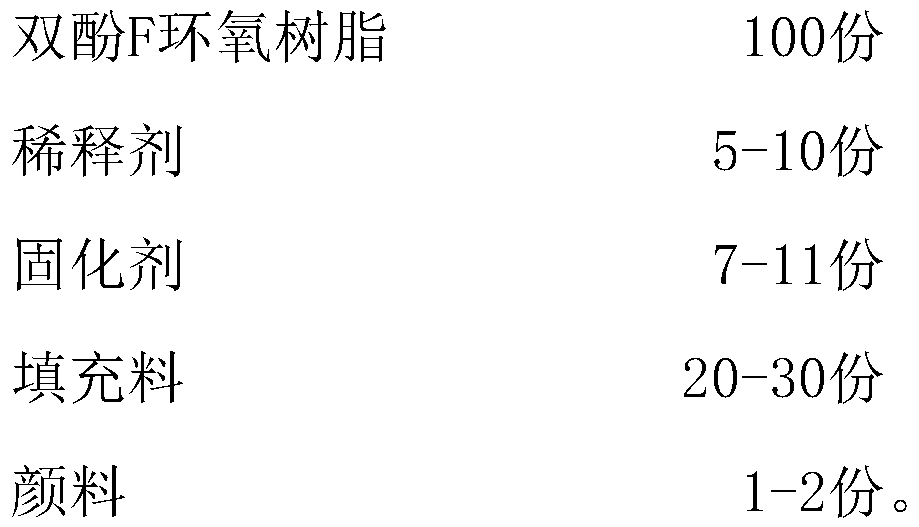
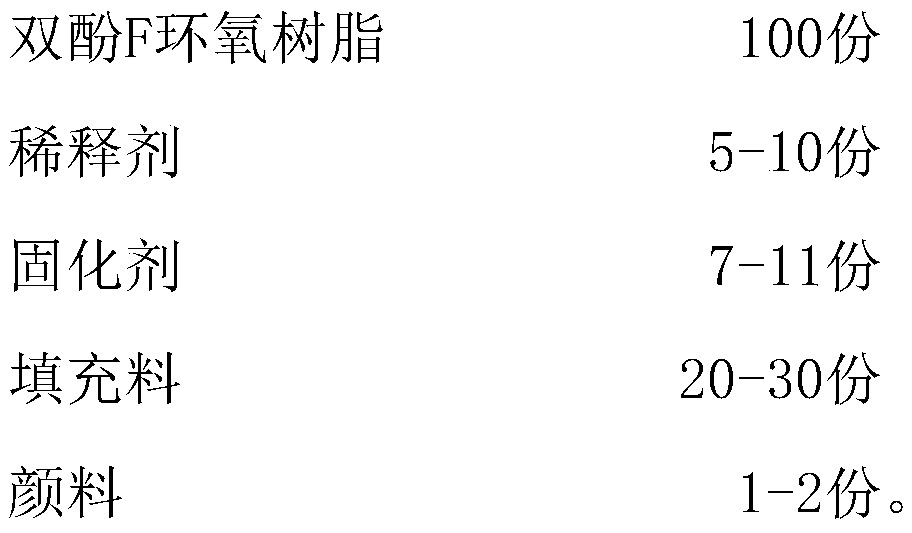
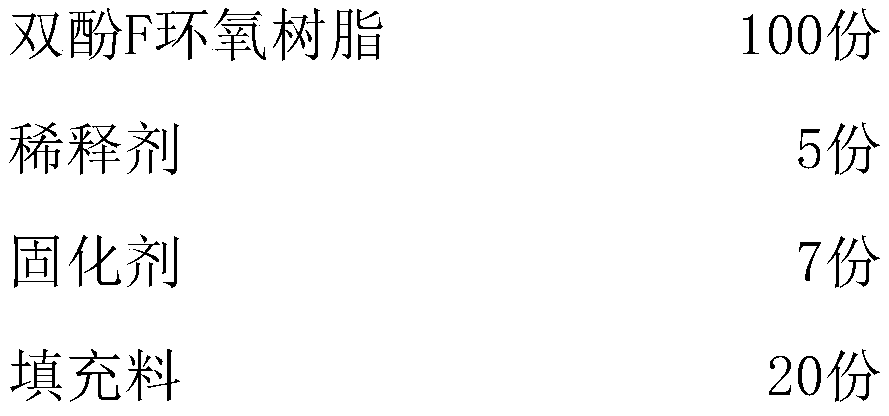
[0031] Wherein, the patch glue includes the raw materials of the following parts by weight:
[0032]
[0033]
[0034] Wherein, the bisphenol F epoxy resin is EPON862.
[0035] Wherein, the diluent is HELOXY8.
[0036] Wherein, the curing agent is composed of EH-4070S and PN23 in a weight ratio of 3:1.
[0037] Wherein, the filler is prepared by ultrasonically dispersing microcr...
Embodiment 2
[0041] A kind of SMT patch technology, comprises the steps:
[0042] (1) Pretreatment: cleaning and drying the PCB board;
[0043] (2) Glue dispensing: use a glue dispenser to apply patch glue to the preset glue dispensing position on the PCB;
[0044] (3) SMT: use a SMT machine to mount the components on the PCB;
[0045] (4) Curing: Send the PCB board into the curing equipment and cure it at 120°C for 2 minutes;
[0046] (5) Reflow soldering: send the PCB board into the reflow soldering furnace for reflow soldering;
[0047] (6) Inspection: check the yield rate of the finished product.
[0048] Wherein, the patch glue includes the raw materials of the following parts by weight:
[0049]
[0050] Wherein, the bisphenol F epoxy resin is EPON862.
[0051] Wherein, the diluent is HELOXY8.
[0052] Wherein, the curing agent is composed of EH-4070S and PN23 in a weight ratio of 5:1.
[0053] Wherein, the filler is prepared by ultrasonically dispersing microcrystalline ce...
Embodiment 3
[0057] A kind of SMT patch technology, comprises the steps:
[0058] (1) Pretreatment: cleaning and drying the PCB board;
[0059] (2) Glue dispensing: use a glue dispenser to apply patch glue to the preset glue dispensing position on the PCB;
[0060] (3) SMT: use a SMT machine to mount the components on the PCB;
[0061] (4) Curing: send the PCB board into the curing equipment, and cure at 110°C for 1 min;
[0062] (5) Reflow soldering: send the PCB board into the reflow soldering furnace for reflow soldering;
[0063] (6) Inspection: check the yield rate of the finished product.
[0064] Wherein, the patch glue includes the raw materials of the following parts by weight:
[0065]
[0066]Wherein, the bisphenol F epoxy resin is EPON862.
[0067] Wherein, the diluent is HELOXY8.
[0068] Wherein, the curing agent is composed of EH-4070S and PN23 in a weight ratio of 4:1.
[0069] Wherein, the filler is prepared by ultrasonically dispersing microcrystalline cellulose...
PUM
| Property | Measurement | Unit |
|---|---|---|
| Particle size | aaaaa | aaaaa |
| Specific surface area | aaaaa | aaaaa |
| Particle size | aaaaa | aaaaa |
Abstract
Description
Claims
Application Information
 Login to View More