Basement bottom plate pre-laying anti-sticking TPO waterproof coiled material construction method

A technology for basement floor and waterproofing membrane, which is applied in infrastructure engineering, protection devices, gaskets, etc., can solve the problems of poor acid, alkali and salt resistance to high and low temperature, blind spots in waterproof construction, and poor weather resistance, etc. Excellent, reduce waterproof construction cost and construction period, ensure waterproof quality and service life effect

CN111173045AInactive Publication Date: 2020-05-19SHANGHAI ORIENTAL YUHONG WATERPROOF TECH +1
10 Cites 4 Cited by

Patent Information

Authority / Receiving Office
CN · China
Patent Type
Applications(China)
Current Assignee / Owner
Publication Date
2020-05-19
Estimated Expiration
Not applicable · inactive patent

Smart Images

  • Figure 1
    Figure 1
  • Figure 2
    Figure 2
  • Figure 3
    Figure 3
Patent Text Reader

Abstract

The invention discloses a basement bottom plate pre-laying anti-sticking TPO waterproof coiled material construction method, and relates to the technical field of underground building waterproofing. The method comprises the following steps of 1, base layer treatment, specifically, treating a base layer internal corner and a base layer external corner into an arc shape or a slope angle; 2, pile head treatment, specifically, cleaning a pile head, and coating the pile head and the periphery of the pile head with waterproof coating layers; 3, line snapping, specifically, paying off on the base layer and snapping out a planning line for paving the TPO waterproof coiled material; 4, pre-laying a coiled material, specifically, pre-laying the TPO waterproof coiled material on the base layer according to the planning line; and 5, welding joints of the coiled material, specifically, welding the joints of the TPO waterproof coiled material by using hot air welding equipment. The method is wide inapplication range, good in waterproof performance and free of waterproof blind areas.
Need to check novelty before this filing date? Find Prior Art

Description

technical field

[0001] The invention belongs to the technical field of underground building waterproofing, and more specifically relates to a construction method for pre-laying anti-adhesive TPO (thermoplastic polyolefin) waterproof coiled material on a basement floor. Background technique

[0002] The anti-adhesive method of pre-laying waterproof rolls for underground engineering refers to pre-laying waterproof rolls on a firm, flat, and no obvious water-filled concrete cushion in advance, and then directly binding steel bars to pour concrete, and then pouring concrete and pre-spreading waterproof rolls The materials are permanently bonded together to achieve full adhesion, and there is no hidden danger of water channeling in the middle. Even if the coil is partially damaged, the water will be limited to a small range, and the waterproof layer of the coil and the cushion layer are empty. Bonding, not affected by the deformation and cracking of the cushion layer caused by bu...

Examples

Embodiment

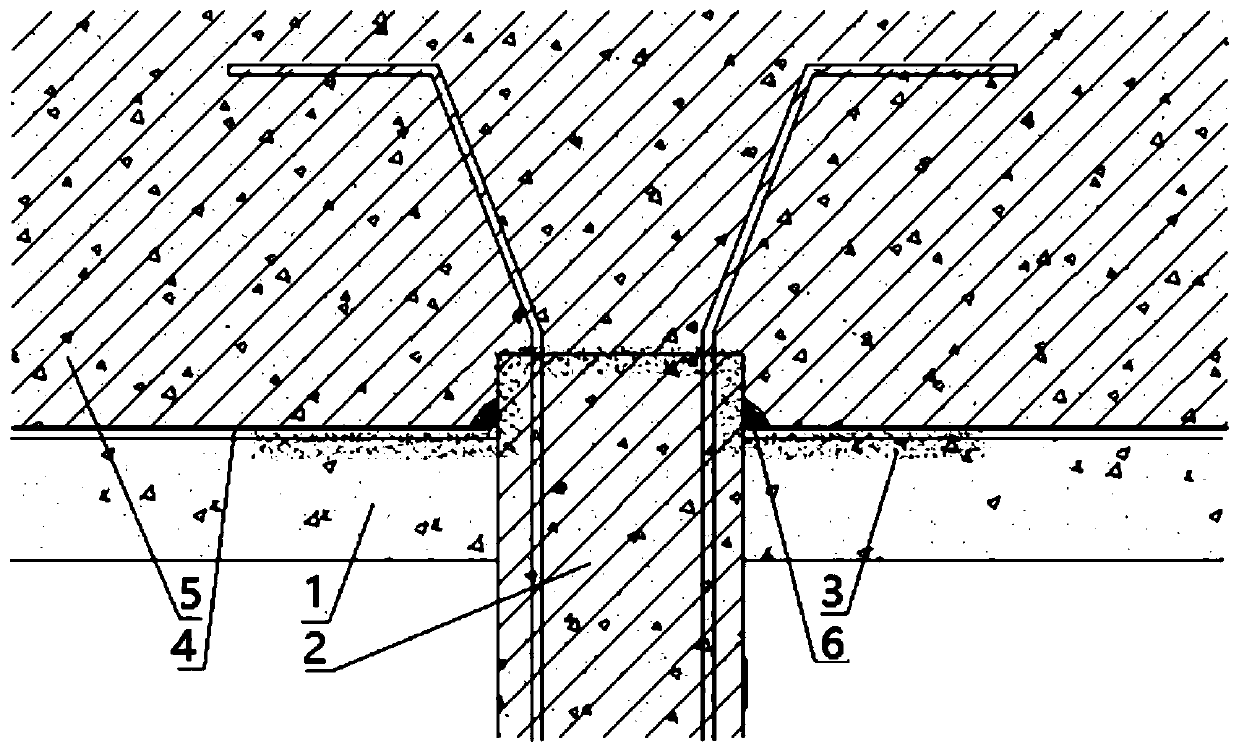
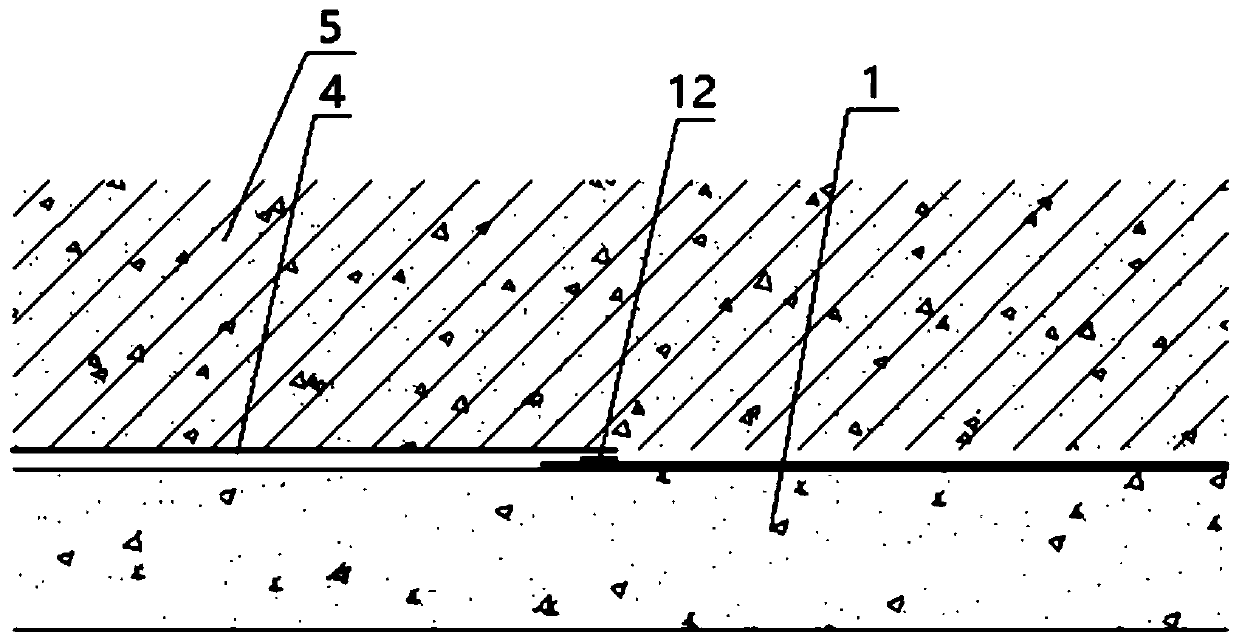
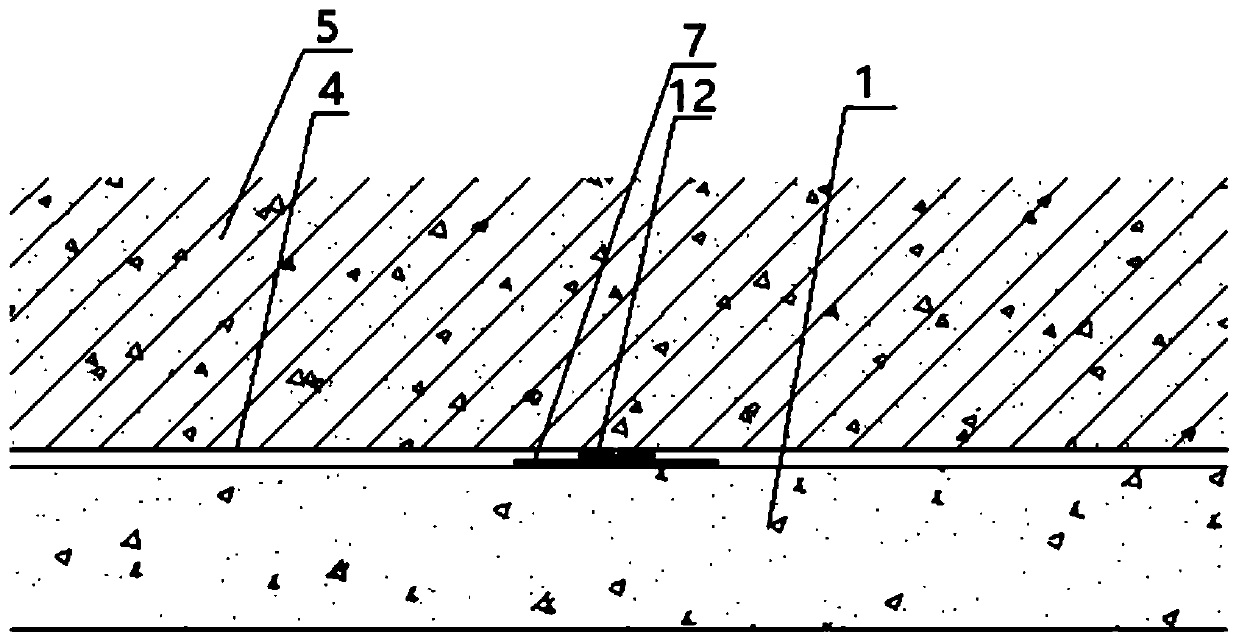
[0086] Such as Figure 1 to Figure 5 As shown, the present invention provides a kind of construction method of anti-adhesive TPO waterproof coiled material pre-laying basement floor, comprising:

[0087] Step 1, base layer 1 treatment: treat the inner corner of the base layer and the outer corner of the base layer into an arc shape or a slope angle;

[0088] Step 2, processing of pile head 2: cleaning pile head 2, brushing waterproof paint layer 3 on pile head 2 and around pile head 2;

[0089] Step 3, snapping the line: laying out the line on the base layer 1 to pop up the planning line laid by the TPO waterproof membrane 4;

[0090] Step 4. Pre-laying the membrane: pre-lay the TPO waterproof membrane 4 on the base layer 1 according to the planned line;

[0091] Step 5. Welding the seams of the coiled material: welding the seams of the TPO waterproof membrane 4 using hot air welding equipment.

[0092] In this embodiment, in step 1, the slope angle ranges from 40° to 50°. ...