Check patentability & draft patents in minutes with Patsnap Eureka AI!

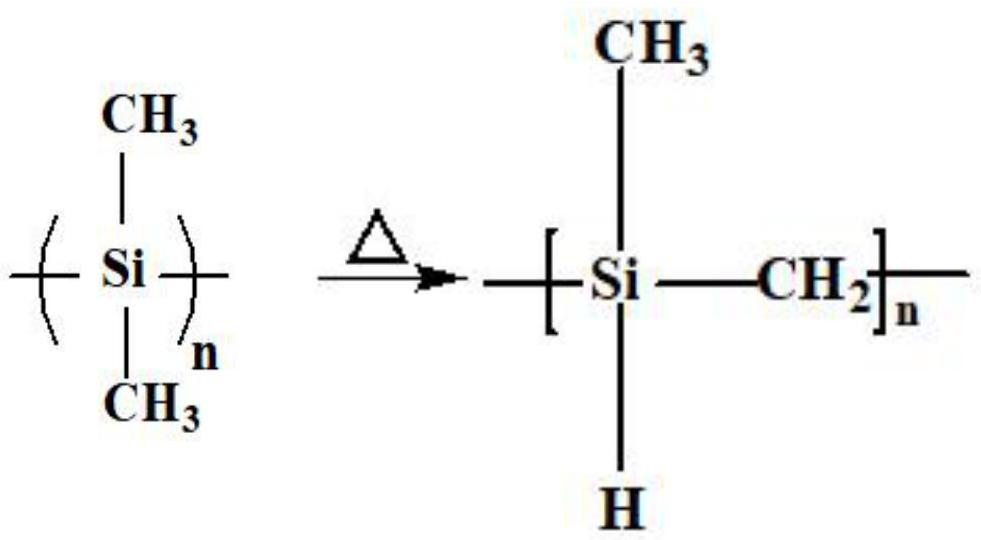
Method for preparing solid polycarbosilane by recycling polydimethylsilane cracking residues

A technology of polydimethylsilane and polycarbosilane is applied in the field of recovering polydimethylsilane cracking residue to prepare solid polycarbosilane, which can solve the problems of difficult separation, increase environmental pressure, increase PCS production and operation cost, etc. Environmental pressure, avoid environmental pollution, improve economic efficiency

Pending Publication Date: 2020-12-08
福建立亚化学有限公司
View PDF5 Cites 0 Cited by
  • Summary
  • Abstract
  • Description
  • Claims
  • Application Information

AI Technical Summary

Problems solved by technology

Since these insoluble particles are very small in size, it is difficult to separate them efficiently. Therefore, the by-products of this decomposition can only be entrusted to professional solid waste treatment companies for incineration treatment. On the one hand, it increases the production and operation costs of PCS. Waste incineration also increases environmental pressure
However, there is no technical literature report on the recycling of PDMS pyrolysis residues.

Method used

the structure of the environmentally friendly knitted fabric provided by the present invention; figure 2 Flow chart of the yarn wrapping machine for environmentally friendly knitted fabrics and storage devices; image 3 Is the parameter map of the yarn covering machine
View more

Image

Smart Image Click on the blue labels to locate them in the text.
Viewing Examples
Smart Image
  • Method for preparing solid polycarbosilane by recycling polydimethylsilane cracking residues

Examples

Experimental program
Comparison scheme
Effect test

Embodiment 1

[0022] (1) Put 100Kg polydimethylsilane cracking residue and 100Kg xylene into the mixing tank, stir for 24 hours, and obtain PCS solution (A) containing insoluble matter;

[0023] (2) Put 10Kg diatomite with a particle size of 10 μm and 10Kg xylene into a diatomite mixing tank, stir for 2 hours, and then use a material pump to inject the suspension of diatomite and xylene into a diatomite filter In, until a stable diatomite filter cake (B) is formed;

[0024] (3) Pour the PCS solution (A) containing insoluble matter into a diatomite filter through a material pump, and filter through a diatomite filter cake (B) to obtain a PCS solution (C);

[0025] (4) Transfer the PCS solution (C) to the synthesis kettle, first vacuumize the synthesis kettle to -0.09MPa, then feed nitrogen to normal pressure; open the stirring device and heating device of the synthesis kettle, when the temperature in the synthesis kettle is controlled At 200°C, keep it warm for 4 hours; continue to feed nit...

Embodiment 2

[0029] (1) Put 100Kg polydimethylsilane cracking residue and 100Kg xylene into the mixing tank, stir for 24 hours, and obtain PCS solution (A) containing insoluble matter;

[0030] (2) Put 10Kg diatomite with a particle size of 10 μm and 10Kg xylene into a diatomite mixing tank, stir for 2 hours, and then use a material pump to inject the suspension of diatomite and xylene into a diatomite filter In, until a stable diatomite filter cake (B) is formed;

[0031] (3) Pour the PCS solution (A) containing insoluble matter into a diatomite filter through a material pump, and filter through a diatomite filter cake (B) to obtain a PCS solution (C);

[0032](4) Transfer the PCS solution (C) to the synthesis kettle, first vacuumize the synthesis kettle to -0.09MPa, then feed nitrogen to normal pressure; open the stirring device and heating device of the synthesis kettle, when the temperature in the synthesis kettle is controlled At 200°C, keep it warm for 4 hours; continue to feed nitr...

the structure of the environmentally friendly knitted fabric provided by the present invention; figure 2 Flow chart of the yarn wrapping machine for environmentally friendly knitted fabrics and storage devices; image 3 Is the parameter map of the yarn covering machine
Login to View More

PUM

PropertyMeasurementUnit
Particle sizeaaaaaaaaaa
Softening pointaaaaaaaaaa
Login to View More

Abstract

The invention discloses a method for preparing solid polycarbosilane by recycling polydimethylsilane cracking residues, which comprises the following steps: mixing the polydimethylsilane cracking residues with xylene, and sufficiently stirring to dissolve soluble PCS (polycaprolactone) wrapped by insoluble substances in the residues in xylene; efficiently separating insoluble substances from the xylene solution of the PCS by using a diatomite filtration technology; removing xylene from the soluble PCS obtained by separation under normal pressure; and finally, carrying out synthesis reaction athigh temperature and high pressure to obtain the polyester resin with the softening point of 200-230 DEG C, the number-average molecular weight of the copolymer is 1300-1700; the oxygen content is less than 0.7%; and the ceramic yield of the solid PCS product is greater than 50%. After the technical scheme is adopted, according to the method for preparing the solid polycarbosilane by recycling the polydimethylsilane cracking residues, the PDMS cracking residues are recycled, so that available solid PCS raw materials are obtained, and the economic benefits are improved; and through recycling,environmental pollution caused by PDMS residue incineration is avoided, and the environmental protection pressure is reduced.

Description

technical field [0001] The invention relates to the technical field of precursor conversion ceramics, in particular to a method for recovering polydimethylsilane cracking residue to prepare solid polycarbosilane. Background technique [0002] The precursor conversion method is a new method of preparing ceramic materials by cracking organic precursor polymers. Compared with the traditional ceramic material preparation process, this method has the advantages of adjustable structure (molecular designability), good manufacturability, low ceramization temperature and close-to-size molding, and is one of the most promising methods for preparing ceramic materials. . At present, the common ceramic precursors mainly include polycarbosilane (PCS), polysilazane (PSZ), polysiloxane (PSO), etc. (Yajima S, Hayashi J, Omori M, et al. Development of a silicon carbide fiber with high tensile strength[J].Nature,1976,261:683-685; Z.Y.Chu,Y.C.Song,Y.S.Xu,Y.B.Fu et al.Different influence of EB...

Claims

the structure of the environmentally friendly knitted fabric provided by the present invention; figure 2 Flow chart of the yarn wrapping machine for environmentally friendly knitted fabrics and storage devices; image 3 Is the parameter map of the yarn covering machine
Login to View More

Application Information

Patent Timeline
no application Login to View More
IPC IPC(8): C08G77/60
CPCC08G77/60
Inventor 郑桦黄力峰陈福来庄培焕陈智林陈家煌刘炯洋
Owner 福建立亚化学有限公司
Features
  • R&D
  • Intellectual Property
  • Life Sciences
  • Materials
  • Tech Scout
Why Patsnap Eureka
  • Unparalleled Data Quality
  • Higher Quality Content
  • 60% Fewer Hallucinations
Social media
Patsnap Eureka Blog
Learn More