Unlock instant, AI-driven research and patent intelligence for your innovation.

Devices, systems and methods for tissue analysis, locaton determination and tissue ablation

a tissue analysis and locaton technology, applied in the field of devices, systems and methods for tissue analysis, locaton determination and tissue ablation, can solve the problems of no known technology which is integrated with such access devices capable of specifically sensing or tissue changes or detecting blood vessels for the purpose of vessel targeting, and the needle can only be used for sensing, so as to facilitate the application of tissue ablation sensitive areas, reduce and/or prevent bleeding, and achieve precise and targeted control of bipolar energy applications.

Active Publication Date: 2021-12-07
BLOSSOM INNOVATIONS LLC
View PDF38 Cites 0 Cited by
  • Summary
  • Abstract
  • Description
  • Claims
  • Application Information

AI Technical Summary

Benefits of technology

The patent describes an insertion device that can be used to detect, ablate, or position tissue. The device contains an array of electrodes that can be used to determine tissue impedance, which can help with tissue detection and ablation. The device can also compare impedance between different electrodes to determine tissue type. The device can be designed to improve accuracy and can deliver pharmacological agents or obtain biopsy samples. The patent also describes a method for using the device to determine tissue type or if the device has reached the tissue. Overall, the patent provides an improved tool for tissue detection, ablation, and position indication.

Problems solved by technology

There are, however, no known technologies which are integrated with such access devices capable of specifically sensing or tissue changes or detecting blood vessels for the purpose of vessel targeting or avoidance.
However, there are no known insertion devices / arrangements that integrate sensing electrodes that facilitate rapid or real-time sensing / detection of different tissue types, while also facilitating an injection of substances or materials into a body and / or an aspiration of fluids or collection of material, cells or tissues from the body, such as, e.g., pharmacological agents, fillers, biologics, therapeutics, cellular materials, stem cells, genetic materials, immunotherapy agents, substances, etc., for example, with no manipulation of the insertion devices / arrangements.
Thus, the needle can only be used for sensing, and not for injecting an agent into a subject.
Ultrasound imaging has been shown to be an effective guidance technology, although it provides only a two-dimensional (2D) image with limited information and somewhat poor needle visualization (See, e.g., Rocha et al., “Step-by-step of ultrasound-guided core-needle biopsy of the breast: review and technique,” Radiol Bras.
Further, X-ray or computerized tomography (CT) scans expose both the clinician and the subject to unwanted radiation.
Thus, X-ray, CT, and MRI equipment is typically centralized with scheduling limitations.
It is indeed difficult to provide a three-dimensional (3D) location of the tissue using the existing technology, and also limiting the negative effects of the devices that are needed to obtain the location.
The current causes resistive heating of the tissue.
In practice, e.g., it is possible to provide heating around the return electrode pad, often leading to burns on the body.
While bipolar instruments have a highly localized effect, unfortunately, they are more complicated to make than the monopolar instruments because of the need to insulate and isolate the two electrodes.
Ultrasound imaging has been shown to be an effective guidance technology, although it provides only a two-dimensional (2D) image with limited information and somewhat poor needle visualization (See, e.g., Rocha et al., Rafael Dahmer, Pinto, Renata Reis, Tavares, Diogo Paes Barreto Aquino, Gonçalves, Cláudia Sofia Aires, “Step-by-step of ultrasound-guided core-needle biopsy of the breast: review and technique,” Radiol Bras.
Further, X-ray or computerized tomography (CT) scans expose both the clinician and the patient to unwanted radiation.
Thus, X-ray, CT, and Mill equipment is typically centralized with scheduling limitations.
It is indeed difficult to provide a three-dimensional (3D) location of the tissue using the existing technology, and also limiting the negative effects of the devices that are needed to obtain the location.
Further, the configurations and components of the catheters which utilize such optical modalities, including OCT, CT, MM, fluorescence imaging Raman, optical imaging, etc. can be complex and costly.
Such exchange of components and / or tools can be length, and may affect the medical procedure when the timing of the use of the catheter and / or tools thereof can be important, and sometimes even crucial.

Method used

the structure of the environmentally friendly knitted fabric provided by the present invention; figure 2 Flow chart of the yarn wrapping machine for environmentally friendly knitted fabrics and storage devices; image 3 Is the parameter map of the yarn covering machine
View more

Image

Smart Image Click on the blue labels to locate them in the text.
Viewing Examples
Smart Image
  • Devices, systems and methods for tissue analysis, locaton determination and tissue ablation
  • Devices, systems and methods for tissue analysis, locaton determination and tissue ablation
  • Devices, systems and methods for tissue analysis, locaton determination and tissue ablation

Examples

Experimental program
Comparison scheme
Effect test

example 1

Phase Angle Defines Tissue Type

[0227]In-vivo testing was performed using fully integrated electrodes produced according to the pad printing procedure described above (see FIGS. 6 and 7). Testing was performed in a live New Zealand White rabbit to measure impedance in several different types of tissue. A cutdown was performed to expose major blood vessels in the rabbit's neck and thigh. Needles were inserted into different tissues to different depths. Magnet wire was used to connect the electrodes to an impedance analyzer (e.g., Keysight 4294A / 1D5). Measured impedance (e.g., magnitude and angle) was exported to text files. FIG. 12A shows a set of exemplary diagrams and side views illustrating exemplary needle 1205 inserted into different tissue types according to an exemplary embodiment of the present disclosure. The tissue types included dermis 1210, major blood vessels 1215, and fat 1220.

[0228]FIG. 12B shows a set of exemplary graphs illustrating the impedance phase angle obtained ...

example 2

Magnitude Defines Tissue Type

[0229]FIGS. 16-18 shows graphs illustrating exemplary results obtained using the exemplary insertion device / apparatus according to an exemplary embodiment of the present disclosure. The exemplary insertion device / apparatus was inserted into different types of fresh tissue harvested from a pig and spectra of the measured magnitude and phase angle were collected using an impedance analyzer. The exemplary graphs shown in FIG. 16 illustrate clear differentiation between the measured impedance magnitude response in various tissue as a function of frequency. Exemplary results showed a variation in response in different tissues at different frequencies. The presence of an outer layer of PET heat shrink on the outside of the needles had little effect on the relative response. Frequencies that illustrate clear differences between the measurements obtained for different tissues can be beneficial. These frequencies can vary depending on the target tissue. Results i...

the structure of the environmentally friendly knitted fabric provided by the present invention; figure 2 Flow chart of the yarn wrapping machine for environmentally friendly knitted fabrics and storage devices; image 3 Is the parameter map of the yarn covering machine
Login to View More

PUM

No PUM Login to View More

Abstract

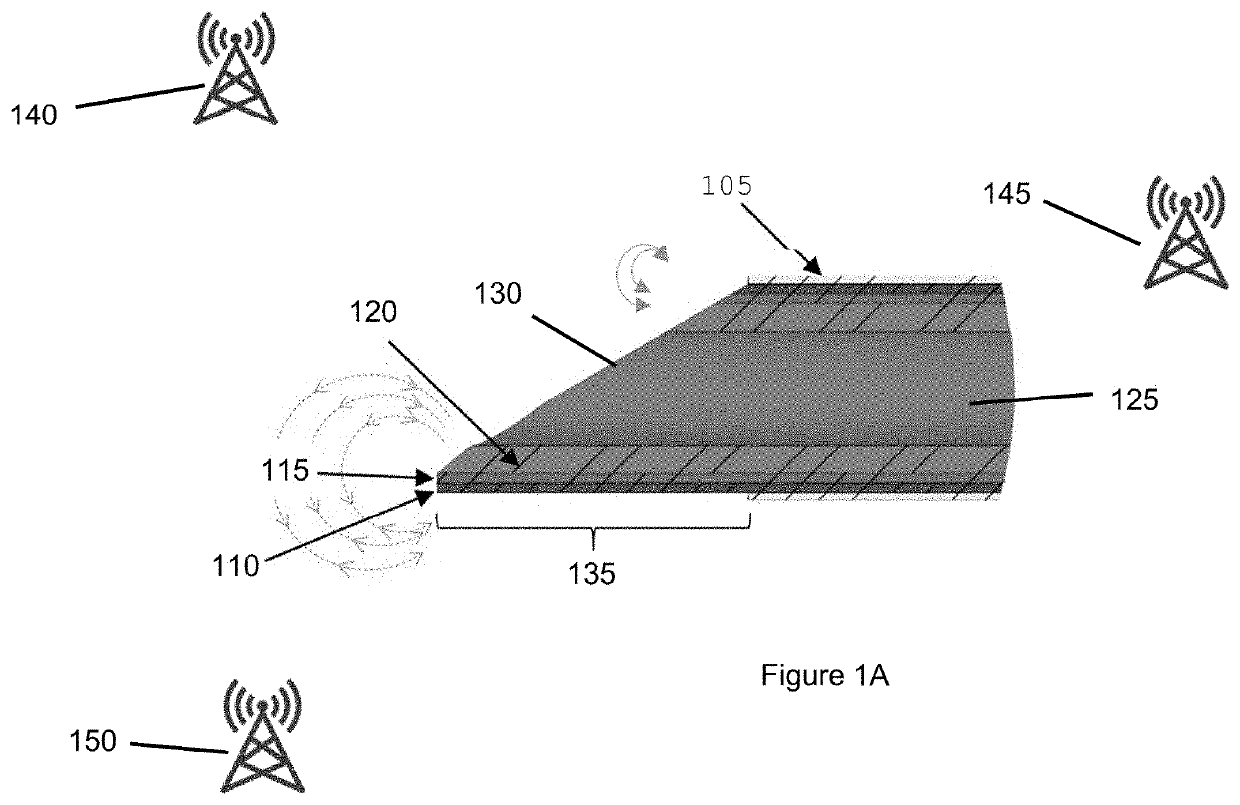
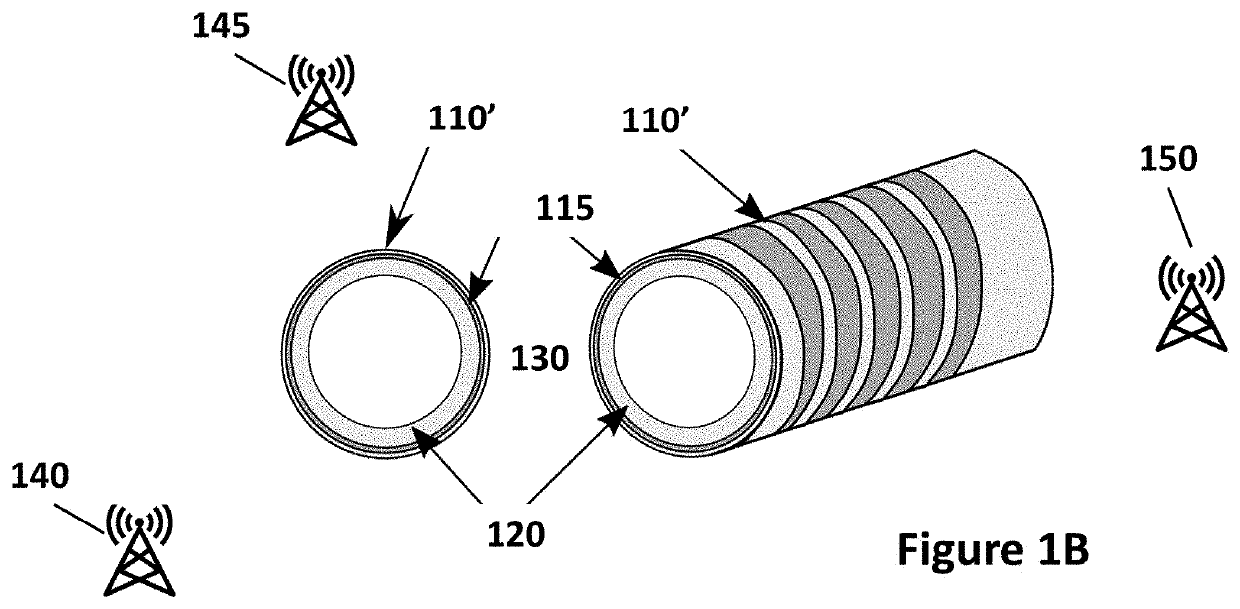
An exemplary tissue detection and location identification apparatus can include, for example, a first electrically conductive layer at least partially (e.g., circumferentially) surrounding a lumen, an insulating layer at least partially (e.g., circumferentially) surrounding the first electrically conductive layer, and a second electrically conductive layer circumferentially surrounding the insulating layer, where the insulating layer can electrically isolate the first electrically conductive layer from the second electrically conductive layer. A further insulating layer can be included which can at least partially surrounding the second electrically conductive layer. The first electrically conductive layer, the insulating layer, and the second electrically conductive layer can form a structure which has a first side and a second side disposed opposite to the first side with respect to the lumen, where the first side can be longer than the second side thereby forming a sharp pointed end via the first side at a distal-most portion. The exemplary configuration can be used for (a) determination / detection of a tissue type using impendence of the electrically conductive layers, and / or (ii) determination of a location of at least one portion of the insertion device / apparatus. Based on such determination, it is possible to effectuate ablation or heating of tissue by applying RF energy across the electrically conductive layers.

Description

CROSS-REFERENCE TO RELATED APPLICATION(S)[0001]This application relates to and claims priority from U.S. Patent Application Ser. No. 62 / 941,213 filed on Nov. 27, 2019, the entire disclosure of which is incorporated herein by reference.FIELD OF THE DISCLOSURE[0002]The present disclosure relates generally to a detection or sensing of an animal or human tissue type, determination / inference or a location of a portion of an insertion arrangement and application of ablative causing signals, and more specifically, to exemplary embodiments of exemplary apparatus, devices and systems, which can be integrated into one or more insertion devices (e.g., including but not limited to a needle, cannula, etc.), for determining a tissue or fluid type prior to (i) an injection of any substance or material (e.g., drugs, biologics, filler, therapeutics, cellular materials, cells, genetic materials, stem cells, immunotherapy agents, etc.) and / or (i) an aspiration of fluids or collection of materials or t...

Claims

the structure of the environmentally friendly knitted fabric provided by the present invention; figure 2 Flow chart of the yarn wrapping machine for environmentally friendly knitted fabrics and storage devices; image 3 Is the parameter map of the yarn covering machine
Login to View More

Application Information

Patent Timeline
no application Login to View More
Patent Type & Authority Patents(United States)
IPC IPC(8): A61B5/06A61B5/00A61B5/0538A61B5/05A61B18/08A61B18/14A61B10/02A61B18/00
CPCA61B5/068A61B5/0031A61B5/05A61B5/0538A61B5/6848A61B5/7405A61B10/0283A61B18/082A61B18/1477A61B2018/00077A61B2018/00083A61B2018/00107A61B2018/00577A61B2018/00875A61B2017/00526A61B2017/00115A61B2034/2051
Inventor TING, JOETO, TANIAZUO, VINCENTWRIGHT, JAMESAPOLLONIO, BENDRESSER, CHARLES HOLLAND
Owner BLOSSOM INNOVATIONS LLC