Unlock instant, AI-driven research and patent intelligence for your innovation.

Multiple drug resistance reversal agent

Inactive Publication Date: 2003-01-09
BRIGHAM YOUNG UNIV
View PDF0 Cites 1 Cited by
  • Summary
  • Abstract
  • Description
  • Claims
  • Application Information

AI Technical Summary

Problems solved by technology

However, cancer cells grow and divide in a rapid, abnormal fashion.
The tumors can compress, invade, and destroy normal tissue.
Multiple drug resistence is a major problem in the treatment of cancer with chemotherapy.
These agents can be expensive which increases the already great expense of cancer treatment.
Moreover, the agents can be quite toxic to normal cells.
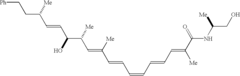
Andrus, M. B. & Lepore, S. D. J. Am. Chem. Soc. 1997, 119: 2327 However, stipiamid is highly toxic and can harm normal cells.
Additionally, stipiamide can only bind one of the potential drug binding sites on Pgp requiring more stipiamide to completely shut down Pgp.
Critical issues include the nature of the linker and the polymeric support the length and position of attachment of the linker, and compatibility with assays.
Pgp is a particularly challenging polyvalency target.
The development of resistance in cancer cells to chemotherapeutic agents has been a major impediment to effective clinical treatments.
To date, no polyvalent anti-Pgp agents have been effectively synthesized.
While stipiamide is an effective MDR reversal agent, it is also highly toxic.

Method used

the structure of the environmentally friendly knitted fabric provided by the present invention; figure 2 Flow chart of the yarn wrapping machine for environmentally friendly knitted fabrics and storage devices; image 3 Is the parameter map of the yarn covering machine
View more

Image

Smart Image Click on the blue labels to locate them in the text.
Viewing Examples
Smart Image
  • Multiple drug resistance reversal agent
  • Multiple drug resistance reversal agent
  • Multiple drug resistance reversal agent

Examples

Experimental program
Comparison scheme
Effect test

example 1

Synthesis of Homodimeric MDR Reversal Agents

[0043] Referring now to FIG. 2, the key to the synthesis of the homodimers was the development of a general, efficient route to synthesize the polyethylene glycol linkers that are not commercially available. Zalipsky, S. Bioconj. Chem. 1995, 6: 150. It was found that mesylates function as an efficient coupling partners. Coudert, G. et al. Syn. Commun. 1986, 16: 19; Keegstra, E. M. D. et al. J. Org. Chem. 1992, 57: 6678. Diols 4 (X=2,) were first monobenzylated using 50% aqueous hydroxide at reflux to give the protected alcohols 5. The step that allowed for reproducible glycol production employed sodium hydride with the alcohol 5, followed by dropwise addition of dimesylate 6 and reflux to provide 7.

[0044] All intermediates were characterized by .sup.1H and .sup.13C NMR, and HMRS. Dimesylate 6 was produced from triethylene glycol, mesyl chloride (2.1 equivalents), and triethylamide (2.4 equivalents) in methylene chloride (0.2 M). Sodium bic...

example 2

Synthesis of a Monomeric Control Substrate

[0050] Referring now to FIG. 4, a monomeric ethylene glycol-amide reversal agent was also made for control purposes in MDR and Pgp assays. Monosilyl ether protection, mesylation and azide displacement were uneventful with hexaethylene glvcol 8 (x=5) to give 14. Phosphine reduction, acid chloride coupling, and TBAF deportation generated amide 15. Coupling with 13 then gave the desired control substrate 16.

example 3

Inhibition of ATPase Activity and IAAP Binding by Homodimers and Control Amide 16

[0051] Pgp ATPase stimulation activity was determined along with displacement of the prazosin analog, iodoarylazidoprazosin (.sup.125IAAP). Ambudkar, S. V. Methods Enzymol 1998, 292: 504-514; Dey, S. et al. Methods Enzymol. 1998, 292: 318.

[0052] The effect on ATPase activity of Pgp and binding of the IAAP substrate to Pgp are shown in Table 1. The effect of the homodimers of the present invention on ATPase activity and IAAP binding to Pgp are very potent. ATPase stimulation reaches a maximum at low concentration (1 .mu.M) and steadily drops off as the concentration is increased (not shown). In contrast with the other homodimers, the X=5 compound slowly achieves maximum stimulation up to 50 .mu.M and this level is maintained as the concentration increases. The other dimers are similar to the monomeric compounds where maximum stimulation is achieved and rapidly drops off as concentration increases. More s...

the structure of the environmentally friendly knitted fabric provided by the present invention; figure 2 Flow chart of the yarn wrapping machine for environmentally friendly knitted fabrics and storage devices; image 3 Is the parameter map of the yarn covering machine
Login to View More

PUM

PropertyMeasurementUnit
Lengthaaaaaaaaaa
Compositionaaaaaaaaaa
Electrical resistanceaaaaaaaaaa
Login to View More

Abstract

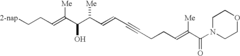
The present invention relates to a MDR reversal agent. The agent is polyvalent possessing two or more binding domains spaced to effectively inhibit the multiple drug resistance activity of Pgp. The MDR reversal agent is based upon the naturally occurring compound (-)-stipiamide. The multiple drug resistence reversal agent of the present invention can be a homodimer based on napthyl-DHS. The homodimer incorporates two napthyl-DHS domains joined by a series of joined ethylene glycol spacers. The invention also relates to method of reversing MDR in a human cell by administering the reversal agent of the invention. When Pgp is contacted with the reversal agent, the ATPase activity of Pgp is significantly reduced as well as the binding affinity of Pgp for its known substrates.

Description

[0001] This application is related to and claims the benefit of U.S. Provisional Application Serial No. 60 / 182,900 of Merritt B. Andrus, filed Feb. 16, 2000 and entitled "Dual Domain Homo-dimeric Polyene MDR Reversal Agents" which is incorporated herein by this reference.[0003] The present invention relates to agents for the treatment of cancer. More specifically, the invention relates to agents which reverse multiple drug resistance in many types of cancer.TECHNICAL BACKGROUND[0004] Cancer involves the out-of-control growth and spread of abnormal cells. Normally, human cells grow, divide, and die in a preprogramed manner. When a person is young, most cell types divide more rapidly than at later stages of development. When that person becomes an adult, the rate of cell division slows dramatically. In an adult, normal cells of most tissues divide only to replace worn-out or dying cells and to repair injuries.[0005] However, cancer cells grow and divide in a rapid, abnormal fashion. T...

Claims

the structure of the environmentally friendly knitted fabric provided by the present invention; figure 2 Flow chart of the yarn wrapping machine for environmentally friendly knitted fabrics and storage devices; image 3 Is the parameter map of the yarn covering machine
Login to View More

Application Information

Patent Timeline
no application Login to View More
IPC IPC(8): A61K31/164A61K31/785
CPCA61K31/164A61K31/785
Inventor ANDRUS, MERRITT B.TURNER, TIMOTHY M.PRINCE, JOHN H.
Owner BRIGHAM YOUNG UNIV
Features
  • R&D
  • Intellectual Property
  • Life Sciences
  • Materials
  • Tech Scout
Why Patsnap Eureka
  • Unparalleled Data Quality
  • Higher Quality Content
  • 60% Fewer Hallucinations
Social media
Patsnap Eureka Blog
Learn More