
Expandable stent having plurality of interconnected expansion modules
- Summary
- Abstract
- Description
- Claims
- Application Information
AI Technical Summary
Benefits of technology
Problems solved by technology
Method used
Image

Examples
Embodiment Construction
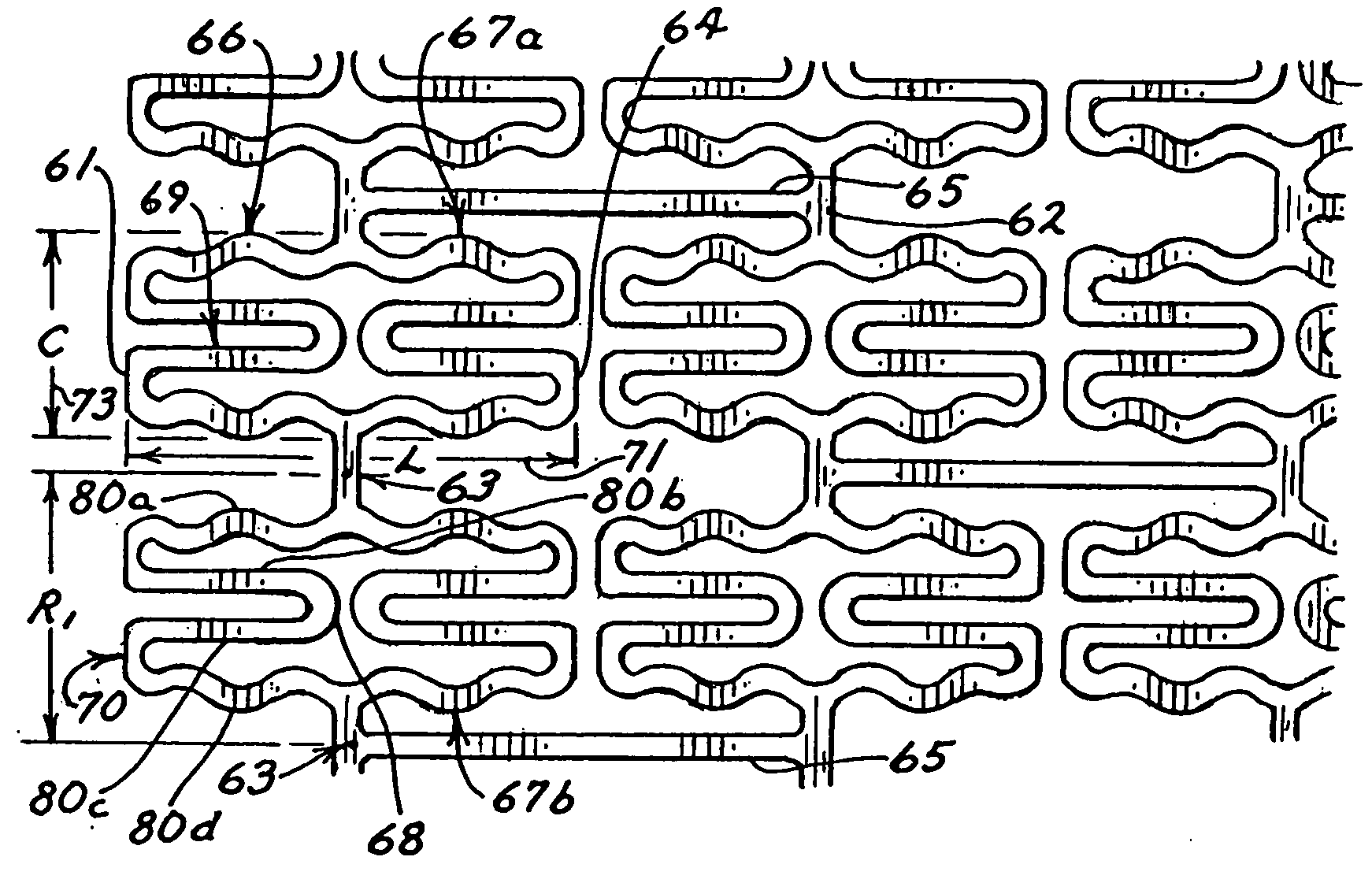
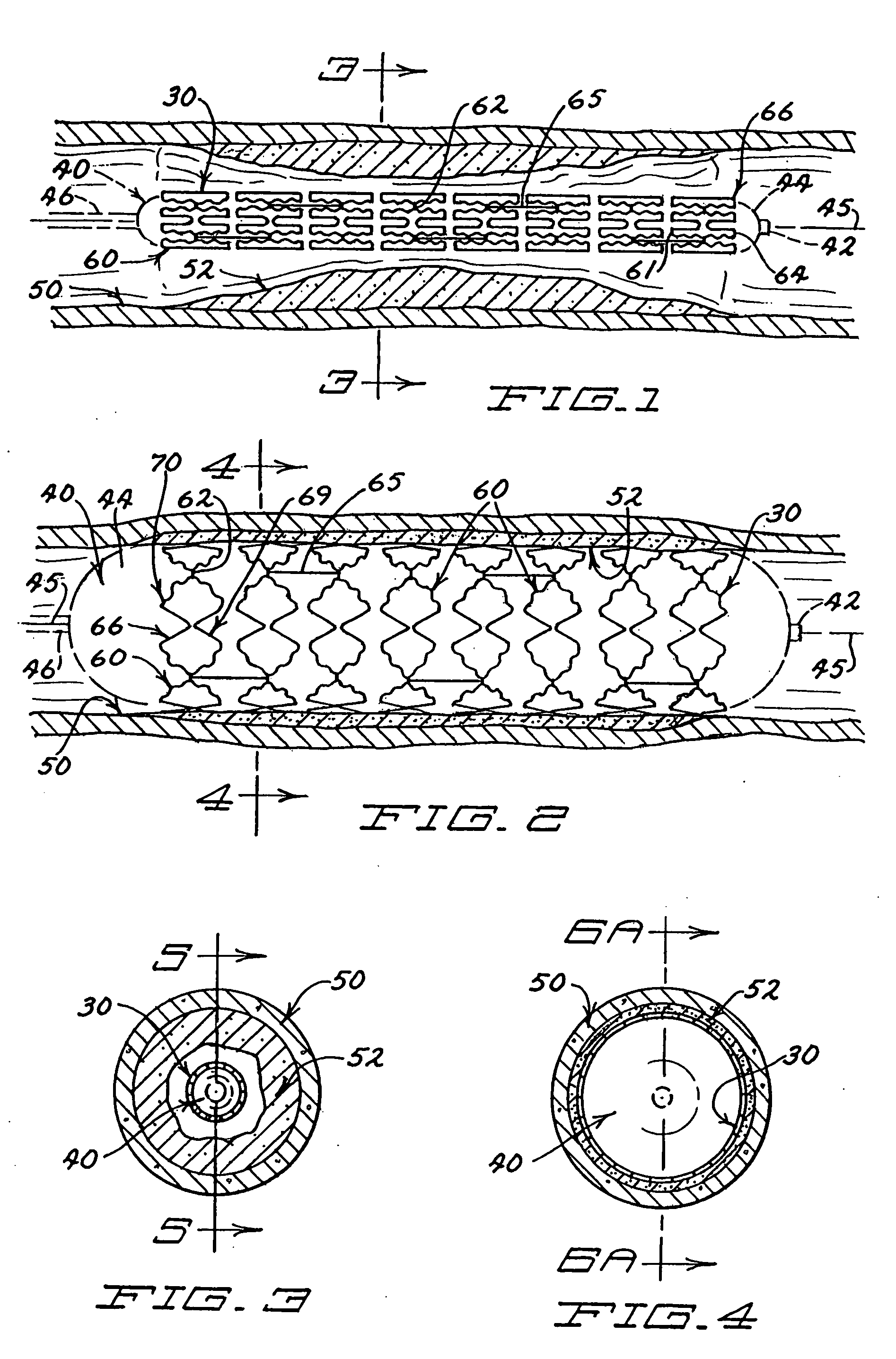
[0051] Referring now to FIGS. 1-4, an expandable stent 30 of the present invention is schematically presented in FIG. 1. The stent 30 has a proximal end 32 and a distal end 34 and is depicted in FIG. 1 as being temporarily fitted upon or generally coaxial with a balloon catheter 40 (shown in hidden line), having a distal end 42, an expandable balloon 44 and a catheter shaft 46. The stent 30 is also shown closely associated within a portion of an artery 50, which is partially occluded by a stenosis 52.
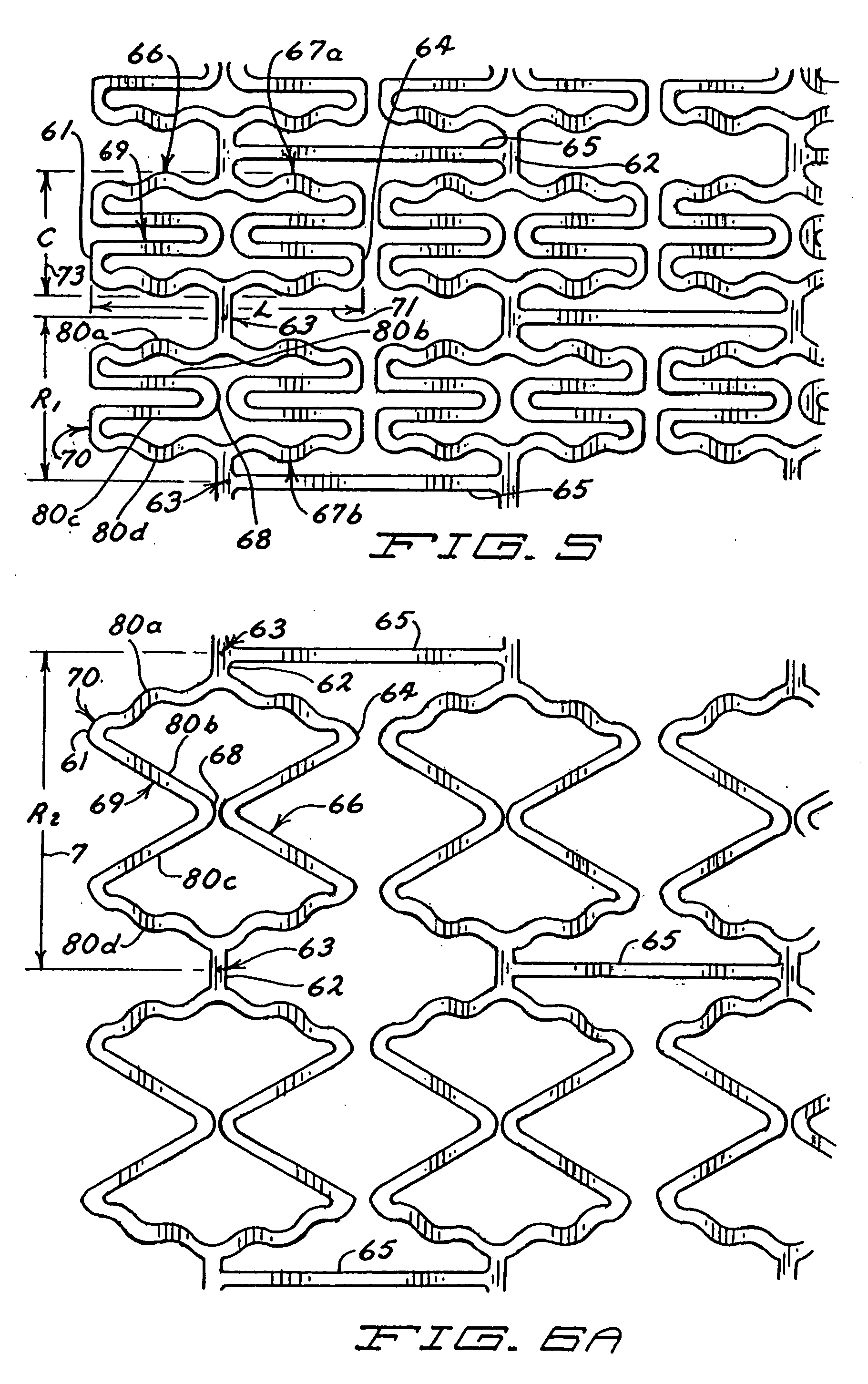
[0052] As shown schematically in FIG. 2, once the stent 30 is appropriately located in the lumen of the artery 50, preferably spanning the stenosis 52, the stent 30 can be expanded outward radially by inflating the balloon 44 of the balloon catheter 40. Inflation of balloon 44 is accomplished by application of fluid pressure to its interior by the cardiologist, acting at the proximal end (not shown) of catheter 40 in a manner, which is well known in the art. As balloon 44 expands, sten...
PUM
 Login to View More
 Abstract
Description
Claims
Application Information
 Login to View More