[0010] In accordance with the present invention, a high efficiency heating apparatus is provided that includes a heating head having flue chambers for the hot gases of
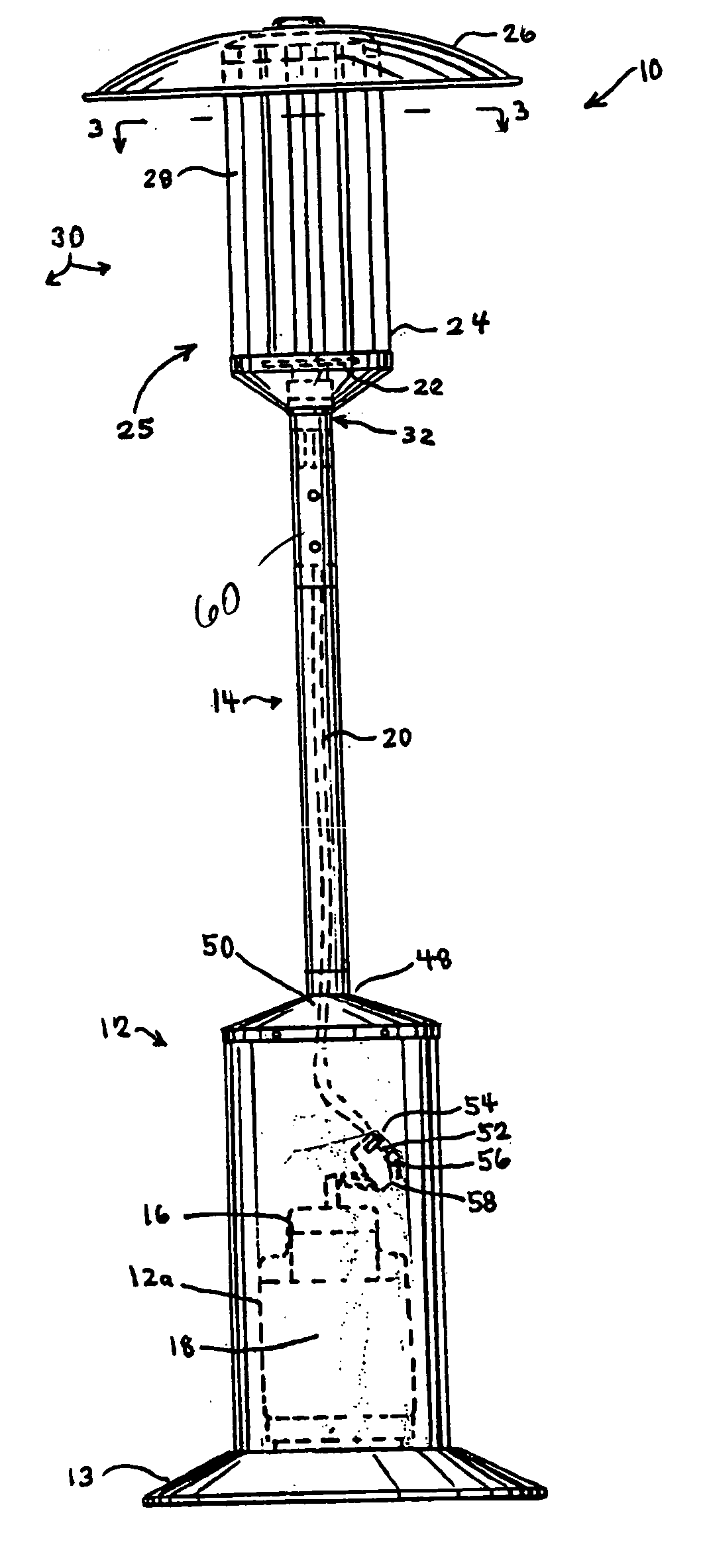
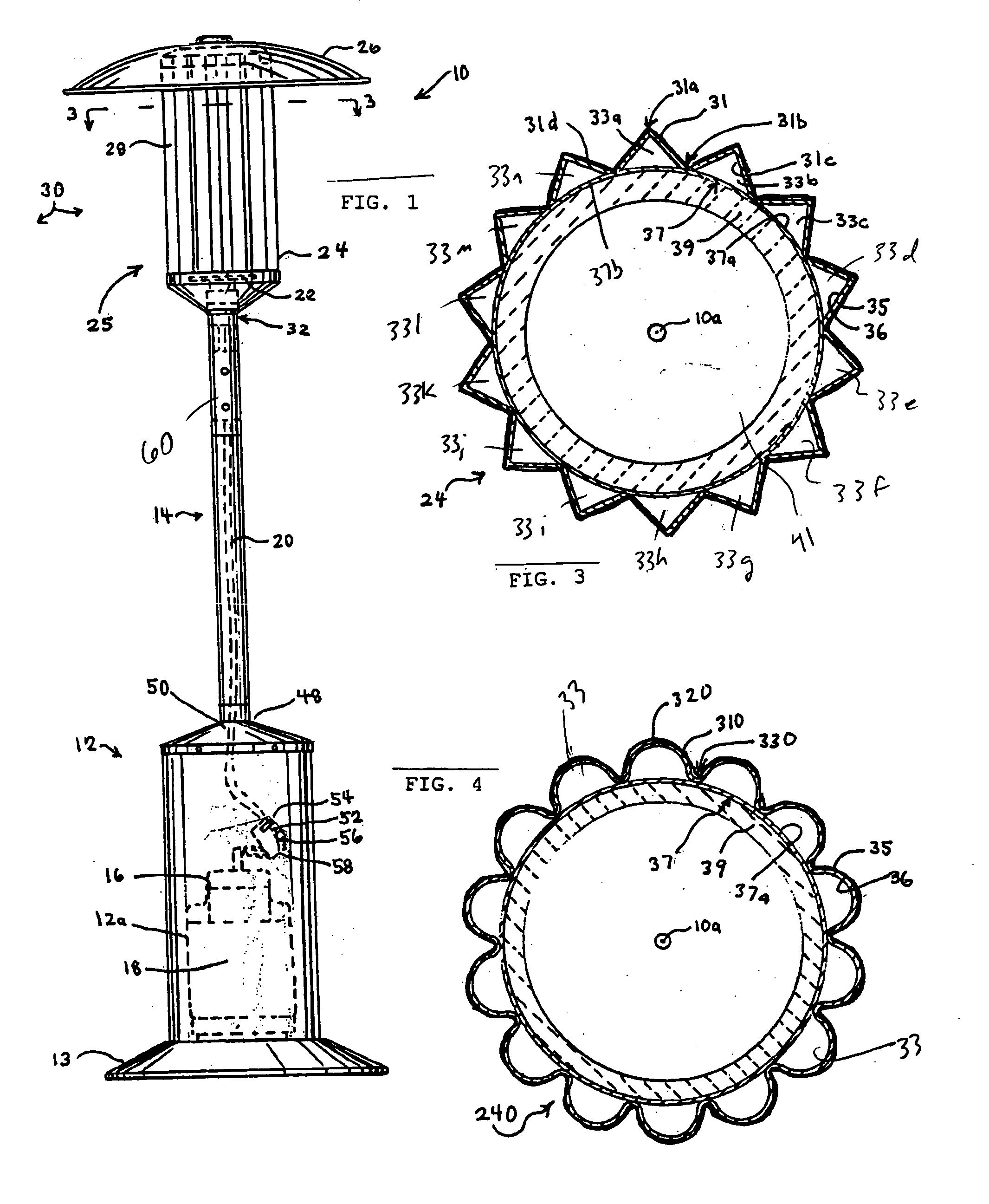
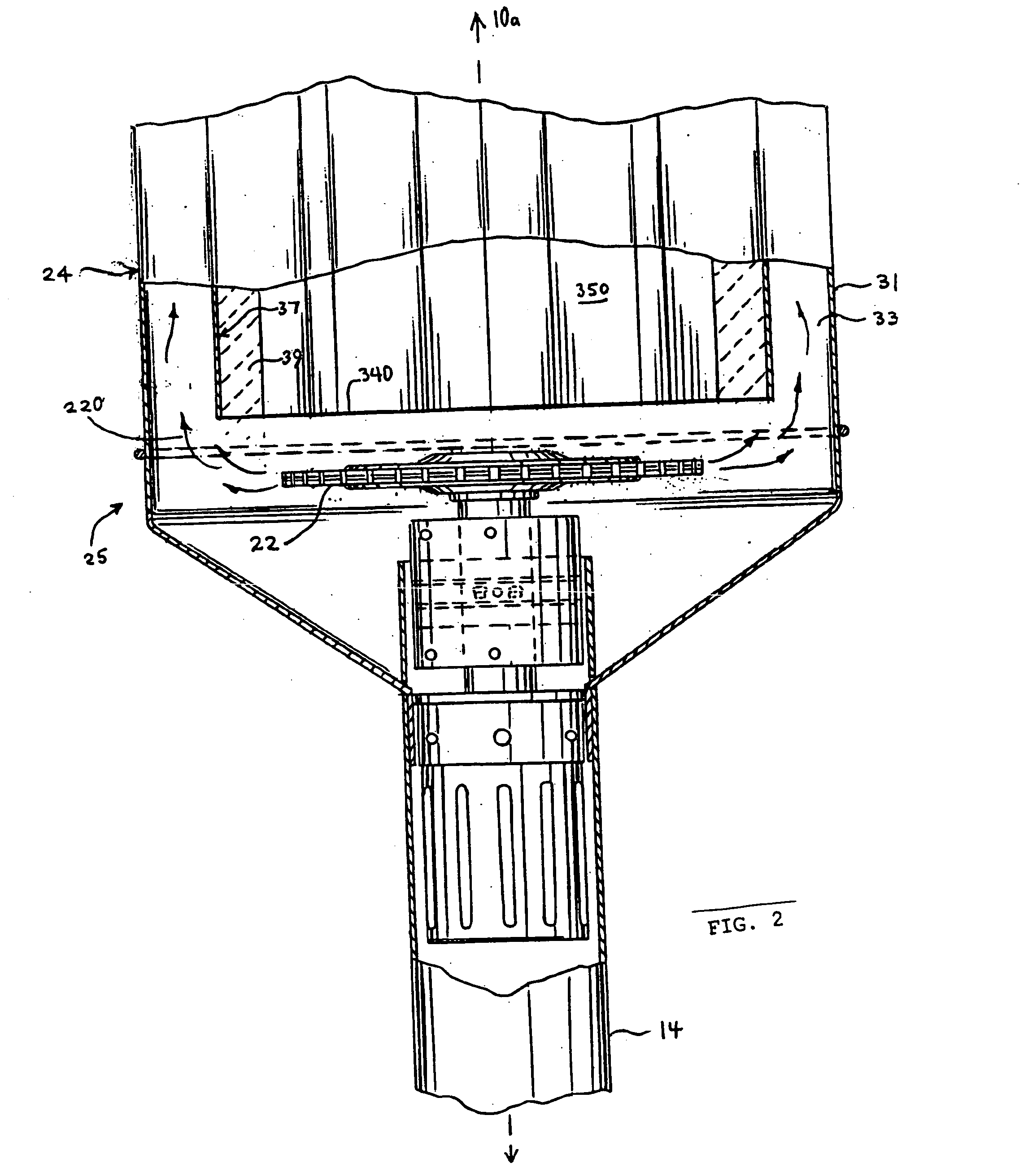
combustion generated by operation of the burner assembly. In one form, the flue chambers are formed by external and internal wall portions of the head, and insulation material is provided along the internal wall portions so that heat transfer from the hot combustion gases to the external wall portions is maximized. In another form, the flue chambers are substantially isolated from each other and are configured to confine gas flow such that turbulent flow conditions are generated therein to maximize heat transfer from the gas to the heating head. In a preferred form, the heating apparatus is used as a patio heater with the heating head mounted on top of an elongate support member or pole. With the flue chambers as described above, the heating head can be maximized in size along its longitudinal axis allowing the pole length to be kept to a minimum.
[0011] In another aspect, the outer wall portion of the heating head are of a predetermined material selected to optimize the generation of
infrared (IR)
heat energy when heated. With heat transfer to these walls maximized, the axial
head size can be increased, as earlier mentioned. Further, with the IR optimized outer
wall material, e.g. aluminized or carburized steel, the head can be axially longer and still generate
heat energy in the desired
infrared region.
[0013] It is preferred that the outer wall becomes heated by the hot flowing gases of combustion in the flue chambers such that it emits
radiant energy that is predominantly of
infrared wavelength from its exterior surface into the surrounding area. To this end, the preferred heating apparatus is an excellent infrared
radiation source in that the outer wall of the heating head is of a material having high
emissivity properties in the region of infrared wavelengths. Moreover, since the outer wall is undulated in configuration, it effectively offers an increased amount of surface area available to emit
radiant energy into the surrounding area. These and other features of the preferred heating apparatus permit substantial infrared radiant energy to be emanated into the surrounding vicinity of the heater. Due the resulting increased heating efficiencies of the heating apparatus, lower feed gas requirements are needed to obtain a given amount of
heating effect, which translates into lower operating costs for the heater. As a result, the gas orifices of the burner assembly can be smaller than the conventional 48 gauge orifices, e.g. 52 or 54 gauge, and the heat input energy can be significantly reduced such as by approximately 50% cover current patio heaters, e.g. from approximately 40,000 BTU / hr to approximately 20,000 BTU / hr.
[0014] The heating apparatus also is effectively wind-proofed because the outer wall feature of the housing that constitutes the radiant energy emitter of the burner assembly can be deployed as a substantially continuous
solid member preferably with little or no aperturing thereof that would otherwise permit ingress of winds sufficient to put out the flames of the burner assembly or premature egress of combustion gases before they reach the open-ended top of the housing. In addition, the use of a
solid, non-foraminous or essentially non-foraminous outer wall construction also creates narrow enclosed annuluses or isolated flue chambers between the inner wall and outer wall of the emitter which are relatively small in cross-section, to create turbulent, non-laminar flow in the combustion gases as they pass upward through the annular spaces away from the burner assembly. The turbulent flow created in the hot combustion gases increases the amount of heat transfer from the gases to the outer wall. As the annular spaces provided for channeling combustion gases up through the housing are relatively narrow and relatively air-tight, and not wide in cross-section, the hot combustion gases have no or little opportunity to spread out and assume a laminar flow profile as they are funneled up the individual annular spaces until escaping at the respective open tops of the annular spaces which can be located immediately below a reflector dome or lid when the heating apparatus is used as a patio heater, for instance.
[0016] In one particular aspect, the heating apparatus in accordance with the present invention emits a significant proportion, such as 50% or more, of its generated radiant energy as infrared
radiation. Moreover, it also emits a significantly higher percentage, such as 30% or more, of the heat input into the heater apparatus as radiant energy in the infrared region of the
electromagnetic spectrum, as compared to conventional patio heaters. This high level of IR radiant energy generated by the heaters of the invention is highly useful and efficient for heating the bodies and or apparel worn by persons and patrons located around the heater.


 Login to View More
  Login to View More