
Integral cover bucket design
a technology of integral covers and steam turbines, which is applied in the design of steam turbine buckets with integral covers, can solve the problems of stress corrosion cracking, corrosion damage of metal surfaces in the tip areas, erosion and other problems, and achieve the effects of reducing aerodynamic losses, avoiding erosion and corrosion of steam turbine buckets, and improving reliability and efficiency
- Summary
- Abstract
- Description
- Claims
- Application Information
AI Technical Summary
Benefits of technology
Problems solved by technology
Method used
Image

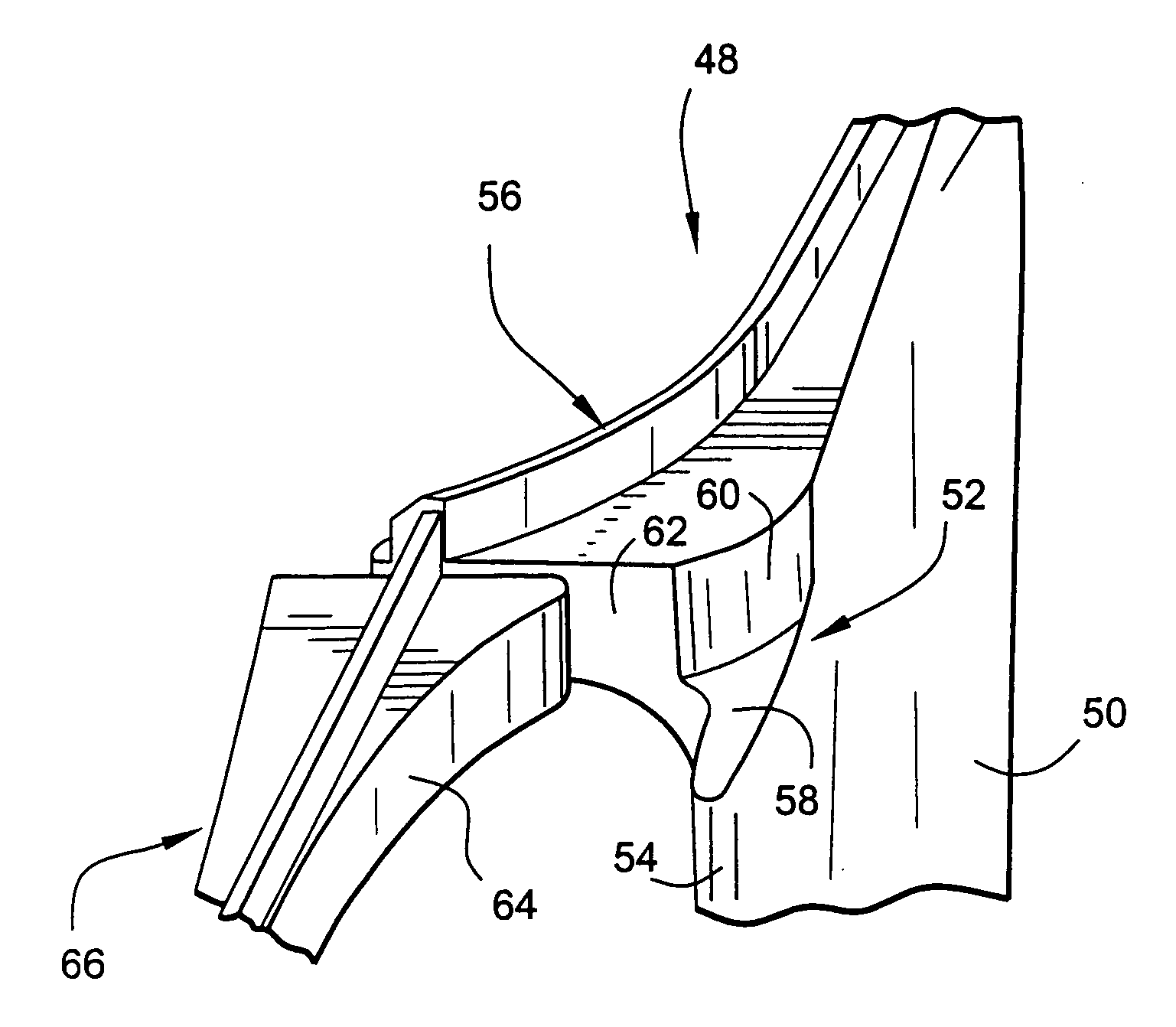
Examples
Embodiment Construction
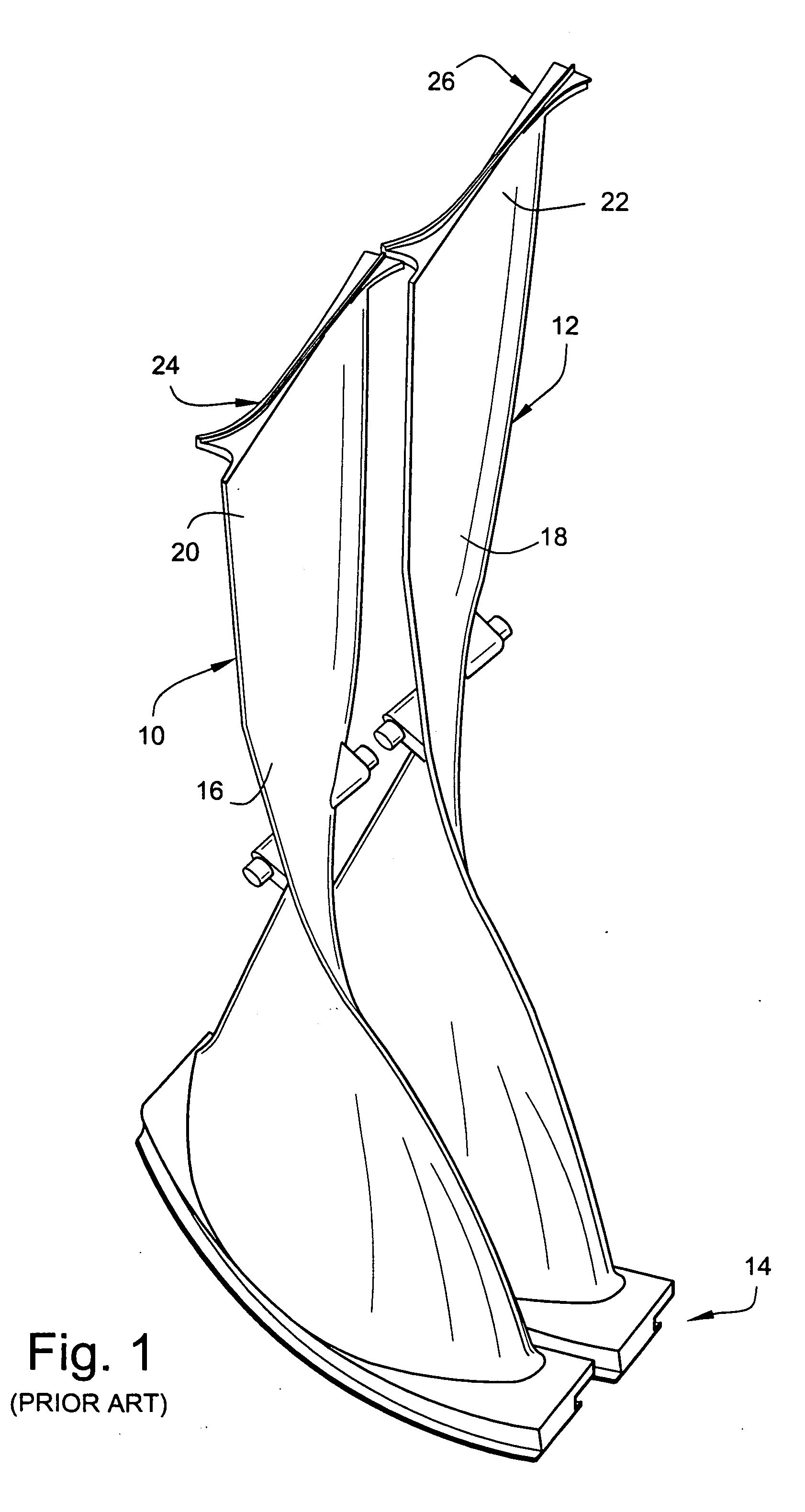
[0014] With reference to FIG. 1, a plurality (two shown) of like turbine blades or buckets 10, 12 are secured to a turbine rotor wheel (not shown) by means of a dovetail or other suitable joint generally indicated at 14. The buckets 10, 12 extend a full 360° about the turbine wheel, thereby forming a “row” of buckets. Each bucket in the row is generally identical, though occasionally the last bucket (or “notch blade”) and two buckets adjacent to the notch blade can have some geometrical differences to facilitate assembly. As is well understood, the dovetail or other joints 14 are designed for mating and sliding engagement with a complementary dovetail or other shape formed on the rim of the rotor wheel. The type of bucket dovetail and the manner of loading the buckets onto the wheel may vary and, in any event, is not significant to this invention.
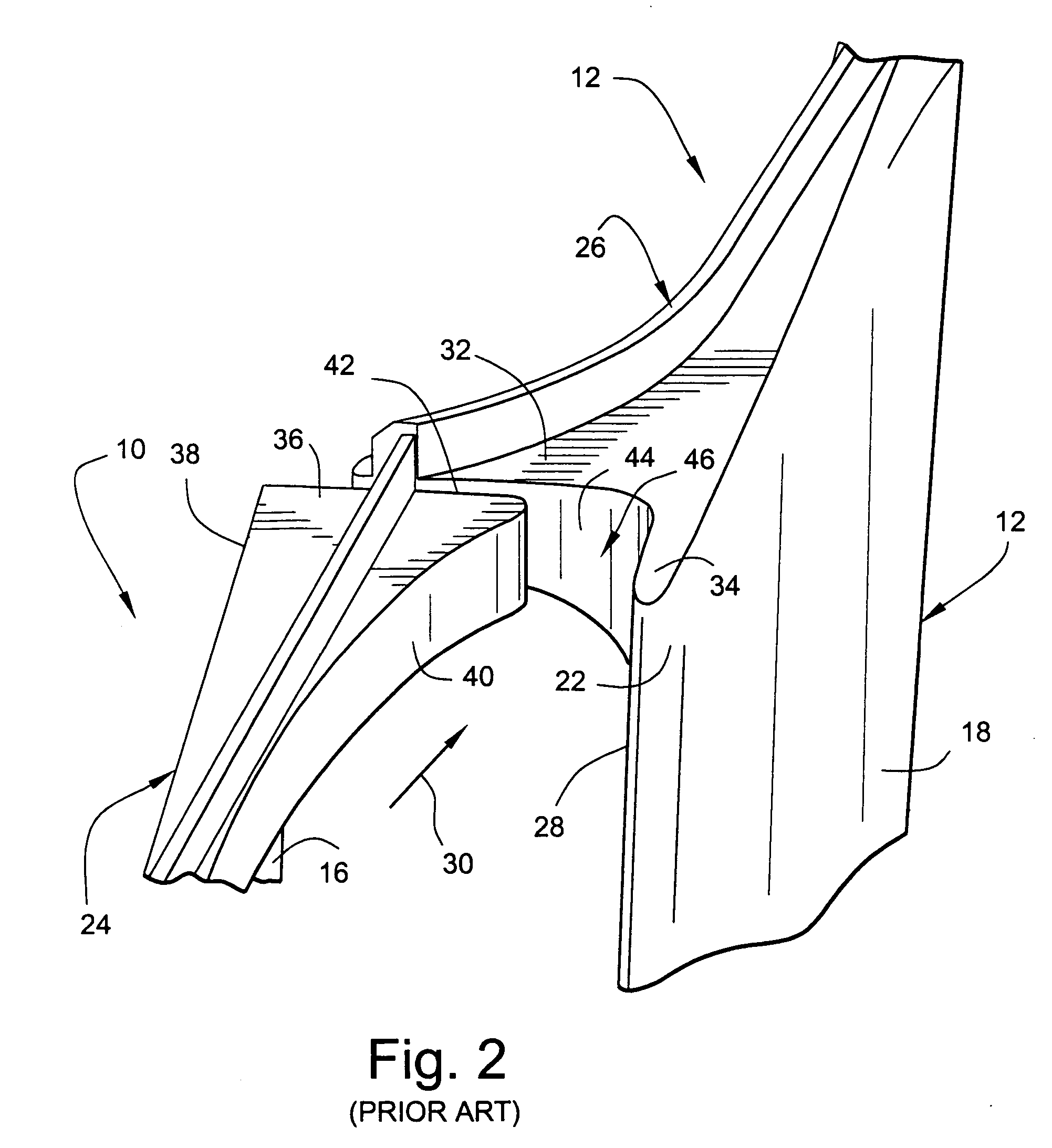
[0015] Blade portions 16, 18 of the buckets 10, 12, respectively, extend upwardly from the dovetail portions 18 to respective tips 20, 22...
PUM
 Login to View More
 Abstract
Description
Claims
Application Information
 Login to View More