
Drill for machining fiber reinforced composite material
- Summary
- Abstract
- Description
- Claims
- Application Information
AI Technical Summary
Benefits of technology
Problems solved by technology
Method used
Image

Examples
Embodiment Construction
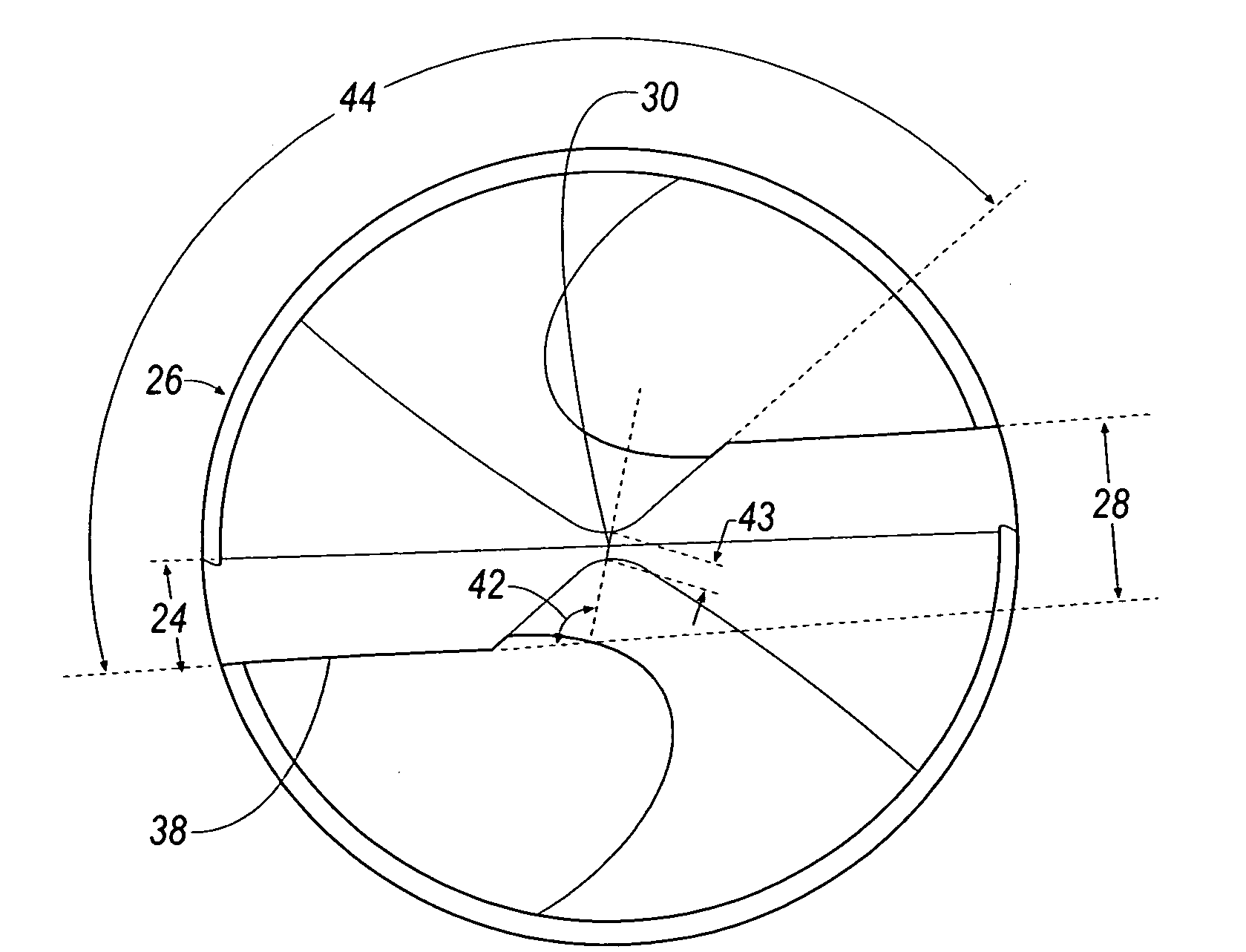
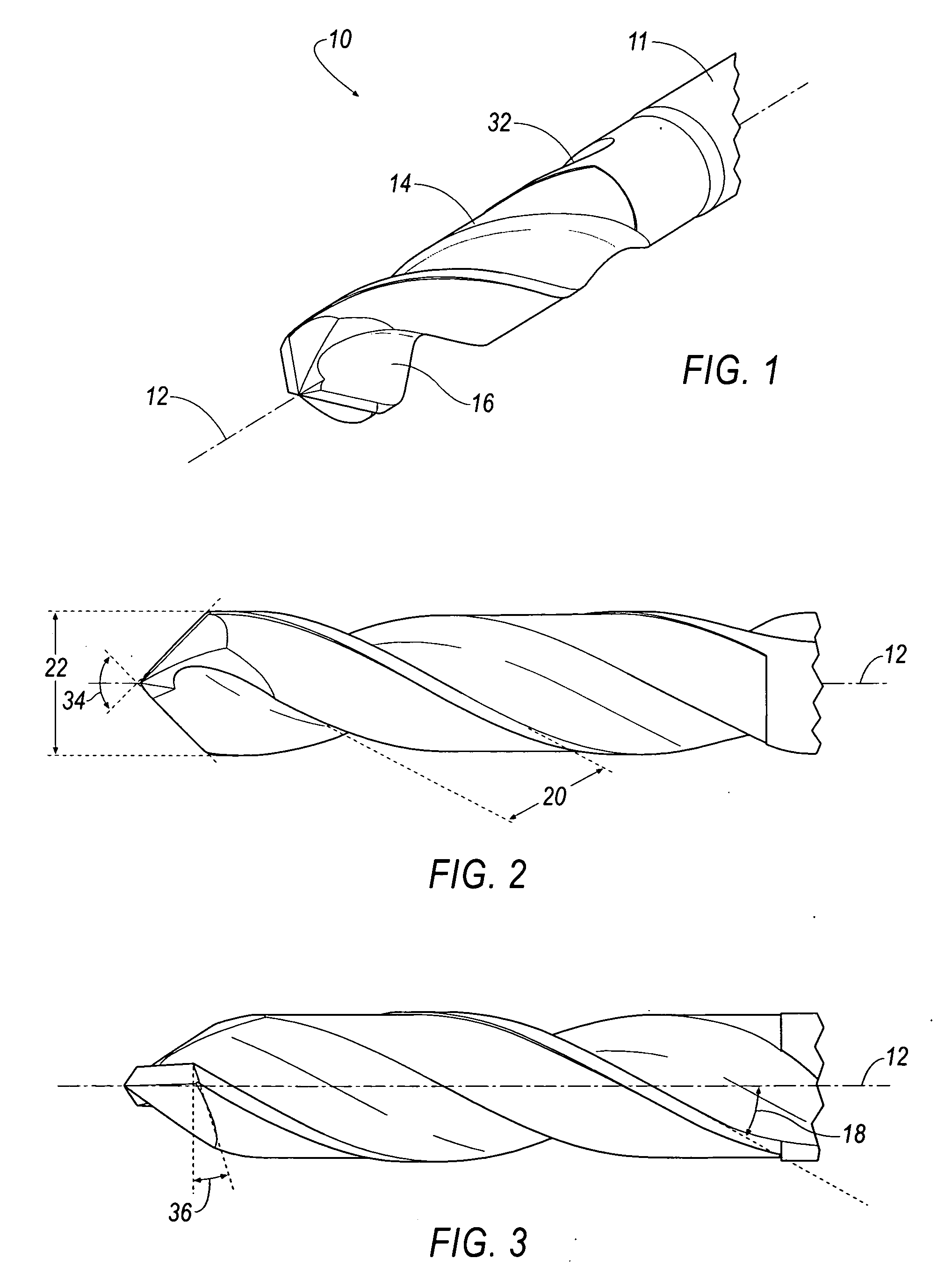
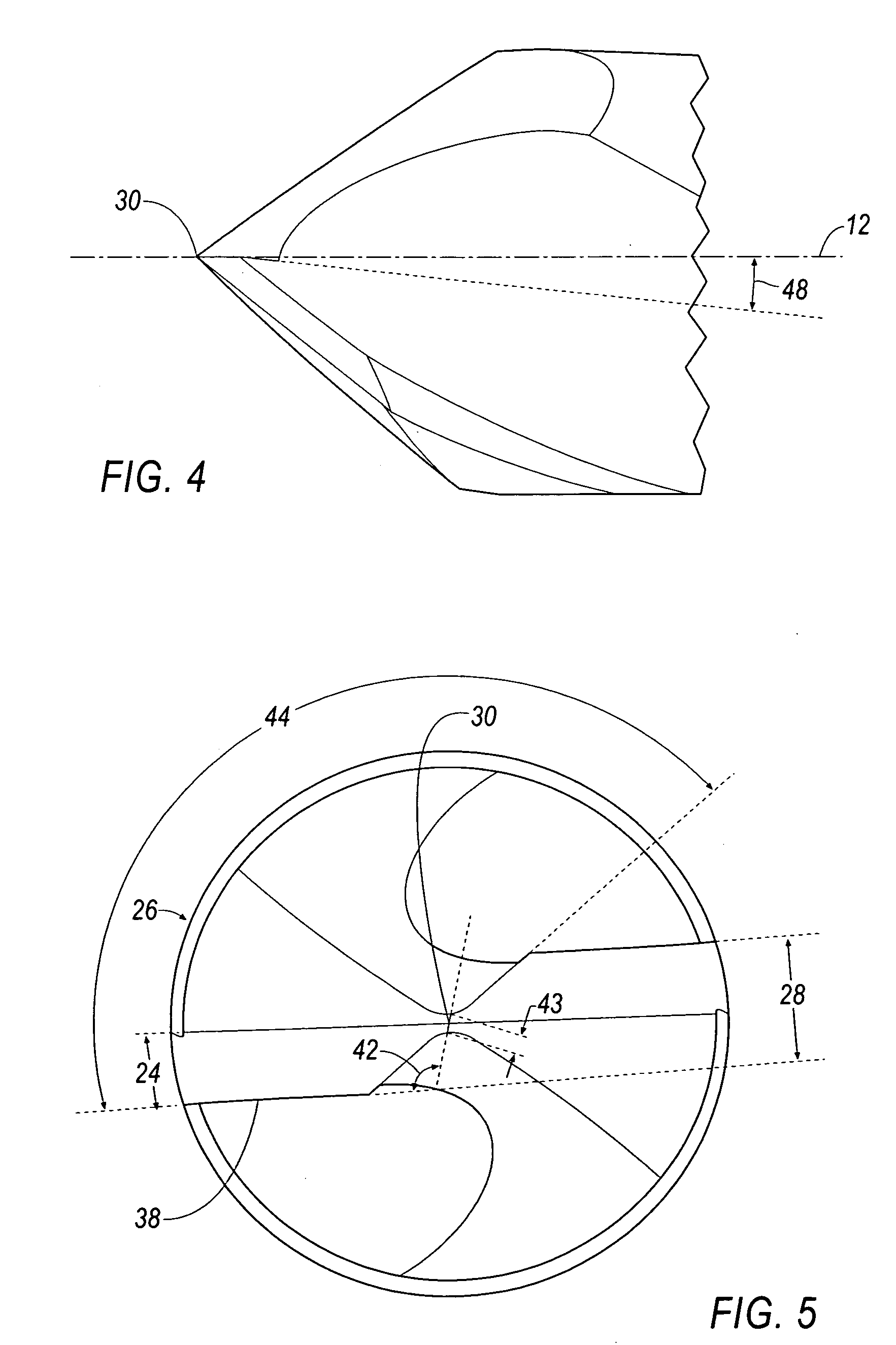
[0017]Referring to FIGS. 1-5, wherein like reference characters represent like elements, a two-fluted, diamond coated twist drill prior to splitting is generally shown at 10 according to an embodiment of the invention. Preferably, the drill 10 is made from a tungsten carbide (WC) substrate with cemented cobalt (Co) in a range between about 3 to 10 wt. % and a diamond coating having a thickness in a range between about 3 to 20 μm deposited by using a chemical vapor deposition (CVD) process. The hone radius (or cutting edge radius) is between about 5 to 30 microns after coating.
[0018]The drill 10 has a shank 11, a longitudinal axis 12 and includes two flutes, 14 and 16, at a helix angle 18 that is in a range between about 25 and 35 degrees with respect to the longitudinal axis 12. A margin width 24 is maintained between about 5 to 10 percent of the drill diameter 22. A body clearance diameter 26 is maintained at between about 92 to 96 percent of the drill diameter 22. A web thickness ...
PUM
| Property | Measurement | Unit |
|---|---|---|
| Length | aaaaa | aaaaa |
| Fraction | aaaaa | aaaaa |
| Fraction | aaaaa | aaaaa |
Abstract
Description
Claims
Application Information
 Login to View More