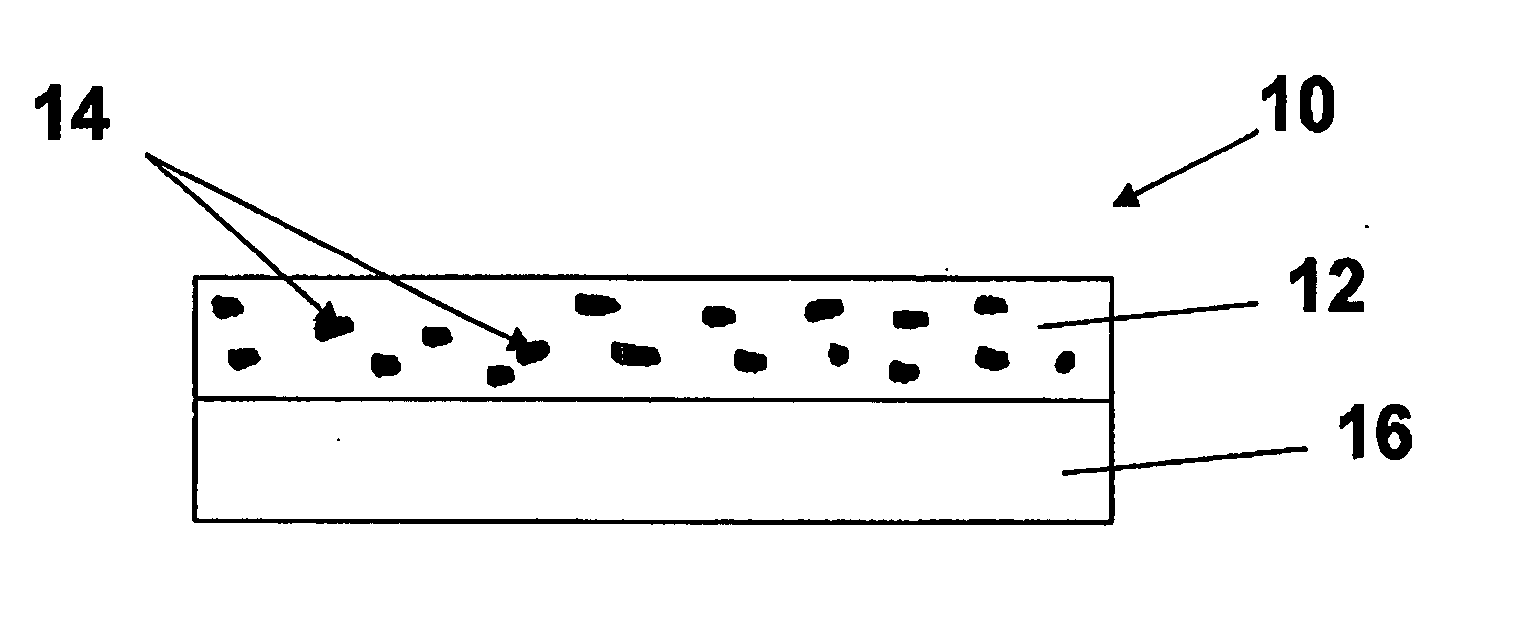
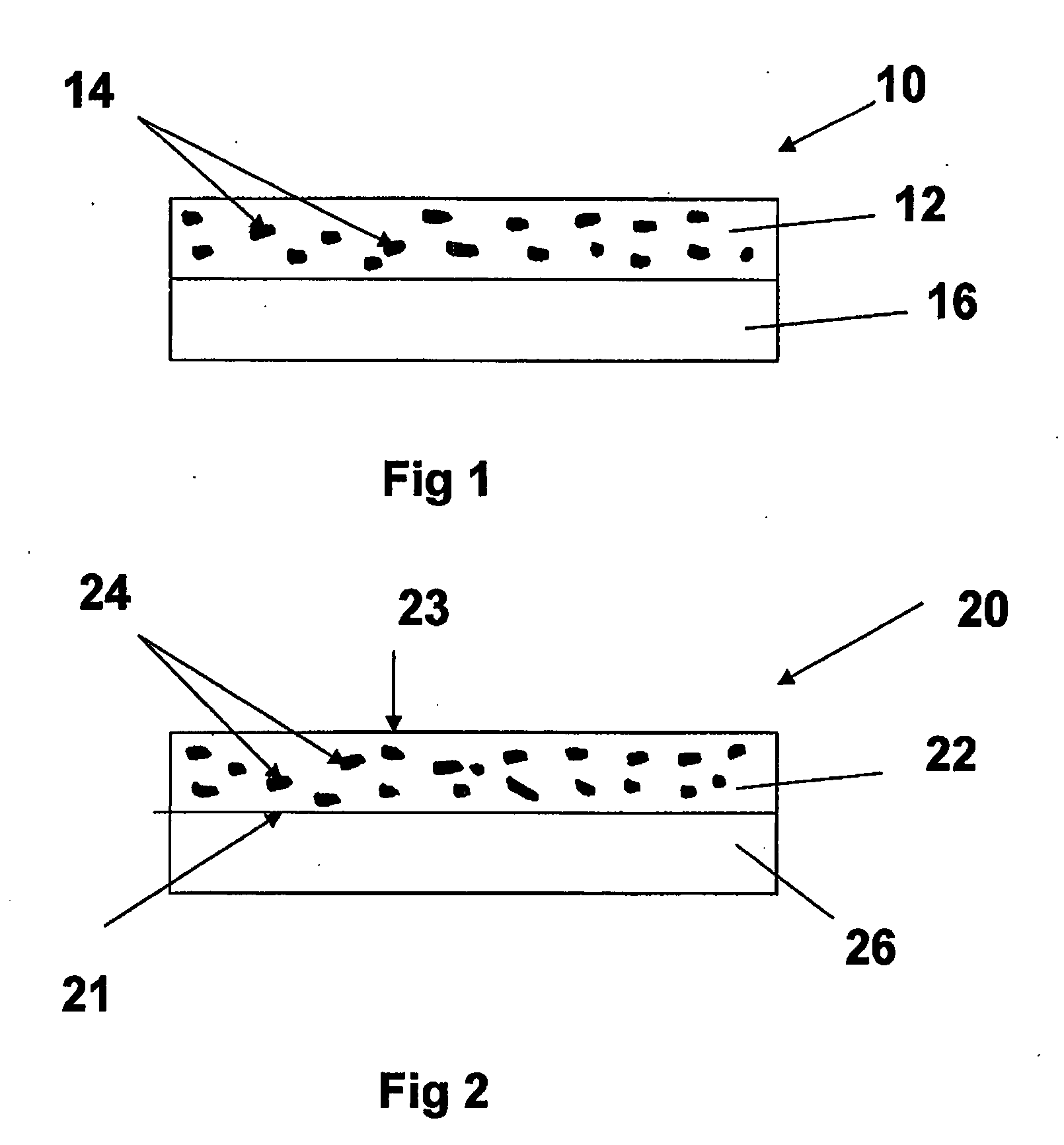
[0009] In another embodiment of the present invention, a method for protecting a roof surface substrate from fire damage is provided that comprises providing the roofing membrane as described herein, and applying the roofing membrane to a roof surface substrate with the polymeric film underlayer being in contact with the roof surface substrate. This orientation of the roofing membrane on the roof structure provides enhanced protection of the roof from floating embers or the like that could cause a fire originating from outside of the building.
[0010] In another embodiment of the present invention, a method for protecting a substrate from fire damage is provided, comprising first a) providing a fire retardant laminate, comprising: i) an outer layer of a cured polymeric film comprising a non-halogenated fire retardant component, the fire retardant component being from greater than about 55% to about 95% of the outer layer by weight; and ii) an organic support layer to which the outer layer is laminated. This laminate is applied to a substrate with the organic support layer being in contact with the substrate. This orientation of the laminate on the substrate provides enhanced protection of the substrate from external fire sources, such as embers or the like, that could initiate a fire on the substrate. In particular, the configuration of this laminate provides a unique
system that can afford surprising protection against fire without interfering with the function of the laminate in its ultimate use. Thus, a polymeric support layer that can be used as a
waterproofing structure, a structural support, an
insulation layer, and the like, is provided with fire retardant properties without the primary functionality of the support being compromised by
high loading of fire retardant material. Because the fire retardant is concentrated in the outer layer, the fire retardancy effect is maximized with a minimal amount of fire retardant component being required for incorporation in the product as a whole. Additionally, a high degree of protection from fire is afforded while not compromising the desired physical properties of the laminate as a whole, because a substantial portion of the laminate (i.e. the support layer) can be formulated without the need to incorporate fire retardant at all.
[0011] In one embodiment of the present invention, the organic support layer is a polymeric material that forms a polymeric support layer. In an embodiment of this embodiment of the present invention, the
polymer portion of the outer layer is the same as the polymeric material of the support layer. By utilizing the configuration of the present invention, the outer layer is supported by the polymeric support layer which provides the desired physical properties, and the outer layer affords better fire retardant properties than could be obtained by a like product wherein the fire retardant is dispersed throughout the polymeric support layer rather than concentrated in an outer layer as presently provided.
[0012] In another embodiment of the present invention, a fire retardant laminate is provided for application to a substrate, comprising a) a polymeric film having a first and a second major surface, the film comprising a non-halogenated fire retardant component, the fire retardant component being from greater than 55% to about 95% of the polymeric film by weight; b) a layer of
pressure sensitive adhesive coated on the first major surface of the polymeric film; and c) a
release liner removably adhered to the layer of
pressure sensitive adhesive. This construction provides a highly fire resistant layer that is ready for convenient lamination to any desired substrate. By providing a fire retardant containing film with a
pressure sensitive adhesive that is protected by a
release liner, this construction can be readily delivered to any desired site of application, whether that be in a remote factory or on a work-site such as a for application on a roof or wall of an existing structure. In use, the construction is preferably delivered to the location of application and the
release liner is removed so that the pressure sensitive adhesive is exposed. The fire retardant containing film is adhered to the desired location using the pressure sensitive adhesive.
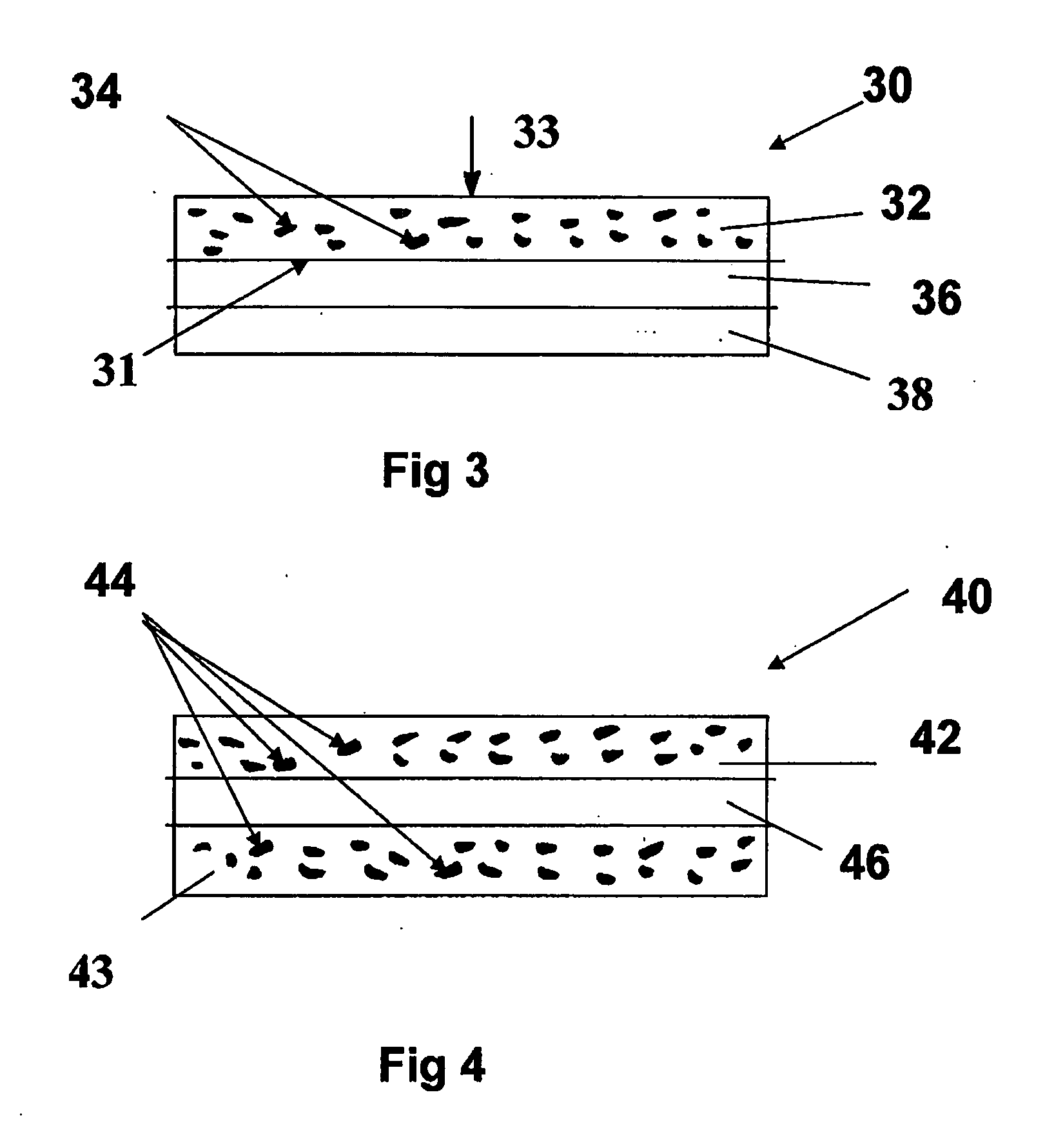
[0013] In another embodiment of the present invention, a fire retardant laminate is provided having at least three
layers. The
layers comprise a) a first outer layer of a polymeric film comprising a non-halogenated fire retardant component, the fire retardant component being from greater than about 55% to about 95% of the outer layer by weight; b) an intermediate organic support layer; and c) a second outer layer of a polymeric film comprising a non-halogenated fire retardant component, the fire retardant component being from greater than about 55% to about 95% of the outer layer by weight. Thus, one or more intermediate
layers are “sandwiched” between outer fire protective layers. This construction is believed to provide superior fire protective properties by inhibiting the
initiation of fire from external sources, and also helping to inhibit promulgation of fire in the event that a substrate to which the laminate is applied itself has caught fire.


 Login to View More